
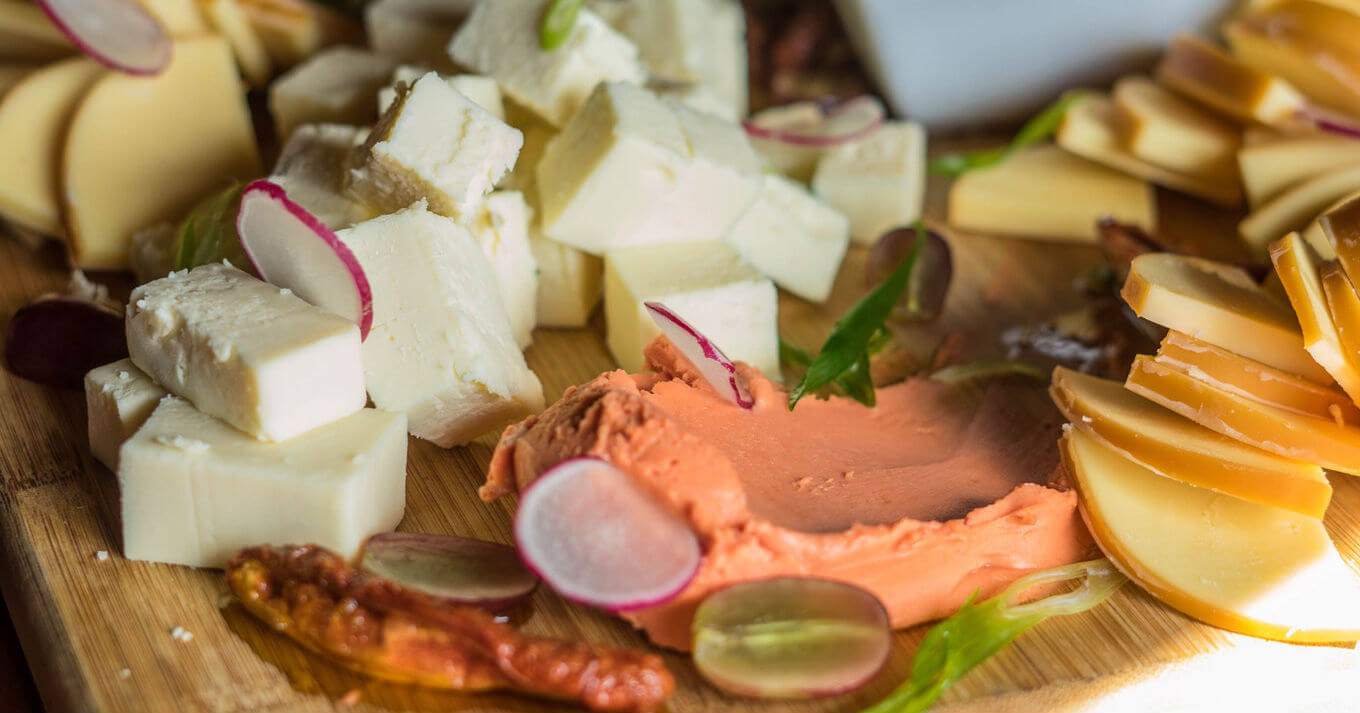
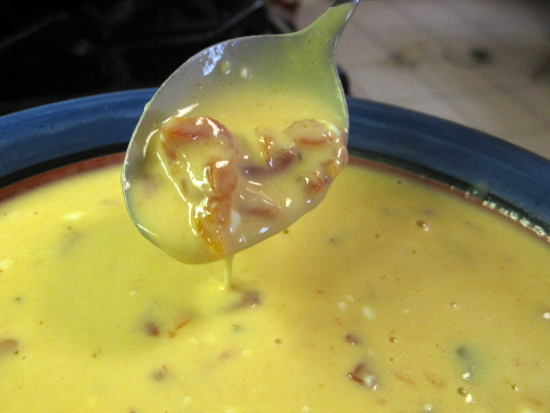
I love cheese. I love nibbling on it with a glass of wine, shredding fine slivers of it over salads, and even using it in large quantities to make comfort foods like creamy queso (a Mexican cheese dip) or scrumptious sauces.
Yet when I walk into most grocery stores, the vast majority of items on the cheese aisle hardly resemble traditional cheeses anymore. The choices can be daunting, particularly if you want to by the most nourishing cheese you can for you and your family. Besides taste, what’s the difference between that expensive, imported Irish cheese and the discount block of American or Colby Jack?
A lot.
Sadly, the state of cheese in the U.S. is deeply disturbing. Whether it’s our acceptance of oddities like Velveeta, or the ever-pervasive “American” cheese — both of which can’t even legally be called “cheese” (even given our lax labeling standards!) and instead are labeled as “cheese products.”
Just take a look at the ingredients label on a package of Kraft American Cheese Singles:
MILK, WHEY, MILKFAT, MILK PROTEIN CONCENTRATE, SALT, CALCIUM PHOSPHATE, SODIUM CITRATE, WHEY PROTEIN CONCENTRATE, SODIUM PHOSPHATE, SORBIC ACID AS A PRESERVATIVE, APOCAROTENAL (COLOR), ANNATTO (COLOR), ENZYMES, VITAMIN D3, CHEESE CULTURE.
Unless you diligently decode every label, you may not realize that the cheese you’ve been buying uses milk protein concentrates.
But even if you’ve shied away from “cheese products,” you may be wondering what the healthiest cheese choices are.
Because cheese is made from milk, many of the principles you’d apply to choosing the healthiest milk can be used to pick the healthiest cheeses.
Healthy Cheese: What to Buy
Basically, we’re trying to find REAL cheese — cheese that’s as traditional and natural as possible, the kind of cheese your ancestors have been eating for thousands of years.
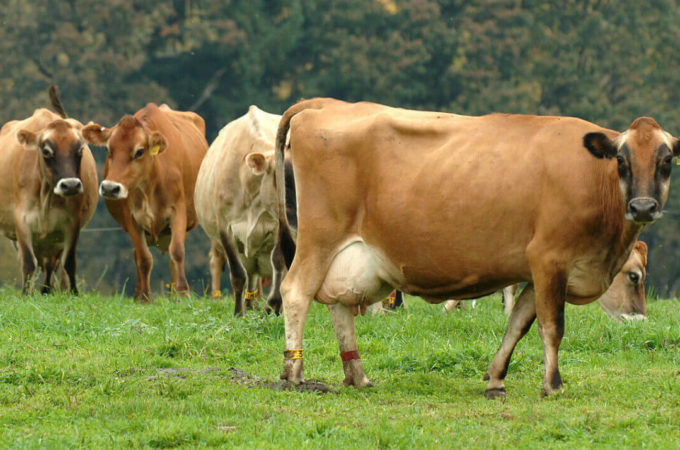
BEST CHOICE: Raw cheeses from grass-fed cows producing milk high in A2 beta casein and relatively low in A1 beta casein — that means milk from Jerseys, Guernseys, and other traditional cattle breeds rather than newer Holsteins. Raw goat’s milk, sheep’s milk, and yak’s milk only contains A2 beta casein and arguably makes better cheeses than cow’s milk anyway.
Finding these in your grocery store can be tough, but it is possible to find them in many of the “deli” sections. In other words, they won’t be on the same aisle with sliced sandwich cheeses and bagged pre-shredded cheese (which contains wood pulp!). Imported European cheeses are a great place to start. Europeans don’t treat their dairy cows with growth hormones, and they also know that the best tasting cheeses are the ones coming from cows eating lush green grass. You can tell if a cheese is made with raw milk by reading the ingredients label.
Unfortunately, U.S. import laws don’t allow us to import many of the softer or mildly aged raw cheeses, instead requiring that raw cheese be aged for at least 60 days before entering our country. So, you won’t find raw chevre, feta, blue cheese, or cream cheese varieties at your grocery store. For those, you’ll need to go to your farmer’s market, a local artisan cheese shop, or purchase them online.
What about cost? These are mightily expensive cheeses compared to what I’m used to buying!
The good news is that these cheeses are packed full of flavor. If you’re at all like my family, you’ll discover that you simply need less cheese when you’re preparing foods with these traditional cheeses. You wouldn’t want more than a few slivers on your salad, otherwise your meal would simply be overpowered by the taste of cheese.
For online sources of quality cheese from grass-fed cows, be sure to check out the listings on my Resources Page.
SECOND: Cheeses from the milk of grass-fed cows, goats, sheep, or yak that aren’t fed antibiotics or growth hormones. This can be harder to discern, but easier to find. What do I mean? Well, most cheese makers don’t advertise what they feed their dairy cows on their labels (some do, but most don’t). It’s up to you to be a detective and start calling companies to find out how they raise their cows and what they’re fed.
As before, most European cheese varieties are a good bet, as are most Amish cheeses. Again, these cheeses will likely only be available in the “deli” section of your grocery store, or at local farmer’s markets or artisan cheese shops. The good news is that of the cheeses in the “deli” section of your grocery store, these are probably far more prevalent than the raw milk cheeses.
THIRD: Cheeses from the milk of cows, goats, sheep, or yak that aren’t fed antibiotics or growth hormones. This will usually be right on the label, as this is a MAJOR selling point here in the U.S. these days. I’m not familiar with every brand out there, but I do know that Tillamook cheeses are antibiotic & growth hormone free.
If you choose to go with this third option, beware of just how much you consume. If the animal’s not eating a grass-based diet, the profile of nutrients & fats in the milk used to produce the cheese will be unnaturally high in Omega 6 fatty acids and fairly devoid of good fat soluable vitamins like Vitamin D.
What are YOUR favorite places to find REAL cheese?
We’re all in this together. Perhaps you’ve made a discovery about a source for local raw-milk grass-fed cheese? Or maybe you’ve discovered that a particular national brand uses only milk from grass-fed cows. Or maybe you’ve found a good buying club that lets you get REAL cheese at prices that rival supermarket cheese? Your knowledge could help somebody out! Why not leave a comment letting us know what’s available in your area?
Want more like this? Here’s the ever growing list of Healthy Foods: What to Buy:
- Healthy Eggs: What To Buy
- Healthy Milk: What To Buy
- Healthy Meats: What To Buy
- Healthy Seafood: What To Buy
- Where to Buy Butter from Grass-fed Cows
 |





I have been able to find some good raw grass-fed cheeses at Trader Joe’s, including some yummy blue cheeses. They also carry raw parmesan (the real stuff), a couple of raw cheddars, a raw swiss and a few others. The raw cheddar is a decent price at about $5.49/lb.
Shannon
I was wondering about Tillimook, thanks for covering that. For some reason I was under the illusion that Tillimook cows were pastured? And I tried reading the label to see if their cheese was pasteurized, but couldn’t tell. I’m just asking because that’s the most reasonably priced cheese I can find that seems somewhat decent.
Cara
Cara — Tillamook buys their milk from a number of different dairies, many of which pasture-feed their cows, but not all. Basically, unless the label specifically says “raw milk,” the milk is pasteurized.
Shannon — Yet one more reason why Austin needs a Trader Joe’s! I would *love* to get raw cheddar for a mere $5.49/lb.
The raw Cheddar at trader Joe’s is not organic or grass fed. THATS why its so cheap. I’ve noticed a lot of comments on here focusing on just raw cheese. But just raw isnt what you should be looking for. Grass fed is what’s most important. Grass fed and raw is fantastic. Organic and raw is good. Just raw, but not organic or grassfed….just a marketing scam. May as well get regular cheese.
good point . . . they do however have a grass-fed sharp cheddar from New Zealand with no coloring. It is not organic but not from cows treated with antibiotics. It is a decent price.
Many cheeses now say they are not from cows treated with antibiotics, but they also need to at the very least be GMO free as well.
Unfortunatly, organic cows may be fed up to 30% of their diet in grain. Grain makes a cow sick because they cannot digested it like they can grass. Therefore I recommend not eating organic if you can find grass-fed.
Raw cheese found in stores in NOT raw. The labels are deceiving and infuriating. I’ve contacted the actual companies. They are all cooked way above 110°. Once raw milk goes past that, it is no longer raw and all the good bacteria and enzymes are killed. It’s just like being pastuerized. Causing mucus and inflammation unlike raw milk.
Cheese has been a stuggle for us. My children love cheese. I actually stopped buying it for a while when we first moved to WY because I couldn’t find anything that I thought was okay at a price I was willing to pay. I found some in the deli department of the local grocery but it was $21.99 a pound. I decided we didn’t need cheese that badly.
Last week I went to the little bitty health food store we have here and was happy to find a raw Monteray Jack style cheese (with jalapeno’s in it) at $6.79 for a 12 ounce brick. We have been using it sparingly-partly because the jalapeno’s are HOT- and we do enjoy it. I keep thinking I might try making mozzarella but that is just another thing on my long To Do List.
Millie
Raw milk cannot be sold for human consumption in NC, but I’ve found some raw cow and goat’s milk cheeses at Earth Fare. The cheeses are from Morningland Dairy out of Missouri. The blocks are pricey but I shred it to make it stretch further. We also have a Trader Joe’s so I’ll have to check out their selection the next time I’m there.
Mary Ellen
I’m very fortunate in that I have 2 award winning cheese makers within 5 miles of my house. Their cheeses are fabulous, but I don’t know how widely distributed they are outside of New England (I think they do mail order). We buy both weekly, they’re worth the price.
Blue Ledge Farm (goat cheeses) – http://www.blueledgefarm.com/
Vermont Ayr/Crawford Family Farm – http://www.crawfordfamilyfarm.com/index.html
Anyone know of a good place in NH?
Meagan
After checking out Gayle’s link for Crawford Farms, it looks like their cheeses are available at NH farmers markets – http://www.crawfordfamilyfarm.com/WhereToBuy.html
If that’s not quite what you’re looking for, Local Harvest may help you in your search – http://www.localharvest.org/
Good Luck!
I’m not sure how “reasonable” the prices are (depends on what you consider reasonable, I guess), but there is Sweet Grass Dairy here in Georgia (can order online at http://www.sweetgrassdairy.com), and Happy Cow Creamery in South Carolina. In the Atlanta area, the Dekalb Farmer’s Market sometimes carries raw milk cheeses (variety and availability vary), as does Trader Joe’s. I’ve heard that Costco sometimes does, but I’ve never found any there, although they do carry Kerrygold butter. I have ordered from Morningland Dairy (which someone else already mentioned) in the past.
I definitely have found that good REAL cheese has such extraordinary taste and flavor! You really don’t need but just a smidge at a time for most uses. It’s like comparing anemic grocery store tomatoes in January to fresh-picked vine-ripe tomatoes straight from the garden, still warm from the sun. There really is no comparison. : )
Michelle
Happy Cow is from Holsteins so A1, their butter is not from their grass fed cows. Another dairy produces that butter for them, not grass fed, GMO diet!!
Michelle & Gayle — Thanks for the links! I’ll go check them out.
Meagan — Let’s hope someone responds soon.
Mary Ellen — Thanks for tips. 🙂
Millie — I definitely want to try making mozzarella SOON. The recipe I want to use calls for rennet, which has been surprisingly hard to come by in my local stores. The best mozzerellas I’ve ever had have all been homemade (by other people), so I’m excited to try.
Whole Foods carrys rennet in the cheese and yogurt section.
Just buy the curd
This made my mouth water! OMG, I forgot to serve the goat chevre at my luncheon today. It would have been great with the curried chicken salad, local blueberries, and sprouted crackers! Oh, well. Sounds like lunch tomorrow.
Cathy Payne
Great post! I am desparately trying to ween hubby off of all chese products. HIs most fav of all is that disgusting Velveeta cheese slices. He says his favorite cheese is American cheese. *eye roll* He refuses to try anything else. So if you have any suggestions of something that is similar yet much healthier, hit me with your best shot!
American cheese, eyeroll, LOL
My hubby is similar.
Over the course of the marriage, I got him off “cheese food product” and on to actual “American cheese” (which is at least CHEESE), and later got him on to sliced “mild cheddar” (he dislikes
ANY sharpness).
I’d LOVE to find a raw or grass-fed mild cheddar that comes in slices. I can shred real cheese easily enough, but making slices that are actually large enough to cover the bread for sandwich making is problematic, so I’m still kinda stuck with crappy sliced mild cheddar for now.
Buy a cheese cutter. They work wonders. Or try unflavored dental floss, also slides through like butter 🙂
My mom has bought Amish cheese for years from Hill and Valley Cheese in Wisconsin. They sell it reasonably (especially look for sales). The more you buy the cheaper it is. They UPS anywhere in the US, I believe. Mama always buys it by the 40 lb block, cut, and froze it…I want to say it used to be around $80-$100 for that amount.
They only ship in cool weather though, but they use an insulated box which means the cheese usually arrives fresh. It occasionally has a bit of mold on the outside, which just needs to be trimmed off; the cheese is fine. It’s not raw (as far as I know) but it is rBGH free. Freezing does make it a bit crumbly, but it’s worth it to know you are getting healthy cheese.
Soft cheeses are also quite easy to make if you have access to raw milk.
Hill and Valley Cheese 608-654-5411 / 888-320-9469
I found a comprehensive list of rBGH-free cheese companies here:
http://www.organicconsumers.org/rbgh/rbghfree050704.cfm
Charity Grace
When you thaw blocks of cheese, after they’ve thawed, leave them at room temperature for 24 hours before refrigerating. The oils redistribute and they are much less crumbly that way.
Charity Grace,
How do you make cheese from raw milk? I’m new to the raw milk thing. We’ve made butter from the raw milk, but I’m ready to take on cheese now. Please do share! 🙂
I’m in Northwest Indiana, and I buy my raw dairy (milk, butter and cheese) through Brunos Organics. It’s a local, organic delivery service that offers a cow share for $30 per year. Raw Jersey milk is $7 gallon, and you can purchase 2 gallons per week. They also sell pastured eggs, and so many other GREAT organic products. They deliver to my home for $5/week. What a deal! I love their raw cheddar cheese, at about $5.99 per 1/2 pound. You can find them online at: http://www.thejuicegarden.com/
My 18 month old son, however, does not yet appreciate the flavor of raw cheese. 🙂 Poor thing… I started him on the grocery store crap before I knew what I was doing. Therefore I searched for a local source of organic, grass fed pasteurized cheese, and I can vouch for Swissland cheese (which you linked to in your post). We LOVE their cheese! I haven’t tried the raw cheeses yet, but I ordered a lot of the types of pasteurized cheese for my son. They are awesome!
I know they’re pricey, but I think Whole Foods has an awesome real cheese selection. I wish there was one closer to where I live now! Cheese is all I ever bought in that store when I lived nearby. I would spend $80, but the cheeses would last me about 4-6 months. Money well spent, in my opinion.
Kristen, you probably know this already, but Wilderness Family Naturals sells the vegetable rennet required to make mozzarella: http://www.wildernessfamilynaturals.com/Merchant2/merchant.mvc?Screen=PROD&Product_Code=YO311-006&Category_Code=
I plan to try it soon. I’ve stockpiled 4 gallons of skimmed (cream went into my coffee 🙂 raw milk in my freezer. I plan to make some soon. I will try Laura’s method found here: http://heavenlyhomemakers.com/blog/how-to-make-mozzarella-cheese
Good luck everyone! Real, quality cheese is SO worth the price! I’m an addict.
I find great cheese in my kitchen! So far I have made mozzarella, ricotta, queso blanco, fromage blanc, cultured marscapone, paneer, and a pound of farmhouse cheddar is aging in my garage. I’m not much of a cook, but found cheesemaking pretty easy. I use gently home-pasteurized raw milk for all my cheeses. Home Cheese Making by Ricki Carroll is a great resource.
By the way, in many states that don’t allow for raw milk consumption, an aged cheese (aged at least 30 days) is legal to sell. Some states are still holdouts, but others allow for this “loophole.”
Local Nourishment
I also live in Northwest Indiana and get the raw cheese from Brunos. It is pretty good and priced reasonably. I am in Fresh from the Farms Co-op and I did not like the flavor of the raw cheese I got from them. Does anyone know if there is grass fed Mexican cheeses that taste as good as in the mexican stores?
Oh and Jen, where are you from? I am from Hobart. I am always looking for local foodies. Are you going to WAPF conference? Please email me at [email protected] if interested in collaberating at all. I am lonely here in processed food land! 🙂
One thing I like to do is to drain the whey from pastured, whole milk yoghurt and use that for lacto-fermenting other foods.
The resultant strained “yoghurt cheese” (strained yoghurt, labneh/labaneh, dahi, or Greek yoghurt) makes a great substitute for cream cheese. Try it with fresh chives on a sprouted bagel.
It is also heat stable, so can be used in cooking and baking or you can roll it into balls, dry it and preserve in olive oil as they commonly do in the middle East.
Nationally, Kalona Organics sells yoghurt and cheese which comes from small, chemical-free Amish and Mennonite family farms in the Midwest. Not raw, but fits into the second group that you mentioned.
Great article- thanks, Kristen!
Ren
There is a fantastic creamery on the west coast called Rogue Creamery out of Newport, Oregon – they also make great ales and beers. We purchase their raw cow’s milk blue cheeses and they are out of this world. And yes, it has been aged, but it is made right here in the United States. Here is their link: http://www.roguecreamery.com/product.asp?specific=107
It is implacably difficult to find real, raw cheese here in Idaho. I mostly purchase the Organic Valley raw milk cheeses, and occasionally when I splurge I go to the deli at our health food store and buy some of the artisan cheeses. My friend who is a nutritional therapist and has attended conferences that cater to the WAP crowds with Sally Fallon speaking reported to me that Sally stated in some of her lectures that when you look on the label of a cheese and it reads “fresh milk” or “cultured cheese,” these are key words to watch for as a hint that this product is healthy to consume – of course, check other ingredients as well, but most cheeses with this wording will be okay.
Raine Saunders
No disrespect to your fine post, Rogue Creamery is located in Central Point, OR in the Rogue Valley, and Rogue Brewery is located in Newport, OR and are not related. They have, however, again collaborated to produce a series of Cheddar and Touvelle cheeses.
http://rogue.com/store/products/Rogue-Hop-Cheddar-Cheese-8-oz-package.html is Rogue’s link to more information.
Dave
Favorites:
Vermont Butter & Cheese
Cabot Creamery
Jasper Hill
I live in Southeastern Pennsylvania, and we are blessed to be within a scant half-hour drive of the largest Amish settlement in the country. We can buy raw Colby for $3/lb on special. I buy it by the 5 lb. block. Praise the Lord for our Amish farmers who are going back to their old ways of farming again. Kinda ironic, huh?
Great article! I gave up cheese because of the expense of buying high quality organic, but as a special treat, I might pick up a bit of locally raised goat milk cheese from the farmer’s market once a month. You can definitely taste the quality!
Lauren B
wondering…if you melt raw cheese, or bake it, does it change the nutritional value? If I’m making a casserole do I want to use my raw cheese or Tillamook?
.-= Julie
I’ve done the grass-fed meat and raw milk from farms, but I just can’t get myself to buy the raw cheeses. We use so much of it…I’ve taken the baby step of buying only bricks and shredding my own to at least avoid the fillers in shredded cheese. It’s not enough, I’m sure, but it’s a step. I think Kraft is using at least hormone-free milk to make their cheese, so that’s another tiny step in the right direction.
.-= Katie @ Kitchen Stewardship
i’m a huge NT fan but a few months ago i got sick after eating a raw milk cheese. this was after drinking raw milk w/ no problems, so i think it was just a bad batch of cheese – plus, i’ve had a delicate tummy for a while due to a too-strong round of antibiotics. (argh!) anyway – this is all to say that, right now for my cheese fix i eat dubliner cheese. it’s produced by kerrygold, so i think it is from grass-fed cows just like their butter is. (though, it’s not organic, and not raw, obviously.) but it is DELICIOUS. the thing i love about it is it has the calcium crystals which sometimes precipitate out in the process of cheesemaking, which give it a crunchiness every so often (it’s harmless, but most cheesemakers don’t like it, so they try and prevent it – for dubliner, i guess they don’t). the other great thing is, i can usually find it at trader joe’s for about $6.50/lb. !! it’s good stuff.
I have bought grass fed cheese from http://littlecheeseshop.com out of Kentucky. I live in Illinois and had them ship it to me. Their cheese is wonderful and reasonably priced. They also sell honey and list their inventory stock next to their products. Their shipping charges are steep so you may want to buy with a group of people to spread the costs. Their store is located in southern Kentucky but they don’t list their address at their website.
Morningland Dairy in Missouri makes delicious raw milk cheeses. Their website posts pictures of their cows, pastures and even a tour of how they make their cheese. They also offer bulk purchasing and shipping of their cheese in cooled, insulated packages via UPS.
Kristen- You should try Antonelli’s cheese shop if you haven’t already. They are an artisanal cheese shop in Hyde Park and they take great pride in the integrity of their cheeses and it’s mostly reasonably priced. We bought a wheel of Camembert from them for our reception in lieu of a wedding cake and it was a.maz.ing.
Hello ladies, here is a website you can all go to and it will help you locate a farm close to your area that may offer herd shares (stock you buy in grass fed cattle so you can buy raw milk and use for personal consumption) the government wants you to consume their poison so the only legal way to buy the REAL milk is to buy stock and mind you everyday our wonderful leaders are making it harder an harder for these family farms to operate….. Sorry for ranting if you want to learn more about the governments fight to stop us from getting truly healthy foods you can google the subject. So the website is called Eatwild.com this is a very wonderful resource. I had stomach problems for awhile and my doc kept telling me they couldn’t find anything wrong I always felt bloated an constipated and just plan crappy (I thought i had become lactose intolerant) We found a local farm via the above website and to my great surprise (and relief) probably 2 weeks after we began drinking fresh milk my issues with my tummy eased up and then before i knew it no more problems. Hope this helps and possibly educates a few folks as to the importance of FAMILY FARMS…
http://www.rockhillcheese.com/ is in Northern Utah and will ship.
Does anyone know of any source for Yak milk cheese?
Faith
Azure Standard carries raw white cheddar cheese…a 5 pound block is $25ish. http://www.azurestandard.com
Klein Farm in Easton PA sells raw milk for $4.25 a gallon from grass fed cows -it is a little more if you buy less than 10 gallons at a time. They make their own cheese right there – it’s out of this world -many different flavors, all raw milk. Their website is kleinfarms.com
They also make their own yogurt, which is not raw, by PA law, but it’s really good. I make my own raw milk yogurt with their milk and it works great. Only drawback is that their cows are holsteins. Raw milk is impossible to buy in NJ due to the laws in this state unless you do it under the table.
If you’re in a state where raw milk is illegal and you live in a farming area, most likely if you start asking around, someone will have a connection to a farmer willing to sell you raw goat or cow’s milk.
Hi everyone –
I’m a probably little biased being a dairy farmer from New Zealand but you may like to try some of our cheeses. New Zealand cows are pasture fed, no antibiotics. There are HUGE penalties for anyone that puts antibiotics in the milk. I drink my own raw milk. We supply a company called Fonterra.
Oh and if you could send some of your authentic Mexican food over here in return that would be much appreciated – it has been a long time since I had a carneasada burrito!! 😉
Kindest regards,
Nikki
Thank you so much for your artical. As a vegitarian who likes some cheese and gave it. I will take a 60 mile ride to Farm Fresh in Huntsville, Al. To find a raw organic cheese for my husband to enjoy,sense I made him give it up also.
Where can I get raw cheeses and raw milk in western ny?
In the Bucks County area of Pennsylvania, Birchwood in Newtown that sells raw milk and cheese! (It’s legal in PA). http://www.birchwoodfarmdairy.com/
Cherry Grove Farm across the river in Lawrenceville NJ (right outside Trenton) also makes their own cheese from grass fed cows – not sure if it’s raw or not. http://www.cherrygrovefarm.com/
We found “Kerrygold” cheese & butter at our Sam’s club!!! Imported from Ireland, but clearly states only from grass fed cows. It’s pricey…$5.91 a lb. but it usually lasts us a little over two weeks. Love it!!!
I found a good assortment of raw cheeses, many of which were from Europe, at the Bon Appetit in the Princeton (NJ) Shopping Center on Harrison Street. The Whole Earth in Princeton has them too, and labelled organic, but they are mostly the American ones.
My husband and I moved to the US three years ago. How i missed my dutch cheese the first few months I cannot even begin to tell.
I was so excited to find real Dutch Gouda cheese at Costco. We have been buying our cheese there ever since! The price is so much better than at Whole foods!
I think we pay about $10 for 2 lbs of cheese.
sorry, can’t pick just one, lol
Peggyann, I KNOW it’s so hard!
Love blue cheese.
I love all kinds of cheese, especially those made out of raw milk! France is my neighbour country!
Raw Taleggio from Whole Foods – perfect!
Can’t find raw cheese in Australia 🙁
the kind on my plate!
Oh, Lyn! That’s so sad.
I know right …I am going to try and make some of my own if possible 🙂
Thank you for the article! I think I just found the ultimate solution: Trader Joe’s now sell”New Zealand Grass Fed Sharp Cheddar (milk from cows not treated with rBST)”. It is $5.99/lb and I love it! It is not too strong for my taste and I think many of you would like it!… 😉
P.S. Nikki, thanks for your note about New Zealand: “New Zealand cows are pasture fed, no antibiotics. There are HUGE penalties for anyone that puts antibiotics in the milk.” – This certainly confirms my finding…
For California folks, I usually buy the raw milk cheddar at Trader Joes but a few weeks ago I tried the Sprouts Market raw milk cheddar, I liked it better than the TJ’s and comparably priced.
I use to think buying the imported cheese at TJ’s or other stores meant their GMO free but apparently Europe makes GMO free for Europe, and GMO for the U.S. There is no escaping the GMO’s it seems without buying organic with the organic label. That’s unfortunate because cheese is very expensive and it would have been nice to save by buying non gmo but still not organic for those of us who want to eat a bit better but can’t afford the cost of full on organic 🙁
Followed the link to the Swissland cheese. Their info says they use Holsteins. Is there another place to purchase all a-2 cheese. Having problems finding a source.
I would like to know what kind of milk Kraft uses in their Feta Cheese? All I can find is that it is pasteurized. I would like to know if it’s cow, sheep or goat milk that they are using. It don’t say anywhere on the label
What if the ingredients on the cheese package says “cows milk” and doesn’t specify if it’s pasteurized or raw? What does that mean? Has anyone else encountered that?
very good submit, i certainly love this web site, carry on it
I want to know if Parmigiano Reggiano raw cheese is A2…thanks for the info you’ll provide me…Good day !!
Any dedicated cheese shop or any food co-op or natural foods stores are places you should be able to find a wide variety of raw milk cheeses, including blue cheese. There are quite a few excellent raw milk blues made in the US including Rogue Creamery’s “Rogue River Blue”, Cascadia Creamery’s “Glacier Blue”, Twin Sisters Creamery’s “Whatcom Blue”, Jasper Hills “Bayley Hazen Blue”, Point Reyes Farmstead “Point Reyes Blue”.
Also, all raw milk cheeses must be aged 60 days in the US, whether imported or domestically made as required by the FDA. If you are finding raw milk chevre or cream cheese in a farmers market, please know that they are selling this cheese illegally and it is highly suspect in regard to food safety and accountability.
I would like to join your group of food renegades, I tried clicking the join here button but I just got you photo. Please add me [email protected]
Thank you for this article; however there’s a BIG problem that you don’t cover.
That ‘elephant’ in the room-so to speak is, RENNET. You see this is an ingredient that most people don’t understand
and it has been completely transformed into something that is frankly TOXIC. The USDA is not looking after our
best interest and unfortunately about 90 to 95% of all cheese being sold in the USA contains rennet that is coming
from lab grown rennet. Cheese makers know that they can make more money and save time by forgoing the traditional
way of cheese process by not using animal rennet and by buying an “enzyme” which they can use instead. Where is it
coming from? Are you aware of Bill Gates project which involves ‘rennet? Why? Why would a tech giant be involved in
the cheese market? I would encourage you to spend some time and do some DEEP research about rennet. Companies
don’t have to disclose what is in it and or, where it actually comes from. Often times the only thing on the ingredient
label is; enzyme. Don’t just trust imported cheese…………………………