
I’m not exactly sure when protein powders became so mainstream. It used to be that only body builders bothered with them, but now everyone from suburban moms to high-rise living hipsters is on the protein powder bandwagon. After all, they promise so much: extra protein without extra food.
The first time I sought a midwife for prenatal care, she gave me only one dietary prescription: eat between 65g and 85g of protein per day. (Adequate protein levels during pregnancy have been proven to dramatically decrease swelling, varicose veins, and birth complications.) For the first time in my life, I went home and started thinking about the macro-nutrient levels of my foods. Turns out, my daily protein intake was nowhere near sufficient. We just didn’t eat that much meat, nor could we afford to (especially if we were going to stick to our grass-fed/wild-caught standards). When I expressed my concern to my midwife, she recommended a protein powder.
I hesitated to take it. In general, I don’t like isolating particular nutrients from foods. I’d much rather get my nutrition from whole foods rather than supplements. Plus, protein powders are definitely the product of industrialization. They are a completely modern food, new to the human diet, totally experimental.
Other typical concerns about protein powders have to do with how they’re processed. When created at higher temperatures, for example, the end result contains a large of free glutamic acids which act like MSG in the body. Also the high temperature drying method used to create the powders also tends to create oxidized cholesterol which contributes to heart disease. (Although, according to this, the oxidized cholesterol in protein powder is far less than what you’d get from eating a few scrambled eggs, so perhaps that concern is over-hyped.)
Eventually, though, I tried to find the least offensive brands of protein powder out there. I needed the extra protein, and protein powder seemed like an easy, quick fix for this tired momma.
What I soon learned was that the least offensive brands tend to be the most expensive. I was looking for a few things:
1. No added sugar.
2. No weird chemical or artificial additives.
3. Made from animals not treated with hormones or antibiotics.
4. Processed at lower temperatures to reduce free glutamic acids.
I wanted an animal protein powder rather than a plant based one simply because I wanted a protein powder with a high biological value (the higher the BV, the more protein is available to be absorbed and used by your cells). Animal proteins have a higher BV, and usually have a more well-rounded and usable set of amino acids in their make up.
But even then, even when buying the so-called “best” brands, I still noticed that I turned unusually aggressive and moody after consuming the protein powders. I don’t know if this was because of what little free glutamic acid was in them, or if it had to do with the sugar alcohols like xylitol which were commonly used to sweeten the protein powders in lieu of sugar.
In any case, I decided to only use them in extreme moderation, only on days when my diet was otherwise severely lacking in protein.
In my most recent pregnancy, I came up against the same roadblock. I needed to eat a lot more protein than I was getting; how could I go about it?
That’s when I discovered a protein powder I could get behind 100%: gelatin.
What exactly is gelatin? Gelatin is just a processed version of a structural protein called collagen that is found in many animals, including humans. Collagen actually makes up almost a third of all the protein in the human body. It is a big, fibrous molecule that makes skin, bones, and tendons both strong and somewhat elastic. As you get older, your body makes less collagen, and individual collagen fibers become crosslinked with each other. You might experience this as stiff joints (from less flexible tendons) or wrinkles (from loss of skin elasticity). (source)
Traditional diets are very high in gelatin. Why? Because they eat bones and cartilage regularly in the form of homemade, slow-simmered bone broths.
Since we don’t consume broth with every meal, our diets lack gelatin. Using gelatin as a protein powder is like killing two birds with one stone. Not only do you get the added protein you need, but you also get the benefits of eating more gelatin (fewer wrinkles, reduced joint pain, less cellulite)!
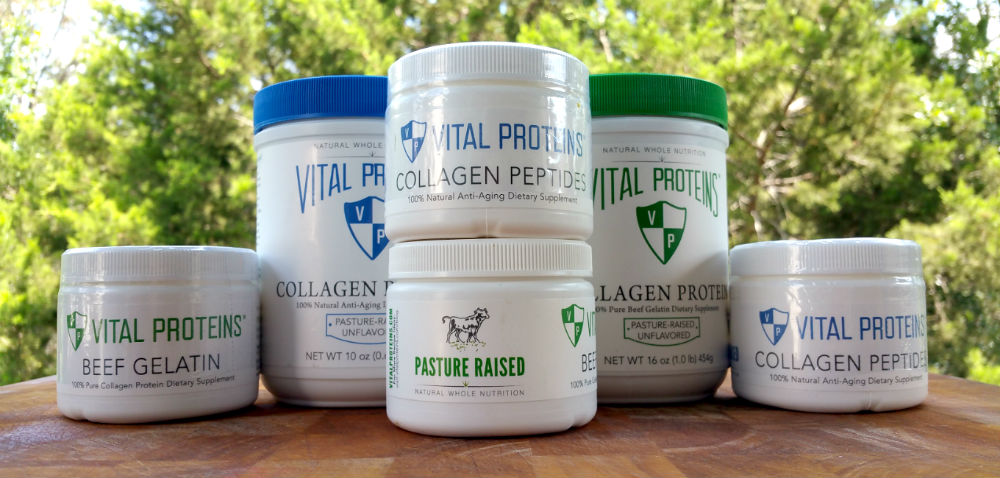
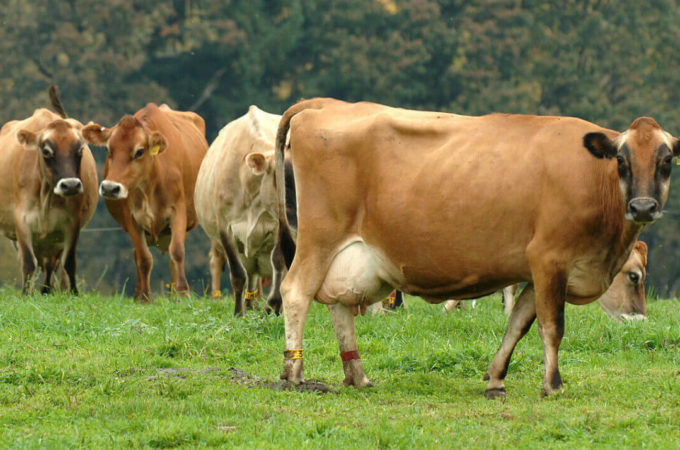
I recommend Vital Proteins Gelatin. It’s minimally-processed, made from truly pasture-raised (grass-fed) cows, and works perfectly in recipes. It contains no added sugars, either.
When the gelatin protein is broken down one step further into its constituent peptides, it’s also flavorless, so you can stir it into hot drinks like coffee or tea without adversely affecting the flavor. It also blends well into smoothies and shakes. For blending into beverages, I recommend Vital Proteins Collagen Peptides over their gelatin because it dissolves better into liquids. (Warning: Collagen Peptides can not be used in recipes that call for gelatin since, unlike gelatin, collagen peptides won’t gel up when cooled.)
Both the grass-fed collagen petpides and grass-fed gelatin make an excellent, healthier protein powder!
EDITED 12/8/2015: This post used to recommend Bernard Jensen and Great Lakes brands gelatin because both used to be entirely from grass-fed cows. Unfortunately, that is no longer the case, so I updated the post to reflect my current recommendations.
 |






How do you use it? Do you add it to soups only or can you just toss it in a smoothie? I use protein shakes for breakfast at least half the time. I use Dr. Mercola’s when my mom gets it for me. 🙂 But most of the time we buy Muscle Milk which has a ton of artificial stuff in it. I’ve also tried hemp protein but it really tastes strongly of grass, that’s ok but not something I’m always up for in the early morning and especially not good with pregnant nausea!
I stir it into hot drinks like coffee or tea or broth, and I add it to smoothies. You could also use it for a ton of homemade desserts like jello. It’s flavorless, so it really doesn’t affect the flavor of your drink.
So you can use the gelatin just like a protein powder is smoothies….I had no idea. I am purchasing them now!
Yes! It even helps thicken up the smoothies a little bit.
Hello Kristen – I thought it would clump up. I’ve tried using gelatin in baking and other dishes when I need thickening and I am having a rough time with finding little icky clumps of it throughout. ~Thanks!
You have to “bloom” the gelatin… put a bit of cold water or liquid into it first – then add it to your hot liquid. I have heard hydrolyzed gelatin works a bit differently but has higher levels of glutamic acid, so I go with the non-hydrolyzed and make sure to bloom it. You only need enough water to cover the gelatin powder.
I put it in my coffee, meatloaf, tacos, pancakes, tea, everything! 🙂
Earth Fare and ProGrade offer some of the most purest forms of whey protein available.
Great Lakes brand is the best! I make marshmallows and gummy squares with it! Amazing!
Would you share the marshmallow recipe with the rest of us???? TY!!!
looks like your site is down…
oh yaah it’s back, thanks! great article!!
love gelatin – Great Lakes is grass fed – Bernard Jensen is not (called Bernard Jensen)
what if you are allergic to beef? Up til now I’ve just made broths from chicken, is there another options (needs also to be corn, soy free as well)
Great Lakes regular gelatin is porcine — made from pigs. You have to buy the kosher gelatin to get the stuff from grass-fed cows. I’m not sure how the pigs are raised. Their advertised diet looks normal enough for pigs, and their website does guarantee that no hormones or antibiotics are present (even in trace quantities) in the final product. But they don’t come right out and say that the pigs were raised without the use of antibiotics.
Interesting–thank you for sharing that!
Thankyou so much! My son has a genetic metabolic disorder and the doctor wants him drinking carnation breakfast shakes for extra protien at bedtime. I have done everything I can think of to increase his protien intake at bedtime in a healthier way (free range eggs, raw milk, coconut oil, etc in his shakes) and I would feel much better doing the natural protien powder than those awful shakes.
If you have to go w/ shakes you could make your own with “less problematic” protein powder. I am pretty sure Nutribiotic’s brown rice is made at low temps and they have little to no additives.
@Candice — No way! I called two months ago and they said they WERE. Plus, they’re still on the WAPF shopping guide. Maybe they recently changed, or perhaps you spoke with someone who wasn’t very knowledgable.
I just checked the product details on amazon.com and the “regular” is indeed porcine–bummer, because since that’s the only one with the free shipping option, I canceled my order till I figure this out…
Why did you cancel your order, may I ask? I bought Great Lakes direct from them on the phone.
ugh, peas are a great source of protien. Gelatin is super nasty.
@Nooria — Pea protein powder has a low BV (65). So, you have to consume nearly twice as much of its protein in order to have the same effect. Also, why do you think gelatin is nasty? It’s totally flavorless.
Gelatin is tasteless. I couldn’t imagine adding peas to fresh squeezed oj, bone broths, desserts, shakes etc. 🙂
ooooh!
Tardy, gummy squares? Recipe please? I make marshmallows too!
I spoke to several people at Bernard Jensen specifically the person who sources the cattle.. He said it was from a conglomerate of ranchers – some could be grass fed but couldn’t guarantee it.. Was not very reassuring. During Cheeseslave’s bone broth challenge I had told Ann Marie about it as well and she said she was going to talk to WPF but I see it is still up there. Great Lakes on the other hand specializes in gelatin and tell me there cows are all grass fed from Argentina. I am a holistic/organic hairdresser and sell nutrients for beauty – Green Pasture, Great Lakes, Dr. Rons…
I sell this stuff in my store and can hardly keep it in stock. I use it and love it myself.
Great Lakes has recipes on web site
Deidre, inbox me your email and I’ll be happy to send it to you!
I would love you marshmallow recipe please. Thanks
when ordering great lakes, be sure to get the beef and not the pork. the beef is grassfed.. the pork .. not so .. i talked to the actual company
I want the marshmallow recipes!
Where you found the best place to buy them online?
I buy the Great Lakes Kosher Gelatin online at Amazon. Free shipping!
Could I find/use some fish gelatin with the same effect health wise?
I just got my first can this weekend. I got it because my daughter was begging for jello. I didn’t realize that I could use it as protein addition to smoothies – awesome!
I am so excited to learn about this! I regularly buy protein powder (Raw Protein by Garden of Life–good brand, but a little pricey) for smoothies that my husband and kids like to make. When I did the math, for the amount of protein per serving, Great Lakes gelatin is a much better deal. And since my daughter is on the GAPS diet, she can use it as well and it will even benefit her gut (Raw Protein isn’t GAPS legal). I just placed an order on amazon.com! Yay! Can’t wait for everyone to try it!
I think I will stick with nice dark leafy greens for more protein. 🙂
Uh…you are kidding, right? A cup of spinach has less than 1 gram of protein, and a cup of kale only has 2g of protein.
Thank you. I have no idea where the popular vegetarian notion that vegetables are a great source of protein came from, but it’s sheerest bunk. Don’t these people know how to look stuff up on a nutrition reference chart?
I started taking gelatin as a supplement a year ago — wrote about it several times at my blog — and I immediately felt noticeably better. Very good stuff.
Thx for sharing this! I have been going back and forth on whether or not to take a protein powder supplement. =) Gonna buy some now.
Good info. Didn’t know you could buy gelatin!
Gelatin makes hair incredible.. Because hair is made of protein we see huge differences in hair quality, growth and texture.. New hair growth, hair that grows long and doesn’t break off, smoother, shinier, easy hair. I sell lots of Great Lakes gelatin to my clients and results are very noticeable almost right away….
Hi. I have a question. I’ve heard that gelatin can raise testosterone levels. Wouldn’t that work against hair growth? I’m concerned because my hair has thinned since menapause.
I agree gelatin is a great food..however Most gelatin products like the ones you list are made from cows in Brazil. The entire livestock industry their is easier on slashed and burned Amazon rainforest and native people are regularly killed for trying to protect the rainforest. I’m not willing to contribute to that for some extra protein that can gotten elsewhere.
Thank you, thank you, thank you! I’m pregnant, and this baby does. not. like. a lot of meats, so I’ve been really struggling with getting enough protein in my diet. I haven’t wanted to buy protein powders, so I’ll have to give this a try!
Thank you very much! I use this for my boys in their formula!! Great stuff!!
We always add the Great Lakes beef gelatin to thicken our homemade yogurt. Works well! How do you all use it otherwise? Would also like the marshmallow recipe. 🙂
How much do you consume in one day? How much do you add to common foods daily? Thanks!
I have a Tbs of Great Lakes in a cup of herbal tea every night and I don’t notice it at all in there, (unless the tea cools!). They have other suggestions that don’t work at all, like in juice (big textural problem for me) or in cereal (OMG that was bad), but in tea (or I imagine soup or other hot liquids it just about disappears.
I have joint problems and it does seem like it helps me have less pain.
Looks good! I like a whey powder made by Progressive Organics.
It’s made from the organic, non-GMO milk of hormone free, grass fed cows, and processed at low temperatures. No added ingredients in the plain flavour. Chocolate flavour has only cacao and stevia added.
It’s expensive but I’m worth it. lol
http://www.befit.ca/products/Progressive-Organic-Whey-Protein-(680g),-Unflavoured.html
Say a serving is 1 tbsp right? I was wondering how many “servings” is in a canister of Great Lakes. I couldn’t seem to find the info online anywhere. Just trying to do a cost per serving analysis.
A serving is 1 tbsp, and there are 64 servings per container. It’s really affordable!
Wow! That’s fantastic!
Thanks so much for posting this! Been researching good protein powders, and have not found anything I love.
As far as protein goes, from my digging it looked like great lakes had half the grams of protein that bernard jensen did, per 1 tbsp (6g vs 12g). Is that accurate?
I’ve only been able to find the nutrition label for the Great Lakes brand:
http://www.greatlakesgelatin.com/consumer/supFacts.php
I can’t find the label for the Bernard Jensen anywhere, including their own website. Can someone who has some Bernard Jensen gelatin confirm the statement on the label? Specifically serving size and protein amount?
http://www.amazon.com/Bernard-Jensen-Products-Gelatin-powder/dp/B00014EO2A/ref=sr_1_1?s=hpc&ie=UTF8&qid=1317330878&sr=1-1
Click on this link. It will take you to amazon’s page. Under product features, it says 1 serving is 1 tbsp. A little further down, there’s another heading that says “important information.” The nutrition info is listed there (12 gm protein).
Thanks, I saw that, but I don’t trust Amazon’s info. It’s not always correct. In this case, the difference between the two brands seems tp be too great for it to be correct. I shop A LOT at Amazon and I see mistakes all the time. That’s why I want to see what the actual nutrition label says.
Oh I didn’t know that. Thanks for the heads up!
I just got some Bernard Jensen’s gelatin. (Next time I’ll definitely go for Great Lakes if it’s grassfed and BJ’s isn’t.) But for the record, serving size is 1 Tbsp and Protein is 12g.
Thanks for a great post!
Nutrition info for Bernard Jensen brand:
http://www.swansonvitamins.com/bernard-jensen-bovine-gelatin-14-oz-pwdr
How timely! I’m following the Brewer Diet to prevent pre-eclampsia, and a host of other problems this pregnance. The diet calls for 80-100 g protein daily. Some days I’m just so stuffed! I’m going to check this out right now!
Thank you, thank you, thank you! I have been searching for an alternative, natural and safe protein source for myself and my son. I ordered it online today!
Thanks again!
i only eat meat and meat byproducts from animals that were slaughtered following islamic dietary law. so i have 2 questions.
is there a good brand of fish gelatin?
is fish gelatin as beneficial?
thank you
There is fish gelatin, though I believe it’s more expensive than bovine or porcine.
I buy 5 pound boxes of gelatin — NOW brand — that I special order through my health food store. Cheapest I’ve found.
thanks dana. i’ll check that out.
Now brand beef gelatin is available through subscribe & save from Amazon now. You might want to check it out and price compare. Azure Standard also sells beef gelatin in bulk, which is what I use. Knox brand is pork and more expensive, but the serving size envelopes are handy for traveling. My personal opinion, the benefits of gelatin out weigh the possible negatives in source and processing for most people.
http://raypeat.com/articles/articl/gelatin.shtml
What a timely post…I just started using Great Lakes gelatin last week. I’m a protein type and have a hard time getting enough protein (even w/ my bone broths) into my diet. I also have several clients with digestive issues that can’t find good quality and won’t do bone broths themselves.
One added bonus I’ve found out is that gelatin has no tryptophan, which can be inflammatory. Here is a post from Ray Peat http://raypeat.com/articles/articles/gelatin.shtml
“Since excess tryptophan is known to produce muscle pain, myositis, even muscular dystrophy, gelatin is an appropriate food for helping to correct those problems, simply because of its lack of tryptophan.”
My daughter is having such problems with her knees, I went and got a 2 pack from amazon. Will have her add it to drinks and see if that helps. Any ideas on how often she should have it daily?
Collagen is hardly a good source of protein.
Yep. Yet another modern Health Nut “Foodie” website polluting the internet with it’s pseudo-science toxic memes.
So what is your feeling on a whey protein powder like this one? http://www.cocoonnutrition.org/catalog/oneworldwhey.php
This one seems to be very ideal. The ingredients for the vanilla are “TruCoolTM unrefined, bio-active whey protein concentrate from grass pasture cows, ProVanillaTM from all natural raw vanilla bean, stevia leaf extract.”
Seems pretty ideal to me. It’s expensive but possibly worth the cost? It even has quite a bit of calcium and potassium naturally.
When I have the money I am going to try it.
I would LOVE your opinion though!
I’m all for self-experimentation. When I was trying out protein powders 5 years ago, it was unusual to find one that used Stevia as a sweetener. Instead they used sugar, xylitol, or artificial sweeteners.
True. Some of us improve our ways. I like the fact that its flavored yet still has 3 ingredients. Amazing. It’s expensive but may be worth the buy to enjoy a couple times a week. I’ll find out when I can afford it!
Hi. Protein type here. I see someone said it was good because it lacked tryptophan. when I mentioned this article to someone else they said gelatin was bad because it lacked tryptophan and therefore was an incomplete protein. As if the body couldn’t even use it. I need lots and lots of protein. Having a hard time sorting this out – anyone? Ty.
Well, it is an incomplete protein, but that’s okay. So are legumes, grains, & dairy. The good news about gelatin is that it acts as a protein sparer. When you’re eating it, it makes the protein you *do* it much more bioavailable. Considering that Nature serves up gelatin right alongside hundreds of pounds of meat (in your typical head of cattle), this makes sense.
Thanks for this “new to me” info! Bottom line: I want to get great lakes gelatin on amazon because it’s grass fed organic beef gelatin. Am I right???
Yes, get their “kosher” gelatin. The regular gelatin is from pigs. (In my opinion, not all that bad, but still not as great as it could be.)
I saw that some people were concerned by the fact that the cows might not be grassfed. To me that is huge since mad cow disease is passed through the marrow. Also, for anyone concerned about factory farming, pigs are raised in some of the worst conditions and fed terribly.
I would love to have a source for strictly grass fed (free range) cow gelatin. Grass fed cows also benefit the environment by producing less methane, and, if they are rotated in fields and ranges, they can help the grasses grow deeper roots and grow better because of the natural plowing from their hooves. Think of the massive plains covered in bison…
Well, the Great Lakes brand Kosher gelatin is definitely from grass-fed cows. It’s the Bernard Jensen brand that is arguably up in the air.
I put gelatin in my raw milk yogurt! It’s great because it firms it up a bit and you get the added nutrition of the gelatin. I also have some of my clients on the GAPS diet add some to their broth just to up the gelatin amount they are getting, especially during the initial stages.
Last week I put a free range chicken in a large boiler pot with filtered water, a chopped carrot, an onion, a few chopped shallots and some sea salt and peppercorns. I brought it to a boil, then simmered it for about 4 hours. Then I took out the chook, took off the bones and skin and shredded the meat, and put it back in the now sieved soup along with some shredded Chinese cabbage and the shallot tops cut up, plus a few eggs fried as an omelette and rolled up then cut in ribbons to put on top. We ate that chicken soup, and the rest I put in the fridge. By the next morning, it was a large tub of aspic jelly. It had set beautifully. I ate it for lunch for the next few days. What is the benefit of gelatin over this sort of gelatinous clear soup? I could easily make this sort of thing, but not put the chicken or vegetables back in afterwards to make it lower calorie (not much lower though…chicken and vegetables are low calorie anyway). Isn’t that as good as gelatine? I couldn’t put it in my tea, but it’s a lovely satisfying snack. It isn’t stock/broth as it has no vinegar, but it tastes sweeter as a result.
Hi Mary, the gelatin you’d make at home and the gelatin you’d buy in the store is almost identical in nature. The biggest difference is the form. The stuff you buy has been cleaned and dehydrated into a powder, so it’s easy to stir into other things like tea or use to make a dessert like jello. Plus, since it’s a powder, it helps those who need more protein easily sneak it into other foods (like smoothies). The stuff you make will always be soup stock. The homemade stuff is probably richer and better for you, but it’s limiting and doesn’t answer to some people’s need/desire to supplement their protein intake with a powder.
Heather, whoever told you gelatin is not a complete protein is correct. It’s not. But, that does not mean the body doesn’t use it. Think of how vegetarians combine proteins to make complete proteins (nuts & legumes). As a protein type you can supplement with gelatin to increase your daily protein intake (6 gms per Tbs) without eating so much meat(I’m a protein type as well and have a hard time getting enough). Take it with your animal protein and it helps with the breakdown of the animal protein.
I hope that helped a bit?
Thanks it did!
My 3 year old is a hugely picky eater and definitely doesn’t get enough protein (his only source is dairy)–never thought of gelatin…great idea!!! Will also help me get more protein.
On Amazon, am I buying the kosher gelatin? That’s the beef not the porcine, correct? (It’s out of stock now).
Amazon carries both the beef and the porcine. The “kosher” gelatin is made from grass-fed beef.
Hello! I just received my first bottle of the Bernand Jensen Gelatin yesterday (ordered online from Vitamin Shoppe on Tuesday). Added it last night to a Mexican soup that we love and it was great to thicken with no taste – I’m in love!!!! My question is, does it work just as well on cold items? Thanks!
>does it work just as well on cold items?
I would have to say no. I just got my order of Great Lakes yesterday and I added some to a 11oz coconut water. When it started to gel, it pretty much ruined the coconut water IMO. YMMV.
hi Colleen! can you answer the question as to how many grams of protein are in a serving of the BJ gelatin? there was some discussion that it was 12g/tbsp vs. 6g/tbsp with great lakes. thanks!
I just received my my first bottle of Bernand Jensen Gelatin and put a teaspoon in my morning coffee. How much should I take daily? There is no taste and it did not make my coffee thick. I have used protein powders for years but was never really sure if they did anything but make great shakes. Any feedback would be appreciated. Thank you
I spent some time on the company websites of both Bernard Jensen and Great Lakes, and could not find on either site any affirmation that the gelatin is either from grass-fed cows or is organic. Nor did they say anything about antibiotic free, etc. If it were my company, I’d be loudly promoting this aspect of my product!! The fact that someone talked to someone on the phone and got reassurances, doesn’t convince me.
I use Jay Robb Whey protein powder. It’s sweetened with stevia, tastes GREAT, says the whey is “cold-processed criss-flow microfiltered”, and loudly proclaims that their cows are grass-fed and rBGH-free. It’s a bit pricey, but I shop around for the best price.
Maryjane — The Great Lakes brand advertises the fact that their cattle are grass-fed from Argentina on their FAQ page under “How are the cattle raised?”. It may not be as prominent as one would hope, but it’s at least on their website.
Oh, and Jay Robb is one of the protein powders I used when I was experimenting with them a few years back. I was avoiding whey protein because of the idea that the powdering process created excess oxidized cholesterol and denatured the proteins too much. So, I took his Egg White protein powder thinking it might be the lesser of two evils. The chocolate flavor is sweetened with xylitol, not stevia, and it made me moody. Now that I’m not *as* afraid of the oxidized cholesterol angle (especially since finding out how little is actually there compared to a serving of scrambled eggs), I would think the Whey protein may be better than the Egg White since at least that uses stevia.
Update on the gelatin – I have been using about 2 tblsp daily and drink it in my coffee. It has taken the edge of the hunger which was what I was aiming for but additionally I feel more energized. Thank you for such a great website with good solid advice.
Hi Patty, good to know! The amount I take daily varies based on how many cups of tea or coffee I drink, since I pretty much always stir at least a teaspoon into each cup. I figure I probably end up having a tbsp or 2 per day.
I gotta say, I have noticed the same effect on hunger. I never expected it, but it does seem to tamp down hunger. Again, YMMV.
I’m not surprised. Gelatin acts as a “protein sparer,” which is why many traditional people groups can eat less meat yet still get enough protein in their diets. They got tons of gelatin from consuming homemade bone broth with every meal.
Still taking my gelatin and now recommending this to my friends – it is working beautifully for me still in the regards of hunger and energy. The next time I have to buy some more I will try the Great Lakes one.
I am now on the Great Lakes brand of gelatin and I have to say hands down I prefer the Great Lakes to the Bernard Jensen brand. The Great Lakes seems to dissolve much better and a little less taste compared to the Bernard Jensen.. I am still taking it everyday and love it. Thanks again for all you are doing with this website and the excellent information you provide on our health..
As a vegan it’s hard to stomach the idea of eating ground up cow hooves and skin no matter what the protein content! Bummer! Guess I’ll just have to get my protein from veggies and non- soy beans! At least more of the
Dead animal is used and not wasted…. Do the eyeballs have protein?
Technically speaking, no hooves! The gelatin is derived from the inside of the skin and from the bones. I think the hooves are used in making glue.
hi great info.
would it hurt if i used the whole sachet in one day ? how much is enough daily ? and would it make me fat ? and if i wasn’t vegetarian, can i have any brand of flavorless gelatin as the kosher gelatin is not available here ??
a reply would be appreciated………………thanks
My standard pregnancy smoothie is:
2-3 frozen peach halves (from a friend’s tree)
12 oz raw milk kefir
1 Tbsp coconut oil
1/2 Tbsp flax oil
1-3 tsp gelatin
I set the peaches out to drfeost about an hour before making the smoothie. I put the coconut oil and gelatin in a small cup and pour some warm water over to melt/dissolve, then everything in the blender. Depending if the peaches are still frozen and how much gelatin I use, sometimes the smoothie “sets” and I eat it like a custard, otherwise it is drinkable. I drink this between meals throughout pregnancy. Has worked great!
Thanks for sharing HOW to use it in smoothies!
This is extremely poor advice because collagen/gelatin is a poor quality protein source, missing some essential amino acids.
Gelatin?
It is in so many bought food items. Always has been.
I’ve been ‘food aware’ since my thirties and never heard of this.
Always ready to learn, however.
Thanks.
My research doesn’t support your contention that gelatin is a good source of protein, since it has several amino acids missing, and several others in very low percentages. But beyond that, why would you have one article on gelatin suggesting it should be a good regular addition to our diets, when in another article concerning MSG, you list gelatin as a label ingredient that ALWAYS contains MSG, and thus should be avoided?
Hi Cathy,
Your question was addressed in the comments on the post you’re referring to, here.
The short answer is that the Gelatin I recommend is actually processed at low-temperatures to prevent free glutamic acids from forming during its creation.
You have no idea how happy I am to have found this
article!!! I am 8 months pregnant and desperately need to find a good source of protein to get my intake up
where it needs to be! I happened to have the Bernard Jensen gelatin on hand so I stirred some into my morning hot drink…perfect!!!! Thank you so much for such timely, useful information!
So long story short, I’ve been using the Great Lakes gelatin for the last few months and I LOVED it. I primarily used it in the NT homemade baby formula, but also in smoothies and desserts. But we keep a very strict level of kosher – my husband is a Rabbi. And though the Great Lakes gelatin is NOT made from pigs, it is not made from kosher slaughtered cows unfortunately. So no more Great Lakes gelatin for us…
My question is: I found a source of fish gelatin that is kosher, but it is manufactured in China. I have confirmed that there is no added sugar of MSG in it, but do I need to be worried that it is processed too much, and therefore too much free glutamic acids? If so, is it better to not use gelatin at all? Thank you so much in advance!
can you give me some examples of how you used this gelatin.
thanks,
renee
I have been making a jello jiggler sort of concoction in order to eat more gelatin. It’s supposed to be good for your joints and I need that. I take 1 qt of grape juice and 1/2 heaping cup of Bernard Jensen’s gelatin and heat them up together whisking until the gelatin is dissolved. Pour into 9×9 pan and chill. It sets up very firm. I try to eat 1/5th of the recipe every day.
I noticed that the Great Lakes gelatin does not dissolve as easily, but I also need less for the above recipe. If using Great Lakes then use a little less than 1/2 cup.
Apologies if someone already mentioned/asked this, but I didn’t have time to go through all the posts. Was wondering if anyone here has tried Great Lakes Gelatin Collagen Hydrolysate (green can)? I want more protein in my diet for sure, but I’m intrigued by the word ‘collagen’ on the label…anything specifically geared to help skin elasticity (I’m a sucker for marketing, lol but this company seem legit) always piques my interests.
Also, I just ordered a tub of Well Wisdom Vital Whey protein powder 20g (grass fed, grass finished, low heat/minimally processed, etc), so I’m wondering if the red can beef gelatin would be too much protein?
I just ordered some of the hydrolysate (green can). When I spoke to Great Lakes on the phone, they told me they use the enzyme bromelain (found in pineapple) to hydrolyze the gelatin. It loses the capability to gel, and the proteins are very easily assimilated. I use the orange can every day, but wanted to try the green can for situations where I didn’t want the gel-ing action.
How does Gelatin compare to Xanthan Gum?
Wow, this is great. Can you use it to make jello? Woot!
After reading this page and many others touting how amazing gelatin is for healing a leaky gut, I went ahead and ordered the Great Lakes Kosher gelatin. My entire family has Celiac and subsequent leaky gut, so I was really excited to have found a ‘natural’ way to supplement protein and heal leaky gut at the same time. Well–to make a long story short—ALL of us reacted very negatively to this product. The bad reaction was more subtle when we just ate the apple gelatin I made. The reaction was unmistakeable and unpleasant when I made us each a cup of gelatin lemonade each day with 1 tsp of the Great Lakes gelatin. We all tried it twice over a 4 week period with the same reaction each time within 2 days. SOMETHING unhealthy is contained in this highly processed product—whether it is trace gluten and natural msg or other chemical residues from beef hides shipped from Argentina. I will NOT be trying this or any other dried gelatin product again. And the one time I actually tasted a bit of the gelatin I thought was dissolved in my lemonade hot water—it tasted like eating a boiled shoe sole—-disgusting!!!
KTB–Lacto-fermented foods are supposed to be great in helping gut disorders. Especially milk kefir. There are lots of websites with good information. Sandor Katz and Weston Price Foundation are the gurus. I use plain Mason jars. Very easy to do. Also, hyperbaric chamber sessions work very well, however some states don’t have a law to make insurance pay for those treatments–Missouri being one, the state where I live.
Did anyone figure out why the discrepancy in protein content between the Great Lakes brand of gelatin and the Bernard Jensen brand of gelatin?
Both are gelatin, both serving sizes are 1 tbsp, but one has 6 grams of protein and one has 12 grams of protein per tablespoon? Pretty big difference….
Any clarity would be appreciated.
I just received a 6-pack of the Great Lakes Gelatin Collagen Hydrolysate, directly from Great Lakes, since the price was right and it seemed to be a good investment in my health. However, something I didn’t notice when I visited their website is that it contains .005 (don’t remember if its grams or mg) of heavy metals. I left the product at my office because I thought that with time the amount of heavy metals will build up in my body and I am planning to return it, unless someone can put my mind at ease with more information on the potential risks. I would really appreciate it!
Are you telling me this could possibly reduce cellulite!!!!!! I am literally going to buy some right after I comment. This is amazing. PLus I am planning on having a baby soon (and your new book is currently sitting right here open to the chapter 1). I heard you speak at a conference, but I had already preordered your book.. Great info!!
Great Lakes Gelatin is made from cowhide not bones. Does this still give the same benefits as a bone broth?
This article made me take a second look at trying beef gelatin (which I would love for skin elasticity). NO THANKS. Though I’m a fan of the Weston A. Price Foundation, I don’t know where they’re getting their info. I looked at both websites: Great Lakes and Bernard Jensen. NEITHER make ANY claims about grass fed cows. This gelatin is not coming from bone marrow. It’s pretty gross once you read the process. Another commenter mentioned the package stating it contained heavy metals. I knew it sounded too good to be true. Not to mention that any site that is advertising their gelatin for horses alongside their gelatin for humans makes me a little nervous… who knows what kind of controls are enforced down in Argentina… I hope all the pregnant women ready to jump on this bandwagon read all the comments first!
Mary Ellen — The Great Lakes brand advertises the fact that their cattle are grass-fed from Argentina on their FAQ page under “How are the cattle raised?”. It may not be as prominent as one would hope, but it’s at least on their website.
The Bernard Jensen brand used to make this claim, but does not any longer. As such, I no longer refer to them as grass-fed. To my knowledge, Great Lakes is the only brand making this claim.
I don’t see any problem with the gelatin coming from hides instead of (or in addition to) hooves. It’s still gelatin, and it’s still from the animal, and it’s still good for you.
As for Argentinian beef, they have some of the BEST cattle raising standards in the world! (Certainly far, far better than American standards.) So, in my book, that’s a definitely plus and adds credibility.
I just started making my own marshmallows from scratch, and this article on gelatin just made me even more excited to continue!
1/2 cup water mixed with 1/4 cup gelatin – set aside
1/2 cup water mixed with 3/4 to 1 cup honey – bring to rolling simmer and let simmer for 8-10 minutes.
Slowly add while mixer is on low to gelatin/water mixture. Once it’s all added, add 1 tsp vanilla and turn mixer on high and mix for 10-15 minutes.
Allow to sit for at least 4 hours before using. Don’t store in fridge. My kids prefer these to store bought!!
Is there a generally recommended daily dose for gelatin? Adults and kids? I keep on hearing about the benefits and started consuming it last week, but none of the articles I have read comment on how much of it to eat. I’m been adding it to my coffee in the morning, but I’m not sure how much to be putting in there.
I’d rather go with something that is regulated a bit closer to home and certified organic, so I choose
http://www.gobiofood.com/organic-gelatin-c-336.html
instead.
I can’t see where the ones you suggested were organic; grass-fed and organic are two different very different things. Very little of the omegas are stored in collagen, more in the fat and flesh of the animal, and organic animals are generally more grass-fed than those that aren’t marked as organic. My hunch is, if they don’t put organic on the label, then it isn’t organic.
I also don’t think Americans in general have a problem getting enough protein. Sources vary, but it looks like we only need 2-4 ounces per day (4 ounces is about the size of a deck of cards) and we consume far more than that on average. (Think of the last steak you had. Bet it was bigger than 4 ounces.) I do agree that gelatin is a great source for protein and if you want to drink your protein, it’s a valuable resource.
Sorry to be a nay-sayer, I love your site and read it all the time. Keep doing what you do, it’s helping lots of people!
You say that Bernard Jensen gelatin powder comes from grass fed cows… how do you know this? I have been to their website and can find no mention of the source of the gelatin except that it comes from cows. The label itself doesn’t indicate grass fed either. I’d like to be sure the gelatin I’m getting is truly from grass fed as opposed to “conventionally fed” cows. Thanks!
Is it necessary to mix the gelatin powder in warm water before adding to a cold mixture like a smoothie? Does this change the availability of the nutritional benefits? Thanks.
This is such an interesting post to me as I am a teacher at home for the summer and working on a high protein muffin for the school year and crazy mornings – learning about healthy eating is a bit overwhelming – does anyone know if this product would work for baked goods? Thanks in advance.
There are other considerations for poly-electrolytes like gelatin and pectin. When added to bulk water they form lattices causing the water to become more structured and more fit for living systems. Study the work on water by the scientists Gilbert Ling, Gerald Pollack, and Mae-Wan Ho.
Hi I was wondering if you could post some recipes for the use of gelatin or maybe some links to good sites.
THANKS
Gelatin is not a source of complete protein. I wouldn’t recommend that any use it as the main source of their protein intake. I am getting a degree in human nutrition and what I found online matched what we are being taught in school.
(Source: Wikipedia)
Although gelatin is 98-99% protein by dry weight, it has less nutritional value than many other complete protein sources. Gelatin is unusually high in the non-essential amino acids glycine and proline (i.e., those produced by the human body), while lacking certain essential amino acids (i.e., those not produced by the human body). It contains no tryptophan and is deficient in isoleucine, threonine, and methionine. The approximate amino acid composition of gelatin is: glycine 21%, proline 12%, hydroxyproline 12%, glutamic acid 10%, alanine 9%, arginine 8%, aspartic acid 6%, lysine 4%, serine 4%, leucine 3%, valine 2%, phenylalanine 2%, threonine 2%, isoleucine 1%, hydroxylysine 1%, methionine and histidine <1% and tyrosine <0.5%. These values vary, especially the minor constituents, depending on the source of the raw material and processing technique.[12]
seems like lots of people disagree with this post and the recommendation to supplement with gelatin? and i also wonder why no one recommends the green bottle collagen?
My mind is blown lol. I can’t keep down enough food to get protein. I’ve been so nauseous this pregnancy. I was losing weight and my blood pressure was going up. I’ve been taking a quality 100% pure whey protein in the mornings which I can’t always get down. I’m allergic to dairy too. I’m also allergic to beef, but I think taking gelatin from beef may do better than whey. We’ll see. Both are pretty strong allergies for me, but I just can’t keep enough food down.
Nausea in pregnancy is caused by lack of Vitmin B6.
Pregnancy needs LOTS of it.
B6 is also depleted by coffee, so add more B6 if yuou drink coffee.
I want to try some gelatin as I’ve been reading about the health benefits, and I want to try to make gummy treats. I found the Great Lakes brand locally, but I noticed it was the porcine gelatin version, not the beef gelatin that ‘everyone’ seems to recommend. So I went to the Great Lakes site to find out if there is any difference between the cow and pig gelatin. Well, I have some concerns now.
This is what they state about the porcine gelatin:
…”What are the hogs fed?
Those hogs raised in farm areas get their daily normal feed (raw corn, pellets, selected waste foods from restaurants, and grocery stores). Cloistered hogs are fed raw corn, selected grain pellets, and a variety of natural foods from various food markets when available.”
Not sounding like those pigs are pasture raised or naturally fed. Sounds more like conventional or even factory farmed (“cloistered”). Certainly the corn is most likely GMO, and who knows what is in “pellets”. Restaurant and grocery waste foods could be okay, but who knows. Reading this now concerns me about the quality of the beef gelatin. Though it’s (apparently) from grass-fed cows which are from South America, I have concerns.
I see Great Lakes gelatin promoted quite a lot, and I’d like to try it. But after reading about the porcine gelatin, I’m hesitant.
Btw, here’s what they say about the cows used in the beef gelatin:
…”How are the cattle raised?
Our cattle are grass fed and slaughtered in Argentina and Brazil which is controlled by their respective Department of Agriculture. These countries have the same type of rigourous tests and inspections as the United States. Beef hides are the only product used to manufacture gelatin in these countries”
I also wonder why they use South American cattle.
Does anyone have any thoughts or info about this. I would like to try some gelatin. Maybe Bernard Jensen would another option, but I’m often seeing Great Lakes gelatin used.
My apologies if the question has already been answered. Is there a recommended dose or max daily dose? I do Crossfit and my knees and wrist are really starting to hurt. I’m hoping gelatin will be my savior! (I do take whole food supplements – cod liver oil and a ligament blend) Thank you!
Not in Canada! And yes you can order from the US but at a very high cost!!! Do you know anything about the Now brand gelatin? Seems to be the only one out worth looking at! Thanks
I am in the gym 4 – 5 days per week trying to put on some muscle. There are many body builder type proteins powders out there. My requirement is an additional 50 gram per day of protein. Has anyone used this product on that scale? If so, any side effects from taking that much gelatin protein? Any feedback is greatly welcome.
Thanks….
Everywhere I read, I keep seeing people stating the Bernard Jensen brand gelatin comes from grass-fed beef. However, this information is nowhere to be found on their official website and the only palce where I *did* find a statement, it clearly says it comes from grass AND grain fed cows. In the FAQ here: http://www.radiantlifecatalog.com/product/bernard-jensen-gelatin/superfoods-supplements
Has anyone bothered to actually fact-check the grass-fed claim before it got parroted and plagiarized across the Internet?
Some of the posters seem to talk about grass fed as though some kind of organic mantra. Grass fed is far from organic. In fact many of the pastures are sprayed with insecticides and pesticides and then igested by hungry cows. Ddt’s are still used in some south american countries to make matters worse.
Cows could be given anti biotics and growth hormones and not found in tests given only a few months later. I only buy meat certified anti biotic and hormones Never.
I am very interested in gelatin especially for collogen help but remain a fence sitter for now.
So for smoothies do you use the regular gelling kind? How do you put it in? Just throw it in like a regular protein powder? Or do you have to prepare it a certain way? Thanks
I just pour it directly into the vortex while the smoothie’s blending. That said, after I wrote this post I learned about their grass-fed beef collagen. It dissolves in hot water. So I’ve been mixing that with hot water to get a nice liquid, then pouring the liquid into the smoothie while blending. It’s a little smoother that way.
Thanks, Kristen!!!
Gelatin/collagen is definitely lacking in the diets for those who eat SAD (standard american diet). I personally make a lot of soup stocks/bone broths, so I don’t feel the need to supplement.
However, for those that see consuming gelatin as way to increase their daily protein intake: Do Not Do This! Gelatin doe not contain all essential amino acids and has a protein efficiency ratio of 0. This means that while it is good for our hair, skin,nails and gut health (which are great things!) It will not support muscle health or muscle building. Just FYI
http://www.npr.org/blogs/thesalt/2011/12/08/143362233/farewell-to-argentinas-famed-beef
fyi. beef from argentina can no longer considered as grass fed.
We live off the stuff, love it!
Recipes you use? I have made gummies-which are a hit, but I’m looking for more kid- friendly recipes.
Marci, I put some in my coffee but you can also check out these recipes: https://www.foodrenegade.com/paleo-vanilla-chai-latte-panna-cotta/, https://www.foodrenegade.com/peach-blackberry-ice-cream-dairyfree/, and https://www.foodrenegade.com/chocolate-caramel-marshmallow-bars-grainfree-nutfree-dairyfree/.
Someone tried to tell me the other day that Great Lakes in the red can does not need to be mixed hot before consuming. True or false Kristin?
Reviews on the amazon site say it does, even though it claims you don’t need hot water
Jane Johnson — I think you mean the green can. The collagen hydrosalate (green can) is a more broken down form of gelatin, so it doesn’t need to be blended in cool water before being stirred into hot drinks. Instead, you can just pour it into your coffee, tea, broth, etc. and stir.
And at .33 cents per serving!
Supposedly one of them doesn’t need to be put in hot water to dissolve, but reviewers say otherwise
Am I wrong? Is gelatin made from horse hooves?
gelatin is not the same as protein powder… http://stupideasypaleo.com/2014/03/15/gelatin-post-workout-recovery/
Can it be added to baked granola bars or raw Larabar type treats?
Lori Bigboy
My daughter and myself love this product. Use it everyday and night.
Or, if you want a protein powder made with grass-fed gelatin, try this! https://m.facebook.com/trulyhealthypowder
Carol this gelatin is made from grass fed cows
I want!!
I mix 1Tbs into a glass of hot water with the juice of an organic lemon and some raw honey. First thing in the morning on an empty stomach, and again, right before bed. (Add gelatin to a 1/4 cup of cold water first, then add to hot lemon/honey water – stir briskly, no lumps 🙂 )
I have found gelatin to be significantly helpful in healing musculoskeletal issues.
animal bones… no thanx.
Perfect timing! I was wondering about these. Is one of them an option to bake with? AIP no eggs.
Scared to try it, it smells like cat butt 🙁
Robert Dorman
I mix it in cold water and then put it in my coffee every morning. There is no taste or smell. The trick to get it to dissolve is to mix it in cold water first. It won’t dissolve in hot liquids. Just like Jello, you mix it in cold then hot.
My can stated nothing about grass fed cows? Has it been changed? It only states ‘kosher’.
I have the red can.
I was confused about that too. I think Kosher is grass fed…?
I put a tablespoon of great lakes in my bulletproof coffee every morning. Works great.
I cannot find any that will ship to British Columbia, Canada…I have Arthritis and really want to give this a try…can you help me…I tried everything and none will ship…I have heard of getting a mailbox for shipment? I live near the border…any suggestions, thank you.
You mentioned that the protein powders you tried made you irritable. Do you feel the same after taking gelatin?
Neither one of the gelatins you mentioned Great Lakes or Bernard Jensen are 100% grass fed. They are both finished with grain which in not GMO free.
Diana
Are you disabled??? look up the amino acid profile of gelatin and you will see it is not even a complete source of protein. Its amino acid profile is a shambles compared to traditional incomplete protein sources making it virtually useless. Doesn’t it make sense to use an evidence based approach instead of all this pseudo religious hippie nonsense? Gelatin is also very high in arginine which will inhibit your ability to absorb lysine.
Isn’t gelatin an incomplete protein? The amino acids you get from gelatin are mostly non-essential?already produced by the body no?
There are articles citing how increased consumption of gelatin reduces the overall bio availability of protein. The study is here:
https://www.researchgate.net/publication/282487512_Hydrolyzed_collagen_gelatin_decreases_food_efficiency_and_the_bioavailability_of_high-quality_protein_in_rats
What do you make of the fact that most gelatins have MSG in them ?
Hello Kristen,
I like your blog and find it helpful and interesting. But I am very concerned about your statement on Great lakes Gelatin (Green cans and finally decided to comment. I just wanted to let you know I once again contacted Great Lakes about their gelatin. I talked to Susan G today 10/24/16. I have studied their site am an RN and VERY concerned about what we ingest specially since I have a full body CRPS. I have been on Great Lakes gelatin for over 2 years and it has made a huge difference in my life and my husband. Great Lakes IS grass fed and there are NO GMO’s!! They have since 1926 maintained the HIGHEST standards for their product. They have a close relationship with the farmers and have been there to Argentina and Brazil many times to make sure they are indeed are grassland fed only. The animals on the trip over to the US from Argentina and Brazil are fed but totally NON GMO FEED! After arriving the animals are AGAIN tested for any TRACE of GMO…the tests are posted on their site. Just like our cows from our farmer we have herd-shares with in the “dry” months they are fed what is called haylage. Bailed dry cut grass. When they state on their labels NO GMO, KOSHER and MSG free they mean it. And their company does not nor will they ever do ‘affiliate’ sponsorships. I asked.
Sincerely,
Any one who has Cancer, has had or is thought to be at risk, should avoid Gelatin as the high protein and methionine levels will encourage the growth of tumors more than just about any food there is.
great blog, helps a lot, thank you!
I wasn’t a fan of gelatin when drinking bone broth thinking it’s fat. But after experiencing the benefits of it I changed my mind. I’ve been drinking Au Bon Broth’s organic bone broth and I’ve felt so much better than before.
I had a severe allergic reaction to my insulin after I ate Chinese food, I’m allergic to all preserveitives, I can’t have store bought meat, all natural grass fed, organically but I have to read every thing, I need kosher gelatin for my candy I make , asap
Gelatin is also abundant in proline. The proline in Gelatin helps keep muscles and joints flexible. It is also used in the development and maintenance of healthy skin, muscle and connective tissues, especially at the site of traumatic tissue injury. Glycine is the simplest of the amino acids. It is a building block and precursor for several molecular pathways. Glycine also helps to repair damaged tissues; without it, our wounds would never heal.