
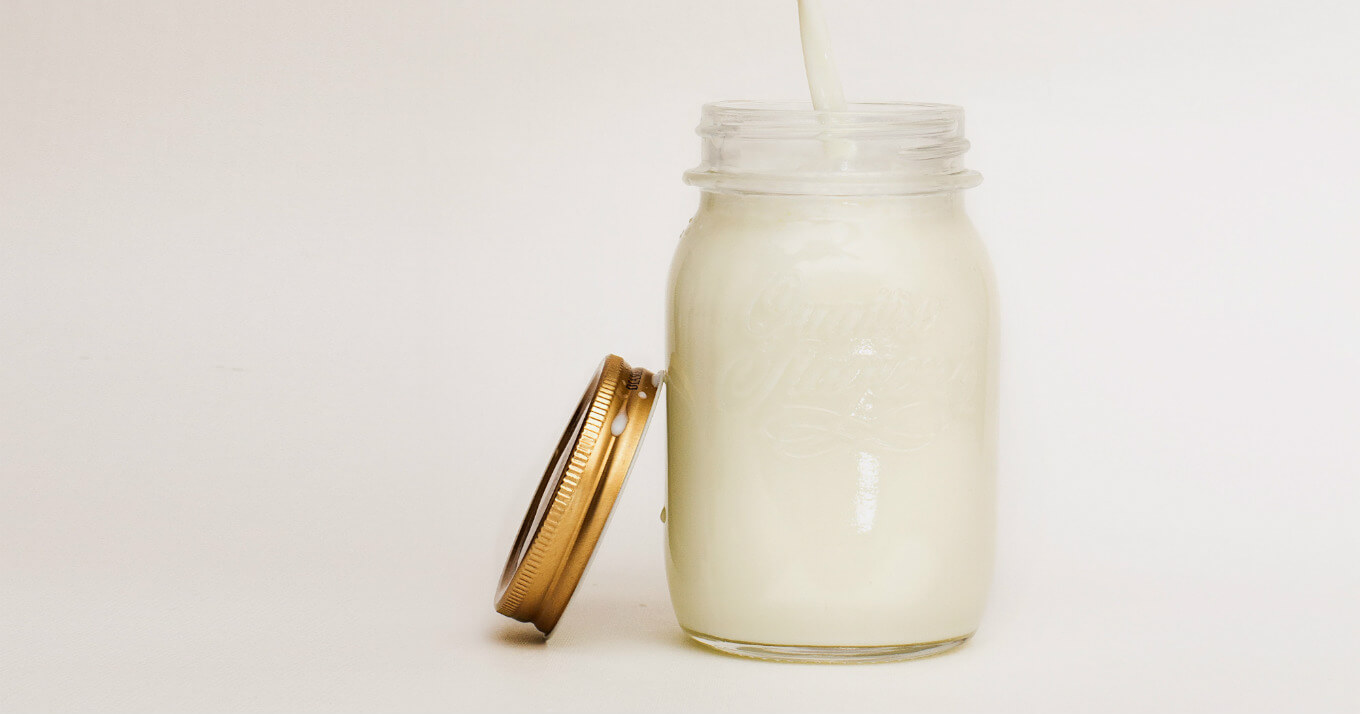
You’re going to hate me because this is so easy.
If you’re new to non-homogenized milk, you may wonder why this is even an issue. Take a close look at any gallon of fresh raw milk that’s been sitting for a few hours in the fridge undisturbed. Notice anything?
It’s a cream line, a little less than a third of the way down.
When non-homogenized milk sits for a while, the cream settles at the top.
If you’re like me, you prefer to keep that cream in your milk. You just shake it up before you pour it and enjoy that whole raw milk goodness.
But sometimes you want cream for butter, sour cream, coffee, or a delightful whipped dessert. If that’s the case, how do you get your cream off the top?
Now, you could just try to pour off the cream and hope you don’t get milk in your cream and cream in your milk. That’s how many people do it, and it works okay.
Back in 1935, Modern Mechanix magazine featured this ad:
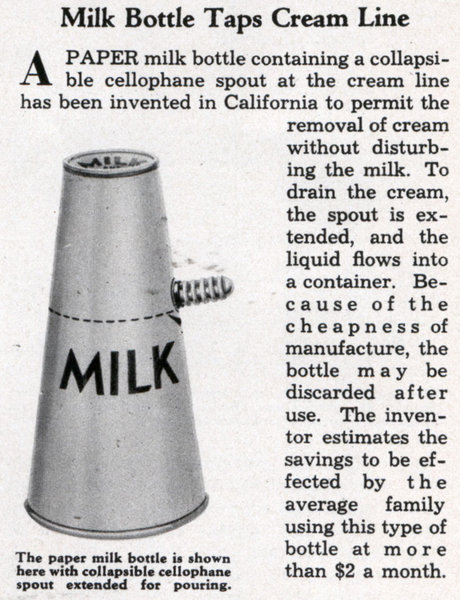
Now they were on to something.
In fact, they were on to the exact something I’m going to show you. Here’s how you can easily separate cream from milk.
Are you ready?
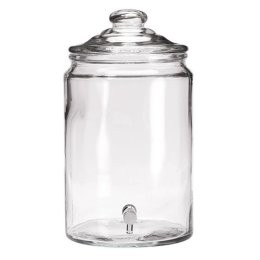
I present the spigot jar, available for anywhere from $2 (at your local resale thrift store) to $7 (at your supermarket or Amazon.com) to $20+ (if you want a higher quality jar without a leaky spigot).
Pour your non-homogenized milk into this container. Let the cream settle to the top. Pour your milk out of the spigot. Eventually, the layer of cream will be all that’s left.
This a was a question from one of you! I’m always open to answering reader questions, just click the CONTACT tab above.
I couldn’t leave those of you dying to know the answer to this question in the dark for a single moment longer. You absolutely must enjoy your homemade butter from pastured cows! You must enjoy the aromatic bliss that is coffee with real cream. And you really must not be deprived of the buttery-soft goodness that is real whipped cream.
So, now you know. Go enjoy!
Photo by Nikolai Chernichenko on Unsplash
 |





What a beautiful photo! I found your site via Blissfully Delish. I am so glad I did!
Joie at Canned Laughter
Joie — Well, I’m glad you found the site, too! Thanks for commenting.
Wow!!!! I have not heard of this easy method! I have heard of people that put their milk in a shallow pan and let it sit for many hours and then use a skimmer to skim off the cream.
My dairy, fortunately, sells us cream by the pint separately. Which is great, because I like my milk whole, too.
Shannon
Shannon — My dairy also sells cream by the quart separately, so I don’t actually do this either. I drink my milk whole and fat and buy cream on the side. There are a few months of the year when cream is not available because milk production slows WAY DOWN. That’s when I have to resort to this method if I want to use the cream separately.
Hi,
My wife and I are buying 28-acres in the country, and are looking to having chickens (for the eggs, I can’t butcher animals), maybe goats, and possibly a cow for milk. I NEED my cream for coffee, and am wondering about separating it from the milk. I see various methods/machines, but my question is: if doing by hand or with your spigot-jar method, how much do I leave in the milk, because I still want whole milk too. As much as I love whipping cream in my coffee, I need to watch the calories, and so would like to end-up with half&half and whole milk. It should be obvious, I guess, but does “half&half” literally mean half cream/half milk?
Thanks.
Huh. I buy pasteurized milk from a local dairy at the grocery store. The label doesn’t say that it’s homogenized. Do you think it will separate? I buy my cream from them too, but it’s expensive.
Amber — If it’s not homogenized, the cream line will probably be obvious just from it sitting on the refrigerator shelf at the grocery store. Cream will always want to settle on top, and will always do so within hours of being mixed in to the milk. So, if it’s been in your fridge for a few hours and there’s no visible cream line, then it means the milk IS homogenized.
Thanks so much for answering this question! I’ve been skimming the cream off the top after pouring the milk in a 5 cup measuring cup. Not the easiest method – I knew there had to be better way! Thanks again!
I’m 37 and I purchased my first bottle of raw, whole milk 2 days ago. Imagine my surprise when I opened the glass bottle and found some sort of “plug” on the top! I had a bit of an “a-ha” moment when I realized that it was cream that had risen to the top. I stuck my finger in, took a little taste…mmmmm! Heaven!
Hello, I stumbled across your website reading up on cultured dairy products. I wanted add to this with my own improvised method of separating cream from milk. I buy local non-homogenised, grass-fed whole milk and wanted to use the cream to make homemade clotted cream. I mix the cream in the milk in the bottle, then pour the whole amount (it’s a quart size bottle) into a quart-volume gravy/fat separater! The spout opens to the bottom of the container, so you can easily pour off the milk, leaving the cream behind. Here is the one I use:
http://www.amazon.com/Oxo-Good-Grips-Separator-4-Cup/dp/B0002YTGIQ
The plug for the spout is very handy, too.
Thanks for pointing this out to me (like ages ago, just found it today-sorry!). I don’t have the just you recommended (it looks very nice!) but even if I leave goat’s milk in the fridge, undisturbed for a few days in 1/2 gallon or gallon jars, only some of the cream will collect at the top, due to the natural homogenization of goat’s milk 🙁 I read at Mother Earth News that you can put your goat milk in shallow pans in the fridge, increasing the surface area where the cream gathers at the top – but I have not the fridge space for that!
Or… have you heard of this working for goat milk? Because maybe I’m wrong!
Wardeh @ GNOWFGLINS
Great website and awesome idea! I just bought a spigot jar and am looking forward to trying this out!
I had a quick question though. I am about to start purchasing raw milk (and have no previous experience with it) and was curious about how much cream I could expect to get per gallon. I know the amount probably varies, but a ballpark idea would be great.
Lara — Unfortunately the amount of cream will vary greatly depending on the breed of cattle, the season of year, and their diet. Expect it to be significantly creamier than so-called “whole milk” at the grocery store. That has had the fat removed and then added back in at a consistent 4% fat. Raw milk, straight from the cow, can have upwards of 20% fat.
Wardeh — Wish I knew more about goat’s milk. Hopefully within the year the ranchers from whom I get my eggs will be opening up a raw goats milk dairy. Then I’ll know more!
Kristen – I’ve searched and searched and can’t find a way to facilitate the cream separating from goat’s milk without shallow pans and extra fridge space – except via a cream separator. I received a large payment for craft items recently so I ordered a cream separator. They are a spendy, but I can’t find any other way to make use of the high fat content of our goat’s milk. We have Nubians and the milk is very creamy, it just doesn’t separate! I’ll let you know how it goes. Goat’s milk cream, here I come!
Wardeh @ GNOWFGLINS
Just had to remark – 20% cream?!? Wow!!!
WOW! I’ve been trying to figure out an easy way to separate cream from a gallon of fresh milk, and had hit upon trying to get one of those antique separator jars. But after seeing your idea, I’m heading for Amazon. Thanks!
I was wondering how to skim the cream off of the raw milk. I was determined to make my own butter today so I went out and got a stainless-steel turkey baster (to keep separate from the real turkey baster) to “skim” the cream. Very easy.
The $30 spigot jar I bought did not work so well because the spigot is a good two inches above the bottom of the jar, leaving 2+ inches of milk on the bottom with the cream still on top of the milk. I ended up scooping the cream off the top with a spoon.
MB — Mine is also about an inch and a half from the bottom, but that doesn’t pose any problems. I just angle the jar towards the spigot until all the milk is out and cream is all that’s left.
Thank you – your cream line is more than double mine! I also tried the spigot with turning it to help allow the cream to come out – 2 person job – but I still didn’t get what I wanted – I have a small Jersey and the pasture isn’t good yet. Anyway, I’m going to go get turkey basters to try yet another way to get it off easy without buying another expensive thing – I tried the tea jars and haven’t tried the fat separators – and I have lots of goats. In my opinion by the time the cream separates on goat’s milk, it’s already getting strong, but the cream separator I had was wonderful. To replace it would be over $2,000 for the 30 year old kind I had – bummer! Lots of experience with goat milk/cream though – even made butter with it. MW
Kristen – thank you for this! I’m just now getting into the raw milk arena (by way of home cheese making) and I would love to add fresh butter and cream to the list of things in my fridge! If I’m looking to pasteurize my milk/cream, would I do that before or after letting it separate? Will home pasteurizing my milk keep it from separating into cream the same way that homogenization will? LPM
What do you use your skimmed milk for? I always think about doing this, but then I wouldn’t have whole milk to put in my tea.!
Skimmed milk is great for yogurt. It raises the sugar content which feeds the good bacteria. We then strain the whey off for Greek yogurt. It makes the yogurt thicker and sweeter. I really love it! You will want to save the whey for bread baking. It made our whole wheat bread the same texture as store-bought.
Brilliant! I just stumbled across this site looking for a more efficient way to skim our raw milk. We reuse half gallon glass bottles that have a small opening/spout to store the milk and they are too small and narrow at the top to get the cream out seperately. (I didn’t even think of using a tukey baster though.) With this spigot idea, I think my kids are going to love being able milk from the “tap”. Thanks so much for sharing!
I have the same question as Lydia. What do you do with the skimmed milk?
Me too! I’ve been searching the web for good ideas for the skimmed milk, haven’t found anything yet. I don’t enjoy drinking it without the cream. And what do the small dairies do with it? Mine only sells whole raw milk, and they have butter and cream and cheese, etc. What do THEY do with the skimmed milk? Hmmm…
Brilliant! I may utilize this method the next time I want to make homemade ice cream or something glorious like that! 🙂
Thanks!
One can still make cheese or yogurt with the skimmed milk!
Now if only I was able to find this kind of milk, I’d be in heaven!
Thanks for the tips Kristen.
Can you let us know please what the temperature should be for separating, because I suppose it will take some time, right?
So say we separate it in room temperature, is the skimmed milk still good for use in yoghurt or cheese after a day?
Thanks.
From what I understand, there was a glass jar called a Dent Jar that was used to separate the cream from the skin milk. Again, I am not sure but they said the farmers felt the cream had the most nutrition and energy so they used the cream and fed the rest of the milk to their animals. I spent a great deal of time trying to figure out how to use a glass container to separate the skin milk from the cream without spending a great deal of money on the Dent Jar. Now I see in print what I had to figure out by myself.
cant you just put a whole in the bottom of the carton you get the milk in and catch the milk in a jug or jar or something and tip it the other way to get the cream?
The reason I want skimmed raw milk is to try and make cottage cheese. You are supposed to use skimmed milk to make it and then if you want add a little cream back in if you want a creamier texture.
Since some of you mentioned the spigot being a bit high on the jars I am wondering if you just poke a smallish hole in the side of your milk jug & catch the milk in another jar/pan you would theoretically have nothing but cream left in the original container. Next time I get milk I am going to try this.
I use a clean turky baster. I just put the tip just under the cream and suck it up, then squirt it into a mason jar. Takes about 3 minutes, but I have complete control over it. We just leave the milk jug in the fridge for a few days til we can see it separate to the top 3rd, the suck it out. We leave about 1/4″ of cream and shake that into the rest of the milk.
Wow!! I am so glad I found this site. I brought home my first batch of raw milk right from milking. I have never done this before but my husband grew up on raw milk. I am going to buy a spigot jar and new baster in the morning so that I can do this more easily. Can you tell me how cold the milk has to be so that it separates good? I will be making butter for the time being with the cream but would love to hear how to make cottage cheese. I can get the milk daily from two Jersey’s if I want that much, but I have no idea what I would do with it all. Any other suggestions?
Thanks,
Michelle
I just bought my first half gallon of milk today from my farmers market. (I say “my” but really it’s an hour away, but it’s “mine” because it’s year round and I moved right when the market in my town ended). Anyway. I felt like I was buying pot… like I was buying something *illegal*
Anyway, fantastic ideas on your site. Thank you. I tried my first sip (after shaking it up), interesting, different, yummy. And my almost 3yr old kid loved it even more. Next on the list-making kefir.. 😀
That is brilliant! Brilliant, I tell you! We’re looking to get milk goats next year, and I was thinking I’d have to spend hundreds on a seperator… but that is Absolutely Crazy Smart.
Thank you for posting!
This would be great in my fridge I could get my milk with a little less fat and still have the cream left over. My husband would just have to bring home a little extra milk for me(he likes his full fat)
I just happened upon your site and was reading all the comments of trying to get the milk out from under the cream. When I was a girl and my mom had the milk on a gallon jug like you have pictured, she would use a ladle – until one day my dad mentioned that she syphon it out. So she got a poly water tube 1/4″ and put it in the milk to the bottom of the jug. you blow then suck the milk up like a drinking straw. Make sure your tube is long enough to reach whatever container you are putting the milk into (for my mom it was another gal jug). once the milk comes rushing out it will drain all the milk in a flash. My dad would use this method when he has to syphon fuel out of the tractor because water had got in there and he had to separate the fuel from the water. This may give another option and it is super cheap. I love reading your website. I miss having raw milk, but I don’t miss milking the cow.
Hi
I’m smiling (not really laughing) , after I read your post about separating cream from raw milk. I’m from a place where everybody natively used to drink raw milk until just a few yrs ago… Now here in the USA I have started my little one on raw milk. So here’s another tip to get the cream out esp if ure thinking of butter. Heat the raw milk stovetop until the milk just begins to boil. I use a stainless steel pot and believe in it. Cool the milk down by setting it aside. At a somewhat room temperature, u’ll see the magic has happened… U ll be able to scoop out the cream as if it were the Icing on top of a cake and save it in an airtight container and refrigerate. Collect from each time u boil raw milk.. First time gives most cream. When ur magic container is full throw the cream in a blender and blend until the butter separates from whey. And that ll happen within 7 -8 mins of blending…. Use a colander or muslin to drain the butter . Refrigerate or freeze or just eat !
I hope u know now why I smiled after reading ure post…and I hope this puts a smile on ur face too..
I ReAd ur other posts related to raw vs uht… Good work and thanks for the info that I always wanted to share with friends….
Does this work as well if we keep the temperature below boiling? Wouldn’t boiling the milk undermine some of the benefits of using raw milk? i.e. pasteurizing it and destroying some of the vitamins, amino acids, proteins, essential fats and other nutrients as well as altering their biochemical and physical structure, making them more difficult for us to digest and assimilate.
Yes, just scald it don’t bring to a boil.
I saw this and just said duh. Thanks for the pointer.
Thank you so much Kristen! I just found a source of real milk here where it is so illegal. Wondering how to take the cream off I, of course, googled it. Not surprisingly, well maybe a tad in a pleasant manner, up pops my favorite site on nutrition and such stuff.
It is no wonder that so many of your pages top the SERP’s they are just so downright helpful!
I just spoon it off the top. It’s not rocket science 🙂 I left some of the cream in the milk on purpose. From 1/2 a gallon, I got 1 cup of cream. If I had wanted to be very picky, I probably could have gotten another 1/2 to full cup. The milk I used was from a Jersey cow, which the farmer says has especially creamy milk (he has another cow variety he sells milk from that has somewhat less cream). The first cup was very easy and no chance there was any milk mixed in. It took 1 to 2 minutes to spoon off. When I do it again, I’ll just use a small measuring cup or turkey baster. If I want to extract more, I’d probably just continue to spoon it out, with increasing care not to dip the spoon too low., or use a turkey baster. Why bother with transferring the milk from the container it came in, to a spigot container, and back out of the spigot container, and then having to put the cream in yet something else. Sounds like a big pain in the rear and too many bulky things to have to wash.
I just found a local farm that has the lowest vat pasteurization and is non-homogenized. I am so excited to make butter and drink real milk. Some day I may try raw too. Thanks for the tips :). I know this post over four years old but it is helpful!
Rochelle,
I’ve just received my state’s (Tennessee) approval to sell vat pasteurized, cream line milk. I’m debating about what price I should ask for it, somewhere between $5.00 -$6.50 a gallon. As a consumer , what price is a reasonable price for this type milk. I have Guernsey cows. Thank you!
Although I drink about six gallons of raw milk each week I do not drink the top two pints of each gallon because it contains too many calories … I usually drain off the cream into an empty carton and throw it away into the dumpster because it is too fattening for me.
Dear Don, this type of fat doesn’t make you fat. It actually helps you digest and assimilate nutrients more fully.
You can use this cream to make butter very easily if you’d rather not drink it, but you already know that because that’s what this article is about.
Blessings,
Oh Don, I cringed when I read that you throw it away…. 🙁
I grew up on raw milk. Since I moved out of my parent’s house, I’ve been wanting to buy raw milk for myself, but have been too lazy to make the drive OR figure out how to separate the cream. This post made my day! I’m going out to get a spigot jar and a gallon of raw milk as soon as I can. Thanks so much.
you genius, you! I can’t wait to give this a try.
Just a question this thread seems a bit old… I just received my first jar of raw milk for my daughter. I was told to leave it out over night before refrigerating so the cream sets to the top. I let it sit for a few hours and I put it in the fridge worrying about it spoiling from not going right in the fridge. Is that what I’m supposed to do? Leave it out for hours to all night then put it in the fridge? If I messed up and was supposed to cool it right away I am ok to try to make soap or something just Want to know if I can drink this milk in the morning?
Sydney, raw milk is different then the milk you are used to. It doesn’t go “bad” or spoil like pasteurized milk does, it sours. You would need to leave your raw milk out for a few days to get sour milk. It would then at room temperature separate into clabbered milk (whey and cream cheese). I haven’t ever heard of letting it sit out over night. It will separate in your fridge and you can just shake it to reincorporate it. Bottom line is you leaving it out for a couple of hours won’t make it sour. Drink up.
Good idea, IF you’re using cow’s milk. I raised dairy goats for many years & goat milk is “naturally” homogenized, so to speak. Actually, the fat glomules are smaller than cow’s milk & don’t separate by themselves. A gal. of cow’s milk left set will have nearly a third cream line; a gal. of goat’s milk will have, maybe, a 1/4 in. line. So with goat’s milk you must use a cream seperater. I used to, sadly no longer, have a separator that came from the Hersey plantation in Pa. It was awesome! Even though hand-cranked, you could separate gallons in just a few minutes.
One note I want to make though, in the US very few, if any, states allow the sell of raw milk & non allow the sell of non-homogenized cow’s milk from a grocery shelf. Only a few, sadly, allow the purchase of raw milk from any source. However, most states allow the sell of whole goats’ milk from, though most require pasteurization. In the Southeast US, it’s getting nearly impossible to get raw cows milk without raising it yourself or “under the table” from a small family dairy. Although their may be exceptions, I wouldn’t be looking to find non-homogenized cow’s milk from your grocer.
And ALL commercial dairies separate 100% of their cream then add back a percentage, usually 3%, homogenize / pasteurize it, then sell as “whole milk”. Bottom line is more of us need to go back to “homesteading” & raise your own. You’ll find dairy goats much easier to keep than cows / pasture size, space, etc.
Thanks for your site. I do enjoy the articles.
Hi, Joe – not sure if no states allow non-homogenized milk. A grocery store where I am has just started carrying pasteurized, non-homogenized milk from a regional dairy farm. It’s what I’ve been buying when I run out of raw milk in between trips to the farm store. I’m in upstate NY. What reasoning would they have for making non-homogenized milk illegal to sell?
Thanks for the article. I am looking for a farm that will ship me frozen raw, unpasteurized, unhomogenized, grass fed butter. I just make my first butter today, and even though it was rewarding, I think from now on I’d rather just buy it already made. Anyone know?
Another sheila! Not sure what your method was, but I have always found making butter very easy. I shake it in a mason jar.
years ago my mother had a bent glass tube. It was longer on one side, and appeared to be mashed closed in the longer end. There was a hole in the long tube, just about where the cream would end. When she shoved it into the jar of milk, the cream would flow out of the jar, and into a container. Do they make this any more?
Use a racking cane, see comment below.
I just started reading your blog ,love the practical information.
I am trying to find fresh from the cow milk and am not proving successful. I ma in the Niagara Falls area. Do you know of any sources here? Anyone I can contact in regards to this issue? I am trying to recreate real butter and other real food. Thank you for any help you can give me.
Annabelle
Are you Niagara Falls, Canada or in the states? If it is Canada it is illegal to sell raw milk for human consumption.. Your best is to do a Kijiji ad that asks for someone to sell you milk to feed you dog or for soap making or something.
Use a racking cane.
I was looking into removing the sediment from natural grape juice, and found that the wine industry uses what is called a racking cane. It is a “L” shaped tube made to fit rubber tubing on the short end. This allows them to siphon the liquid from a container while leaving the sediment undisturbed at the bottom. This would work perfectly to siphon off the skimmed milk from the bottom of any container.
These can be purchased for relatively cheap online or at a home brewing shop. Just make sure to buy one without a tip, or one that has a removable tip (the tip creates suction from above, rather than below, which would not work in this application).
Here are some links to give you an idea of what i’m talking about. (As a disclaimer I am in no way affiliated with any of these sites, I just did a basic Google search):
http://www.northernbrewer.com/shop/brewing/brewing-equipment/siphoning-equipment/racking-canes/24-curved-racking-tube.html
http://www.northernbrewer.com/shop/review/product/list/id/260/category/104/
This video shows a great way to start the siphoning action without using your mouth.
https://www.youtube.com/watch?v=N6wnVFsGdv0&feature=youtube_gdata_player
As stated above these links are only for illustration, and I have no affiliation to any of the sites.
I have removed many gallons of cream over the yrs by using a gravy ladle. Works so much better than a spoon and way easier to clean than a turkey baster.
Thanks for the post, but sadly I can’t find this type of container in the country I’m living in. Do you know any other ways to remove the cream from the milk? I hate drinking it but my husband loves to eat it on his rice with milk.
Some use a turkey baster to get the cream off the top, but I found it a bit tedious and difficult.
My raw milk comes in a plastic jug. After the cream naturally rises to the top, I use an ice pick and pierce a hole in the bottom of the jug. I place the jug on a large deep crock that’s not as wide as the milk jug. The jug sits on the crock and the milk drains out leaving the cream. I then cut off the top of the plastic jug and pour off the cream. It’s worked like a charm every time I’ve done it (except one time when I think the cream had not separated enough…all the liquid went through the hole). Very easy!
Freakin Brilliant! I was just talking to someone today about wanting to separate the cream to make a whipped cream for a cake. THANK YOU!
perfect!
That’s exactly how I separate the cream from the milk. Sometimes I have to freeze milk, so I remove the cream prior to freezing in bags.
So, if I separate all of the cream from my milk, am I drinking skim milk? Or am I still drinking whole milk? My mom (who had a milk cow growing up) was under the impression that even after you separate the cream from the milk, the remaining milk is still “whole” (aka, around the 4% milkfat found in Vitamin D milk at a grocery store). But my separated milk seems thinner than whole milk I used to drink from the store, so I’m wondering if I should just be shaking all that cream into it for each use and buying my cream (for whipped cream, butter, etc.) separately.
By the way, I think this is a really great idea for separating the milk and cream. I have been using a siphon tube, sticking it down to the bottom of the jar, and letting gravity do its thing. 🙂
If you skim all the cream off, what’s left is skim milk. Which is why it’s called “skim” 😉
Some breeds produce fattier milk than others. Jerseys produce very fatty milk, you can skim some (but not all) of the cream off and still have milk as fatty as the whole milk from the store.
this is so exciting, I can now take the extra fat out of soups and stocks easily too, without buying a another gadget!
We went strawberry picking yesterday and made ice cream last night. I could have used this!
Melissa, Someone answered your question about whole milk. They gave a percentage of cream to leave and incorporate into the milk. I think it was 4 per cent. U can read all comments to confirm. I can imagine it would be more like skim milk without any cream at all.
Do you know where I can buy Raw Milk in California?
I bought a spigot jar for this purpose. After I poured the milk in it, my cream never came back to the top.
this method works for defatting broths as well.. Nice tip, thank you!
Our raw milk comes in regular plastic milk jugs, so I just poke a hole in the bottom and drain off the skim milk that way. 🙂
Thank you!
When you say “let it sit” are you talking about in the fridge or on the counter?
THANK YOU!!! for the simple instruction on how to make real cream from raw milk. I was beginning to pull my hair out after a few Google waltz down the garden path. Now the question is, where around Columbus, Ohio do I find raw milk. Do you have a connection?
Yay! I found a raw dairy with pastured cows less than 30 minutes from home, and I have a spigot jar gathering dust. Milk and cream, here I come!
I’m glad that I came across this site. Loved it
I’d like to make butter in a jar with my fresh milk/cream. I don’t have a churn. But my jersey has lots of milk! Can u tell me more?
Ty tina
Would a baster work as well? I just want half a cup or so and mostly want the cream in the milk but was wondering if I could siphon a bit off this way. You could conceivable get all the cream this way too, right?
Maybe you can tell me how many products a milk manufacturer makes with 1 gallon of pure/raw milk?
I bought some organic milk with cream on the top but the butterfat has separated , is there a way to mix it back in??
i have to buy my raw milk frozen. Do i just let it thaw and the cream will still rise to the top?? or does the milk have to be really fresh
When whole milk from the farm sits and separates, about 1/3 of the gallon is cream at the top. Yet, everywhere I read about milk, WHOLE MILK is supposed to be 3% cream!! It looks like 33% of cream to me!!! There must be 2 1/2 inches of milk at the top. 3% would be about 1/2 inch!! WHY IS THIS? Isn’t the cream that rises 100% cream? WHEN ONE-THIRD OF THE CREAM RISES TO THE TOP OF A GALLON OF MILK, THAT IS A LOT MORE THAN 3 PERCENT!! PLEASE EXPLAIN. Thank you…..
mam, can this cream be whipped to make frostng?
Hi
Hope you can help me doing my halomi cheese it’s only done with non-homogenized milk
My question is if I’m using fresh milk from the cow how to get it become non-homogenized
To make the halomi
Thanks for your advise and help
Two questions:
1) How long do you let the milk sit for the cream to separate? At room temp?
2) Does this work the same way for goat milk as cow milk? We have dairy goats, so that’s the kind of milk we’re working with.
Thanks! I truly hope this is as easy as you make it sound!
Thanks for sharing.. I was reading about the milk centrifuge that was designed a hundred or more years ago to get all of the cream out and wonder how much more cream is still in the milk when you use the spigot method because I think more can be got. The question remains of whether any standard kitchen appliances can be used to achieve this.
So glad I clicked on your page! Thank you for the tips on how to separate raw milk from the cream! I’m new to it! Can’t wait to separate my milk tomorrow and try my hand at making butter! Also gonna make fresh mozzarella cheese with the milk! Yumm