
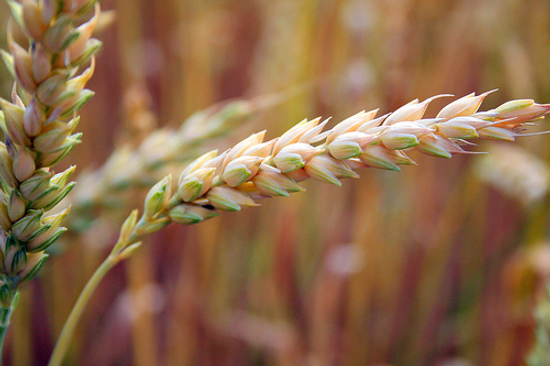
You’d think it’d be simple. Eating grains is as old as… well, agriculture. But within the last century the industrialized grains we eat have become quite perverted. Refined flours have weaseled their way into just about every baked good: breads, cereals, crackers, desserts, you name it. But even whole grains — the so-called “healthy” alternative — are dangerously devoid of nutrients thanks to our modern methods of grain preparation.
In tight economic times, you want to squeeze every bit of nutrition out of your food as you possibly can. So, if you eat grains, consider this your guide to preparing them in the most nutritious way.
We all know that refined grains are bad for us. In the refining process, the bran and germ are removed from the whole grain, hence removing the fiber and most of the vitamins and minerals. Then the grains are further processed via mixing, bleaching, and brominating. Then, because poor people who switched to eating refined grain products started suffering from severe vitamin and mineral deficiencies, we now “enrich” the refined flour with synthetic vitamins and minerals. These synthetic nutrients can be hard on your liver. Even if they were substantially equivalent to naturally occurring vitamins and minerals (which I don’t believe!), the vitamin and mineral content artificially added back into enriched flours still does not measure up to the amount inherent in whole grains.
Without question, whole grains are nutritionally superior to refined grains. But, they can be even more nutrient dense if your prepare them according to traditional grain preparation techniques.
What Are Traditional Grain Preparation Techniques?
- Sprouting — This is when the whole grain kernel is sprouted. You can eat it as is, or you can dry it again before grinding it into flour.
- Soaking — This is when the already milled whole grain flour is soaked in an acidic medium like buttermilk, whey, yogurt, lemon juice, or vinegar before being cooked.
- Fermenting — This is when the grain is naturally fermented with wild yeast, as is the case with all sourdough breads.
Why Should You Care?
We can’t blame our parents or our grand parent’s generation for falling in love with convenience. Modern science promised to revolutionize our lives, reduce the amount of time and energy it took us to perform tasks, and give us more time to do the things we really enjoy. It also revolutionized our food, dramatically reducing the time we spent in the kitchen preparing wholesome meals.
But this convenience came at a cost. We lost many wonderful food traditions as Grandmas raved about frozen pizzas and stopped cooking from scratch. We stopped eating meals together around a table, instead opting for fast food on the go. And the traditional food preparation techniques that had nourished us for thousands of years fell victim to the efficiency of industrialization.
Now, instead of capturing wild yeast from the air through the long process of sourdough fermentation, we had quick rising baker’s yeast. And instead of soaking our whole grain flour in buttermilk overnight to produce wonderfully light and fluffy buttermilk pancakes in the morning, we could use a baking mix containing white flour and chemical leavening agents to achieve the same effect.
So what? How does this affect the food’s nutrition?
Grains are essentially the seeds of domesticated grasses. Seeds are meant to do one thing: propagate their species. They are built with multiple layers of protection in order to pass through the digestive systems of animals unharmed so that they can grow in a new place where the animals deposited them. Granted, we have a fairly acidic digestive tract when compared to your average chicken, so we do a better job at breaking down the grains.
But grains are still hard on our digestive systems, and we don’t digest any grain completely. Undigested particles of grain get stuck in the microvilli of our intestinal walls, building up with time, and ultimately undermining our ability to properly digest other foods because of this interference. If the interference becomes extreme, a host of intestinal and auto-immune disorders can result including leaky gut syndrome, gluten intolerance, celiac disease, and irritable bowel syndrome.
On top of all this, we have to battle phytic acid — the enzyme inhibitor present in grains that locks up all the minerals and vitamins until the seed is ready to germinate. When that phytic acid gets loose in our own guts, it binds with the vitamins and minerals present and keeps us from absorbing them. This can lead to a host of systemic problems, most notably dental decay.
It turns out that traditional grain preparation techniques solved these problems!
Soaking whole grain flour in an acidic medium overnight neutralizes the phytic acid by activating phytase — an enzyme present in the grain which breaks down the phytic acid, rendering the grain easier for us to digest.
Fermenting whole grain flour also neutralizes the phytic acid and does an even more thorough job breaking the grain down — to the point that many who suffer from gluten intolerance have no trouble eating traditionally prepared sourdough bread!
And sprouting grains not only neutralizes the phytic acid, but also radically increases the nutrients present. This is because the grain has essentially been turned into a vegetable. When comparing sprouted wheat to unsprouted wheat on a calorie-per-calorie basis, the sprouted wheat contains:
- four times the amount of niacin
- nearly twice the amount of vitamin B6 and folate
- five times the amount of vitamin C
- significantly more protein and fewer starches and sugars
How to Eat Grains
If you’re going to eat grains, you should really make sure they are traditionally prepared.
For many recipes, this consists of making a few minor and easy adaptations. For example, you can soak your rolled oats overnight in yogurt before adding water and cooking in the morning. This is how traditional cultures have always prepared their porridge, and it only takes a few extra minutes in addition to a little planning to eat this instead of quick cooking instant oatmeal. You can also do this with your breakfast quick breads like pancakes and biscuits simply by soaking the whole wheat flour in buttermilk overnight before adding the rest of the recipe’s ingredients and cooking in the morning.
Making traditional sourdough is something I have not ever attempted, although I’d love to try. I typically buy my sourdough from a local bakery that cooks it up the old-fashioned way. (Note: Most sourdough bread available at your grocery store is not traditionally prepared. It is your typical commercial yeast bread that includes something sour tasting. If “yeast” is listed as an ingredient, it’s not a real sourdough.) If you’d like to try making your own sourdough bread, you can find listings for sourdough starters on my Resources Page.
Perhaps the easiest way to adapt to eating healthier grains is to simply substitute sprouted grain flour for your typical whole grain flour. If you have a grain grinder, you can sprout the grain yourself, dry it, and grind it into fresh flour. (This is what I do whenever I occasionally eat grains.) Or, if you don’t have a grinder, you can buy sprouted grain flour online. Again, you can find listings for sprouted grain flour on my Resources Page.
(photo by aricee)
 |








@FoodRenegade re: http://bit.ly/11lMAy intrigued abt yr phytic acid comments. An acid can’t neutralize another acid – a base/alkaline does
This comment was originally posted on Twitter
As mentioned above, phytic acid is broken down by the enzyme phytase. It’s not an acid-base reaction.
Yes, it is saying that the acidic medium does not directly neutralize the phytic acid, but rather activates the phytase in the grain, an enzyme whose sole purpose is to break down said phytic acid.
We love soaked,sprouted and soured goodies! They’re much easier to digest. There’s a fantastic bakery nearby that does traditional, whole grain sourdough breads that are fantastic. They use a variety of grains too – which is good for those with food sensitivities.
.-= Jenny @ Nourished Kitchen
I just ventured into sourdough bread making and made my first sourdough bread over a week ago. I followed Clotilde’s tutorial and method over at Chocolate & Zucchini with great success. She makes it seem so simple and easy – and it really is! Here is the link: http://chocolateandzucchini.com/archives/2009/07/natural_starter_bread.php. I also loved Joy the Baker’s sourdough pancake recipe and Emeril’s recipe as well, which I tried just this morning.
Thanks Kristen for always giving us great information and resources so we can be healthy and stay that way.
How to eat grains, from @FoodRenegade: http://bit.ly/1fgRz
This comment was originally posted on Twitter
Hey Kristen!
I noticed this is the second time you’ve mentioned soaking flour in buttermilk for biscuits. I am wondering if you have a recipe for that or know where I can find one? A quick google search showed nothing.
Thanks
Kitty
Kitty — We don’t really eat grains anymore, but I do occasionally make a loaf of sprouted grain bread. When I made biscuits, I used to substitute buttermilk in for the liquid in my old recipe. Then, I’d let that soak overnight before adding the salt, baking soda, and butter in the morning. So, I’d recommend finding your favorite biscuit recipe and adapting it like I did.
Just wondering, what is your reason for not eating grains anymore?
I’m lazy. Sprouting, soaking, and/or fermenting all require planning ahead. I’m a homeschooling mother of 3 with a newborn, AND I do nutrition coaching, AND I write ad copy, AND I blog here and teach nutrition courses. I’m a busy person! I just don’t want to take the time to properly prepare grains on a regular basis.
I understand completely! I was just making sure there was not some other reason I should be aware of that would make me want to limit grains too. I also have 3 kids and just started the slow transition to real foods this past March. I thought I was doing pretty well until I read your articles on soy and grains! I looked through my pantry and was sad to see how much of my “healthy, all natural” foods were full of soy! And I just started buying fresh farm eggs and milk, so the grain soaking and sprouting thing sounds a little overwhelming at the moment! I am so thankful for your website, I have learned so much I did not know!
Great post. we soak/sprout almost all grains–about 70%. I love the Nourishing Traditions Cookbook by Sally Fallon.
Another major benefit for soaking your grains is CONVIENENCE! That’s right (I know that’s an evil word sometimes) but by soaking your grains you cut back on the time it takes to cook. A heart grain like spelt normally takes 45 minutes or so, but if it soaked cooking time is reduced to 25.
.-= Daily Diner
How To Eat Grains | Food Renegade: But even whole grains — the so-called healthy alternative — are dangerously.. http://bit.ly/xbs0A
This comment was originally posted on Twitter
We don’t eat any grains – love the recipes without them!!!!!!!
How To Eat Grains | Food Renegade: They’re much easier to digest. There’s a fantastic bakery nearby that.. http://bit.ly/JrxBm
This comment was originally posted on Twitter
How To Eat Grains | Food Renegade http://bit.ly/AN7mV
This comment was originally posted on Twitter
How To Eat Grains | Food Renegade http://u.mavrev.com/v0v7
This comment was originally posted on Twitter
If you’re going to eat grains, this is how to eat them: http://bit.ly/11lMAy
(RT @FoodRenegade)
This comment was originally posted on Twitter
How to Eat Grains: http://bit.ly/11lMAy
This comment was originally posted on Twitter
Reading @foodrenegade’s How To Eat Grains http://tinyurl.com/mywds5
This comment was originally posted on Twitter
I stopped eating grains about six months ago, as part of my quest to treat diabetes without medication. It has worked very well, and I have been able to stop taking insulin shots and oral medications. However, I have been curious as to how my body would handle sprouted grains. My intuition tells me that I best avoid flours, sprouted or otherwise, because I digest them too quickly and will get a nasty blood sugar spike. But I wonder how I would handle whole sprouted wheat, oats, etc. hmmm. Must experiment. Do you know if quinoa can be sprouted? Is it a whole seed? Quinoa seems to be the only grain I can eat without a blood sugar reaction.
.-= b kinch
Reading @foodrenegade How To Eat Grains http://tinyurl.com/mywds5 – Who knew it was so complicated…
This comment was originally posted on Twitter
What do you sprout the grains in? I definitely am going to try that. I thought I read somewhere that freshly ground whole wheat flour contains more phytase, have you heard that?
Really good post, by the way!
Kyle — You can soak your grains overnight in a bowl, covered with water. Then, in the morning, transfer them to a colander covered with a wet towel. Every 8 hours rinse the grain to keep it wet. Usually it sprouts within a day. If you want to make flour from it, you will now dry the grain using a dehydrator or by spreading it very thin on cookie sheets and leaving it in a warm oven or out in the sun. When they’re fully dry again, you can grind it into good flour using a grain mill. And yes, freshly ground flour contains more phytase, which is why it is best to make soaked bread recipes using freshly milled flour.
Sprouting, soaking, fermenting. Good article on how to eat grains over at Food Renegade. http://bit.ly/11lMAy
This comment was originally posted on Twitter
@ Food Renegade – How to eat grains -http://bit.ly/p3UhS
This comment was originally posted on Twitter
what about pasta??? how should that be prepared?
.-= The JoyfulHomemaker
Thank you!
Kyle — You’re welcome.
The Joyful Homemaker — You can buy sprouted grain pasta, make it yourself, or buy noodles not made from grains. Many asian stores sell a mushroom noodle. You can also use vegetables cut into noodle shapes (zucchini noodles are quite popular in the summer, and spaghetti squash noodles in the fall/winter.) If you can’t find sprouted grain pasta, you can try preparing brown rice pasta. Of all the grains, rice is the gentlest on our digestive system and the lowest in phytic acid.
How to eat #grains, and why you should care, from @FoodRenegade. Soaking, fermenting, sprouting, … http://tinyurl.com/mywds5 #fd
This comment was originally posted on Twitter
This is a great post with some terrific information. We continue to strive to get away from industrialized food by growing our own. The grain nut is the next one for me to crack, but my family thinks that if it isn’t white and tasteless it can’t be good! I’ve won the fresh produce game so with ideas and information like this, I’m certain I’ll be able to make progress with the grains as well. I’m looking forward to trying the zucchini bread with the over abundance of zucchini coming from our garden.
Thanks!
I eat bread very seldom, I’m just not into it. 😉 But hubby and my son take sandwiches to work everyday. I’m trying to find a way to make my own bread that would be the healthiest for them, until I can figure out how to wean them off. 😉 Thanks for the post.
Taking another baby step…
I began reading your posts a short time ago and am so appreciative of the information you provide here for us — thank you! My question is likely a rather stupid one, but I was wondering if you need to refrigerate the grains that you’re soaking.
I’ve been grinding our own whole wheat flour since February, and next month is when another grain buy-in is anticipated. Now after reading your post, I’m re-thinking this whole thing and not sure just what to do for our ‘daily bread.’ My family typically has sandwiches for lunch most days, and my kids love pancakes a time or two each week.
I’m trying to help us be the healthiest we can be by changing our diet, but there’s SO much info out there I think I’m on overload at the moment.
.-= stampmonkey´s last blog ..hey, hey {for the} monkeys =-.
look up the book “the art of baking with natural yeast” It has some terrific recipes for waffles, pancakes, etc. They are delicious.
Stampmonkey — No, leave them at room temperature while they’re soaking. If I eat grains and prepare them by soaking, I typically cover the bowl in which the grains are soaking with a plate. Then I leave the whole setup on my counter top until they’re done soaking (usually overnight, or at most 24 hours).
Thanks so much!
One other question: Legumes are listed among the other grains in your article here, but I didn’t notice anything in regard to how to eat them. Are there any tricks to preparing them, or is there anything specific we need to know to make sure we’re getting their full benefit when eating them? Or are we not really supposed to eat a lot in the way of legumes either??? Thanks!
.-= stampmonkey´s last blog ..hey, hey {for the} monkeys =-.
Stampmonkey — Most legumes do quite well being soaked overnight in warm water before being cooked the next day. Black beans are a little higher in phytic acid than other legumes and require a slightly acidic medium to do the trick, so you can add a little lemon juice or whey to the water in which you’re soaking them. Hope that helps!
Got it! Again, thanks so much!
.-= stampmonkey´s last blog ..hey, hey {for the} monkeys =-.
Thanks for this post! Why, just the other day I was looking at the Nutrition Facts on some Ezekial 4:9 tortillas I had randomly bought (and loved) and was kind of blown away by how much good stuff they contain — your post some light on why that is.
A question for you: I love making pancakes from grains like quinoa, buckwheat, garbanzo, spelt, millet, etc. (and sometimes whole wheat as well). Some of these are gluten-free — should I also soak them overnight? Actually, hmm, it occurs to me that the liquid in my pancake recipe is simply a mixture of water, egg, and … yogurt, which you say is one thing that’s good to soak grains in. Perhaps I should just make the batter (sans egg?) the night before, leave it on my countertop (right, as opposed to the fridge?), and add the egg in the a.m. Thoughts?
.-= Bronwyn´s last blog post …Government publishes list of child- and slave-made goods =-.
Hi Kristin, just discovered your wonderful site – it is an amazing resource, thank you for all the information. I’ve been thinking a lot about grains and food choices lately and this article is very helpful, although I am still quite confused about sprouts and sprouting grains. You hear all the time that sprouted grains are so healthful, yet I’ve also been told by some wise women that it is not prudent to eat sprouts. As you say, “Seeds are meant to do one thing: propagate their species.,”…and so baby sprouts, in the most vulnerable stage of a plant’s life, must also be equipped with something to keep predators at bay. I have been told that you must not eat sproutlets until they have developed their first set of leaves, for until this stage they are producing a host of (carcinogenic) chemicals to ward off munching predators. One does not really see birds or other creatures eating baby sprouts…Anyway, I haven’t researched this more, but was wondering what your take is on this? Also, you say that sprouting is a ‘traditional’ food preparation method – can you tell me what indigenous cultures sprout grains? I can only think of some Asian cultures that use bean sprouts, but these are always cooked and not raw. Thank you very much for any enlightenment you can provide!
Stampmonkey — No, leave them at room temperature while they’re soaking. If I eat grains and prepare them by soaking, I typically cover the bowl in which the grains are soaking with a plate. Then I leave the whole setup on my counter top until they’re done soaking (usually overnight, or at most 24 hours).
Hey Kristen,
I’ve been writing about bowel problems caused by grains and ended up here. An excellent post. I wanted to let you know something about grains and leaky gut. A 2006 study showed that gliadin which is a component of gluten, acts on a chemical called zonulin. Zonulin decides how big the holes in the intestinal wall are. If these pathways get too big, then larger molecules can pass through, and is thought cause immune responses that lead to food sensitivities, IBS, and all kinds of issues.
Thanks for the info.
I have found it difficult to get the right consistency in my bread products when I’ve used sprouted flour. Can you tell me if it is a one-to-one substitution, or if I need to alter the amount of flour and/or add any other ingredients?
Thank you!
If you’re subbing for another whole grain flour, than it should come out the same and be 1:1. You can’t, however, expect the same results from switching from a refined, white flour to a sprouted flour.
Thank you! I’ve been using it in place of whole wheat, but only in recipes with sourdough starter instead of baker’s yeast. I’m wondering if sprouted flour works with sourdough. My husband seems to have problems with gluten-containing grains unless they are sprouted (even sourdough doesn’t totally agree with him). I seem to have problems with breads leavened with baker’s yeast instead of sourdough. However, the lower gluten in the sprouted flour seems to affect the texture and rise of the sourdough breads.
I am dairy intolerant, what is the best to soak grains like oatmeal for porridge in? Does lemon juice or vinegar make it “sour”?
I learned to make sourdough bread using the resources at sourdoughhome.com. It is a very helpful website with detailed instructions, and I even learned to make my own sourdough starter!
It just seems to me that to eat safely and nutritionally correct, one needs a degree in Chemistry. I prefer to EAT as opposed to dissecting everything before I prepare it. If good sense is used and just being aware of the good OR the bad, we can eat safely and nutritionally.
Do steel cut oats need to be soaked as well?
i soak mine in water, works great!
Thank you so much for this important information! I tried soaked pancakes and they are so much better than the quick method ones and I am also making my own sourdough bread which is delicious. You said you have not tried to make your own sourdough yet. I think you should try: it is fun and it makes you feel very proud of yourself when you get to eat it 🙂 I suggest two books that have really great sourdough recipes: “Whole Grain Breads” by Peter Reinhart with amazing whole grain recipes and “Local Breads” by Daniel Leader (both available at libraries or new & used on Amazon.com)
Thanks again!
i have oat bran that I like to use instead of wheat flour for pancakes ( wheat flour seems to irritate my stomach) and also I am going to try sorghum. What is the recommended process for fermenting either of these over night for pancakes? Just soak the flour in some yogurt or vinegar and then cook the next day?
Whoa, you lost me at “Undigested particles of grain get stuck in the microvilli of our intestinal walls, building up with time, and ultimately undermining our ability to properly digest other foods because of this interference…” Where does this information come from? You state it like it is fact.
Basically this is the rhetoric you get from people pushing colonics. The idea is that our systems cannot detoxify themselves, that somehow our colons are incapable of clearing themselves (even though the colon sheds old cells about every three days and microvilli do renew as well) so we need to avoid certain foods and/or flush out our colons every so often. There is absolutely no evidence to support this. So while you may believe it, I think you should preface your statement with, “some maintain” or “some believe” so it is stated as a hypothesis rather than a fact.
Well, it is a fact. I didn’t go into the science in this post, but besides the fiber (which is indigestable plant cellulose) the real danger comes from lectins. Lectins are present in a lot of foods, but especially concentrated in grains. A lot of studies have been done on how lectins interact with our intestinal walls. Just Google it. Here’s one of the first results, among hundreds.
Maybe this is the reason why traditional people sifted their flour to remove both germ and bran?
exactly
Thank you for sharing! I am a college student who has an interest in eating healthy with clean and raw foods. This past summer I found out that I had a small gluten allergy along with dairy products. A lot of people think I am nuts to not eat any grain but I have found that to be the easiest thing for me. I do not have the time or patience to prepare my own grains right now in my life but I will certainly re-visit this issue later on. Thank you again for going through the process and sharing your knowledge about this topic.
Very informative post, thanks. Explains a lot about my digestion… I always cook from fresh ingredients, but would miss flour, I confess, even though I don’t use that much, and always wholemeal.
I’ve soaked nuts and seeds for ages because I prefer them that way, all crunchy and crisp. (Walnuts lose their bitterness when soaked, e.g.) I’m very glad to see there are far more benefits – bonus!
For the SAD and SUD (UK) eaters, giving up grains would be a big shift. I’ve been really shocked to see how much Californians eat out of packets and plastic – no-one seems to cook any more other than mixing or microwaving.
I’ll be delighted to share this, and try a low-grain way of eating. Cheers.
I just made the switch to whole wheat flour and plan to use this going forward anytime I would have used all-purpose flour in the past. After reading your post, I’m wondering if it will be very hard on the stomach if I use it without soaking first. Is this necessary before every recipe including whole wheat flour?
what bakery do you go to – i want to try that sourdough!
I think it would be easier to stick with almond flour etc than all this soaking and sprouting – but this is great info!
almonds are extremely high and oxalate I don’t think that we’re meant to eat a lot of them at one time
I can’t ever seem to find good buttermilk anywhere. I see a lot of low-fat buttermilk – WTH is that? Like decaf espresso? Even at my gourmet groceries or food co-op I find good quality milk but the buttermilk is always low-fat, which seems an oxymoron. At our local farmers markets, they say that they cannot sell *real* buttermilk without the risk of being shut down by the county health department. Any ideas?
You can make real buttermilk or easy substitutes at home:
real buttermilk: 1. whip heavy cream that is at room temp. It becomes whip cream and go a little more and it separates into buttermilk + butter. Yield is approx 3:1 heavy cream:buttermilk. If you want to keep the butter, strain w cheesecloth to separate and immediately plunge into ice water to solidify.
Alternative, quick sub: 1 c milk + 1 Tbs white vinegar OR lemon juice. Add vinegar or lemon juice to cup then add milk and let stand 10+ minutes at room temp.
Can one take the enzyme phytase when traveling or in a hurry and not able to soak or sprout?
This is…well, BRILLIANT! Such an interesting article! I have celiac disease almost 5 years now and I am well managed by diet and lifestyle. I was already a soy-free, organic-loving vegetarian but my diagnosis opened my eyes to a whole new world of healthy eating. I tolerated gluten free whole grains well until this year – I stepped up my clean eating by incorporating even more raw (or steamed) veggies and fruit, and cutting out dairy. Now i notice even gluten free grains are causing less than ideal gastro symptoms for me and making me feel sluggish. Malabsorption is a concern for me as an “underweight” celiac so I am fascinated to learn about phytic acid. You mention soaking flour overnight but should I be soaking the grain itself before preparation like for brown rice, millet, quinoa, etc? And if so what can I soak them in that’s acidic and vegan? Any suggestions are greatly appreciated! And many thanks for sharing your knowledge and passion for healthy eating!
Wow. I am horrified by this post. Your statement claiming this can cure Celiac and GI is irresponsible and unfounded? Where did you find your facts? Gluten is found in so much more then wheat! As someone who lives with Gluten Intolerance and has family with Celiac I highly recommend you educate yourself better on these disease before spouting off false hope. Please site your sources.
I just started making sourdough bread about 2 months ago. I love the simplicity of making sourdough pancakes, sourdough blueberry muffins, baguettes and traditional sourdough bread. Living, learning and loving life!
how do you soak flour for baking cookies, or pies??
Thanks!!!!!!
Rather than a comment, I have a question, please. I’m only a month into eating more wholesome but one of, what I presume, my best ways to keep off the bad stuff and have something ready to eat is to prepare a pot of bean soup (lentil, lima) from dried beans and include sometimes a little vegies or curry powder. Though high in protein, I’m sure there’s lots of carbs, too. I’m not eating much meat, some fish, nuts, soup, salad, and limited fruits. I’ve lost about 22 lbs. in less than 1 month and started at almost 270lbs. Non-diabetic (probably pre-) Blood pressure is good, even better since swimming and walking on the eliptical since my knees are very painful. Only 55 yrs. old. Please comment on the legume intake and make suggestions. Thanks so much. Enjoying your site for the first time visit. Keep up the good work!
Great information, I’m so glad more people are talking about the need to soak or sprout grains! I am wondering if anyone has any suggestions for me. I have been soaking my whole grain spelt flour in an acid medium (lemon juice and water b/c I am allergic to dairy)for a number of years and have not had a problem consuming it. However, I recently bought whole grain spelt and ground it into flour myself. I soaked it and baked it as usual, but this final product caused noticeable stomach discomfort. Any thoughts on why? Or how to fix this? Unfortunately I ground the whole 25 lb bag into flour so I don’t have the option of sprouting the rest. Thanks.
Sourdough breads and overnight soaking of oats for porridge.
Hi Kristen,
Can i use set greek style yogurt to soa my flour or do i need to use regular ‘runny’ yogurt?
Thanks
Joy
I gave up all grains for almost a full year (besides an occasional sushi trip) and have noticed many of my symptoms decrease! I’d say if you have to, go for it, but they are not really necessary. Humans didnt evolve (on the grand scheme of things) eating grains.
We’ve been using Nourishing Traditions by Sally Fallon for several years now and love her recipes for grains and lacto-fermenting.
I avoid them. I have tried the whole soaking/sprouting thing (Big fan of Nourishing Traditions), but still react. If I eat wheat, I can’t walk. It’s that simple.
Where did the idea that grains stick in your intestines come from and why do people keep repeating it?
I avoid most of them. I’m gluten intolerant and my immune system reacts even to soaked and sprouted spelt and long-fermented rye. My digestive system doesn’t love most other grains, but I eat white rice and nixtamalized corn occasionally without issue. I also keep sprouted buckwheat around for the rare occasion I feel like baking with grains.
I make all our breads with a homemade flour/water sourdough starter, and I use kefir whey instead of water – incredibly easy to do, and tastes delicious.
Hi Kristen,
How are you ?
My question is about whole grains , you have talked about soaking them in an acidic medium overnight before using them.
Do you think , cooking them in a pressure cooker before consumption can be an alternative, my mother has been making porridge from whole wheat grains using a pressure cooker for a long time.
> Whole wheat grains are crushed in a mixer or in a mortar and pestle ( a big one )
> Cooked in a pressure cooker
> Cooled down to room temperature and eaten with milk like porridge or dried in an oven and made into muesli
Please let me know your thoughts on it.
Thanks,
Varun
i’m wondering what kind of flour I should use for making sourdough bread. Any suggestions?!
Thank you!
This article, and the attitudes prevalent in it and this website are PROFOUNDLY unscientific. Wrong, wrong, wrong.
I can’t begin to tell you how wrong, I’m sorry but all I can do to help is advise you to read a wider range of sources and consider all points of view.
Use your brain.
Hey lord sod, I’ve been reading all of these comments (having just come across this article). I am completely unsure what to believe. If you wouldn’t mind, could you refer me to 1 or 2 sources you have read which refute this statement with scientific evidence?
Cheers
Hi Kristen,
I was wondering if it was possible to soak grains in warm water with apple cider vinegar added … could I also sprout after soaking
Any help appreciated,
Warm regards,
Mikey
How do you soak rolled oats in yogurt?
Yogurt is thick. It’s not in liquid form.
I’m trying to figure out if it makes sense to for example –
1. Buy sprouted flour to make sourdough bread – or is this just reduddant?
2. Sprout grains, cook them and then ferment them or if this is overkill – would just srpotuing be enough or just soaking and fermenting either before or after cooking better?
3. Also with beans – for example black beans, would it make sense to sprout them and then cook them and then ferment them or is the sprouting and fermenting step overkill done together?
Thanks! so much for oyur help figuring this out!!!
How would you prepare grains for an infant for weaning?
Hi Kristen. I appreciate your info/advice on grains.l Thank you. I am a recent vegan, using no oil (nut. Seeds or avocados) in order to reverse heart disease a la Caldwell Esselstyn, MD. Are you familiar with this diet?
So far I am supplementing for omega 3 and B12.
Do you have any advice for me? Or sources to direct me to.?
May I be on your email list.? I have also been passionate about food and food security all my life. (RN with Husband with heart disease and no children)
Thanks!
Jeannie
Very informative and a great resource
Why do you prefer jasmine rice over brown rice?
I thought the poor people ate brown rice and brown bread while the rich were able to eat properly repaired white bread and white rice Etc…if Phytic acid leaches minerals out of your body then removing the bran is healthier. poor folks had to brown rice and brown bread because it kept them Fuller longer because they had less access to meat. I don’t eat whole grains anymore because of the oxalate content. I’m learning how to bake traditional artisanal French bread, not using whole grains. I eat very little bread and I don’t eat it for nutrition. I eat it for pleasure.