
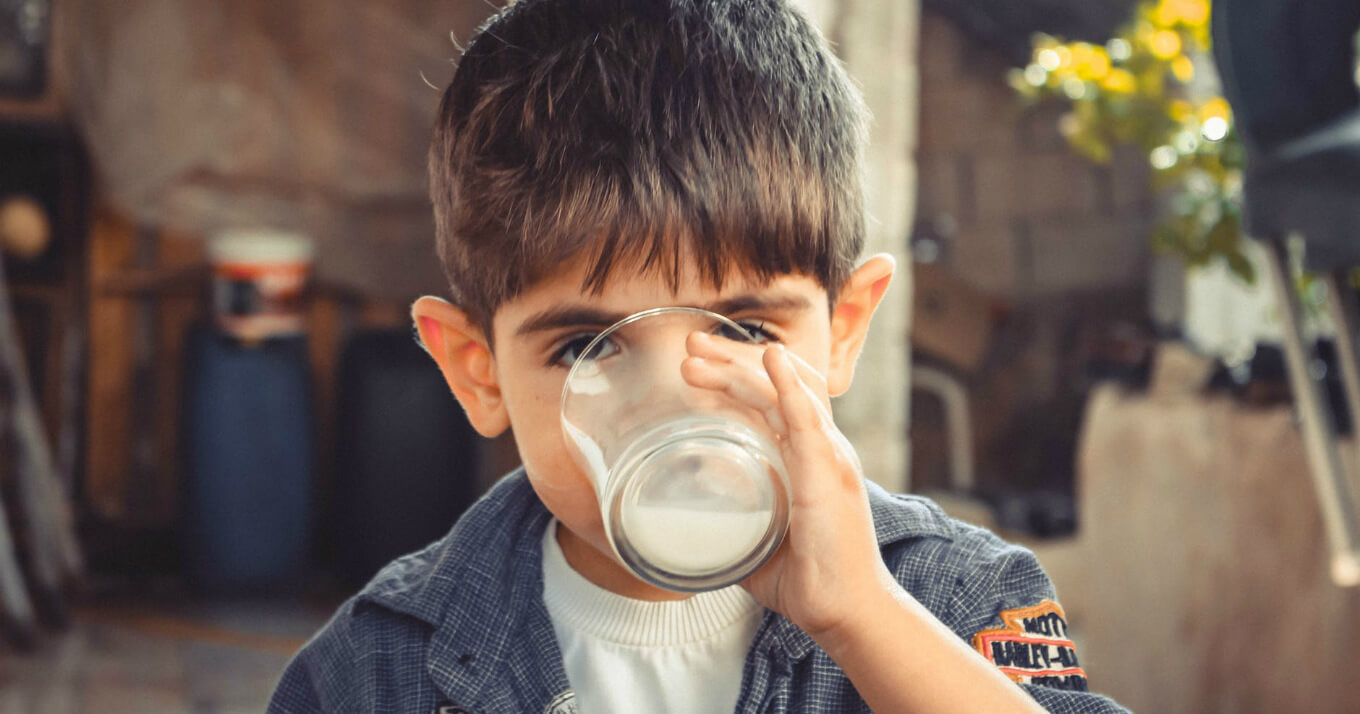
Organic milk. Raw milk. Milk from grass-fed cows. Homogonized. Non-homogonized. Hormone-free milk. Whole milk. Skim milk. Goat’s milk. Cows milk. The choices regarding milk boggle the mind.
If you drink milk, it’s important to buy the best, most nourishing milk your family can afford. Why? Because sadly, milk is one of the most adulterated so-called “whole” foods on the market today.
It’s also one of the most misunderstood.
Strikes Against Milk
Surely you know a handful of people who are dairy intolerant. As with any dietary intolerance, the symptoms range from digestive problems to mood swings. And like gluten-intolerance, the wave of people now claiming a dairy intolerance is on the rise. People aren’t just on gluten-free diets. They’re on casein-free diets. (Casein being the primary protien found in milk.)
It doesn’t surprise me. Modern milk is notoriously hard to digest. On so many levels, it hardly resembles traditional milk at all.
What’s wrong with modern milk?
- Most modern milk comes from more recent breeds of cattle producing milk abnormally high in A1 beta casein. A1 beta casein is a slightly different milk protein than the ancestral one common to more traditional breeds of cattle, sheep, goats, and even humans, known as A2 beta casein. Mountains of scientific research have been done on the subject of A1 beta casein, the way our bodies digest it, and the slew of mental and physical disorders it can cause. (For a more complete look at the research, I highly recommend you read Devil in the Milk).
- Most modern milk comes from cows fed a disproportionate amount of grains. The most nourishing milk comes from cows being fed their natural diet of grass — the greener, the better.
- Most modern milk is pasteurized. For the run-down on why pasteurization isn’t all it’s cracked up to be, check out this article on Real Milk.
- Most modern milk is homogenized. Homogenization is a process whereby all the fat molecules are mechanically forced to be the same size. (With homogenized milk, the cream doesn’t separate to the top and is dispersed throughout.) Unlike with pasteurization, there is no debate underway as to any purported health benefits of homogenization. But there are many sound reasons to distrust homogenization, such as the huge increase in surface area on the fat globules. The original fat globule membrane is lost and a new one is formed that incorporates a much greater portion of casein and whey proteins, potentially leading to milk related allergies.
- Most modern milk is adulterated. After pasteurization, they add back in fat soluble vitamins (like Vitamin D) in a synthetic and arguably indigestible form. Without the usable and REAL Vitamin D, you can’t make any use of the Calcium in milk. If the milk has had fat removed (as in skim, 1%, and 2% varieties), it’s not only going to be absent all the fat-soluble vitamins that your body needs to properly digest the calcium and other goodies in the milk, it will also usually have non-fat dry milk or other milk solids added in to create a more desirable consistency. These forms of dry milk are high in free glutamic acids (AKA “MSG”) and oxidized cholesterol (a dangerous inflammatory form of cholesterol which can cause all kinds of heart disorders).
- Most modern milk contains pus. Because modern dairy cows produce up to four times as much milk as a traditional cow did a mere century ago, they are far more prone to mastitis — infected udders. If the mastitis gets out of control, the cow is temporarily removed from the herd and treated with antibiotics. When it finishes its course of treatment, the cow is allowed back into the herd. Some farmers cut corners, re-instating sickly cows back into the herd before all the antibiotics have passed through the cow’s system. Translation? Antibiotics in your milk. Although that is initially a scary thought, it is actually quite rare.(source) I’m personally far more concerned about the low-grade mastitis that goes untreated in industrially-raised dairy cows. Farmers can get away with this because the FDA allows a whopping 750,000 somatic cells (more commonly known as “pus”) per liter!
- Much modern milk contains synthetic growth hormones. Many dairy farmers give their cows rBGH or rBST, genetically-engineered growth hormones designed to increase the cow’s milk production. These hormones come out in the cow’s milk, you drink them, and then they play games with your own hormones potentially leading to a number of problems, including cancer.
Healthy Milk: What to Buy
So, in the face of all these choices, what kinds of milk should you buy? The key is to stick to traditional milks — the kind your ancestors have been drinking for thousands of years.
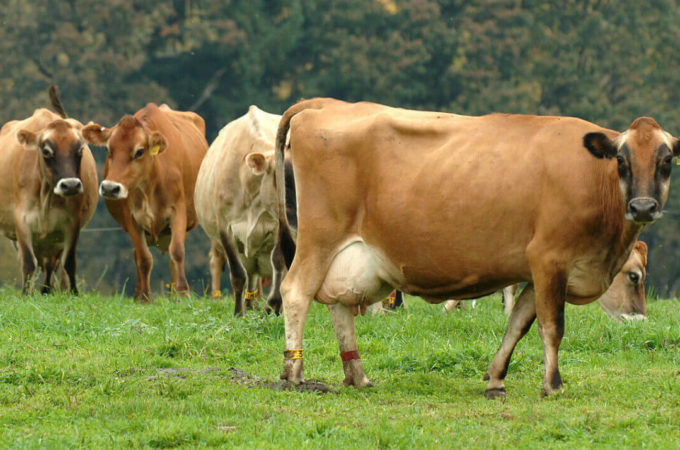
BEST CHOICE: Raw, non-homogenized whole milk from grass-fed cows producing milk high in A2 beta casein and relatively low in A1 beta casein — that means milk from Jerseys, Guernseys, and other traditional cattle breeds rather than newer Holsteins. Raw, non-homogenized goat’s milk, sheep’s milk, and yak’s milk only contains A2 beta casein, so you could make a great argument for giving raw goat’s milk preference over raw cow’s milk if you can find it.
SECOND: Raw, non-homogenized whole milk from other grass-fed cows.
THIRD: Lightly-pastuerized, non-homogenized whole milk from grass-fed cows.
FOURTH: Lightly-pastuerized, homogenized whole milk from grass-fed cows.
Notice What I Didn’t Say
I didn’t say to buy organic milk. Most major-label organic milks (like those coming from Horizon or Aurora dairies) are not only NOT grass-fed, but they’re also ultra-pastuerized. The health risks associated with milk that’s been ultra-pastuerized and from cows fed grain outweighs any benefit you might get from the milk being organic.
That said, organic standards do count for something. At least the milk is guaranteed to be antibiotic and hormone free from healthy cows. So, if your only choice is between standard cheap supermarket milk and organic milk (and you’re unwilling to do without milk or use milk alternatives), then by all means get the organic milk.
Where To Buy Real Milk
The best way to find real milk is to seek out local sources. Since raw cow’s milk sales are restricted dramatically in most places, you’ll have to “go underground” to find it. In many states and countries, you can co-own a cow through a herdshare arrangement. You pay for a portion of the cow’s upkeep, and in return you get a portion of the cow’s raw milk. Technically, you’re not buying milk. You’re buying a cow.
Finding these arrangements can be tricky, but it’s doable. Just start asking around and visiting your local farmer’s markets. You’ll very likely find a local farmer selling lightly-pasteurized, non-homogenized milk from grass-fed cows right at the market. And, if you ask them for information, you may be able to find out how to get your hands on raw milk via a herdshare or driveshare arrangement.
If those avenues come up dry, a limited listing of raw milk dairies can be found online at www.realmilk.com.
Want to read more like this? Here’s the ever growing list of Healthy Foods: What to Buy:
- Healthy Eggs: What To Buy
- Healthy Cheese: What To Buy
- Healthy Meats: What To Buy
- Healthy Seafood: What To Buy
- Where to Buy Butter from Grass-fed Cows
 |





Spending summer’s in upstate New York while growing up there was a dairy farm right down the street from our property where we used to buy raw milk. It wasn’t organic, but I remember the cows grazing on the farmland grass. Back then, it was very cheap and delicious. We stopped buying it because my mother had read about how raw milk was really bad for you and was unsafe for us to drink.
I recently started buying organic milk as there are no nearby local sources, here where I live in New York, unless I want to drive more than an hour to the one source I did find 🙁
I’m still hopeful that I’ll find a good quality source in the near future.
Great informational post. Thanks!
raw milk is healthier The Weston A. Price Foundation has been active in promoting raw milk with its “Real Milk” campaign.[14] The organization claims that of 15 milkbourne disease outbreaks cited by the FDA, not a single one demonstrated that pasteurization would have fixed the problem, that 93% lacked either a valid statistical correlation with raw milk or a positive sample, and half lacked both; they further claimed that, even with the FDA’s numbers, raw milk was no more dangerous than deli meats.[29] In response, the director of the FDA’s division of plant- and dairy-food safety, John Sheehan, called the organization’s claims on the health benefits and safety of raw milk “false, devoid of scientific support, and misleading to consumers”.[30]
In 2008, scientists discovered that raw milk contains more bacteria than previously thought and identified Chryseobacterium oranimense as well as C. haifense and C. bovis, but the amount found in raw milk has not been proven harmful.[3
Great article Kristen! Too many people thing that organic is the be all and end all of healthy food. It took me about a year to make my wife realize that organic snack food isn’t healthy just because it’s organic (I’m still not sure she’s convinced 🙂 ) Although less obvious, this is certainly the case with milk. Most organic milk is pasteurized and homogenized, and in some cases, probably fortified as well.
Leesie, I live in upstate New York also! Have you tried Hawthorne Valley Farm? They are in Columbia County and are about 40 minutes southeast of Albany. http://hawthornevalleyfarm.org.
Vin | NaturalBias.com
Thanks for the article. I agree that knowing where your milk comes from is much more important than just buying organic milk at the supermarket. Probably all the milk from large producers you find in the supermarket would be “adulterated” by the way you describe it above. For example, Whole Milk is not really whole at all; it has the fat removed and then added back in so that all the milk produced has the same percentage of fat in it.
The issue with antibiotics is interesting, it is my understanding that milk from cows treated with antibiotics even from a conventional dairy is not supposed to be sold. I imagine that some of antibiotic tainted milk gets occasionally mixed in, but it shouldn’t.
For another farm in NY you can check out Milk Thistle in Ghent which sells grass-fed unhomogenized batch pasteurized milk
Michael
Thank you for all this detailed information in times of deception! Consider having a list of products that people could vouch for and add to. You wouldn’t have to do it yourself, I’ll bet people would love to help you, as you have helped us. I love the letters people write in response, too, because we all have information to share, thanks All!
What about A1 and A2 milk. Why is nobody talking about this?
Read “Devil in the Milk”…. very eye-opening and frightening. It helps explain the prevalence of Type 1 Diabetes, certain types of heart disease, Schizophrenia, Multiple Schlerosis and other illnesses.
I buy delicious raw milk and cream from my dairy farmer. I am part owner of a beautiful Jersey cow named “Grace”. I’m trying to get my dairy farmer to get “Grace” tested to see if she’s producing A1 milk, A2 milk or 50% of each. Hopefully, it’s 100% A2 milk.
Mimi
Hi Mimi,
I’m responding to an old post, but hoping you’ll see it. Are you located in California by chance? I’ve been looking for a cow share to join…I’m in Oakland, very far removed from any farm. I want to get my hands on small batch, A2 grass fed raw milk…seems impossible though.
Oakland is gonna make things really hard to get in on those types of things. You’d have to travel a pretty good distance out of town before you found anything remotely like that. Let us know if you find something, though!
Kristen, I think you’re exactly right about priorities in choosing milk. I also think it’s important to remember that your health and your family’s health is your best investment and good milk is at the top of the list of healthiest foods. It’s also a good idea to visit the farm where you get your milk. Here’s some photos I took at the dairy that produces the milk I drink.
Bryan – oz4caster
Leesie — Isn’t that ironic? I remember when my mom switched us from butter to margarine because it was supposed to be so much healthier for us. That was before we knew of the evils of trans-fats, of course. I like studying nutrition, but I recognize that it’s a budding science. That’s why nutrition science can contradict itself every five years with a different, newer discovery. It’s also why I don’t rely on science to tell me what to eat, but tradition. I want to eat like we ate before our food supply became so perverted.
Vin — I have a friend who does the same thing! She buys all organic processed foods, but YIKES. They’re PROCESSED!
Michael — Even though the antibiotic laden milk is SUPPOSED to be removed, tests continually find low-levels of antibiotics in conventional cows milk. The FDA does do random testing, but their standards for “safe” levels of antibiotics in milk is still alarming to me. I don’t want *any* amount of antibiotics in my milk. Plus, the FDA only tests for FOUR known families of the most commonly prescribed antibiotics! Farmers and vets can still administer other antibiotics, or other medications “off-label” and contaminate the milk with no repercussions.
Bryan — Great photos! I’d say the largest portion of our food bill goes to milk. No joke! We spend around $37/month on pastured meats (which we buy in bulk from local farmers), but $60/month on raw milk and cream.
Great post. I am currently exploring raw milk options in my area, but it’s difficult to track down since the sale of it is illegal in NC. Lovely blog!
Lauren B
i guess that is one really cool thing about living in the greenville, sc area. i have 2 raw jersey cow dairies with in 15 miles of my house. one that also sells cream, sweet and country butter, buttermilk, and cheese made from their milk. (oh the butter is to die for!!!) there is also a slew of raw goat milk dairies around as well. one very popular that produces lots of goat milk products, but for those products they pasturize the milk. then i have a smaller goat farm that sells just the raw milk from her goats.
therefore, since we could not find any raw milk kefir, we have started making our own at home with the local raw goat milk. yummy!!!!!
AND, for the squemish, we also have a local dairy that produces lightly-pastuerized, non-homogenized whole milk from grass-fed cows.
lauren, that stinks that raw milk is hard to come by in NC. where in NC are you. if your down by my way, i can point you in a few directions down here to get some darn good milk!!!
trish
Hello,
I live in travelers rest sc next to Greenville, where are the two raw milk dairies located?
Thank You
-Rudy
Trisha, I know this is an old post but hoping you can jump back in and give some information on the raw milk dairies near greenville! 🙂
This is really helpful information; I appreciate the “first, second, third, etc.” choices you offer for various healthy foods. Rarely are we in a spot that we can afford/find choice #1, so it’s nice to know that there are still other nutritious options with which I can feel comfortable serving my family. Thank you!
Like Lauren B, I’m also in NC where raw milk is illegal for human consumption. But even if I could find a source, I’m not sure my husband would be on board with the idea.
Mary Ellen
Here’s a question for you. Which is worse: pasteurization or homogenization?
I can buy non-homogenized but pasteurized goats milk at my farmers market from a local farm. If I want the raw milk, I have to go to the farm to buy it, which probably is too far away. I figure pasteurized local goats milk that is non-homogenized is at least better than grocery store milk. But I’m wondering, which process is worse? Any thoughts?
Kari (Eating Simply)
I’ve sort of wondered about Goat’s Milk. It’s not traditional, right?
Kyle — On the contrary, goats milk is VERY traditional. Arguably more traditional than cow’s milk. For thousands of years, goats milk has been the milk of choice to feed infants whose mothers have passed on, particularly where other lactating women were scarce or too impoverished/malnourished to produce enough good milk. It’s far more easily digestible to humans, and much more closely resembles human milk than does cow’s milk.
Kari — I think pasteurization is worse than homogenization, but you will never find a homogenized raw milk, so the question is moot. I would recommend trying to get your hands on the raw goat’s milk. Perhaps you could arrange a buying club with some friends or family so that you take turns driving out to the farm to buy your milk?
Mary Ellen — I think it takes a while to jump on the raw milk bandwagon. It took me nearly 3 years to make the transition! Raw milk is so demonized. You really have to pray and do a lot of research to feel comfortable with the decision.
Emily — You’re welcome.
Trish — I feel very privileged too.
Lauren — Thanks, and good luck!
I don’t have a source of raw milk, so I’m content with the creamline grassfed Jersey cow milk at the farmers market. Delicious! But the market DOES have raw milk cheese available. I had never thought about whether cheese comes from raw or pasteurized milk, but I guess it’s almost as rare to find raw milk cheese as it is to find raw milk. Apparently DC’s laws allow for the former but not for the latter….
Amelia of Gradually Greener
Very informative, thank you. We go for organic milk at Whole Foods or have gone out to the farms to get raw milk. But where might I find those other options you listed like Lightly-pastuerized?
thanks!
Michelle @ Find Your Balance
Michelle —
Pasteurized non-homogenized milk from grass-fed cows is usually something you can find at farmer’s markets. Some of those local farmers may have cut deals with a few local health food stores/upscale markets (like Whole Foods) to carry their milk. You just have to keep your eye out for it. It’s often called “creamline” or “cream top” milk because you can see the cream settling on top when it’s sat still for a while.
Pasteurized/homogenized milk from grass-fed cows is something you can find at some Whole Foods and health food stores. A prominent national brand of milk from grass-fed cows is Organic Valley. They’re a regionally organized co-op of dairy farmers whose milking cows are exclusively pastured. Some cows eat marginal amounts of grain (again, living green grains out in the fields, usually oats, rye, or barley) depending on the locale and the season. But if you’re buying Organic Valley milk from March through September, you can pretty much be certain that the cows are eating 100% green grass. There are other brands that are grass-fed. You just have to keep an eye out for them. Also, be sure to ask the milk person at your local Whole Foods about it. They may know which brands they carry that are exclusively grass-fed & pastured, or they might be responsive to ordering some from a local dairy at your suggestion.
Amelia — Raw milk cheese is legal in most states. I think the standard for importing it is that it has to be aged for at least 6 months.
I put my daughter on goat’s milk when she was about 10 months old after I had an emergency appendectomy and my milk dried up. I diluted it with water, added some flax oil (nutritionist recommended at the time), and some probiotics to the concoction. Unfortunately, I couldn’t find a raw source of goat’s milk at the time. All I could find was the homogenized kind. 🙁
I have on my desk a note to research sources for raw milk; however, in the mean time,:
1. What do you think of rice “milk”/almond “milk”?
2. Do you think there’s a definitive link between earlier menstruation of girls and the growth hormones in regular cow’s milk?
3. What do you think of the vegan critique that “cow’s milk is for baby cows — not baby humans”?
Hi Kristen,
What a timely post. My wife and I have been talking about buying a share of a cow for raw milk for some time now. In Colorado you can drink raw milk from a cow that you own, but you cannot buy the milk itself. I went to visit a small dairy yesterday to get info about their cow-share program. I love the taste of real milk and my wife does too. What I’m most excited about is being able to make cheeses with very fresh milk. I’ve been wanting to get into cheese making for some time, but didn’t want to use milk that had been sitting on a shelf for a few weeks.
Here’s my question though. I’ve been wondering about vit A and D that are added back in to reduced fat milk. While taking some nutrition classes I asked about why vit A and D, both fat soluble, would be added back into a product with the fat removed. The answer I received was that nutrition scientists are able to attach a water soluble chain onto the end of the vitamin chain to allow the vitamins to be absorbed without the presence of fat. Have you heard anything like this? Do you have any resources to point me toward regarding natural fat vs. fat added?
Thanks,
steve
p.s. I think I’m going to write about our choice for raw milk for my first Fight Back Fridays post.
stephen
Christina —
Rice and almond milks are decent alternatives to milk for some things, and they’re not nearly as detrimental to your health as a non-fermented soy milk would be. They’re not going to give you the benefit of the naturally occurring vitamin D, calcium, etc. of raw milk, but they’re easy on the taste buds
I would recommend checking out some of the local farmers markets, buying some non-homogenized milk, and trying to get plugged into Houston’s raw milk underground. It will take a bit of snooping, but you shouldn’t have too much difficulty finding a driveshare to join.
I do think the link between added growth hormones and earlier menstruation is suspicious.
All I have to say about anything vegan is this: there is not one traditional culture — not one — on the face of this planet that has chosen a permanent vegan diet. It’s not a traditional diet; it’s a “virtuous” diet. It’s what monks do to fast. It’s not how people live. Every traditional culture knows that it is dependent on animals (particularly their organs and fats) if they want to be healthy and fertile.
As to the argument itself, that cow’s milk is for baby cows, ask yourself if you have a problem eating any other food that other animals eat to nourish themselves. Squirrels eat nuts, does that mean you shouldn’t? We ought to choose how to eat based on traditional foods. What would your great great grandmother have recognized as food? Eat that.
Also, if it was good enough for God, it’s good enough for me. (God ate raw butter and milk in Genesis 18.)
Stephen —
That’s great news! Glad you found the raw milk. I pretty much distrust any food that’s synthetic or manufactured, including vitamins AND reduced fat milk. We may “think” we’ve got the nutrition all figured out, but if watching nutrition science over the last few decades has taught us anything, it’s that we know very little indeed. This is a totally new, budding science. I liken it to how surgery was back in the 16th century. There will be A LOT more that we figure out as we go along, and many of our past firmly held beliefs will continue to be shaken as we learn more. I believe it’s important to stop thinking about nutrition, per se, and to start thinking about Real Food. Ever since we put our diets in the hands of the diet dictocrats, we’ve gotten fatter, more diseased, and cancerous. We need to return to eating Real Food, in it’s most natural forms, prepared the way hundreds (if not thousands) of years of tradition have taught us to do. If we can do that, we can be healthy.
Traditional people groups are just as long-lived as us. If their average life span is less than ours, it’s because of all the dangers they face in the normal course of hunting/gathering. But, their elderly are just as old (if not older) than ours, and they’re in much better health! Spry and fit and able well into their 70s, with no sign of degenerative or chronic diseases or tooth/bone decay.
Hello,
Milk has always been a tough one for me with the smorgasbord of choices out there but raw milk sounds like the way to go. Im fortunate to have a food co op nearby that sells raw milk produced by local grass fed jersey cows. Everything Ive read points me in this direction so Im going to give it a shot. To anyone thats already drinking raw milk- is there a huge difference in flavor? texture?
Cheers.
Cherie
cheriepicked.com
The information in your article is why I am now milking two Nigerian Dwarf Goats. I’d like to get off the “food grid” as much as possible and I hope to be using only my own goats’ milk soon. As they are still nursing their young and as I’m a new milker we still have a ways to go but are making progress every day.
Interestingly enough, some municipalities and jurisdictions allow goat “pets.” My goats are the size of cocker spaniels and someone might consider pet dairy goats, very loyal and loving if socialized correctly, instead of or in addition to a dog or cat.
Lauren
Really? Good to know, thanks!
Routine antibiotics in feed is forbidden in dairy, in the US and in Canada. Unfortunately, I wonder what else is not quite true in this article because of this mistake?
When cows have mastitis, they are treated with antibiotics and their milk is discarded for a number of days; it is not sold to consumers. Moreover, all milk is sampled at the farm and tested at the processing plant to ensure there is no antibiotic residues. Tests are done in laboratories as well. these tests are very sensitive. Farmers will not ship milk that contain antibiotic residues because they will be caught and heavily fined (financial penalties are stiff!), and the farmer is responsible for the whole truck load of milk that must be disposed of – not just his own, but milk from other farms that truck picked up.
Therese —
Please read the comment I left to Michael above:
“Even though the antibiotic laden milk is SUPPOSED to be removed, tests continually find low-levels of antibiotics in conventional cows milk. The FDA does do random testing, but their standards for
to Cherie
My opinion, having drank both types is that the real difference is the amount of fat in whole milk is higher so it does have a richer texture and taste because of it. If you don’t give it a shake, the cream rises to the top – it is not a figure of speech – it is litteral! Other than fat, nutriton wise it is the same. (and I don’t mind the fat, because I’d rather get it from milk and meat and stay away from junk food personally.)
Raw milk needs to be tested for microbiological contaminants regularly.
Nobody can prevent all of them all the time and farmers need to remain vigilant.
This is why pasteurization has become mandatory, if not strongly encouraged, is so many places around the world over the last century. Also – pregnant women and anyone with a more fragile immune system should be careful with anything raw – milk, cheese, oysters, sushi, anything tartare, spinach…
Therese —
Pasteurized milk and Raw milk are NOT the same, nutritionally speaking. If they were, I wouldn’t be recommending that people drink raw milk from grass-fed cows (preferably a more traditional breed of cow, at that). Please read the links in the above post for more information on all that. Also, if you’d like to look at more in-depth research, there are some great, thorough articles posted at http://www.realmilk.com that are worth checking out.
Kristen:
I am in Canada – I am not an expert of the US testing. I thought it was pretty much the same – I do know we do radom testing for many more antibiotic here, that antibiotic must be prescribed by vets and a withdrawal time period respected.
Thank you. Thank you. Thank you. I’m a Holistic Nutritionist in Vancouver, BC and I’m so happy to have found your blog. Great post!! I’m so happy to see that you’re getting this information out there!
Kristen,
I’m trying yet again *sigh* to find someone nearby who sells raw, organic milk from pasteured cows. There was nothing close by on the http://www.realmilk.com site. The closest location is a 1 1/2 hour to 2 hour round-trip for me. I have sent an email to someone from a local chapter of the Weston A. Price Foundation. Perhaps they will write me back with the good news that there is raw milk somewhere nearby. My question for you though is do you know if there is any private farm that will MAIL raw milk to me via UPS with a bunch of freezer packs to keep cold? This could be a really dumb question, but it seems to me like I read somewhere that you can actually order pasteured meat and raw milk, etc. to be mailed to you. C
Christina —
Don’t be dismayed. Yes, there are a few places that will sell you raw milk in the mail, but they’re in other states. In Texas, that would be illegal. Plus the cost would be VERY prohibitive. I am CERTAIN that there is plenty of raw milk available in Houston! Just be patient. You’ll probably end up getting it via a driveshare arrangement.
Hey, I found a lady who runs the local chapter for the Weston A. Price Foundation. She’s offered to pick up some milk for me and meet me at a restaurant close by our house for a drop-off. That is SO great! I’m really excited! My question for you though is do you know if there is any problem in freezing raw milk? Does it diminish the nutrients? I would love to just drive out to a farm every few months and just buy 40 gallons at once and maybe some good meat as well, and then just bring it home and deep-freeze it all until we need it. Have you read anything though about freezing raw milk? Boy, it’s too bad we didn’t know about all of this stuff back at DBU! We could have had the best talks in the cafeteria as we chowed down on all of that food-like substance they served up! LOL
I’m not an expert, but I would think that if it is safe and nutritiously sound to pump and freeze human milk(which is raw and whole) to be used later, that it would be perfectly acceptable to freeze other raw milk. Just follow safe handling procedures, don’t thaw and re-freeze, and use clean or sterile containers to store it.
I agree with 90% of what you say. I still like pasteurisation. There are some very nasty bugs that Pasteurisation can get rid of.
wow this is a very informative article. I have always wondered what real milk contains and how much of a difference it is from pasteurized milk milk that is sold in supermarkets. I do know that grass fed beef is really good to eat because of all of the benefits that it has to offer. I know that real milk that comes from grass fed cows must have those benefits as well. I’m checking out the real milk website right now to see what’s in my area.
.-= Jessie
My wife and I purchased several dairy goats 3 years ago and we and our 8 children have been drinking raw goat milk ever since. We carefully clean the animal prior to milking, strain the milk and freeze it immediately. It will store for a long time frozen. Once thawed, it is very delicious and much easier to digest than cows milk. No one in the family has ever gotten sick. The rapid cooling of the milk likely stops the reproduction of any “bugs” that might have gotten in the milk. I seems to me that pastuerization was more necessary prior to the advent of refridgeration. Interestingly, goat milk is naturally “homogenized”. The fat particles are smaller and stay in suspension so there is no fat separation. Unfortunately, selling raw milk is illegal here in Arizona, so owning your own dairly goat is the only way to get it. The law even prohibits purchasing a share of a goat, as was described above for dairy cows.
By the way, if you’ve ever tasted pastuerized store bought goat milk, it tastes nothing like raw goat milk.
@iamkhayyam here’s a wider caution against store-bought milk (with alternatives) http://bit.ly/io4Xm
This comment was originally posted on Twitter
Wider caution against store-bought milk (with alternatives) http://bit.ly/io4Xm via RT @rebeccaforever
This comment was originally posted on Twitter
Wider caution against store-bought milk (with alternatives) http://bit.ly/io4Xm (via @rebeccaforever @iamkhayyam)// interesting..
This comment was originally posted on Twitter
Well I’m not a milk drinker but this is a must read… crikey RT@iamkhayyam http://bit.ly/io4Xm via RT @rebeccaforever
This comment was originally posted on Twitter
I live in Cincinnati, and I just found non homogenized whole milk at Whole Foods from a local dairy. It was about half the price of the homogenized, organic milk! And it tastes very very good.
I was reading some goat breeds have A1 also namely the Nigerian dwarf breeds and some other West African breeds.
Here’s the study I was shown.
http://jds.fass.org/cgi/content/full/90/6/2989
So much for me breeding Kinders! =(
Dawn
Sigh… I grew up drinking raw milk. It was amazing!
Now I live in Alberta, Canada and check the Real Milk website about once a year – still no place to find it where I am… I have never even seen lightly-pasteurized milk here, it’s all ultra-pasteurized. As the result, I only drink it twice a year so I don’t forget the taste…
Will look into goat’s milk, may be I will have more luck.
Hi Inga,
I live in the Calgary, Alberta area and am able to get raw milk shipped via expresspost to us (they offer weekly, monthly and bi-weekly options) from Wild Thing Organics in Christina Lake, BC. You can google them. http://www.wildthingorganics.com/. Enjoy!
What I would like added is a list of store bought best choices. I have a number of options available to me and would like to save myself the trouble of looking for a dairy cow in San Francisco. (I don’t have a car) Even our big farmers market doesn’t sell liquid milk. Ideally my second best choice would be grass fed, organic milk locally produced, homogenized but not ultra pasteurized. Unfortunately, most store bought milk only tells half that story.
For instance I know that our local Organic Valley milk is ultra-pasteurized and I do not purchase it. (it says it right on the carton) What about Strauss Milk? I know it is probably homogenized but it does not say that it is Ultra Pasteurized and it is organic and hormone free. Is this a good choice after all raw milk choices are exhausted? What about Trader Joe’s organic milk. It makes great yogurt so it must not be ultra pasteurized. Clover Organic? These are local dairies. I pretty much don’t drink milk because of these issues, but I do like to use it in recipes. (where ironically it probably gets somewhat pasteurized due to cooking) Suggestions?
Laura – try the Cornucopia Institute website: http://www.cornucopia.org/dairysurvey/index.html It does not address the question of pasteurization and homogenization, but grass-fed is one of their criteria. Based on their review of Straus and TJ, I wouldn’t buy their milk – Clover or OV are probably better choices.
Thank you for the link! 🙂
The website recently say Straus gets 4 rating and 4 cows. Same as CV.
Trader joes get their milk from different plants. The Plant code is on the Carton or container. You can search the plant.
I believe the Whole Milk Cream-Top is made at the same plant at Straus. I would buy the Straus glass bottle since glass is safe that plastic.
Great article – thanks for sharing all that info with people! 🙂
Do you have any idea what type of casein Water Buffalo milk contains? I have read a bit about it but haven’t come across anything giving the casein type…
I just moved to Atlanta from CA and found out that Raw Milk is illegal out here for human consumption.. Unbelievable! I’ve been looking but haven’t found anyone who knows where I might find some.. I’m still searching.. If anyone knows where I could go, please let me know..
Spending summer’s in upstate New York while growing up there was a dairy farm right down the street from our property where we used to buy raw milk. It wasn’t organic, but I remember the cows grazing on the farmland grass. Back then, it was very cheap and delicious. We stopped buying it because my mother had read about how raw milk was really bad for you and was unsafe for us to drink.
I recently started buying organic milk as there are no nearby local sources, here where I live in New York, unless I want to drive more than an hour to the one source I did find
I’m still hopeful that I’ll find a good quality source in the near future.
Great informational post. Thanks!
Thanks for all the info. What about for children? Would you recommend non-pasteurized (raw) milk for a 1 year old? I have found a local source of non-homoginized, lightly pasteurized, organic, grass fed, Jersey cow milk. Do you think this is a good choice for my child? I’m thinking it is, thanks!
Does anybody know of a farmer that sells 100% RAW GRASS-FED milk? No gmo grains!
Please email me if I can’t get back to this forum: [email protected]
Oh, um… hopefully near SC.
Hi, what is your opinion about getting raw milk from Jersey cows who sometimes are fed corn (not organic) in winter, and the grazing fields are occasionally spot-treated as needed. I have a source for 100% grass fed organic A2 milk, but it is twice the price of what this farmer offers.
Thank you for your advice!
Good to know, thanks!
Thanks for sharin this Info its great..
I recently started buying organic milk as there are no nearby local sources, here where I live in New York, unless I want to drive more than an hour to the one source I did find
I’m still hopeful that I’ll find a good quality source in the near future.
Great informational post. Thanks!
OMG, I didn’t know I could learn this much about milk in just a few minutes, I’d never been too picky about the milk I buy but I guess I can start thinking a little bit more in what I buy. Thanks for sharing.
Is it better to consume pasteurized grass fed cow milk or raw grain/grass fed cow milk.
I’m completely new to all of this and so I’m probably posing a dumb question but… Any suggestions for skim milk? I love the raw milk I’ve had, but I’m working very hard to lose weight and am wondering about your ideas of skim milk.
Not sure if you’ll ever see this, Alexis. But I’ve had much success with returning to full fat products and losing weight. One thing to note, low-fat & non-fat products frequently add fillers/additives/powders to ensure good mouth feel. Unfortunately, our bodies are unable to recognize those substances as food so we don’t feel full. Before returning to full fat, I was frequently hungry and unsatisfied all day long…now I find myself eating less and feeling satisfied. 🙂
I always consider articles like these as very instructive and informative; that’s why I always look for them if I want to have better information on how things I use and food I eat benefit me cost-wise; and which ones are better than what I currently have.
Question… I didn’t hear this option and I’ve been wondering where this type if milk I’ve been drinking falls into place on your list.
I’ve been drinking ‘cream top, non-homogenized, grass fed, non GMO, VAT-pasturized, hormone free milk’.
Is this good? It does have the cream top, it is from grass fed cows…. But is this bad?
Isn’t that the third option?
I started to drink raw milk and I am in love with it. I am breastfeeding and because we live in cold climate (MA) and cows in Ma cannot be on pasture 6to 9 months, my husband wants me to boil the milk before I drink. Would boiling kill all the good bacteria in the milk? What can I do?
Raw milk is very hard to come by where I live. My only current source with in 4 hours is a holstein. My 19 month old LOVES is raw milk. Should I get it or wait until something better comes along?
I am just wondering what your thoughts are on this milk specifically for a young child.
Straus milk is not homogenized but is gently pasturized at 77 deg C for 18 secs so it being grassfed and organic, is the closest to raw milk that i can get in Singapore.
As a dairy veterinarian and a lover of good dairy products I take real offense to the comment milk is riddled with antibiotics and pus. This simply is NOT true! It is ILLEGAL to feed antibiotics to prevent mastitis in the USA! That is why there are withdrawal times et cetera for the drugs used to treat mastitis. There are always your bad eggs that try to skirt the system, but the detection equipment most dairies use are capable of detecting parts per billion of antibiotics in the milk! So I beg you, please cite your sources for this blasphemy before you print it!!
Hi,
I’m curious to know what you think about microfiltered raw organic milk?
Greg
I have access to 100% grass fed non homogenized raw milk from Jersey cows at a local farm sold as “for pets only”. Here in Georgia, raw milk is not legally sold for human consumption. I think it tastes great and the farm while not a certified organic farm, the farm practices provide healthy, sustainable, nutrient filled whole foods. That said, I’m not 100% comfortable giving it to my 1-year old son. So my thought is to pasteurize it myself at either 145-degrees for 30 minutes or 165-degrees for 30 seconds and cooling to 40-degrees before storing in the fridge. Yes, I realize some nutrients will be loss, but would what I’m doing be the 3rd choice on your list? What’s your thought?
I recommend a visit to the dairy. Notice how clean or not clean the facility is. Notice the cows and talk to the dairyman. Not all pathogens come from filth and none can be seen with the naked eye but good cleanliness is a good indication of where the producers heart is. Also ask for his quality report showing what pathogens are present. All raw milk contains pathogens so know that upfront. These should be in small amounts and should actually have positive affect on your child’s long term health. But just like vaccines, you, the parent must weigh the advantages and the risks, and choose what you feel is most advantageous for your child. My family all drink raw milk from our herd and are spoiled by the great taste and the knowledge we are consuming a healthy product which we produced. Good luck
Have you heard of vat pasteurization?
As an organic dairy producer in North Carolina it should come as no surprise I feel raw organically produced milk is the best. Cows which get most of their nutritional needs from grass produce a healthier milk. But there are a few down sides. The flavor of the milk WILL be different as the cows are moved to different paddocks. The fat and protein content will also change for the same reasons. The large companies blend milk from hundreds of farms to keep the flavors and nutrients somewhat consistent. This blending also increases the need for pasteurization. Unfortunately, raw milk is frowned upon by the powers that be in our state. But buying milk from a small, grass fed herd, even though processed, would be better than the large name brands. I recommend you visit your chosen farm and ask questions of the producer to see if your expectations are going to be met. This article is very good but I will take exception to one paragraph concerning conventional diaries. ALL milk is tested for antibiotic residue. There should be no antibiotics in any milk. Also no dairy cows are fed antibiotics, not even conventional. And the statement about puss in the milk is an over dramatization of somatic cells which are similar to white blood cells in function and is in all milk. I know there are true differences between conventional and organic milk, but I refuse to try to sell our product by putting down the products of our conventional brothers. Keep up the good work.
Richard,
I live in North Carolina and am hoping to find a source to buy raw milk and dairy from. However, I am more concerned about the cows not being milked during mid-to-late stages of pregnancy. I have a hormonal disorder that is worsened by estrogens in the diet.
I am also hoping to find more sources of grass-fed beef. Do you have any suggestions? Feel free to email me or respond here if so!
Thanks!
Amazing that you are writing this twaddle. Pastuerizing milk is one of the most benign and important advances in safe food production. Go ahead, drink raw milk and get listeriosis, typhoid fever, tuberculosis, diphtheria, or brucellosis.
I have just now stumbled on this website and thoroughly enjoy it. I am looking to make my own butter from raw product. I still remember the distinctive flavor from visiting relatives in the country as a child. Also my mother-in-law made fresh butter that I still remember. I live in Dallas metroplex north of the city. Are there any farms in this area of state?
This is great! I learned something today. I tell my clients that raw is best, but then jump to organic/grass fed as the next best thing. Now I know better…your shelf stable milk article is GREAT. Passing it on to my clients.
Love your blog and will be reading MORE.
Thanks
Selena Maestas Moffitt
Nutrition Counselor
One comment about not having ‘real’ vitamin D allowing you to absorb the calcium. You don’t really need the two to be from the same source. Just because the vitamin may or may not be digestable doesn’t mean the calcium can’t bind with vitamin D from other sources.
Another about antibiotics – the cows cannot be use for milking during antibiotic treatment and until testing shows it out of their system, by law. At least by what I’ve read.
Here is a link to an interesting article on the hormone levels in store-bought milk.
http://www.news.harvard.edu/gazette/2006/12.07/11-dairy.html
For anyone with hormonal imbalances (especially women): you may want to check into this. It sounds like if you struggle with infertility you may be more susceptible to the negative effect of these hormone levels, depending on the underlying cause/factors of the infertility.
Lots of claims made here but where is the research that backs them up?
Wow great website ! I wonder if you can help….This week in NZ it has been announced that Fonterra will be supply low fat UHT milk to schools. My son has Asthma and we have limited the amount of dairy he consumes as we know ths is a trigger. We don’t intend to allow him to have the milk at school instead he will stick with his water(which he is happy to do) my question is what nutritional value does UHT milk have? Should we be advocating 5-8 year olds drinking it ?….I guess in comparison to the alarming amount of fizzy drinks the are consumed here UHT milk would be a better option! That said for those of us trying to ensure oUR children have a healthy diet is UHT milk really the best choice for them?
How about kalona supernatural?! Is it a good choice?, it’s not homogenized but it is pausterized, idk if their cows r grassfed tho?
Kristen,
If you get to New England, check out Maine’s Own Organic Milk (MOOMilk). It’s HTST pasteuized — NEVER ultra-pasteurized. It comes from 13 small Maine organic dairy farms (the largest farm milks about 60 head) There’s no vitamin D added, and no vitamin A in the whole milk (FDA requires Vitamin A be added back in to 2%, 1% and skim) Currently our milk is homogenized, but we have to do that because the only packing machine we have fills half-gallon containers with the tent-top opening — no screw cap. You don’t want to be shaking that milk after it’s been opened.
Which would be better, Kalona Supernatural whole milk or Organic Valley whole milk?
Hi! I am pregnant, and was wondering if there are any concerns for drinking raw milk when pregnant?
Does anyone know of an organic dairy farm in California (or West Coast) that raises calves alongside their mothers? WITHOUT the spiky ring around calves nose, or other devices to prevent them from suckling? Please let me know, I’ve been desperately searching…
Try living in Australia all milk by law has too be pasteurized and over 90% of milk is homogenized, It is illegal to buy or sell raw milk.
Although if you own a cow you can drink the milk raw, the law only applies to the buying and/or selling of Raw Milk.
As a biochemist, i would like to point out that your justification for why homogenization is bad (increasing the surface area of the fats) is complete nonsense, because the fat is broken down into much smaller subunits than that in your digestive tract, otherwise it would never get absorbed. The initial size of the globules doesn’t matter, at least no on the scale we are talking about here. As to the “fat globule membrane… incorporating more casein and whey protein”…. what is that even supposed to mean? The solubility of these proteins in lipids (fats) has nothing to do with the size of the fat globule. That’s like saying that one cookie contains more sugar than another because it’s smaller, even though they both came from the same lump of dough. Chemistry just doesn’t work like that!
Its one thing to claim that pasteurization has no benefit besides making the milk look nicer (which is true), but its another to spread misinformation and paranoia. I realize that I’m probably convincing no-one, because this kind of fearmongereing has nothing to do with facts, but at least I tried :/
One last thing: DO NOT GIVE BABIES UNPASTEURIZED MILK!!! It almost certainly contains bacteria (pasteurization is designed to kill them, that’s its only purpose), and while adults can usually fend them off, babies have weaker immune systems and fewer/different gut bacteria, which makes them much more susceptible to infection from contaminated foods (milk does not have to be spoiled to cause such an infection). Dehydration intestinal infections could do a lot of harm to a baby, so please, just don’t risk it. Its not worth losing your child over.
As a real human who pays attention to how food affects the human body, if the milk is homogenized it’s shit(to put it harshly). It must be non-homogenized to be at it’s best for human consumption,… and whether pasteurized or raw is a personal(or governmental) choice. Clearly from my experience, and that of many others, homogenization unfavorably changes ones body’s ability to best process the milk, hence causing more ‘detritus’ in the lymph system, and which also typically occurs with starchy foods, particularly non-fermented starchy foods,… and so, more disease develops within ones body, such as common cold, arthritic conditions, chronic diseases related to ‘accumulated detritus in the lymph system and veins from the food we eat’,… variable per person of course,…depending on the individual, their dietary balance and quantity, and age.
what brands would you recommend for organic whole homo milk?
Great Article. However i am still confused. On one side we have grocery stores that sell milk (with pledge from farmers that they don’t have artificial hormones in it) that sell for say $3/gal and other side we have these special whole food markets that sell milk in glass bottles that are VAT pasteurized, non-homogenized for $7/gal (+$2 for glass bottle) (not raw milk). I understand that the grocery stores only have pledge from the farmers and cannot substantiate. The label can be disguising. We don’t know if they have antibiotics or pesticides. However the same will be applicable even for the milk from these whole food markets, right? Can they substantiate on behalf of the local farmers?
There is a huge price difference between the two and its hard to chose between them. ($3 vs $7). Does the huge price of the milk from local farmers in glass bottles really make us consider them better than milk from grocery stores? More price, so the milk will be better ????
I’m so lucky there is a a2 herd winter milking near me,,,they have a 24 hr chilled dispenser which is easily accessed an they also provide glass bottles ($4 ) an a carry bag ….this milk is absoultely divine an my main problem now is to keep my consumption down ,,,,I can’t seem to stop going to the fridge !!!!!! ……..the price is great to at $2.30 a litre …….roll on a2 milk
Organic milk is also ethical…
Estoy agradecido con esta pagina que me ha sido de mucha utilidad, la visitare con frecuencia
Me ha gustado toda la información la leche cruda es una gran fuente de calcio se recomienda
Hi Kristen.
I enjoyed reading your information on your site. I am trying to eat better. Thank you for all your great information..
Just to note the dangers of drinking untreated milk from cows is real. You can get brucellosis or even TB.
I never knew there was so much to learn about milk.
Is there a healthy grocery store brand
Thank you for this wonderful article Kristen.
I cannot get RAW milk in my state.’m avoiding Organic becuase most are UHT which is like dead milk. What is the healthiest conventional milk to but that is non-homogonized and non-antibiotics? I Thanks
Me gusta me gusta
We found your info…my cousin has 12 cows…does organic farming…
Great article about milk but I drink soy milk. I’ve noticed that they are using the ultra-pasteurized method on the soy milk. It gives the milk a horrible taste and thickness. And it gave me diarrhea. Do you have a list of places that have good old fashion soy milk?
Thank you for the detailed analyses. I grew up in India which as you know is known to have one of the largest original A2 milk producing cow populations in the world. The original local indian milking cow breeds (off which there are many, but the most prominent ones are “Geer” cow) are 95% A2/A2 milk producing. They even look different with the visible “hump” on their back. The local Indian cow breeds are so pure and the milk is so healthful, that Brazil has started to import the Indian cow semens to convert the Brazil dairy industry to this A2 milk.
I have a question which has been thoroughly confusing me – I hope you can help get to the bottom of this. You see growing up in India, we were always told that Jersey cows produce the most unhealthy milk. Beyond the milk processing debates, looking at the breeds themselves, we came to understand that the nutritional composition of Jersey milk is extremely poor, and it’s 50% A1 milk in most cases. There are plenty of videos on YouTube from India talking about the science being this.mAny are in Hindi, but here is one in English. https://m.youtube.com/watch?v=dCNPGsURmGo
However, since moving to the US, I’ve seen that Jersey milk is actually considered to be one of the best milks available. Yours and other blogs regularly name Jersey milk as the one to look out for. I myself consume raw Jersey milk here in the US, but wonder if it’s really healthy given what we were taught back in India.
So I wonder if the American preference for Jersey milk is simply a consequence of lack of other options?
Also, while I know that Guernsey milk is supposed to have a higher concentration of A2 protein than even Jersey milk, how come in health circles in the US, nobody talks about where we can buy Guernsey milk? I myself have looked but have not done across a single source of Guernsey cow milk here in California.
I’d be very grateful for your opinion and research on the matter.
Esta información esta muy buena me han recomendado siempre hervir la leche alguien me pueede decir si esta bien?
Nice information. Yes, I agree with you that milk is one of the most adulterated foods on the market today. Today, for increasing the amount of milk that we can produce, we consume not just less healthy milk but milk which can be causing various diseases. Regular milk exposes us to the risk of type-1 diabetes and coronary heart diseases. It causes gut inflammation and irritable bowel syndrome.
Our native Indian breeds produce A2 protein milk which is easier to digest. A2 protein, similar in structure to human milk, is the best alternative to mother’s milk.
Me gusta esta infiormacion
ALL milk is tested for antibiotics before it is bottled. Even a trace amount of antibiotic would require the milk to be disposed of. It is completely inaccurate to think or state that milk could contain any amount of antibiotics. IF a farm were to be found to have shipped milk with antibiotics, they have to go offline and it’s a process to get back online.
I’m looking to start making homemade mozzarella and all the info says not to use UHT milk. How do I tell the difference? Does it say it on the label?
Buena orientacion sobre los cuidados de la leche
Thank you. Now, I’m trying to buy a powdered milk fromNew zealand. This is very hard, too hard. I’m moving to goat milk, I just use cream in my coffee.no other milk do in drink. But I’m also concerned about my butter. I’ll have to change to gee.
Thank you.
I live in AZ abound grass os about not a premium.
Informacion clara y suficiente para entender estos temas de alimentacion
La nutricion organica causa en estos tiempos gran expectación y muchas personas entre ello yo no sabíamos que esta es y creo que es mas sano, y esta publicacion me ha informado con amplitud sobre este tema por eso la sigo consultando, sigan publicando
Toda la leche es buena peroi quesiera que me orientaran porque la lactosa me provoca mucha acidez, gracias
Thanks for sharing this informative blog. Only choose best organic brand for your child. If you want to choose the best milk for your babies just choose organically certified milk. It is very useful and contains all necessary minerals and vitamins.
Hopefully waiting for your next blog post.
Thanks for your blog. I always prefer Organic milk for me and for my toddlers. Organic Milk contains all necessary minerals and vitamins as our body need. So, I recommend to use organic milk for your babies and adults too.
Hope we will soon see your post.
Thanks for the article. I agree that knowing where your milk comes from is much more important than just buying organic milk at the supermarkek.
HI,
I live in Atlanta as well. I’m looking for low heat pasteurized, non homogenized milk to make cheese. I’ll go with raw as well. Did you ever come up with source?
Kevin
100% natural and healthy – A2 milk is a great source…. and thank you for sharing.
Just found this article–what an eye opener! Sadly, I’ve been drinking UHT Grass Milk but will be switching. Question: out of all the options, the *best* I can find where I live (affordability and availability) is grass fed, high temperature (not ultra) pasteurized milk. Is that okay in terms of enzymes/vitamins?
is this still what you would recommend for those who are weaning breastfeeding and about to start cows milk at 12months? What is my best option for a baby? You always hear “never give raw milk to a baby! etc”
Great Content !