
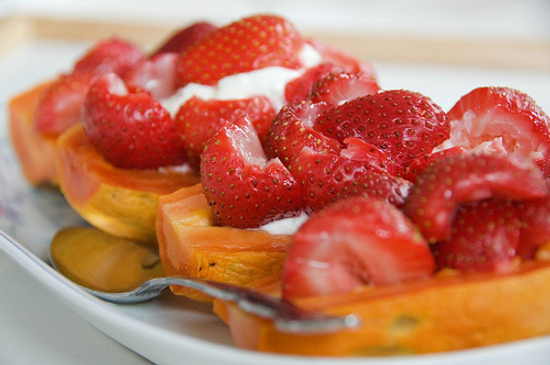
 She sat across the table from me enviously eyeing my salad. “I’d really love some vegetables right now,” she said. We started talking about her diet — the typical diet of the typical American.
I told her that 60-80% of the diet of traditional people groups isn’t cooked. “Oh,” she interrupted, “I bet I don’t cook 60% of the food I eat.”
She missed my point. She was talking about sandwiches and cold breakfast cereals, snack bars and cheese sticks. Let’s not beat around the bush, people. The Standard American Diet (SAD) is cooked. Aside from the occasional salad or piece of fruit, we just don’t eat raw foods. In fact, we fear them.
I think it’s time for Food Renegade Newbie Tip #4.
Eat more raw, fermented, and living foods.
First, some definitions.
- A raw food is a food that is not heated above 118 degrees (F).
- A fermented food is a food that has had its carbohydrates and sugars turned into alcohol or beneficial acids.
- A living food is a food that still has living enzymes in it and includes both raw and fermented foods.
Now, for some examples. Everyone understands “raw,” but “fermented” and “living” may be harder to follow.
- FERMENTED — Some typical foods preserved by lactic-acid formation include mayonnaise, pickles and yogurt.
- LIVING — Cheese, sour cream, yogurt.
Why should you eat more living foods?
One word — Enzymes.
Your body needs them to properly digest, absorb, and make full use of your food. As you age, your body’s supply of enzymes decreases. This has caused many scientists to hypothesize that if you could guard against enzyme depletion, you could live a longer, healthier life.
Okay, so they’re important. But what does that have to do with eating living foods?
Here’s a fairly succinct summary from Life Extension Magazine:
One of America’s pioneering bio-chemists and nutrition researchers Dr. Edward Howell, in his book Enzyme Nutrition, cites numerous animal studies showing that animals fed diets that are deficient in enzymes suffer from enlargement of the pancreas, as huge amounts of pancreatic enzymes are squandered in digesting foods that are devoid of natural enzymes. The result of this wasteful outpouring of pancreatic digestive enzymes is a decrease in the supply of crucial metabolic enzymes and impaired health.
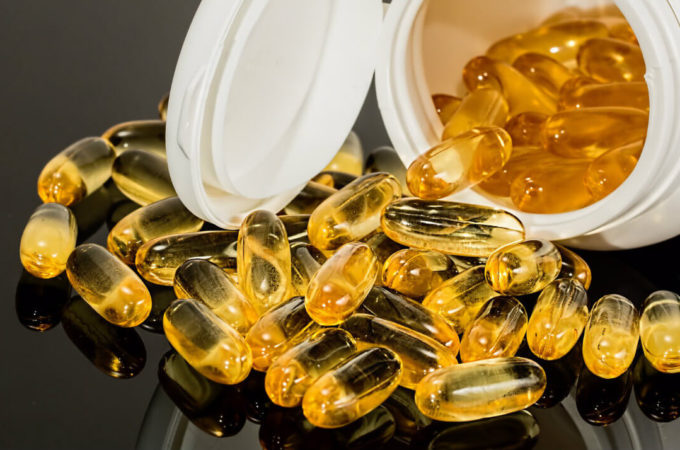
<snip>Digestive organs such as the pancreas and liver produce most of the body\’s digestive enzymes, while the remainder should come from uncooked foods such as fresh fruit and vegetables, raw sprouted grains, seeds and nuts, unpasteurized dairy products, and from enzyme supplements.
Eating food in its natural, unprocessed state is vital to the maintenance of good health, and a lack of it in the modern diet is directly responsible for much degenerative disease. Cooking of food, particularly if heat is prolonged and over 118 degrees Fahrenheit, destroys enzymes in that food, leaving what is commonly consumed by the modern person – an “enzymeless” diet. This is how by middle age we become metabolically depleted of enzymes.
If foods are eaten uncooked, fewer of the body’s digestive enzymes are required to perform the digestive function. The body thereby adapts to the plentiful, external supply by secreting fewer of its own enzymes, preserving these enzymes to assist in vital cellular metabolic functions.
So, I’m about to go all bold and red on you.
Are you ready? If you didn’t read that hunk of text up above, this is the one thing I want you to understand:
Eating an enzyme-rich diet decreases the load on your pancreas, preserving your body’s own natural enzyme potential, thereby reducing your risk of chronic diseases.
So, that’s why science tells you to eat more raw, living foods.
Here’s why you really should consider it.
It’s like what I told my friend at the beginning of the post — for centuries, traditional people groups the world over have consumed at least 60-80% of their calories in raw, living foods and beverages.
Put another way: They’re not the weird ones. We are.
Need an Easy Guide to Get Started?
I’ve created a nifty, print-friendly, easy-to-follow collection of 7 naturally probiotic recipes your kids (and you!) will love.
Where to Buy Fermentation Airlocks & Vessels
If you want to find wide mouth jars with airlocks already installed for fermentation, fermentation airlock lids you can use to top your own wide mouth mason jars, and fermentation crocks, check out the listings here.
Looking for more Newbie Tips? Check out the ever-growing list here.
(photo by puzzlemepuzzle)
 |


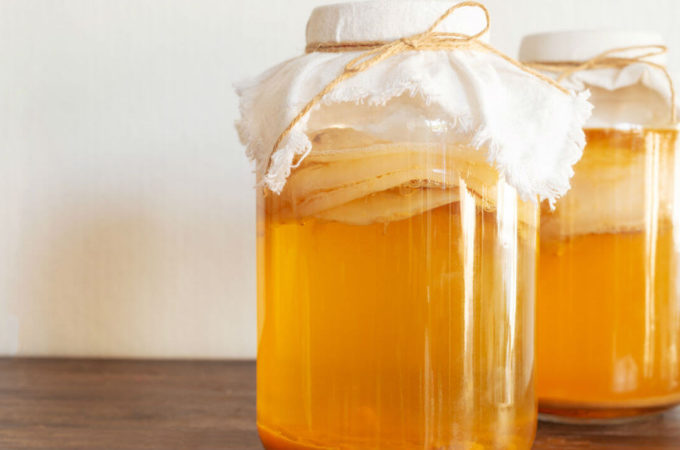



Thanks for the definitions! I had to think about “living food” a bit. I think kombucha tea fits in there, and probably kimchi, both of which I enjoy often. I just made my first whey batch, so I will try to add that (and less salt) to my fermenting.
Erica
Hi Erica — Yes, kombucha and kimchi are both living foods. And they’re also fermented. That’s good news about having whey on hand now. I don’t like fermenting without it (too salty for my tastes).
Oh my, I just heard Sally Fallon speak last weekend and now I’m all about finding myself a resource for raw milk. Your post is a great one–we tend to think our diet is ‘normal’ but really this foodstuff crap we eat is very, very abnormal.
Well said. Thank you for the definitions. Makes perfect sense!
Annette
Thanks for sharing your site with me. I love it!!! I will be signing up for your e-newsletter! I’m so excited about discovering it. Thanks!
Deanne
While I agree that people should eat more “raw foods”, that doesn’t mean we should give up on cooking all together.
Cooking also releases a lot of vitamins, minerals AND ENZYMES from vegetables. You certainly should cook your meat and not only for sanitation reasons, but because your system cannot access a great deal of the nutrition in meat if it is not cooked (realize that ‘raw meat’ is not biochemically the same as ‘fresh muscle’).
The Raw Food Diet is an extreme of the very good idea to eat more raw food…but that does not mean it itself is a good idea.
I know that’s not what this article is necessarily promoting 🙂 I’m just throwing my two cents in on the general subject.
Oh and as a note to Michelle? Just make sure you get your raw milk fresh and from a good source. I’ve worked at a dairy before and I can tell you from experience…that stuff goes bad REALLY fast. It does freeze quite nicely though. Our frozen colostrum (for the calves) kept for many months before we would need to toss it. You’ll just have to mix it up when you thaw it because it will separate when it freezes.
And if the farmer doesn’t clean the cow’s teats properly (as all actually dairies are required to do by the government), then you could easily end up with fecal material in your delicious milk.
Great idea, just make sure you check up on the source.
.-= Celia
Exactly, raw, fermented and living foods are healthy. I think that’s why we seldom see an obese Chinese or Japanese (except for young generation now exposed to fast foods) its because of the food they eat.
I don’t know if Celia still reads this, but I noticed she says that raw milk goes “bad” really fast. I guess that depends on what you think “bad” is. When raw milk goes bad it just sours and the curds and whey begin to separate, which is great in my opinion.When I had a raw milk source and drank a lot of it I used to let a lot go “bad” so I could mix the curds up with herbs to make a spread for crackers and the whey was used for fermented drinks and foods. Good stuff. When pasteurized milk goes bad it is truly bad.
What are some suggestions for those of us that want to, but just really, really don’t like fermented foods? I mean, I don’t even like beer or wine, alcohol of any kind. It tastes bitter, sour, horrible to me.
The only fermented food I’ve really enjoyed so far is kombucha. It’s a nice kind of sour and not bitter. Everything else I’ve tried — I can’t even *force* myself to eat it.
@ Celia… Focusing on raw meat, what do you mean “raw meat” is biodynamically different then fresh muscle? I’m curious.
I would think that cooked meat is biodynamically different due to the proteins being altered by the heat and the loss of enzymes…. I acknowledged the various ways one cooks the meat, whether by boil or by grill impact the outcome. Enzymes are still lost. But am curious about why on what you know?
I personally am a fan of both cooked, raw, and fermented. Both organs and meat!! 🙂
I know this is an old comment, but I know the answer to your question. Muscle is alive. Raw meat is dead. Living muscle is still taking chemicals and processing them into other chemicals. It is also still fighting off bacteria nearby. Raw meat is not processing any chemicals on its own, the bacteria it is not fighting off is doing the only chemical processing that is happening. (This could be spoilage or fermentation depending on the bacteria.)
I think you are really all confused about what the benefits of raw, fermented and cooked foods are and what they do in the body. You really need to do some studying and research. Everyone’s jumping on the bandwagon of ‘raw’ and using terms like ‘enzymes’ and ‘chronic disease’, but have no depth of understanding of these at all.
I agree with you, but let’s say it nicer:)
1st this article seems bias towards dairy. With research we know why that’s a bad idea. Enzymes are best found in raw veggies and so is protein (proven way too many time to respond to someone who believes otherwise). Take a look at food docs to start (netflix), like “food matters” “forks over knives”, the list is pretty good and will give you a great start to understanding this whole food thing. But pay attention, takes notes, and research…
Sorry, but this is nonsense, traditional cultures cook most of their staple foods like meat, fat and root vegetables. you want to eat those potatoes raw do you?
Just finished a kefir smoothie as I’m reading this!
Thank you for sharing, great article very informative.