
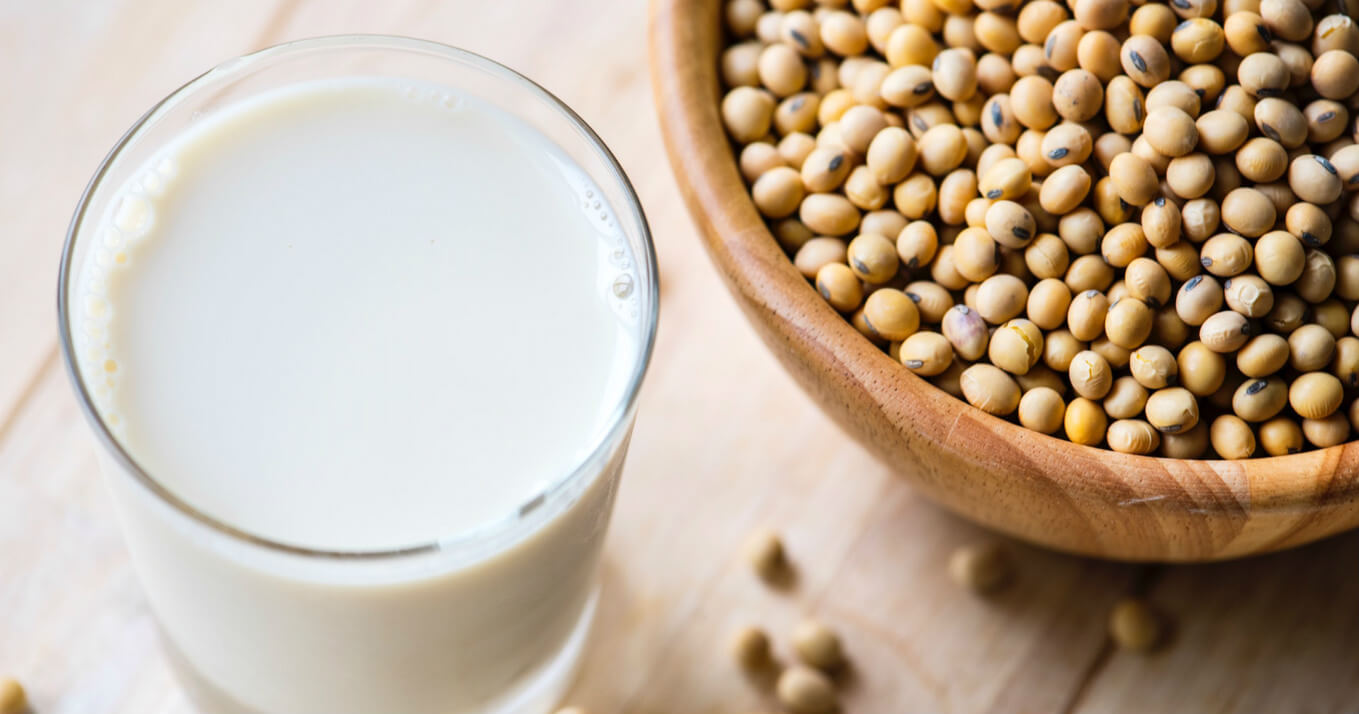
Are you convinced yet about the dangers of soy? Many aren’t. “Is soy bad for you? …Really?” I hear the question so often I want to scream.
After decades of hearing marketing spin about how soy is a wonder food, a protein-rich legume able to rescue us from our dependence on meat, I suppose it’s understandable why so many people have yet to understand fully the dangers of soy. Really, you’re not going to get the full story unless you research it on your own. And why would you, when soy is “universally” touted as a health food?
Well, it isn’t.
Dangers of Soy
Thankfully, more and more research has been done regarding the dangers of soy, and what it’s revealed should scare you.
Soy Danger #1: Phytoestrogens
Soy is higher in phytoestrogens than just about any other food source. Phytoestrogens are plant-based estrogens that mimic estrogen in our bodies. In recent years, you may have read about studies which indicate phytoestrogens are good for you. But ask yourself, who funded those studies? The soy industry, that’s who. Independent research has clearly shown that consuming phytoestrogens is downright dangerous for the human body.
It’s only common sense. No one argues, for example, that a leading cause of breast cancer, endometriosis, uterine fibroids, infertility, and low libido is unopposed estrogen, or estrogen dominance. Why, then, would anyone argue that we should consume more of a food high in estrogen?
An infant taking the recommended amount of soy formula is consuming a hormone load equivalent of 4 birth control pills a day! We haven’t even touch upon what it does to the human growth hormone. Is it any wonder we’ve seen such a dramatic rise in precocious puberty with young girls starting their periods at 6 and 7? (source)
Soy Danger #2: Goitrogenic
Soy will destroy your thyroid. Many foods are goitrogenic (thyroid suppressing), but soy is king of them all. Goitrogens work by preventing your thyroid from getting the necessary amount of iodine. Friends, I believe this is what happened to Oprah’s thyroid. She pushed soy for years, featured it in everyone one of her “healthy” diets, and it destroyed her thyroid. If your thyroid fails, what happens? You gain weight. You have a harder time regulating your moods. You get colder more easily. You’re more easily fatigued. You demonstrate an inability to concentrate and remember details. The list goes on. You simply don’t want to mess with your thyroid. (source)
Soy Danger #3: Phytates
Phytates are enzyme-inhibitors that block mineral absorption in human digestive tract. They are naturally present in all grains, seeds, nuts, and legumes (which is why everyone should read this primer on how to eat grains, if you eat them at all.) But soy is so high in phytates that it’s almost impossible to get rid of them. Simply soaking soy overnight in an acidic medium won’t do the trick. Soy must be fermented in order to be digestible to humans. That means that if you eat soy at all, you should stick to fermented soy products like miso, tempeh, natto, or a naturally fermented soy sauce (tamari). (source)
Soy Danger #4: Trypsin inhibitors
Finally soy is rich in trypsin inhibitors. Trypsin is a digestive enzyme we need to properly digest protein. Without enough trypsin, you’ll experience many digestive problems including stomach cramps, diarrhea, and bleeding. You’ll also be leaving yourself open to future problems with your pancreas. (source)
Debunking The Asian Soy Myth
But, people say, what about Asians? They eat soy every day, and they’re so healthy!
Nina Planck writes:
Soy farming started around 1100 BC in China, where it was used to build soil fertility and feed animals. Soy beans were not considered fit for humans until the Chinese learned to ferment them, which makes them digestible. Asian diets now include fermented soy beans in the form of natto, miso, tamari, and tempeh.
Soy producers want you to eat more soy — more than the Asians eat, and more than is good for you. The Japanese and Chinese eat 10 grams of soy per day — about two teaspoons. Yet a soy manufacturer recommends Americans eat ten times what the Japanese eat — 100 grams of soy protein per day. In The Soy Zone, Barry Sears recommends a daily diet of a minimum of 50 grams of soy, and up to 75 grams for women and 100 grams for men.
It’s like red wine: a glass or two a day may be good for you; a bottle or two every day rots your liver.
Did you catch that? Asians only eat 2 teaspoons of soy a day, usually as a condiment, and it’s highly fermented! Fermentation takes care of many of the dangers of soy. Plus, the typical Asian will also consume soy with mineral-rich and nutrient-dense foods such as fish broth (naturally high in iodine & other minerals which support the thyroid).
So, Is Soy Bad For You?
The short answer? YES! Let’s be clear on the recent history of soy. The soybean was a modest and unpopular crop until food manufacturers intent on creating cheap vegetable oils convinced the U.S. government to start subsidizing it. The soy was turned into oil, and the industry was left with an industrial waste product. Then somebody had a brilliant idea:
Let’s take this industrial waste product full of toxins and carcinogens — isolated soy protein — and turn it into food that people will eat!
Soy foods were born.
Soy Protein & Soy Milk Dangers
From Nina Planck:
The FDA refused to approve isolated soy protein as a safe food additive with the designation “Generally Recognized as Safe.”
Agribusiness giant Archer Daniels Midland withdrew its application for the coveted GRAS status for soy protein, after an outcry from scientists about the toxins and carcinogens that come with it. They can still put soy protein in your food, but they have to get pre-market approval for every product.
Isolated soy protein is no health food. But we don’t eat soy protein with a spoon. How do we eat it? It is the main ingredient in soy burgers, ice cream, milk shakes, and fake cheese. These soy protein products are phony foods — but they must look like the real foods they imitate. So the soy industry transforms a small yellow soy bean into something resembling a hamburger. They make soy “milk” and “ice cream” white and creamy.
The other ingredients in these foods are no better for you than the soy protein that goes into them. Soy milk, for example, is simply a cocktail of soy protein, sugar, and vegetable oil. The “natural” MSG formed in soy processing is already bad for you, but even more MSG, and more flavorings, are added. Imitation foods need a lot of help to be tasty. Many savory soy foods are loaded with additives to give them the flavor of the real foods they mimic. Most imitation meat, for example, contains man-made MSG, which causes migraines and is associated with brain cancer.
Soy foods aren’t real food. They aren’t traditional. They aren’t old.
They’re industrial waste products dressed up in pretty clothes and marketed to an ignorant public.
What Do I Recommend As Alternatives To Soy Milk?
If you can’t do dairy and are looking for healthier alternatives than soy milk, please see Healthy Milk Substitutes With Recipes for a couple of excellent alternatives you can make at home.
One alternative I particularly enjoy is coconut milk. It’s full of the best kinds of saturated fat — medium chain triglycerides — which help speed your metabolism. It’s also exquisitely flavorful and perfect stirred into curries, soups, and sauces. Sadly, almost all coconut milk available at your grocery store comes in BPA-lined cans. To my knowledge, only Native Forest and Aroy-D brands are BPA-free, and not all stores carry them. Click here to find guar gum-free coconut milk sold in BPA-free packaging online.
ETA: Reader comments below prompted me to include a couple of additions to this post. The questions: What about tofu or homemade soy milk? Their consumption is quite widespread in Asian cultures, and they’re non-fermented soy foods. Are they okay? The answers: Tofu originated around the 2nd century BC in China, and it was made from fermented bean curd. That is how it was traditionally made before the days of refrigeration. Most modern tofu isn’t fermented anymore. You can still buy varieties of fermented tofu (aka “Stinky Tofu” or “Pickled Tofu”) in some Asian markets, though. Also, according to the most comprehensive online account of soymilk’s history, its use was rare before the 20th century and widespread usage was highly unlikely. In other words, it’s not a traditional food. Nor is non-fermented tofu. They’re the Asian equivalents of margarine, hot bath canning, “vegetable oil,” or soda pop — something relatively new on the food scene which became very widespread with the industrialization of the food supply. And like these industrialized food products, they are bad for your health.
Still not convinced of the dangers of soy?
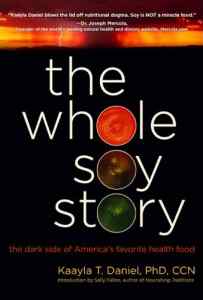 If the sources cited below and a blog post alone aren’t going to convince you, then perhaps you’d like to read an entire book on the subject written by Dr. Kaayla T. Daniel?
In her groundbreaking book on the subject, The Whole Soy Story, Dr. Kaayla T. Daniel uncovers the truth about soy that the government and the soy industry has tried to suppress.
She’ll wow you with research, entertain you with her witty writing style, and have you believing that soy is simply not as safe as we’ve been led to believe.
(Click here to get your hands on a copy of The Whole Soy Story.)
Similar Stories You May Enjoy:
Soy Formula Linked to Seizures in Children
Soy Infant Formula: A Formula for Disaster
Life-threatening Retaliation in Soy Prison Lawsuit
Sources
288 references to the toxicity of soy in the FDA’s poisonous plants database
77 studies showing the adverse reactions to dietary soy
174 studies showing the adverse reactions to isoflavones (phytoestrogens)
(photo by unite)
 |




This is why I’m cutting back. RT: @FoodRenegade Not convinced yet about the dangers of soy? Read this http://su.pr/2BpRoa
This comment was originally posted on Twitter
I suggest basing your judgement on Soy around an article that is at least referenced… who would gamble their health on a random blog post?
This would be a good start: http://www.vegansociety.com/lifestyle/nutrition/
(there are hundreds of conflicting scientic reports on the consequences of soy for health – this information has reviewed and continues to review all reports and bases it’s recommendations on a balance of those reports rather than 1 or 2 that is in line with a given agenda)
Educate yourselves properly – spurious blog posts like this can have detrimental impacts on people’s lifestyles.
Oaks – thank you so much for your comment. I’ve left a couple of posts along those lines in other areas on this website asking for better research and using qualified resources. So much of what I’ve seen here is inaccurate and some of these posts indicate people believe it anyway. It’s irresponsible.
The problem with “qualified resources” is that they are generally funded by big pharmaceutical companies, who’se sole agenda is profit.
One of the greatest marketing techniques is the “Law of Authority”. How many times have you seen an actor dressed in a white coat and stethoscope, “advising” on the health benefits of a drink or drug?
Do your own research, apply common sense and above all, Ignore the media!
When you have people like Michael Taylor, a former lobbyist for Monsanto – the largest producer of genetically altered soy beans – sitting high and mighty in the FDA, how are people supposed to get the truth. Soy isnt just a health danger, its socially irresponsible.
Do you really think most people defending soy are discussing the merits of GMO soy and processed food?
facepalm.
To some degree the processed food tag can even apply to soymilk and tofu, especially the commercial products, but these can be made at home easily with organic soy, and the end product is much superior. To say nothing of the obvious benefits of fermented soy products.
The worst of these myths being spread is the myth that phytoestrogens are the equivalent of taking gobs of birth control pills (which are progesterone, NOT the same thing). This is completely misunderstanding hormones, and absolute nonsense.
The hormonal changes evidenced in children at alarmingly young ages has more to do with the hormones pumped into livestock and dairy cows than plant-based estrogen. Please educate yourself better, and stop spreading misunderstandings.
I don’t know where you’re getting your information from but most birth control is estrogen based.
Please educate yourself.
As someone who had a radical hysterectomy because of endocervical cancer, hormones and calcium uptake are important subjects to me. I have read various articles and claims, fears and cultural practices like in Japan, where they use both fermented and non-fermented soy. Their breast and prostate cancers are much lower than ours, and it doesn’t spread like ours in the US. 98% of soy today is GMO, which I’m not interested in, but a plant-based protein (as meat and dairy are full of antibiotics and hormones and steroids these days-now also growing Fukishima radiation?)is of interest to me. This phyto-estrogen attaches to the recepters where normal estrogen can collect, and thus offers a safeguard. The Shaklee brand I use is Non-GMO, water-washed and calcium added to combat the acidic quality of soy. I definitely feel energy when I consume it, and most of us are deficient in protein, which makes up 90% of our immune systems. I’ve outlived my oncologist and their non-prognosis doom. It’s been 9 years. If I leave this earth, it will probably be from grief and what it does to the immune. Do your own research. Refuse to live in fear, or as sheep. I can send you an entire scientific article if you’d like, or maybe post it on my blog. Some people have been drinking soy protein shakes every morning for 28 years. Decide what ‘s best for you and yours.
After having been misdiagnosed with Fibromyalgia seven years ago, when I happened to be consuming quite a bit of soy, due to problems with dairy, on the advice of a friend, I quit soy cold turkey. Surprise surprise….the Fibro symptoms disappeared and have never returned. Its obvious to me that the soy was linked to thyroid issues.
Well actually, the phytoestrogens in soy have weak estrogenic activity and yet compete with endogenous estrogen and xenoestrogens for cellular estrogen receptors, probably resulting in a decrease in the diseases that result from an overabundance of endogenous estrogen that we produce as well as xenoestrogens, from BPA and other plastics. The phytates have antioxidant activity and (arguably) have value in chelating and removing unwanted, excess minerals in the blood, such as excess iron and heavy metals. The heat of cooking weakens the activity of the phytates btw. and deactivates trypsin and chymotrypsin. As you pointed out, increasing iodine intake can decrease [or maybe eliminate] soy’s goitrogenic effect. That said, soy is for people who digest it well and show only improved health when consuming. It is very important to eat only non GMO, organic soy products. Conventional soy consumption is an invitation to disastrous health.
Btw Ms. Cohen, I just read your kindly, informative comments. Thanks for posting that. Ongoing good health and happiness to you!
This article may be a random blog post, but it is certainly referenced! In the post I provided a link to independent research done about soy. That link takes you to a page that collects much of the independent research in one listing.
References on that page include:
288 references to the toxicity of soy in the FDA’s poisonous plants database
77 studies showing the adverse reactions to dietary soy
and
174 studies showing the adverse reactions to isoflavones (phytoestrogens)
The “independent research” you cite comes from a website where they tout “plenty of eggs, cream, cheese and meat” as a healthy diet! The research includes studies about how pigs, cows and rats react to soy. This is a joke!
There’s a good argument to be made for “plenty of eggs, cream, cheese and meat” being a healthy diet. Heart disease was practically nonexistent before all this “low fat” nonsense got started. The counter-argument is that before about 100 years ago, they didn’t have the means to diagnose heart disease. But I don’t buy that. People still knew what a heart attack was.
are you really going to argue that soy is bad for you based on the studies of a dairy company? sure in large quantities, or heavily processed,it is, but so is just about EVERYTHING, with just about the only exception being water. People need to stop looking for the research that only supports their own beliefs and try looking at things from every angle. sure there is a lot of false and biased research out there (people want to make money) but that comes from both sides. you just need to be aware of where you get your information from before blindly believing it.
I just wanted to whole-heartedly agree with your post. Research is always going to be funded by those wanting to prove their point. The most important thing is doing what we can to be as nutritious as we can.
It seems that way now. Until relatively recently, science, by definition, had unbiased research, which meant it could not be financed by a potentially interested party.
I just want to agree with you Anna, but add that water in excess will also kill you.
Water sure will kill you if you drink to much, ever heard of drowning your organs?
News flash: Too much water is also unhealthy!
I disagree about water it is possible to die from drinking to much water. It’s called water intoxication but you’d have to drink a lot of water for it to happen. Also soy actually is a product that shouldn’t be taken likely even my anatomy and health teachers have advised me against soy products saying it’s best to stick with soy sauce but not to use that much.
Kevin you are right. Junk food junk oils are causing havoc with our health. Dr. Bob Marshall has lot of research on toxic fods, chemicals, GMOs, junk oils. As he always says: If you eat fake food you get fake health.
To be published in a scientific journal, your research must be reviewed by a jury of your peers – scientists with no financial motives. Look to academia and scientific journals – the safest bet for good science!
Kristen, how many of your studies did you actually read the abstract to look for conflicts of interest and funding? I bet none.
No study done on soy that has been paid for by the animal agriculture industry is valid so you can throw those out.
You will be left with a handful and of those, there are plenty that refute them.
Think about it this way, if the GMO corn and soy is so bad, why is it fed to the cows and pigs
you and others eat? What about all the growth hormone in the animals and all
the antibiotics they are injected with?
No matter how bad soy is, it is dwarfed by the amount of negatives involved in eating
an animal based diet.
Yes, for all the most unbiased information on soy and other non-animal “protein” sources, we should all visit a vegan website. lmao
A few of my friends are vegan, and they all eat soy (much to my chagrin). Refrain from being immature, please.
I was going to say the same thing. Yes, slam the “random blogpost” and then direct people to your vegan website, where they are too lazy to research a, what could be considered, “caveman” diet, before humans had the ability or foresight to kill for survival.
Humans have a hard time digesting wheat as well. Processed miracle food that humans discovered could feed a growing population quickly.
We shouldn’t even be consuming lactose past infancy.
What I can’t stand about the Americans of today is… we will bend BACKWARDS to say things like, “Milk can’t be bad for you because why else would they sell it?” “Soy can’t be bad for you because they sell it”. Well with that logic I’m sure you agree cigarettes are okay because…they sell them! DO YOU’RE RESEARCH PEOPLE. Who works for pharmaceutical companies? DOCTORS DO. You know that that means? They will prescribe you ACUTANE (known to make teens real angry and even KILL THEM) over something simple like… going dairy free for 6 months. Oh yeah that’s right dairy causes acne! But oh wait… how long has it been known to cause acne? I can reference one source from the 80’s! An how many people really know about this? Not to many. The government just want’s $$$ or something along those lines. Dig deep inside yourself and realize just because our forefathers consumed this trash, doesn’t mean you don’t have to continue the tradition. Save yourself from acne, cancer, hormone problems, etc. and EDUCATE YOURSELF ON WHAT FOUNDED THIS COUNTRY. The so called companies we trust in? Just want our money. Whether it kills us or not.
Did you know it is illegal for dairy farmers to sell milk to private buyers without a license? It’s because the governement requires a specific amount of hormones be added to milk prior to it being sold to grocers… this came from a dairy farmer I know personally who has issues following the laws regarding private selling….
We make our own Kefir from Raw milk. The best tasting food you’ll ever consume.
I make kefir from raw Jersey milk as well 🙂 It is delicious and has totally changed my life. I can’t ever go back to store bought pasteurized milk.
Please, for the love of the English language, if you are going to rant in all caps, don’t use the incorrect form of your*. In your own words, “EDUCATE YOURSELF ON WHAT FOUNDED THIS COUNTRY.” Thank you.
The US Food and Drug Administration lists SOY as one of the top 8 foods defined in the following passage- ” the law identifies the eight most common allergenic foods. These foods account for 90 percent of food allergic reactions, and are the food sources from which many other ingredients are derived” (Last updated 03-01-2013). No matter the purpose of the “Other Researchers” coming out with their own statistics, it’s common knowledge that soy is used as a filler and is not exactly good for our population. Though, some people may not experience issues when ingesting it. Understand also, that these “researchers” on both sides, have agendas, the FDA information is based on statistical fact not researcher’s conclusions based on narrow hypothesis.
http://www.fda.gov/food/resourcesforyou/consumers/ucm079311.htm
Do you like soy or soy products? Then eat them. I make my own from non-gmo beans. So many of the comments and this article are biased. Is soy a miracle food? No. But touting anything as a miracle food is ridiculous. One comment said there was no heart disease until soy. Huh? Duh! Another says trust the fda. Uh no! Oprahs thyroid troubles were caused by soy. People she was fat to begin with. which is usually a thyroid issue. Think! Eggs, cream, milk and butter are healthy? Oh yeah, thats right. No heart disease until all this lowfat stuff. Not that my grandmother died of heart disease long before any lowfat came on the market. Stop believing
marketing scams. Are Americans really that dumb?
I agree with you that more eggs, cream and butter are not the solution. However, being overweight is not usually a thyroid issue. Far from it. There are approximately 314 million people in the US, about 20 million with some form of thyroid disease. Only about 6.5% of Americans. That includes those with not only hypothyroidism (the disorder that gets blamed for obesity). It also includes those with hyperthyroidism and Graves Disease (a genetic, autoimmune form of hyperthyroidism). The truth is that the vast majority of overweight people are overweight due to overeating the wrong foods, and a sedentary lifestyle.
http://www.thyroid.org/thyroid-events-education-media/about-hypothyroidism/
I was diagnosed 10 years ago with Hashimotos which is another autoimmune thyroid disease. The storms were terrible. I was lucky enough to meet a doctor that had studied and wrote many of the medical journals about the effects of soy on thyroids. He asked me if I wanted to stop taking a handfull of pills every day to avoid removing my thyroids and when I said yes, he told me to stop eating soy in all of its forms. It took a few years to undo the damage but my thyroids have returned to normal and the excess weight fell off without trying. Most of that ‘Wrong Food’ you speak of contains soy in some form. Soy is fodder not food and we would be a much healthier nation without it.
You might want to read who is responsible for the research data as a lot that is favorable is sponsored by the producers of the product there is heaps that is independent research that inform of the dangers of soy heaps on mercola.com another useful independent source is Elaine Hollingsworth ]in her website doctorsaredangerous.com
I too have read conflicting reports concerning soy, so it’s difficult to tell. Non GMO is supposedly good for you. Food Renegade is touting coconut milk and I’ve also read that coconut milk isn’t all it’s hyped to be. I agree, do your own research and do quite a bit.
There are plenty of articles on PUB MED. Most of the research that finds issues with soy are from non-US research institutions, and US research tends to be on the fence. However, all articles on PUB MED are peer reviewed and “legitimate” (to use your word). I attribute that bias to the soy lobby in the USA and the lack of soy lobbyists outside of the USA.
Hm, much of this is new to me. I’m Chinese, and I’ve been eating soy forever in the form of tofu (firm, silken), something like tofu called doufuhua, soy sauce, soy milk, and bean curd sheets. And so, I take issue with a number of the “Debunking the Asian Myth” statements:
1) Whoever Nina Plank is, I can tell you, as a Chinese person, that Chinese people in no way limit themselves to eating just “2 teaspoons” of of soy product a day. One tofu dish will easily give you 5-10 TABLESPOONS of tofu. That’s not including the soy sauce that will almost always be consumed at some point during the day, either as a condiment, as noted, or as a seasoning in a sauce. And if I drank soy milk that morning, and/or have bean curd sheets in hot pot that night… yeah, we’re talking anywhere from 2 teaspoons…to 40 teaspoons. And in no way is any of those soy product in anyway consistently linked with fish broth. It is also consumed with rice, vegetables, meat, and alone.
2) I am very doubtful that consumption of soymilk was rare before the 20th century. It’s a traditional breakfast drink, particularly common around the Shanghai area. I think you misunderstood the article you were quoting, which says “In 1928 Tso, an expert on soymilk, wrote: “Soybean milk is a native food used in certain parts of the country as a morning beverage but is little used as part of the diet for children.” That meshes with what I know: it’s a very common food, but not really something people traditionally grind up to feed infants. That’s what human milk was for…
So overall, I take issue with your statement: “Soy foods aren’t real food. They aren’t traditional. They aren’t old. They’re industrial waste products dressed up in pretty clothes and marketed to an ignorant public.” If you’re talking about tofutti ice cream, or tofu yogurt or the weird American soymilk that tries to taste like cow milk, ok fine, I have no problem believing that American companies that come up with these weird processed stuff that tries to make tofu be milk might be a little odd. But tofu is all pretty traditional, and I’ve heard stories from my Dad about how his grandma would make fresh tofu and he burned himself gulping the piping hot stuff down. I don’t think she was making him “industrial waste products dressed up in pretty clothes and marketed to an ignorant public.”
Thank you for your post! I have been eating soy since childhood and I enjoy it often, so all of the conflicting reports have worried me. Of course, I did my own research, not just reading speculation on blogs but by reading actual medical and academic journals. I use PubMed.gov and my university library databases. I have found it nearly IMPOSSIBLE to locate a single article that draws any conclusive evidence that soy is as dangerous as you claim. On the contrary, most of what I have read has concluded that Non-GMO soy can actually help prevent many diseases. Try using PubMed.gov to look up any concerns. It seems you list many of these complications with only a partial understanding of the biological effects of the plant. And the birth control statement? C’mon. Absolutely irresponsible!
Great post. I appreciate your input. It seems that people want to blame soy rather than their own ignorance. Stay away from commercially processed “health” food.
Thank you for this. I am Asian too (Singapore), and I found it very odd that the article claims that Asians by and large limit themselves to two teaspoons a day. Seriously?? My mom would make soy milk from scratch, and we often ate tofu/soy related foods. I really wonder how many of the ‘food scares’ I read about on the internet are particular to certain regions, ie. America…
Japan, by the way, has a very long history of making not just natto (which is tasty), but also fresh tofu.
What you say is spoken as true by your experience. Research has shown that thyroid problems are generally rising in China.
so is meat and milk consumption…. so….
i always thought that soy was cattle feed because they could digest it…the human body makes one digestive enzyme at a time so how could we digest soy
I am anaphylactic to soybean oil since i eliminated soy I became leaner and lost 6 pounds..this phytoestrogen is so dangerous and is feminizing men and causing women to become fatter.. stay away! its in everything now..
A very straight forward and informative post.
I’ve known soy was bad, but I wasn’t quite sure why, and I hadn’t looked at it like you stated in the last bit
“Soy foods aren’t real food. They aren’t traditional. They aren’t old. They’re industrial waste products dressed up in pretty clothes and marketed to an ignorant public.”
Thanks very much.
.-= Q´s last blog ..An easy change for the sake of the environment… =-.
So will it be better to continue to suck out the backs of farmed sick scared murdered animals… What is really bad for you.. Maybe if more people demanded the look into natural foods rather than eating living animals we will find the majic of life.. I will eat the soy anyday over the sick animal that was raised on soy….
Cantsen — I don’t eat animals raised on soy either. Rather, I opt out of the industrialized food system altogether. That means I say no to soy, and that I say yes to grass-fed/pastured/wild animals.
Just out of curiosity, what then is your opinion on the birth control pill?
Caveman diet… eat to survive. Everything should be natural as it was prior to industrialization. Look into food forests and the benefits of raising and keeping chickens on your property.
well said!
I’m sorry, but just because you are a vegetarian doesn’t mean that the world should be vegetarian. Human beings were never built to be vegetarians and it’s clear by our general makeup and our jaw structure, teeth, etc. There are only a very minute population of indigenous groups on earth that even come close to being vegetarian and the only reason they are is because of the scarcity of meat in their region. Food is regional and is eaten according to availability. Natural is the way to go, however I really don’t have time these days to go hunting to spear my game or fish for my fish.
You are right, many farm animals are raised on soy and that makes them sick as well. But ingesting it directly is no better. The only thing we can do is limit what we can control directly. Unfortunately, I can’t control what mass produced animals are fed, but I can control my own feed. Unfortunately if I cut animal products from my diet I would not be able to maintain the muscularity that I have. There simply would not be enough protein in my diet. Bottom Line.
bangkok trainer:
do some legitimate research before raging on, because you have a personal need to believe we are natural born meat eaters. There is tons of good research out there to refute that and America is sick getting sicker so it’s not even reasonable and void of common sense to make your comment.
The issue isn’t soy. I avoid soy as well. We are complex carbohydrate starch eaters and plant eaters.
Soy is some of the main ingredient in fake meat products and any thinking person can reason that can’t be good. If people would get over their obsession with flesh and start eating complex carbs they would be healthy and we wouldn’t need to debate soy vs meat in the first place.
Your muscles? are you serious? There are issues around enjoying looking at your own flesh as well but I will not go into it.
If you ever choose to be healthy (healthy-not vain) a place to start would be The China Study (and no it has nothing to do with soy).
Go to Dr. Mcdougalls website. Another healthy place to begin.
And anyone who uses the phrase “bottom line” should consider that a red flag to examine their heart, motives, and more importantly their knowledge. I wouldn’t recommend asking other muscle heads.
amy
Nope, there is no credible research anywhere that suggests we were not meant to eat meat, sorry.
NEXT!!!!!
Oh also complex carbs make you fat, cause inflammation and heart disease. I stopped eating them and will never eat them again. Completely useless.
Pretty sure you meant to say SIMPLE carbs make you fat, not complex.
GMO soybean oil is in practically everything. It is absolutely making us fat and unhealthy.
Olive oil, virgin coconut oil ,and non-GMO sesame oil are excellent.
Plant based oils are cheap and soy lecithin, which is also in nearly everything, is otherwise very harmful. If we were eating all non-GMO soy (fermented!) in small amounts but mostly lean hormone fee meats that didn’t eat GMO grain and we ate a ton of organic, non-GMO vegetables with it, we would be in fantastic health! More veggies than meat and more veggies than soy. Good luck with that here in America, though. :-/
My horses don’t have canine teeth or ridges on the roof of their mouths. But I bet you do.
Wow. U should probaly do some more research before trying to inform people about the jaw structure of the human body. If researched, u would find our carnivores have no flat molars for grinding ( or plant chewing), & our stomach acid is 20 times weaker than the average carnivore. As far as ” only a minute population of indigenous groups that even come close to being vegetarian”, I grew up in a farm community & stopped eating meat when I was 10yrs old because it made me feel sick. I’ve been vegetarian for almost 20 yrs (almost 30 yrs old now). I think u should try readng EAT RIGHT FOR YOUR TYPE; which is about eating right for your blood type. I am B- which is fairly rare & therefore what my body needs is going to be different from someone who has O BLOOD TYPE & NEEDS MORE IRON LEADING THEM TO CRAVE RED MEAT. Every human is different, like you said, “it doesn’t mean that the world should be vegetarian” & furthermore nor should the world be carnivorous! To each his own, we live in a quickly evolving society & people who choose alternative lifestyles for whatever reason should be respected as well as people who live more tradtiionally. THERE ARE PLENTY OF ALTERNATIVES TO SOY- FOR EXAMPLE, MOST DON’T REALIZE 1 OZ OF WHEATGRASS CONTAINS 6.4 GRAMS OF PROTEIN & SPINACH & BROCCOLI ARE UP THERE AS WELL. The only bottom line is our health! Not your point of view! Stay healthy people!
Well said. I am not a vegan but not w/o consuming meat either. I think it has to be balance most of all. I respect individuals who chose eat a healthy for their type. I am AB+ It would be better for me to eat mainly fish oppose to eating beef and chicken. Knowledge is power!!!! 🙂
Your Blood type comments are beyond ignorant. This old saw has been dismantled years ago ~ but advocating for vegetable proteins is beyond the pale.
@Bangkok Trainer, I couldn’t have said that better myself!
Hmmmmm…. do you think that at some point in your santimonious life that you, or at least one of your ancestors may have eaten an animal product (and here I cannot resist saying that I have never eaten a LIVE animal as you wrote in your post)? The plain fact is that modern man got here by eating meat and what other meager ingredients that he was able to raise for himself and his family. The rest of the world suffered from famine because modern farming methods that can produce surplus’ crops to send to those starving countries did not come along until the industrial revolution when modern implements made it possible to clear large areas of land, till and cultivate the soil, and harvest the resulting crops… I’m willing to bet, even now, that any one of the hungry of this world will not turn down a meal made up entirely of dead animals… so get over yourself.
While I’m talking about corporate farm methods, may I mention all of the untested chemicals that caused ill effects from paper-thin eagle’s eggs (result of DDT contamination) to birth defects and cancers in humans that were rampantly used – and are even now only being found as dangerous when we can get past the lobbiest’s influence on our law makers and regulators… such as the FDA… if you want an example of gross malfeasance look at how aspartame was refused safe status for over 8 years and suddenly and suspiciously was granted approval by a new FDA head that summarily negated all objections and approved it’s use, and then resigned and went to work for Searle… the company that developed it… at a very high salary… and when the government finally appointed people to investigate the case, the two prosecutors found that there was insufficient evidence to come to an investigative conclusion. But then guess what? Those same two prosecutors resigned their government jobs. Their new employer… Searle.
However, that is sustenance with which to feed another blogpost. I have gotten off of the original reason I replied to your post, to wit: Get off of your self-elevated, golden soap box, get your nose out of the sky (it may rain and drowning is a distinct possibility with it poked that high up) and try to contain your supercilious air that is so common to those of your pompous ilk. I get tired of being low-rated because I enjoy a fine medium rare steak, grilled to perfection, over almost any other food out there. I also enjoy vegetables too… nothing goes better with that steak than a good ‘ol baked potato.
If you choose the vegan life style, good, that is certainly your prerogative; but don’t look down on others that don’t subscribe to the same misguided logic that you do.
Wow, AGAIN. Why are you people so angry at vegetarians, is it jealousy? Perhaps? Eat meat if you want, there is no threat posed by vegetarians. We are not going to suddenly take the meat supply away. MISGUIDED INFORMATION!?! I CHOSE TO BECOME VEGETARIAN WHEN I WAS 10 YRS OLD, ON MY OWN, AGAINST MY PARENTS WILL, WITH NO INFORMATION BECASUE I KNEW IT “FELT RIGHT”. HAVE NOW BEEN VEGETARIAN FOR 20 YRS W NO PROBLEMS. I AM NOT MISGUIDED, BUT I WOULD SAY VERY GUIDED W/IN MYSELF, VERY IN-TUNE W MYSELF FROM A VERY EARLY AGE. YOU CAN ONLY WORRY AND TAKE CARE OF YOURSELF, SO STOP HARRASSING THE VEGETARIANS BECAUSES YOU CAN’T GRASP THE IDEA OF NOT EATING MEAT. SHUT UP AND EAT YOU RMEAT QUIETLY. IF YOU ARE LOW-RATED, IT IS MOST DEFINATELY BECASUE OF WHO YOU ARE, NOT BECASUE YOU EAT MEAT!
-PIXIE
Humans aren’t made to digest plants. We use it mainly to clear out our digestive system. Read the book “The Vegetarian Myth”. Its written by a long time vegetarian who had many problems with it.
That is the dumbest thing I have ever heard… “not made to digest plants”??? We are clearly omnivorous and such an extreme statement should raise a red flag in any rational person.
The recommendation about “The Vegetarian Myth” is well taken and the idea is that we humans are clearly meat eaters and to not do so has profound consequences.
there are no profound consequences to not eating meat. you are arguing with people who have done it for years (18 years myself) and not suffered from the choice. quite the opposite, actually. nobody’s coming down on the meat eaters here, just defending ourselves against accusations, and extremely rude comments, i.e. “misguided logic” and the ridiculous idea that we’re only meant to consume vegetables to clear the meat out of our systems. leaves me wondering why, if the meats so good for us, does it need the vegetables help to clear on out of our bodies?
Pixie, that is exactly my story! And I consider my decision to be one of the only ones I have always been sure of. I’m really confused by the way everyone is arguing about whether being vegan/vegetarian is natural or healthy. Isn’t the question whether soy is harmful or not? Personally the research on soy is terrifying but not necessarily because of the tofu I eat, most baby formula is soy based and many many many packaged foods are contaminated with soy as well, start checking it will amaze you. However as a vegan and not the type to spend more than 15 hour a week in the kitchen I find it difficult to find protein sources that will suffice. I have been working to eliminate soy but it is something I crave and it makes me feel good so it is hard. I guess this feeling is probably similar to the feeling a true meat lover gets when doc says to eliminate the steaks….. hard. I wish we could all see this as a problem for us all to deal with instead of jumping to opposite sides of the court immediately. I am a vegan because I believe it is the right thing to do, I encourage everyone to do the things they see as right as I will continue to do. Lets see what we can come up with.
Kale has alot of protein.
WHAT??? Why eat EITHER one??? You say that like animals fed soy and soy products are the only choices on the planet! C’mon people. The fact of the matter is that soy is a HUGE industry and a lot of money exchanges hands there. Not only is the soy industry huge but it is extremely powerful and it doesn’t appreciate it when people mess with its profits — and it will do and say ANYTHING in order to keep the illusion that it is ‘healthy’. Remember Ken Lay and Enron? Worldcom? Bernie Madoff? The disgraced accounting firm, Arthur Anderson? The one thing all these people and companies had in common? GREED. And it was the type of greed that was at the expense of anyone and everyone. They didn’t care who they hurt. They lied and cheated and stole indiscriminately — and at any cost. The soy industry is no different. They are raking in the profits while people think it’s ‘healthy’. I know firsthand, because I was one of them. I thought soy was healthy. I was feeding soy formula to my baby and then once she was off of soy formula, she was drinking a LOT of soy milk. She began having cramps in her hands and her feet – which was when I knew something was very wrong. I called a local holistic doctor and told them what was going on and the first thing they asked me was, “What is her diet like?” I told her she was drinking a lot of soy milk. They told me to take her off of that IMMEDIATELY. I was shocked! “Why?!” I asked. They gave me several links – I was stunned and then horrified and then — angry. It took about a year for ALL the cramping to go away, but I did notice an immediate improvement. My family avoids soy like the plague. So should yours.
We don’t eat living animals. Most of us make sure the animals are dead and nicely cooked before we eat them.
And that makes it ok to eat slaughtered animals!? its inhumane and wrong also contrary to popular beleif eating meat is not good for you period!! the majoroty of serious life threatening illnesses are caused by eating it. Do you actually think its natural to cook meat “becasue you always see tigers in the jungle wip out a george forman to cook up a fresh kill” lol anyway my poit is wisen up dont let the years of brainwashing fool you! and even if you eat organically raised animals they are still bad for you because its dead not l are more prone to ccive food like fruits and vegetables the human body needs lving food packed full of antioxidents and nutrients to thrive. Meat is also highly acidic so your prone to cancer and other ilness caused by your body being in an acidic state.
I don’t do “sick, scared, murdered animals” because I raise my own. I have free range chickens and lovingly cared for goats. I know what my animals ate from the day they were born until the day they died humanely. You call it “murdered”; I call it fulfilling their destiny because they were raised to be eaten. I have my goats for milk and meat. I don’t know how to get milk from a dead one or how to get meat from a live one. I DO know how to feed them and love them and watch over them. I know that the way I care for them affects the way they care for me.
Hm, much of this is new to me. I’m Chinese, and I’ve been eating soy forever in the form of tofu (firm, silken), something like tofu called doufuhua, soy sauce, soy milk, and bean curd sheets. And so, I take issue with a number of the “Debunking the Asian Myth” statements:
1) Whoever Nina Plank is, I can tell you, as a Chinese person, that Chinese people in no way limit themselves to eating just “2 teaspoons” of of soy product a day. One tofu dish will easily give you 5-10 TABLESPOONS of tofu. That’s not including the soy sauce that will almost always be consumed at some point during the day, either as a condiment, as noted, or as a seasoning in a sauce. And if I drank soy milk that morning, and/or have bean curd sheets in hot pot that night… yeah, we’re talking anywhere from 2 teaspoons…to 40 teaspoons. And in no way is any of those soy product in anyway consistently linked with fish broth. It is also consumed with rice, vegetables, meat, and alone.
2) I am very doubtful that consumption of soymilk was rare before the 20th century. It’s a traditional breakfast drink, particularly common around the Shanghai area. I think you misunderstood the article you were quoting, which says “In 1928 Tso, an expert on soymilk, wrote: “Soybean milk is a native food used in certain parts of the country as a morning beverage but is little used as part of the diet for children.” That meshes with what I know: it’s a very common food, but not really something people traditionally grind up to feed infants. That’s what human milk was for…
So overall, I take issue with your statement: “Soy foods aren’t real food. They aren’t traditional. They aren’t old. They’re industrial waste products dressed up in pretty clothes and marketed to an ignorant public.” If you’re talking about tofutti ice cream, or tofu yogurt or the weird American soymilk that tries to taste like cow milk, ok fine, I have no problem believing that American companies that come up with these weird processed stuff that tries to make tofu be milk might be a little odd. But tofu is all pretty traditional, and I’ve heard stories from my Dad about how his grandma would make fresh tofu and he burned himself gulping the piping hot stuff down. I don’t think she was making him “industrial waste products dressed up in pretty clothes and marketed to an ignorant public.”
fantastic article: the dangers of soy! http://bit.ly/IjV3j
This comment was originally posted on Twitter
Did u know the avg baby fed soy formula is eating the amt of estrogen found in 4 birth control pills? http://su.pr/2BpRoa (via @FoodRenegade
This comment was originally posted on Twitter
Did you know that the avg baby fed on sick fat scared cow milk is eating way more of eveything than that of soy. We raise our human children off the milk of a cow.. Whats wrong with that picture!!
Why not raise your baby on human milk instead?
That’s why there’s raw milk made from Jersey cows. Happy cows make healthy milk. Or even goat’s milk, which honestly, is even better. Pasteurized milk is what’s really bad, for anyone! But it seems most people don’t know the difference between pasteurized whole milk that anyone can get at a regular grocery store, and actual raw milk that’s ‘straight from the cow’.
Soy is bad, pasteurized cow’s milk is bad. Both are not good for people. Drink raw goat’s milk (which taste just like cow’s) or raw cow’s milk, if one were to drink milk at all.
Hmmm.. I disagree. Goat milk does not taste ANYTHING like cows milk.
I have to interject here. FRESH goats milk tastes very similar to FRESH cow’s milk. That canned stuff in the store just tastes sour!
We are the only mammal that drinks milk after we are weaned. Any one think that maybe we shouldn’t be drinking milk at all, expect for when babies are breast fed? And if you’re worried about the hormones in soy, you should be worried about hormones in milk. There are a ton of hormones pumped into cow’s food, which in turn are passed on to us. I don’t think we as a society eat enough soy to attribute early puberty to phytoestrogens – hormones are pumped into our food at every turn. Look for grain-fed meat (if you eat meat)and find out where it came from – you can’t always trust the label, beans, lots of fruits and vegetables.
Hi Lynda,
The milk I drink doesn’t contain hormones. It comes from cows eating lush, green grasses, and it is raw. I also wouldn’t touch grain-feed meat with a ten foot pole. This site advocates opting out of industrial agriculture, including industrial animal farming practices.
And yes, the average American *does* eat enough soy. It’s in just about every food in the supermarket — like corn. It’s even in our infant formulas.
Assuming we all buy processed food. I don’t. I buy everything as natural as I can find it. And the milk you drink may not contain hormones – more people should buy the mil you do. Butt he milk the vast majority of people drink does contain hormones. Once again, if you have a balanced diet, you don’t need to eliminate natural foods. Buy organic soy products, consume them in moderation and you will be just fine.
Are you going to tell me I can’t eat corn now? Corn is not in everything, high fructose corn syrup is in everything. There is a massive difference between the two. High fructose corn syrup is bad for you. Corn, as a whole food, is not.
I have a wonderful bridge in Brooklyn to sell you.
I’ve been so upset living in this US, not having the right to know if my corn (tortillas, masa, corn meal) is GMO or not. Rarely can I find corn labeled as Non-GMO or Organic, and I love corn. I figure anything with High Fructose Corn Syrup has the GMO Round-up Ready genes in it, so I just say NO>>>>>>, but anymore, it feels like we’re being set up for some eating disorder, wading around the grocery store, not able to buy anything sprayed, processed or GMO=I’m hungry! It’s down to growing most of our own food, and/or joining a Co-op. I can grow arugula all winter, but now esp. on the west coast, I think of the Fukishima radiation raining over outside crops. 8hrs. ago, better-trusted media released San Francisco beaches are now high w/ radiation.
The sea animals are dying in mass numbers in the Pacific, but it will spread to every ocean.
See also the recent series of alerts from the citizen-based Radiation Network.
There have been a series of recent alerts – defined as readings above 100, particularly on the West Coast: http://www.radiationnetwork.com/index.htm – up to a million times normal background radiation.
I feed my babies Muscle Milk =P …My Baby = My Arms…haha
.-= Bangkok Trainer´s last blog post …Super Size Me Part I =-.
It’s been done for centuries and humans have been fine. We’ve done it much longer than human use of soy and soy products. What’s wrong with that picture?
The only problem with animal products is that we’re feeding them soy products and hormones…What do you think they’re putting in the already screwed up soy that wasn’t meant for ingestion in the first place?
.-= Bangkok Trainer´s last blog post …Super Size Me Part I =-.
and how much of that soy is Genetics?
Infants and babies are meant to have mother’s milk and that is why those not nursed. Cow’s milk forms large curds in the babie’s stomach and that is why they are crying with a stomach ache. Besides, that is why God put animals on this earth–to feed the humans
Dairy Farmers of America – another great industry (not). Another HUGE industry with a lot of pull. “Milk — it does a body good!” REALLY??? I disagree. It DOESN’T do a body good the way we do it here. Ever notice that everything that is good for you, they just HAVE to mess with it? I was raised on a farm. We milked our cows by hand, let them eat the sweet grasses of our farm — all 280 acres… and that was they way it was done. There was no mastitis or any other nonsense. Our cows were healthy because we took care of them. We drank the milk RAW… we were never sick. But our government mandates that we should be scared of milk, fruit juices and a million other things if they are not pasteurized, homogenized… and every living healthy content of the milk destroyed. Then, in all their wisdom, they will ADD back into the milk the ingredients they think you need. Talk about messing with nature. Just leave nature alone!!! Keep your chemicals and all your safety nets. Really. We are just fine!
I’m with you, Ethix. I have “organic” goats and chickens. They never get sick and they either die from old age or because they’re dinner. My animals forage and I’ve never had a goat with mastitis or any kind of infection. I use internal parasite control once a year, in the fall, but even that’s all natural and organic, so it isn’t bad for them. The corporate farm is killing Americans with GMO plants and grain-fed meat full of antibiotics and hormones. It’s a shame. I’m working on becoming totally self-sustaining like our forefathers. We supplement our meat with deer. They eat my fruit trees and Japanese maples and I eat them.
Cow milk contains progesterone which is identical to human progesterone. Progesterone helps balance the excess cancer promoting estrogens we are exposed to in the modern world.
I highly doubt cows who are used to being milked are “scared”. And why rebuke the cow for being fat? You don’t want to give it a bad self image issue do you?
interesting read
i have to ask though, and forgive my ignorance, but what about tofu? that’s made from soy right? and asians eat that, and i’m not aware of them getting health problems from it
Dan you are on the right track!! Still research everything but nothing has more danger than eating living flesh!! We are humans with sence to not eat like animals. Look are they saying its better to eat the animal that was raised on soy foods.
Cantsen — I addressed the tofu question in the post, and I also replied to Dan further down in the comments thread. Also, please know that I do NOT recommend feeding soy to animals either. If someone wants to eat animal foods, they need to be animal foods not raised in the industrial agriculture system. Find grass-fed/pastured/wild meats from local farmers; stick to raw or fermented dairy from grass-fed cows; etc. In other words, the mode of eating I recommend is based on sticking to Real Foods — foods that are old and traditional.
Well..eating living flesh is one thing. I tend to prefer it being dead, and in most cases cooked, prior to consumption. Not to mention it’s pretty difficult to eat something that’s living, they tend to disagree with it. Now, I do have the sense to not eat like an animal – I cook most of my food in some way prior to eating it which actually puts me above animals, ’cause they can’t cook or season foods. That being said, I take full advantage of my omnivorous physical traits and enjoy both meat and veggies.
Cantsen, it appears, is more interested in a DISinformation campaign. NO ONE here has said it is better to eat animals raised on soy than to eat soy. BOTH are equally unhealthy. You should pay more attention. By the way, that is one of the drawbacks of eating soy… it will give you the attention span of a gnat.
AMEN, AMEN!
Just an editing note – In Nina’s article it mentions the Asians eating only two TEASPOONS a day.. and you said two TABLESPOONS in your paragraph after it… you might want to fix that 🙂
.-= Meagan´s last blog ..Fruity Vegan Oatmeal Bake =-.
Great article! You did an excellent job summing up the current arguments against soy. Just a question: In your first quote by Nina Planck it says that Asians eat a total of 2 teaspoons a day of soy. In your next paragraph you re-state this fact except you say that they eat a total of two tablespoons. Which is correct?
Thanks again. I’m going to forward this to a few friends!
Katie
Katie & Meagan — Thanks! Fixed.
@jillianmichaels already preached!! RT @Kathy_Valentine: @FoodRenegade Not convinced yet about dangers of soy? Read this http://su.pr/2BpRoa
This comment was originally posted on Twitter
Dan — Tofu originated around the 2nd century BC in China, and it was made from fermented bean curd. That is how it was traditionally made before the days of refrigeration. Most modern tofu isn’t fermented anymore. You can still buy varieties of fermented tofu (aka “Stinky Tofu” or “Pickled Tofu”) in some Asian markets, though.
Furthermore, the stats regarding Asian consumption of soy products includes tofu, so the original point still stands. Asians eat ridiculously small amounts of soy compared to a westerner eating the standard American diet (which is saturated with soy oils and protein in most processed foods), let alone a “health-crazed” westerner trying to eat 100g of the stuff per day!
It would be interesting to find out if soy consumption goes up or down compared to the asian consumer’s economic status. Wasn’t soy considered a poverty food prior to the world wars?
I recall a study designed to test aged people’s IQ before and after completion of a study in which men and women consumed soy drinks daily for several months. The male IQ scores dropped but the female IQ scores improved some.
Step away from the soy: http://bit.ly/6yptz (I’m amazed so many people who are into healthful, local, artisan food eat soy.)
This comment was originally posted on Twitter
Dangers of soyhttp://bit.ly/IjV3j
This comment was originally posted on Twitter
Concerning soy products, does that also include eating the soy beans in the pod?
i was wondering the same thing i LOVE some boiled soy beans!
an article on the dangers of soy: http://bit.ly/IjV3j
This comment was originally posted on Twitter
Interesting article: http://bit.ly/IjV3j
This comment was originally posted on Twitter
Reading @foodrenegade Dangers of Soy http://tinyurl.com/mevdyu
This comment was originally posted on Twitter
Hi Kristen, this is an intriguing post.
I still don’t get this point about soy and tofu. You said that Asian consumption of soy products includes tofu, but they only eat on average 2 teaspoons when they eat it in dishes? This seems a little unbelievable to me. Is tofu not a traditional item included in stir fries and other Asian meals?
If soy is bad, are people not supposed to eat tofu or edamame either? Is tofu OK to eat if you’re combining it with other fermented items like fish sauce and tamari?
Sorry, I don’t mean to be argumentative, I’m just confused about this all.
.-= Amy P.´s last blog ..FeedBurner Terms of Service Update =-.
Soy may not be good for us after all http://bit.ly/IjV3j #organic #realfood #health
This comment was originally posted on Twitter
Dangers of soy? You decide. http://tr.im/z1d4
This comment was originally posted on Twitter
Amy P. — You got it. According to the surveys, Asians eat an average of only 2 teaspoons of soy product a day. It is usually NOT the centerpiece of the meal, but rather added to it like a condiment. Remember, too, that this is an average. So, it’s possible they don’t eat hardly any soy for three days, then have it with a meal and consume 6 teaspoons of it.
And, yes, people should not eat unfermented soy products like unfermented tofu, straight edamame, soy milk, etc.
Michelle — If those soy beans aren’t fermented, then you should avoid them.
Since I have hypothyroidism, I have avoided all soy foods (which I don’t really like anyway), with one exception – soy sauce. I’ve never used huge amounts of it anyway because of the saltiness (and I use the reduced sodium kind). Should I be totally avoiding soy sauce as well? I love the taste of it, but I’m sure I could learn to live without it, especially if even a small amount is still affecting my thyroid. Thanks!
~janella~
Janella — If the soy sauce is naturally-fermented, it should be fine in moderation. Of course, it’s best to get an unpasteurized, fermented soy sauce, but those are harder to come by. Ultimately, though, it’s your decision. Are you doing things to promote thyroid health like eating mineral rich REAL sea salt? Avoiding other goitrogens? You get the idea. If the soy sauce is one of many compromises, then maybe it’s best to avoid it. If it’s the sole one, then occasional use shouldn’t hurt.
Can thyroid damage caused by soy be reversed ?
also note that inorganic sodium fluoride is added to sea salt & other salts (around the world & in the U.S.) now because of the false claim of it keeping teeth healthy. So i alsays call the manufacturer now or small business person to make sure they do not add any forms of sodium fluoride, which is an aluminum byproduct of the phosphate fertilizer industry.Most ppl aren’t aware of this. THere is an excellent documentary titled An Inconvenient Tooth: A fluoride documentary, it was released this year. I think you may be able to watch it for no cost on the hosting site you tube, or order it online & spread the information. I drink only distilled water & show this to everyone.
I learned this a while ago but this explains it better RT @ZenOfHealth Food Renegade » Blog Archive » Dangers of Soy http://bit.ly/2oxEq7
This comment was originally posted on Twitter
Thank you, Kristen. I do use real sea salt when I use salt. Looks like I have to do some research on other goitrogens, however – I don’t have a clue about them at all.
Food Renegade » Blog Archive » Dangers of Soy http://bit.ly/Q0kg9
This comment was originally posted on Twitter
Food Renegade » Blog Archive » Dangers of Soy http://bit.ly/118DHs
This comment was originally posted on Twitter
Great post! I’ve long been concerned with the push to drink soy milk and eat soy burgers to replace meat and milk. We already live in an endocrine interrupting world and eating so much soy just exacerbates the problem.
Karla
.-= Living A Whole Life´s last blog ..Great Read: Healthy Child Healthy World =-.
The dangers of soy: http://bit.ly/6yptz #food #organic #farm #agriculture
This comment was originally posted on Twitter
Dangers of Soy | Food Renegade: After decades of hearing marketing spin about how soy is a wonder food, a protei.. http://tinyurl.com/mevdyu
This comment was originally posted on Twitter
Dangers of Soy | Food Renegade http://tinyurl.com/mevdyu
This comment was originally posted on Twitter
This was an excellent article! Thank you so much for posting it. Don’t forget about all the farmers out there who are feeding their animals soy based feed because it is cheap and because the farmers, even good ones, are convinced that their animals cannot live without the protein in soy. This is just not true. And when we eat animal products from animals fed soy, we are eating soy. Especially when we eat eggs from soy-fed chickens, even pastured chickens because they are still getting some grains and it is usually soy based. It took me a long time, but I finally found a local source for pastured, soy-free eggs. I am now working on locating soy-free chicken for meat. I have tried to educate local farmers but, being a city girl, I don’t have much credibility even though I know a lot about this! Thanks again for a fabulous article.
What about those of us who have been eating/drinking soy our entire lives? Allergic to milk since birth I have always used it in place of milk. Am I damaged?
Anything too much for anyone is no good. Besides each of our body is made up differently, some can eat certain food and be ok with it., some would get a reaction. Who then can decide that something is really good or really bad. I don’t think soy is really bad for you. As an Asian, I made soy bean milk. There is some processing to make it, but it’s not a ferment product. Asian had been drinking this for years. I am sorry but after all these hypes about how something are really good for you, then there are the opposes. There are doubs in my mind always when I read something anymore. You even said it yourself, there are funded articles to promote, so by the same token, there would be funded “demote” articles. One can only judge for oneself. Listen to your body is the best rule.
Listening to your body will likely produce a cancer or other serious consequence years from now. You may not have any reaction in real time but as a “for instance” ~ how do you know the consequences of GMO Soy products? NO ONE KNOWS! Two or three generations from now we may get information that the eating of GMO Soy (which is nearly all of it) causes … fill in the blank.
Thi — The independent research that has been done on soy is just that — independent. The people doing these studies are truly not profiting by publishing studies demoting soy. If anything, they are being hurt by it because of how long-reaching the arm of the soy industry is in the U.S. They are putting their professional reputations and credibility on the line in order to come out and say these things.
Also, according to the most comprehensive account of soymilk’s history, its use was rare before the 20th century and widespread usage was highly unlikely. In other words, it’s not a traditional food. It’s the Asian equivalent of margarine or hot bath canning — something newfangled, industrialized, and processed.
Jana — Yes. If you’ve been regularly drinking soy milk your entire life, you should definitely worry about the damage you’ve been doing to your thyroid and to your endocrine system.
Amy — Excellent point.
The Dangers of Soy. Food Renegade: http://tr.im/z3PB < soy everything, a marketing coup & the bane of lazy vegetarians
This comment was originally posted on Twitter
So, which is worst (if you’re forced to choose) — pasteurized cow’s milk or soy “milk”? We were faced with this situation the other day.
And what is “commentluv” at the bottom of your page, Kristen? I’m scared to click on it until I know what it is! LOL
Great article. One point you missed: most non-organic soy is genetically modified, these days.
.-= Kathryn´s last blog ..Mish mash =-.
Excellent article and helpful information Kristen – thanks for posting.
Teresa — Thanks!
Kathryn — Excellent point. So very true.
Christina — Hard call. Is the pasteurized cow’s milk from grass-fed cows or mostly grass-fed cows? If yes, then it’s a slam dunk for the pasteurized cow’s milk. If not, then I’d try to make a third way. Maybe that coconut milk tonic I posted a couple days ago?
Oh, and CommentLuv is for those readers who have blogs of their own. Ever notice how after some reader comments there’s a little box highlighting their last post? That’s CommentLuv in action. It’d pop up for you to use if you’d enter a web address in the comment form.
I love this article by @foodrenegade – http://bit.ly/IjV3j . Take THAT you dagone Vegans! j/k
This comment was originally posted on Twitter
Dangers of Soy | Food Renegade http://bit.ly/2wpHUH
This comment was originally posted on Twitter
OK, so I have been eating 1 soy-based “ice cream” bar per day, for the past couple of years (Tofutti). The 5th ingredient is Isolated Soy protein, and the 6th is tofu…how much soy is too much, or at least how much would one need to consume to start experiencing real health problems?
Zero would be the correct amount of daily soy consumption. While some rats can exist/live on the glue found in cardboard they are not what you call healthy rats ~ you may be able to tolerate some soy for years.
Someone who is hypothyroid or living in the goiter belt should probably not be consuming soy ,imo, as it is a goitrogen. Many asians consume seaweed giving them extra iodine which might be protective of the soy’s goitrogenic effects. BTW, ovaries also produce thyroid hormone so I wonder if soy has negative effects on them.
Reading @foodrenegade Dangers of Soy http://tinyurl.com/mevdyu
This comment was originally posted on Twitter
Ever since my mom’s estrogen positive breast cancer I’ve been studying how to control my own estrogen dominance and to take steps to be as breast healthy as possible. My naturapathic doctor specializes in endocrinology and she let me in on the secret that we get so much disguised soy already in our diets already (and industrial corn also) that we don’t need to eat any more soy and to use it only in extreme moderation. (especially with my history)
I like what you said about fermented soy. It gives me back my soy but let’s me know one good for me form of it. I’ll miss my soy milk, but at 47 I’ve already had a lifetime of modern chemicals, pesticides, hormones, and industrial foods to take this lightly. All anyone can do is to slowly reverse those trends in your life eat whole foods and only eat processed foods (most foods in packages made from whole foods into new forms) in moderation. When it comes to health claims exhorting us to eat more of something, one size does not fit all and don’t believe the hype!
Wow! I knew soy wasn’t great, which is why as a vegetarian I try to limit it and have been happy that I only have daughters instead of boys because of the estrogen factor, but I had no idea how bad it was! I have been too overwhelmed by all the information out there to do my own studing, so I am very thankful to you for writing this comprehensive post. I have linked to it on my breastfeeding blog beause of the soy formula quote. Astonishing! Do you mind if I ask you where you got that information?
I’m so glad I found your site. You’re a couple steps ahead of me as far as the slow food movement and nutrition thing goes so I feel like I will learn a lot from you. Thanks for hosting a great carnival too!
.-= Melodie´s last blog post …Foodie Fridays: Summer Fresh Salsa =-.
Melodie — That info came from Lierre Keith, author of The Vegetarian Myth. I haven’t yet read her book, although the excerpt I heard in that podcast I just linked to made me really want to. Her writing style is refreshingly good, and it makes me want to listen to what she’s got to say even if I may not agree with her on every point.
Laura — I’m with you. I’ve already eaten too many industrialized, processed foods in my life to take proper nutrition lightly any more. 🙂
Deb — I’d say that there’s already so much soy hidden in the average American diet that even toffuti is going a bit too far. That said, if you DON’T eat the average American diet and instead stick to Real Food and heatlhy fats, then perhaps eating soy like the Asians do — in small quantities, with other nutrient-dense foods — is okay. But I’d pretty much ALWAYS avoid toffuti, though, since it’s an industrialized food. Why not go some other frozen dairy alternative that isn’t so bad for you, like frozen coconut cream?
If YOUR BABY IS getting rec amt of soy formula = same estrogen as in 4 birth control pills. T or F? Read on. http://bit.ly/hD5Nj
This comment was originally posted on Twitter
Very informative post. I’ve been doing some research of my own for a post I’ve been wanting to do. I’ve found several of the same issues you’ve mentioned here. I started watching my soy intake when the research indicating its link to cancer came out several years ago. Lately I’ve been learning even more about possible dangers. Thanks for all the information and resources.
.-= Lori´s last blog post …Cooking Is a Necessity =-.
I only skimmed through the comments. I’ll just stand by and agree that soy will kill your thyroid… It certainly killed mine and I now jave the exact syptoms described above. It sucks.
im w u dave… i have had severe chronic health problems for EXACTLY the same amount of time as Soy was introduced into my diet. Been off for nearly 6 years now, unfortunately the damage to my digestive tract and ultimately my whole body has been MUCH harder to overcome than to come by.
o if only we knew then wot we know today….
Older-Sadder-Sicker-but Wiser
btw- i was one of those (previously very healthy) Lacto-Ovo veg types who fell for the Soy SuperFood hype in a BIG way, when my then 2 year old was discovered allergic to both eggs & cow. that was over 10 years ago now… was looking at the old home movies last nite and watching how my physical appearance changed and gradually became so sickly and aged in such a short time *sigh* …too bad it took something like 4-5 years to figure out the connection to Soy, i really believe there has been a lot of permanent damage. But i also really believe i would be dead today & my boys w/o a mum if i hadnt realized in time, and after 6 years off soy i am doing much better than when i was daily being poisoned by the stuff
Now i give thanx for every day with my boys, & doing my best to educate them so they might avoid the same toxic state!
No one will ever be able to convince me “isolated soy proteins” are a good thing ever again, my own damaged health is proof enough for me
Hi,
I have enjoyed the Fight Back Friday. I don’t serve my family Soy. I can tell a difference in my body if I eat soy.
I look forward to exploring more of yor blog.
Blessings,
Elizabeth
.-= Elizabeth´s last blog post …Real Foods =-.
http://su.pr/2BpRoa Did you know that the recommended amount soy baby formula has the equivalent estrogen of 4 birth control pills?
This comment was originally posted on Twitter
Is soya a healthy food choice? http://www.qicute.com/?oj16
This comment was originally posted on Twitter
A few years ago, I convinced myself I was lactose-intolerant (I seemed to always get an upset stomach when I drank milk) and switched to soy milk. I decided to cut out dairy for a month and even switched to soy yogurt. I was probably consuming soy dairy products 3-4 times a day. The effect on my body was similar to when I switched from a low-dose birth control to a higher dose one — I was one crazy lady. To top it all off, I still had an upset stomach, probably from all the excess fiber in my diet. I went off soy cold turkey and switched to grass-fed dairy and feel great now. I later talked to my mom and realized that the “lactose intolerance” I was experience was eerily similar to my sulfa drug allergy — which was probably in the conventional milk I was drinking in the past.
Did anyone catch the Dr. Oz show yesterday? Sept.18th. http://www.doctoroz.com/ He was promoting soy milk, apparently Silk is one of his sponsors. Scary to think of the masses of people he’s reaching with the kind of influence he has.
What is the source of your claim “we’ve seen such a dramatic rise in precocious puberty with young girls starting their periods at 6 and 7”. Precocious Puberty is a fairly rare disorder caused by specific glandular and/or neurological problems. Age of Menarche has been falling steadily for over a century (see http://pediatrics.aappublications.org/cgi/content/abstract/111/4/844), but I think that is attributed to more general dietary patterns and weight gain.
Hi Dave —
As far as I know, there is no study done linking the rise in instances of precocious puberty to dietary intake of soy. But there are numerous studies which document a rise in precocious puberty, both in the U.S. and in other countries. I did a quick Google search for “rise in precocious puberty” and found too many sources to list.
There are numerous papers speculating about why this increase is happening. My particular source for the idea that dietary intake of soy could be a contributing factor to the rise in precocious puberty is Lierre Keith, author of The Vegetarian Myth.
Of course, I don’t think intake of soy is the ONLY factor, but I do think we need to carefully examine all the hormone-mimicking chemicals and foods we come in contact with as potential culprits.
Hope that helps!
Since soy is in so many processed foods in the form of soybean oil and soy lecithin, the problem is increased. I try to stay away from soy products as much as possible since I tend to have low grade hypothyroidism and estrogen dominance. Thank you for posting this!
.-= carla´s last blog post …A Small Vent about SIGG =-.
Dangers of Soy http://short.to/r12s
This comment was originally posted on Twitter
The dangers of soy http://bit.ly/OTJnv by @foodrenegade
This comment was originally posted on Twitter
Reading @foodrenegade Dangers of Soy http://tinyurl.com/mevdyu
This comment was originally posted on Twitter
Really interesting article attached to your tweet. thanks 4 the info! RT @vinmiller The dangers of soy http://bit.ly/OTJnv by @foodrenegade
This comment was originally posted on Twitter
So how would one get rid of estrogen dominance? I don’t eat soy beans or soy milk, etc, but am concerned about my thyroid after reading your post. Any thoughts on how to increase the functioning of your thyroid?
Maria — Good question! I’m researching a post on estrogen dominance right now, which is where the idea for this post on the dangers of soy was born. I’m also going to write a post on the Thyroid next in my Understanding The Keys to Health series. A few tips to last you until then: eat more coconut oil as its medium chain fatty acids help the Liver digest Vitamin A, take fermented cod liver oil so that you can get more Vitamin A, and make sure you’re getting enough real iodine in your diet (via real, unrefined sea salt, if possible).
I’m a believer in moderation, but think soy use at the level in western diet has legitimate concerns. http://ow.ly/qm2X Dangers of Soy
This comment was originally posted on Twitter
Great post!
Hey I wanted to mention that in Lierre Kieth’s book, near the end, she writes about precocious puberty and how it is MUCH higher in African American girls in the US. She makes the correlation between African American girls who are fed soy formula, because they can get the free formula via the WIC program.
I wish I could quote her exactly but the book is on my Kindle which needs to be charged.
Please go listen to this interview with Sally Fallon Morell that just aired yesterday — so much great information about why unfermented soy is bad for you — even just one cup of soy milk per day:
http://www.heritageradionetwork.com/programs/2-Q-Report
.-= CHEESESLAVE´s last blog post …Update on Kate’s Anemia =-.
Thanks for the link to the interview with Sally Fallon Morell! I hadn’t heard it yet.
Kristen/Maria –
You really can’t get much iodine from sea salt. If you want to supplement iodine (which I personally think everyone should do since we’re all getting soy/fluoride/bromide etc. in our water/food/environment which block iodine uptake), the recommended supplements are Iodoral and Lugol’s.
You can try to get iodine from food if you prefer — the best source is fish broth that is made with the heads of fish. That is traditionally what the Japanese, who eat the most soy (still very little) always eat with their fermented soy. Miso is traditionally eaten at every meal in Japan and it is made from bonito, which includes the heads of the fish. The heads are where the thyroid is, which is where the iodine is stored.
Incidentally, Dr. Weston Price wrote about how native people around the world ate a lot more iodine than we do in our modern diet. The
“…the foods of the native Eskimos contained 5.4 times as much calcium as the displacing foods of the white man, five times as much phosphorus, 1.5 times as much iron, 7.9 times as much magnesium, 1.8 times as much copper, 49.0 times as much iodine, and at least ten times that number of fat-soluble vitamins. For the Indians of the far North of Canada, the native foods provided 5.8 times as much calcium, 5.8 times as much phosphorus, 2.7 times as much iron, 4.3 times as much magnesium, 1.5 times as much copper, 8.8 times as much iodine, and at least a ten fold increase in fat-soluble activators.”
He wrote about the Indians who went to great lengths to procure kelp and dried eggs, “so that they would not get ‘big necks’ like the whites.'”
http://iodine4health.com/special/weston_price.htm
.-= CHEESESLAVE´s last blog post …Update on Kate’s Anemia =-.
Sorry I meant to say dried fish eggs not dried eggs.
OK and I found the quote from Lierre Keith about African-American girls, precocious puberty and soy formula. This is shocking and horrible, and everyone needs to know about it, which is why I took the time to look it up:
“…14.7 percent of Caucasian girls show signs of puberty by age eight. But for African-American girls, that rate is 48.3 percent. That’s basically half.”
She says, “So where’s the soy in this story? WIC (Women, Infants & Children) is the federal food distribution program for the poor. It give out a lot of [free] infant formula.”
She goes on to say, “According to a Government Accountability Office (GAO) report, “Infants were least likely to be breastfed if their mothers were under 20 years old, not college-educated, unmarried or the infants were African-American.”
.-= CHEESESLAVE´s last blog post …Update on Kate’s Anemia =-.
This is an excellent and interesting post. I learned a lot from your research and from the comments. Linking soy to the vegetarian diet has made it seem healthy to many people for a long time. But heck, all sorts of crazy food are meat free, eh?
.-= Lee´s last blog post …Our Harmony Valley Farmshare Arrives Again! =-.
@bluidsocoluva HAAAA That is awesome… check out this article: http://bit.ly/6yptz
This comment was originally posted on Twitter
Excellent post!
By the way an excellant and easy to use source of iodine is Thai Fish Sauce. It is made from fermented fish, usually anchovies. At the end of the process, you have a clear, light brown liquid that is full of nutrients from the fermented fish.. Since the whole fish is used in the fermenting process, you get the iodine from the head.
Sally Fallon recommends Thai Kitchen brand, which I have used for years. You can add the fish sauce to broth, sprinkle it on your food instead of salt, add it to gravies. It is also an excellant substitute for soy sauce.
Stanley Fishman
Author of Tender Grassfed Meat:
Traditional Ways to Cook Grassfed Meat
http://hartkeisonline.com/2009/09/17/at-last-the-secret-to-tender-grassfed-meat-revealed/#more-3664
A far better brand of fish sauce is Red Boat Fish Sauce, which is out of this world! Thai Kitchen contains sugar and to my knowledge is not traditionally fermented. Red Boat is made the old fashioned way, with whole anchovies from pristine waters, fermented with nothing but salt in wooden barrels for a year. Once you try it, you can’t go back. It’s great on everything, Asian food, steamed vegetables, potatoes, eggs, salads, etc. You can make an awesome sauce by blending it with a bit of coconut sugar or honey, finely chopped fresh chilies or chili flakes, shallot or green onion, and lemon or lime juice. Num num.
soy. the new corn. http://bit.ly/IjV3j (via @foodrenegade)
This comment was originally posted on Twitter
The more I read the more I find I don’t know anything! I wasn’t aware about the dangers of soy, it makes me rather sad and frustrated with “the experts.” Every day we find out something we were told is good for us is in fact very bad for us.
While it is important to learn about the dangers of certain foods and the benefits of real food I don’t know that we should stress out too much about what we eat as long as we don’t over do any one thing. As they say, in moderation ‘n all.
How do we ever know what is good for us since it changes every day? Most people don’t have the time to research every food we eat. Pretty soon I’m just going to eat tree bark its gotta be just as good for me as most of the products in the stores right?, but then again that breaks the “in moderation rule.” 😉
.-= Earth Friendly Goodies´s last blog post …Lime: the Natural Key to the Fountain of Youth =-.
That’s why I don’t base my opinions on what’s touted for us as “good” or “bad” in the latest politically-correct nutrition craze. Rather, I use history as my guide. I figure we’ve been on this planet for thousands of years, and our bodies have adapted to eating certain kinds of foods. When we eat those foods, we’re healthy. Just look at native people groups eating their traditional diets. They’ve got no chronic diseases, no heart disease, no obesity, no cavities, no degenerative aging. They’re strapping and physically able even into their old age!
Only recently, with the advent of industrialization, have we so altered the nature of our food that what used to be a given simply isn’t anymore. Fifty years ago, all food was local and organic. And, thanks to industrial farming practices the meat, milk, and eggs you buy at the grocery store are fundamentally DIFFERENT than the meat, milk, and eggs you would have bought at the turn of the last century. It’s THESE things which have led to what are now called the “diseases of civilization.”
So, to test whether or not food is good for you, do one thing. Ask yourself this: would your great, great grandmother have recognized it as food? Would her grandmother have? If yes, then by all means eat it. If not, avoid it. This one simple tests eliminates all packaged and processed foods, returns you to healthier, pastured/wild meats & dairy, and gets you eating naturally-occurring healthy fats and avoiding modern yellow seed-based cooking oils (like corn, soybean, & canola). Eat according to traditional wisdom, with pleasure & gratitude , and in classic food combinations, and you’ll be eating a healthy diet.
In general a terrific response to the question of how do I know what to eat. I would question the great grandmother part. Great grandmother was raised on an agriculturally based diet ~ not that of our genetic ancestors, so if they ate it more than 10,000 years ago it is most likely the thing to eat. Hmmn that leaves the wheat, corn, beans and sugar out and puts fresh veg, meat and fruit and nuts in.
I understand what you mean about the great-grandmother recognizing it as food and mostly agree. But I’m new to this nutrition research, and don’t know how to take that into account when you are talking about coconut oil, and soaked grains, and kombucha… not to mention possibly every product sold at my local health store. No way would she have recognized any of those! How do you know when to apply that guideline and when not to?
Reading @foodrenegade Dangers of Soy http://tinyurl.com/mevdyu – highly recommend it for ppl who consumer soy-based products regularly
This comment was originally posted on Twitter
What about soy candles? Obviously they arent ingested but they are advertised as being a healthier alternative to burning petroleum products such as paraffin. Are they really any safer?
.-= Ashley´s last blog post …Green Home – Beeswax Globe Candle – Carved Seasonal =-.
Ashley — Good question. I honestly have NO IDEA. It’d be an interesting thing to research.
I’m a believer in moderation, but think soy use at the level in western diet has legitimate concerns. http://ow.ly/qm2X Dangers of Soy
This comment was originally posted on Twitter
You succeeded in scaring me about soy. So I did some online research and have come to the conclusion that your writing is alarmist and over-exaggerated. It’s a shame you have so many readers and people so quickly quote you and Twitter/Facebook about you.
I’m not denying that soy contains phytoestrogens, phytates, trypsin inhibitors and might be termed “goitrogenic. But look at the following:
1. Phytoestrogens. This article is a bit too technical for me to fully understand but one thing is clear and that phytoestrogens are not the same as estrogens. It’s still unclear if phyestrogens actually help or harm. http://www.jacn.org/cgi/content/full/20/suppl_5/354S
2. Phytates. Can actually be a good thing to block overconsumption of minerals which can also be toxic. A balanced diet (or with simple mineral supplementation) can prevent problems. See more info here: http://en.wikipedia.org/wiki/Phytic_acid
3. Trypsin inhibitor. Cooking can decrease this.
4. Goitrogenic. If cooked and with sufficient iodine consumption, it’s not an issue. Iodine deficiency can be tested for. See here for more info: http://www.womentowomen.com/hypothyroidism/goitrogenicfoods-thyroidhealth.aspx
Saying things like “soy will destroy your thyroid” is alarmist and just plain false. There’s nothing wrong with questioning soy and bringing up some of the points you did about its nutritional value and how it and its derivatives are showing up in many foods. But condemning it as a dangerous food is just plain false.
Christine,
I don’t feel like I’m being alarmist or false at all based on the research I’ve read. The truth is, you can find a study or an article “proving” just about anything anybody wants to believe. That’s why the point of this blog is to “challenge politically correct nutrition.” You’ll notice I hold to a lot of other “controversial” views about food and health as well. I, for example, think saturated fat and cholesterol are GOOD for you, and I encourage people to eat plenty of butter, eggs, and animal fats. The main reason I believe my views are right and others’ are wrong has to do with my approach to nutrition and food. I believe that we shouldn’t rely on “research” or nutrition science to tell us what to eat. Conventional food wisdom is, in most cases, convoluted and wrong.
Instead, I think what we eat should be determined by centuries of accumulated wisdom. I place a great value on food traditions — particularly those that have been around for thousands of years. I do this because 1)it intuitively makes sense, 2)the human body is adapted to eating this way, and 3)native people groups eating traditional diets untainted by industrialized foods or industrialized food production methods have remarkable health (no cancer, no heart disease, no diabetes, no obesity, no tooth decay, and fully-functional old age).
So, I draw my conclusions about a food’s merit first by asking if it’s traditional (would a great-great grandmother have recognized it as food?), then by seeing what kinds of research (particularly independent research) backs up these claims. In the case of soy, history proves that it is NOT traditional (at least not in the way we consume it), and the independent research says it’s downright dangerous.
While I agree with a lot of what you mentioned, especially the soy-based fake and fast foods, I think it’s worth mentioning that not all traditional and native foods are considered safe or healthy. A very common problem prior to refrigeration was stomach cancer. Processed foods are bad, but butter and animal products are not the best either. The advent of refrigeration has really improved our diets. And our great grandmothers lived a very different lifestyle from most people today. They probably did more manual labor and led a more active lifestyle. Although they may have been eating high caloric foods with animals fats, they had a lower body mass index than we have today. It’s hard to make blanket statements when there are soo many factors to consider.
Jacqleen — I really do think it’s more simple than you think. Read my comment to Earth Friendly Goodies above.
Rock on!!!
for years before i fell for the Soy SuperFood hype, i was predominately Lacto-Ovo veg and very very healthy- Cheeses, Yogurt, plenty of Butter & loads of Eggs were my staples along with whole grains, fruits & vegies.
then my toddler was found to be both Cow & Egg intolerant so i made the switch to Soy as our family’s protein staple… and began my rapid descent into personal health hell.
Soy everything for 4-5 years and i nearly died- no i am NOT being alarmist- my basal metabolism really got that screwed up. now been off for 6 years and doing better, but STILL struggling to find balance and better health again.
my second son was born into that heavy soy period so he got it en utero as well as thru breastmilk & diet for the first 2-3 years of life. he has been small and somewhat frail all his life and suffered from “failure to thrive” syndrome as a toddler.
my whole family now consumes an omnivore diet with no soy except aged tamari, and both my boys are much healthier than they ever were during our years consuming soy!
Christine – Amen to that. Thank you very much for bringing some common sense into this blog. People are being misled here about what they should be eating and I appreciate your comments.
Check out this site: http://www.foodrevolution.org/what_about_soy.htm
This comment was originally posted on Green and Natural Mom Blog
Hi,
Good article, but I have a question about the “preadolescent puberty” piece and how that might be related to soy intake as a kid. From what I have read this is actually attributed to the high levels of hormones in the meat/dairy that people are eating as kids. Do you have any studies to cite the soy-preadolescent puberty thing? after all aren’t most kids on regular, not soy formula?
thanks!
jessica
That’s good to know and hear, because all people ever hear about soy is how wonderful and healthy it is for you. Thanks for the heads up!
-Jack
I have been wondering about the issues with soy in recent times after hearing increasing number of reports about it’s affects on health. This article has surely made me consider giving up soy as I have been consuming it for years.
I have been vegetarian (although not quite 100%) for 24 years and have had very good health in that time. I don’t use soy as my only source of protein or amino acids but it is common in my diet. I’m really going to miss my muesli with soy milk in the mornings though! 🙁 ….now I’m at a loss of what to replace it with?
When it comes to cow’s milk, I’m still not convinced that it’s a reasonable alternative? …milk is intended for new born infants and then they are eventually weened off. Why are we as adults drinking milk …..and why the hell do we drink cows milk? …cows don’t even drink it!
Anyway, my basic view on diet has been one of eating things that are available naturally and avoiding processed foods as much as possible. If it is processed, I am very particular about the ingredients used and won’t buy anything with ‘numbers’ for example. ….your article has made me realise that I hadn’t applied that approach to soy based products! They are processed foods.
I have recently found a few health related sites and the first was http://www.naturalbias.com which is a fantastic source of information …and it was from one of Vin’s posts on twitter that I found this article.
I have now got a heap more reading to do to re evaluate my view on diet and will be making changes as soon as possible.
Hi Mianne — These are the alternatives to milk I use most often:
https://www.foodrenegade.com/healthy-milk-substitutes-with-recipes/
On March 17, 2008 I began the Nutrisystem diet. By April I could no longer eat without violent vomiting, severe chest pain, sore muscles (the fractured rib kind) and joint pain. No doctor has diagnosed or warned of the dangers of a soy allergy in all of the months passed, although I mention it immediately. I have eaten soy for many years in small doses. Those of you who show no symptoms and wish to continue your present diets, learn the symptoms. After the past 3 weeks of diarrhea, I knew it was necessary to eat and drink, so 2 days ago I took a TLC mocha bar with me for lunch. I meant to take a non-soy bar. But I ate it and felt very full and fine. That is because it takes 24 hours for the blood to produce enough histamine to attack your next intake of protein, in my case, egg whites. Another exhausting, sickening 24 hours has been wasted again with the classic symptoms because I did not learn about the 24-hour cycle until late last night when I found a medical paper on it. An antihistamine is needed for living with this allergy unless you suffer the more serious symptom of anaphalactic shock, which can be fatal if not treated by injection of epinephrine or adrenaline.
When there is this much mystery surrounding a food product I believe the manufacturers know of the danger and bury it. Thanks a lot FDA.
I strongly encourage readers of this article to do more research. To criticize soy while touting dairy products would baffle most nutritionists, who, at least in the moderately-progressive suburb of Washington, D.C. in which I live, will be quick to remind his/her patients that dairy products are rich in fats (the wrong ones), cholesterol, and additives and ingredients that won’t appear on any label, like, for example, PUS. That’s right. And dairy farmers acknowledge this. They even invented a system to measure the amount of pus and bacteria in produced milk–not that it did any good, since most states don’t adhere to it anyway. And why should they be forced to, when the FDA and USDA are able to brainwash and manipulate the American people so easily?
For a reaction to a similar article blaspheming soy, you can visit this site: http://www.foodrevolution.org/mothering.htm, but the PCRM is also an excellent source for unbiased information from actual–wait for it, wait for it–physicians.
If you really think the flesh of another animal (because we’re animals too, in case you forgot) or milk intended for a baby cow are better for humans than a plant which has been used–and not just two teaspoons a day–for centuries, you have more reading to do. The Okinawa Centenarian Study can be easily Googled and will prove what scientists and nutritionists alike have been saying for years: that a plant-based diet is the single best thing a human can do for both his/her own health and for the health of the world. Just ask the people of Okinawa, who are considered to be the healthiest in the world, and who eat TWO SERVINGS OF SOY-BASED FOODS PER DAY. In fact, soy makes up 12% of the average diet.
The author makes a point in one of her comments about the evolution of the human diet, and I think that is a good distinction to make–but not the way it was phrased. Hundreds of years ago, the food industry wasn’t a corporate behemoth that was responsible for billions of dollars in government-subsidized revenue. And, for the most part, we didn’t have much choice when it came to our diets. But now? Creating and destroying life for human consumption is barbaric and antiquated. We’ve found better, plant-based options since then–healthier, more sustainable options–which are globally recognized to be the most beneficial of any other lifestyle. As many recent food-related documentaries such as Food, Inc. and Fast Food Nation have noted, truth in the food industry is all but absent. I would encourage people to look at what goes into the foods they’re eating–to say nothing of the disgusting treatment of living creatures for food–and make decisions based on health, not habit.
“The time will come when men such as I will look upon the murder of animals as now they look upon the murder of men.” –Leonardo da Vinci
Kristin —
I believe you’ve unfairly misrepresented me.
If you were a regular reader of this blog, you’d know that I in no way encourage people to eat factory-farmed foods. In fact, I particularly discourage people from eating factory-farmed, industrialized animal products. And, I regularly take the food industry to task for its misinformation. It’s in that spirit that I wrote this post. I’m taking the soy industry to task for the misinformation and lies they spread. I advocate a return to traditional foods — real foods as they’ve been grown and prepared for the hundreds and thousands of years we’ve been around (and long before industrialization).
For more information on where I’m coming from, check out these articles:
The Basics
The Vegetarian Myth
Healthy Foods: What To Buy
Thanks!
We’ve started to offer soy -free eggs from our truly free range/pastured chickens. Due to my concerns of soy as a hormone disruptor and my son’s allergy to soy – and learning more about the dangers of soy . We’re located 25 miles SW of Portland, Oregon.
bless you Annie – as soon as it is Spring i will come visit yr farm! 😀
The modern appeal of soy is that it is a dirt-cheap source of all essential amino acids. It also is extremely high in protein for a plant food. Farmers rely on it to help bloated Holsteins produce much more milk per day, and to allow industrially-raised animals like hogs and chickens to grow more quickly. Even my local dairy farmer uses it in goat feed to help his goats produce more milk. There are other legumes and specialty grains which provide good nutrition, but they are neither as readily available nor are they as cheap. The economics of soy feed are very hard to escape.
Of course, this may change once the effects of soy feed are more firmly quantified. (Using the amino-acid profile of a legume as the sole quantifier of its nutritive value is simplistic; one might as well claim that a freshly cooked medium-rare steak is no more nutritious than the same cut of meat overcooked into shoe leather, and stored in the refrigerator for 2 weeks.) I have noticed a LARGE difference between soy products made from GMO soy, and fresh organic soybeans (edamame) straight from the field. I was unduly skittish about all things soy until I tried a Taiwanese “long bean salad” made of pickled long beans, cooked ground beef, and edamame. They are quite delicious, like many other mildly goitrogenic foods — cabbage, tahini, pine nuts, millet, etc. Where products like Silk Soymilk (made from organic, non-GMO soybeans) fall on the spectrum from industrial GMO soy-product to fresh local heritage edamame, I can only speculate.
I look forward to the day when farmers can know the exact effects of soy feed, and what traces it leaves in milk, eggs, and flesh from otherwise healthy pastured animals.
One final thought — tofu is significantly different from soy milk, and the “real thing” is quite good, albeit inferior to products like miso and tempeh. It is very possible that most of the anti-nutrients and unpleasant oils are in the discarded liquids rather than the solid foodstuff. I find most American supermarket tofu to be bland but acceptable, but in China (speaking from experience) it can be downright tasty. There is an extra dimension of flavor to fresh tofu in Asian countries that’s hard to describe — like describing the difference between supermarket cabbage and farmer’s market cabbage. BTW, I have heard that some Asian immigrants in the United States search out specialty producers to get the freshest, tastiest version (just as many Europeans look for artisanal bread similar to that found in their country of origin).
im veg. what the hell am i supposed to eat now? straight up vegetables dont fill me up..and eating meat, well thats not going to happen.
I have never seen anything address edamame. Does anyone know if this falls into the “not a good idea to eat” catagory.
Soy is highly over-rated as a health food. Follow the money and it goes right back to the industry that processes so much of it. That is often a good way to determine if something is really as good as all the advertising claims it to be.
Thank you for the article. I would like to direct you to Dr. Jeffrey Bland and the vast amount of research he has done that indicate quite the opposite of your presentation of soy. Phytoestrogens are not estrogen, they are modulators of receptors. Non-GMO soy is used in many of the formulas in the Metagenics line of products (www.metagenics.com) They do have a position paper on this topic, an interesting read. Yes, there are some who are actually allergic to or have digestive issues with soy, but that may also be an actual digestive issue, similar to any response someone may have to a food substance to which they are sensitive.
Eric — Thanks for visiting the site. Please read my comment to Christine above, as I think it addresses how I view the research that nutritional scientists do (and as such, is an answer to your point).
Cheers,
~KristenM
Thanks for all this insightful information everyone! I have a concern.. I have been eating organic “veggie” fed eggs purchased from both my local health-food store and my local supermarket thinking I am eating healthy eggs.. I only realize now that they are fed soy! I have endometriosis, so I am wondering how badly this may have affected me? How much estrogen or soy may have passed into the eggs? I recently joined the traditional nutrition guild where I can buy eggs from chickens fed a non-soy diet, so hopefully this is the better alternative.
You could look into No-Soy Eggs from Chino Valley Ranch. I get them at my health food store.
I have read that unfermented soy is indeed bad for us, that it can contribute to breast cancer and affect thyroid function. I used to eat veggie soy protein burgers at least four time a week and many other products rich in soy protein, flour, etc. Now I avoid unfermented soy like the plague. It disturbs me that Dr. Oz (who I love and generally agree with) promotes soy burgers so much. Like Christina, I am now realizing that even some of the organic eggs from cage free chickens are fed soy protein.
Thanks so much for this informative article! I realized last summer that I am very allergic to soy and have since cut it out completely. I have found so many other wonderful foods that I don’t miss it at all. It did put a cramp in my coffee drinking, but that’s a good thing, too!
What about using soy for menopausal women? I have read there are many benefits.
I disagree. I’ve been a vegetarian for over 20 years and have no ill-side effects or thyroid issues. Nice to think we could all enjoy grass fed wild animals as a part of regular diet in America, but not likely. I’ll stick to non-animal proteins, including soy, and avoid factory farmed meat. I’m interested to see how long you can tout this high fat/cholesterol diet for, I think it’s a sham. For some another insight on soy and high fat diets please read:
http://www.foodrevolution.org/what_about_soy.htm.
The nefarious effects of soy in your article sure opened my eyes, but it’s not the entire story by a long shot and I have serious doubts about the effectiveness of vivisection and studies that rely on it. Enjoy your steak.
Scott–the cholesterol in foods has little to do with cholesterol levels in our bodies (only 15% of the cholesterol in our bodies is attributable to food sources); the whole “low fat diet” concept is a myth, as well. Read Gary Taubes’ “Good Calories, Bad Calories.” He does exhaustive research on these subjects (and I do mean exhaustive–hundreds of pages and a very broad and deep inspection of studies, scientists, etc.).
That said, I agree with this blog, that eating healthy is “intuitive” and shouldn’t be based around the latest research. Avoiding processed foods and sticking to whole foods, locally raised when you can. Grass fed animal products. Local, responsibly grown fruits and veggies. At farmer’s markets, you can ask the farmers how they raise the food they sell; you can’t do that in a grocery store. Eating organic when you can’t get local is the next best thing. It is simple, it’s just that we are given too many choices (non-food choices, I should say, since most of what is in the grocery store is just that).
I have a vegetarian friend who has PCOS; bad acne on her face, neck and back. She continues to eat a lot of soy–her naturopath recommends it for her, apparently, since she isn’t allergic. She drinks soy milk, eats tofu, etc. pretty much every day. Her PCOS has not gone away; in fact, when I looked at her skin the other day, it looked worse. I tried to reason with her about it, but she got very defensive, said soy was good for her and that “everyone said so.” Everyone, meaning her doctor and Dr. Oz. I’ve read Lierre Keith’s The Vegetarian Myth, and while it’s a good book, I think it would be too much for her right now. I like Nina Planck, think I’ll send her the article with no comments attached; don’t want to be preachy, but what she’s doing to her body is concerning. Thanks for this blog.
Kidney stones! I don’t think anyone mentioned that soybeans contains oxalate, a compound that can bind with calcium in the kidney to form kidney stones. I only know this because a long time vegetarian I know had to have surgery for kidney stones recently, the doctor analized his diet and said it was the excessive use of tofu as a meat substitute that was the culprit.
Scott,
I will enjoy my steak.
I hope you enjoy your estrogen.
Cheers,
i am so disturbed. my son who is now 1.5 yrs old has been on soy due to an allergy to dairy since he was a newborn (alternated soy formula and breastmilk). He is short statured for his age but so is father and I. I am Asian (did not drink any cow’s milk growing up) and his dad African American (drank formula, cow’s milk)
I am very concerned that we have done irreparable harm to our little one. What can we do? Right now I am researching milk alternatives but the main concern is long term damage.
I’m no expert, but I’d say don’t freak out about it. Just don’t feed it to him anymore.
As for an alternative is soy milk, if you’re brave, you could try finding a safe source of raw dairy. The farmer(s) should be OCD about germs. There are still too many outbreaks of food related illness linked to raw milk. However, I have been raising goats for almost a year now and have been drinking my milk raw (and I have OCD :), and I have never gotten really sick with anything. And ANY store bought dairy products make me ill, even if it’s milk cooked in something else.
I don’t believe in miracle foods, but raw milk is the closest thing I have found to one. I’ve been healed from things I didn’t know were really problems.
Great article, it is not too often that you see the truth laid out so clearly. I work with a lot of patients with thyroid problems and soy is always a part of our initial conversation. Oprah’s up and down weight has probably affected her hypothalamus and pituitary glands as well. These glands give control to the thyroid and must not be overlooked.
Thanks for this article. I really had no idea. I don’t actually eat soy, but have been looking for ways to get more protein. I will look to other options now.
.-= Robin´s last blog post …“Week without Mirrors” Challenge Report =-.
Wow. Someone in this string of posts was concerned about some “Dr. Oz” reaching people with conventional media. I would have to Google him because I have no clue who he is. Kristen, it’s an interesting opinion you present, I just wish the internet would require some sort of disclaimer. A friend actually directed me to your blog as “proof” that we had harmed my son with the use of soy based infant formula (on the recommendation of our naturopath) when we could no longer breast feed and he developed skin rashes when we started milk based formula. But your “research” comes from a foundation with this in their “about us” page: “Specific goals include establishment of universal access to clean, certified raw milk and a ban on the use of soy formula for infants.” If that isn’t research with an agenda (in my opinion every bit as bad as industry sponsored research) then I do not know what is.
Matt, you sure hit the nail on the head. Almost EVERY “eye opening” nutrition/medicine based article one reads has an agenda behind it, whether it’s Big Pharma, Supplement Makers, Food Industry A, Food Industry B, Agricultural Groups, Doctors, Naturopaths, Evangelicals, Exporters…and the list goes on. It is so hard to separate fact from fiction. (Heck, it’s hard enough for even UNBIASED science — to the extent it exists — to do that!) The “soy expose” here may very well have some nuggets of truth, aplicable to a select group of people, but things are surely distorted, one-sided, overblown and incomplete. But the same could be said about a blog *extolling* soy as a wonderfood that will cure all ills. Sigh.
What scares the be-jeebus out of me is that so many people read this stuff and just take it as gospel because it sounds logical. “OMG, thank you for letting me know the truth!!” The ubiquitous “I know it’s true because I read it on the net!” syndrome is almost as scary to me as environmental and food pollutants. It especially amazes me that people routinely cite “eye-opening” websites “that explain it all”…without considering that JUST MAYBE they should be a little skeptical if the site has a product(s) for sale??
The part about eating what our great-grandmothers would eat may be wise when it comes to some foods, but ridiculously simplistic and VERY unwise when it comes to others. My great grandmother smoked up a storm, used lard by the barrel-full, and obviously was not familar with today’s food-safety and hygiene guidelines. And as another pointed out, she got hugely more exercise working her farm than the average American would today — and weighed a lot less And don’t forget, lifespans are a lot longer today than they were in “great grandma’s” day, especially when comparing like socio-economic groups. The reference to “native people” being so healthly is particularly preposterous and overgeneralized.
Hi Rick,
I just had to respond to your comment that “lifespans are a lot longer today…” While the average life expectancy has increase, it’s not because we are living longer: it’s because we have reduced the infant mortality rate. If you walk through any old cemetery, you’ll find multiple gravemarkers listed people dying when they were in their 100s. For example, John Adams, Benjamin Franklin, Thomas Jefferson, all lived into their 80s and 90s. Of course, you could argue they were upper class, but when I did my genealogy, it was reflected in my ancestors too (they were lower class).
Average life expectancy is simple, but misleading math. If you have 100 people and 50 of them died when they are one years old and the other 50 die when they are 90, the average life expectancy is 45 years old. While 45 years old is technically true, it’s more accurate to say: if you could make it past childhood, you’ll probably live to 90 (in this example). Obviously, life’s still a game of chance, but basically if you made it past your first year of life (and maybe a couple more years of childhood), you had about the same chances then as now to make it to old age.
Not to mention, there’s all the hype about how we are all dying younger now anyway.
Finally, while I agree that everyone shouldn’t just accept anything as fact, it does allow them to research and come to their own conclusions. Personally, I support the “what did my ancestors eat” idea. Though, I’m sure many people can survive and thrive on the SAD, I can’t. I prefer to look to what my great-great-great-great-great-great-(keep going) grandmother did. And of course, that would vary for everyone: Aborigines, obviously ate different foods from Eskimos. Basically, there’s no perfect way. 🙂
I encourage everyone to look into Epigenetics. Our gene expression is affected by what our grandparents ate, and so our grandchildren will express (or not express) diseases based on what we eat now. I shudder to think of the illnesses two generations down the road will have.
Perhaps if one comes from a family of chain-smokers who had short lifespans, the advice is unwise.
I look at my family tree, and I see the lifespans dropping by the generation, with a corresponding decrease in health. Four generations ago, several of my direct ancestors passed their 105th birthdays. My 4xg-grandfather immigrated to Canada at the age of 60, then eight years later, remarried (after his wife died) and fathered six more children. My great-grandfather was living completely independently until his death at 97. My father and his siblings, though …. diabetes, high blood pressure, heart problems. I’ll be surprised if any of the six of them see 70.
I don’t know what my great-grandparents ate, but I know what my grandfather ate, and I can work on recreating that for my family.
But what about those who are badly lactose intolerant? My sister can only drink soy milk right now (told by her dietician) and can’t touch anything with lactose in it, including most other kinds of milk (she may be able to handle goat’s milk, but they can’t get it where we live, waaaay up in rural B.C.). Soy milk is the only way she can get anything resembling calcium and many proteins as well…
Shai,
There are a LOT of other alternatives to soy milk that don’t have lactose. My personal favorites, and recipes, can be found here:
https://www.foodrenegade.com/healthy-milk-substitutes-with-recipes/
I reduced the amount of soy I was eating a few years ago due to similar concerns and as an attempt to figure out why I was having certain health problems…all I can say is, I noticed that I felt better. I usually follow the rule that natural, unprocessed food is best…but for some reason suspended that logic when it came to processed soy products. I also eat butter, red meat on occasion, eggs, cheese, etc. – by all accounts a relatively high fat diet…but always get a clean bill of health at my annual check up…blood pressure, cholesterol, etc. But, I also eat a lot of garlic, olive oil, avocados, black beans, etc. Do not have a car, am very active in my daily life, etc. This reminds me of a similar article I read questioning the effectiveness of sunscreen…all of this makes it very important for us to do our own research, read opposing views, and draw our own conclusions before jumping on any bandwagon.
I live in Trinidad and Tobago West Indies……This info is really mind-blowing……Good for me, i’ve never liked soy products although coming from a family of strict vegetarians…… Thanks a lot
God’s Blessings to everyone…
Thanks for the information… I am curious as to if you have a suggestion for me… I have a 20 month old son who is allergic to whey (dairy), eggs, and peanuts. In order for me to find food in which he can eat I have been feeding him replacements from our local co-op (much of which contain soy), I have been eating what he does also~ I don’t want him to feel different in his own home. I also was using soy milk, but have recently changed to almond milk. He won’t eat meat (I think it is a texture thing?) except for fish, so I am concerned about getting protein to him. What, if anything, is there that I can feed him that does not contain soy? Any advice or suggestions are greatly appreciated. Thank you!
Beans! There are so many different types, kinds, flavors, etc. Beans are loaded with protein, as is quinoa (found in most organic/natural bulk sections of a grocery store). “Milk,” per se, is not necessary in a diet. Everything that is in milk you can get from other foods, mainly vegetables and legumes. Just thought I’d share (my son was allergic to milk, soy, wheat, eggs and rice for his first 9 months – he’s practically vegetarian but likes his grass fed beef hot dogs and adores fish. Yours may enjoy sardines – very good for you). I realize this was 6 months ago, but you never know! Good luck!
This is fantastic. Thank you! I have shared this on my facebook where i have also shared the link to Future of Food, Secrets of Food, another documentary by this french lady and I want to get Food, Inc on there but i can’t find a link for it. Anyways, this is great, thank you so much for sharing. Once you’re informed you gotta spread the word. It’s the only way to make a change in our society and in our world.
I haven’t personally done a critical review of the evidence surrounding soy but honestly, you cannot write an article like this claiming all these scientific findings and then write about Oprah being fat because she ate soy for 10 years. Everything in moderation and we’d all be fine.
… riiight.
I would say, everything in moderation. And as a vegan it is important to keep track on nutrients, especially if one is not accustomed eating this way at first. There has been quite a lot of discussion about that book you mentioned, and there is a lot to point out what Lierre Keith did wrong. You think what she mentions in her book is scientific facts?
Aaaand, here is a very well written article on this very subject:
http://www.guardian.co.uk/commentisfree/2010/jul/01/anti-soya-brigade-ignore-scaremongering
I myself try not to eat too much soy, there are other great options for getting protein. Hemp is fantastic, but hard to come buy. And then there’s buckwheat, seitan, quinoa…
Hi.
Nice site, but the “Independent Research” link is not working.
I like the site and the arguments sound convincing,…but then so did the ones FOR Soy Beans.
Some research with traceable proof would be a nice addition and one that I need before I move forward in making any health and nutritional changes to my kid’s diets.
Cheers 🙂
Brad
Thanks for the heads up. I fixed the link.
I honestly hadn’t heard any of this research.
Thanks for sending out word. I never thought soy would actually have such negative consequences. I really need to cut back my consumption now–don’t want my metabolism dropping or my protein absorption falling.
.-= Edmund Mokhtarian´s last blog post …Cannoli at Mike’s Pastry =-.
I don’t understand, I have been reading natural and organic sites to help me cope with menopause and they all tell me to eat soy. I take it this is a bad thing?
I would like you to go to an asian country and tell the that the fresh tofu that they have eaten everyday for centuries as well as the soymilk milled from the same beans are dangerous for their health. I would like to know your sources for the “non-traditional” state of fresh tofu and soymilk in asian cultures. Having an asian heritage and seeing myself the ancient soymilk mills made of stone in villages in China leaves me to question your factuality. “used only as condiments”… yes. Care not to be trapped in the western way of thinking. Asian public schools have been serving soy based products, fresh, for years. Edamame, anyone?
The sources are the ones cited in the article. One is an article by Nina Planck, the other is an article put out by the soy industry itself on the history of soymilk. As for “fresh” tofu, all you have to do is look up tofu on Wikipedia and you’ll learn about how it was made, kept, and served before the days of refrigeration. In other words, eating it “fresh” like we do now wasn’t really a widespread possibility until the advent of refrigeration. Sure, people still ate it fresh, but not in large quantities and only seasonally.
Hi, has anyone here heard of Dr Christiane Northrup? I have been very interested in her for a while now. She is a ob-gyn practising for the last 30 years and has published a few intense books on female health.
She states in her book Women’s Bodies, Women’s Wisdom that
”In 2009, an international group of nearly 20 researchers from around the world convened in Milan, Italy, for a meeting on isoflavones (phytoestrogens) and their implication in cancer, sponsored by the Council for Responsible Nutrition. Overall, the information presented in this conference strongly supported the idea that isoflavones are indeed safe for both women with breast cancer and for those who are at a high risk for developing breast cancer.” also, interestingly,
”Phyto-estrogens cannot act in the same way as oestradiol (the most biologically active of all estrogens) as oestradiol is a 3-dimensional molecule whereas phyto-estrogens tend to be planar. The geometry in space due to the chemical structure is very different. Another difference is that oestradiol contains a 6-angstrom biophore, found in many carcinogens. Phyto-estrogens contain a biphore, but not 6-angstroms, and is therefore not able to act as a carcinogen.”
This is the first scientific explanation I have heard discussing the biological link between estrogen and phyto-estrogens. What is your take on that?
Also, there was a comment made earier by someone who is suffering from thyroid problems due to soy intake, but I wanted to share what Dr. Northrup has to say on that topic too.
”Soy doesn’t disrupt thyroid funstion in those with normal thyroid function and adequate iodine. The relationship between soy and thyroid function has been studied for more than seventy years. Since then 14 human clinical trials have studied the effects of soy foods and soy isoflavones on thyroid function. All involved presumably healthy subjects, and with few exceptions, the soy product used was isolated soy protien. With only one exception, all of the studies showed either no effects or minor and clinically irrelevant effects of soy on thyroid function. The one trial that noted marked antithyroid effects (and the one that is often cited in anti-soy literature) involved Japanese adults who were fed roasted soybeans that had been pickled and stored in rice vinegar. It is not known what the soy protien or isoflavone content of this food was, and the study was not controlled.”
Aside from quoting someone else I just wanted to say, it seems obvious to me that the saying ”everything in moderation” fits well here. If you are buying pre packaged products that contain genetically modified processed soy ingredients, this is the first problem. If you are concerned about soy intake and eating this stuff, maybe someof your health problems also stem from the high fructose corn syrup, or for savory things, monosodium glutamate. The fact is that pretty much any food in excess can cause adverse effects. If you are consuming organic soy products fermented or not in moderation, it sounds like you will be fine.
I would also like to mention that the instance of soy allergy in children is about 1% and in adults 0.1%,multiply that by 6 if you are looking at milk or wheat allergies!
Well said.
thank you stephanie for some reason in all of this. We are complex carbohydrate eaters and plant eaters. Everything else should be in much moderation.
Dr. Mcdougall is a wonderful resource.
The China Study is a great book to own to inform yourself of nutritional issues (not about soy or tofu).
amy
Moderation, moderation, moderation! As Stephanie above noted. It is not a difficult concept to understand.
There is no (read NO) solid evidence that moderate consumption of tofu or other soy products has ill effects on human health. Soy is not a toxin. It is not a poison. It is an edible plant, that has been consumed in some form for millenia. That’s right: several thousand years.
It is true that Asians probably don’t eat as much soy as Westerners imagine, but as someone who lived in Asia (namely Japan) for years, a fair amount is consumed and two teaspoons a day seems low to me. Even if it is an accurate average: this means while some people eat none or little soy, others eat more. The question is: in those people who eat more, are there any demonstrably negative effects? There is no evidence of that.
Should we give up on all other foods and rampantly stuff soy down our gullets three meals a day? That seems like a no brainer as much exclusively eating any other single plant or animal source would be.
Yes, moderation is the key but none at all is better. Don’t eat soy daily and no more than a few teaspoons a week. Soy is an industrial product remember, used in plastics and ink. The stuff is not really a food and asians hardly eat the stuff because they know of it’s ill effects on the reproductive system. It’s mostly used to fix nitrogen in soil and the plant is thrown away. Also, since it is chock full of estrogen, it was used by the ancient chinese to reduce the libido of buddhist monks but the problem is that reduced testosterone causes many problems as well including depression (kind of explains why monks self immolated).
Soybeans are plants. Not man made. Sure, some soy products may be refined and used for other things, but the soybean is a natural growing plant.
Wow! I just read some of the comments and this is a very contentious subject isn’t it? I recently left a comment on someone’s blog (who I previously respected) because they were promoting a protein bar based on soy protein isolate crisps (how processed can you get?). It caused a huge wave of soy supporters to lash back at me, saying that I didn’t know what I was taking about and to employ the 90/10 rule – ie give yourself a break about consuming things you know might be bad for you.
I have done a good deal of research on soy and come to the same conclusions as you. I think we should all try to eat what we know is good for us 100% of the time. If you choose not to eat meat then there are plenty of other beans apart from soy that will not disrupt your hormones and deplete huge swathes of land through monoculture.
I believe we should try to eat what is native as much as possible and soy is not native for most of the world – definitely not british or americans.
I only ever eat a very small amount of miso or tamari as this seems to make sense – a very ancient and fermented form of soy, used in minute quantities.
x x x
Read people…READ!!! Again you are failing to do proper research to LEARN about food and your health…I suggest to all the book The China Study, the most comprehensive nutritional book ever undertaken. You want to know what makes women’s estrogen go whonky? MILK!!!!
Casein in milk has been known for over 100 years to hugely affect women’s estrogen levels. And THIS leads to super-charged estrogen production…NOT soy!!! Over-indulging in ANYTHING is wrong and is what’s wrong with most “affluent” societies.
Read and research people, one article can tell you nothing but what it is paid to tell you no matter who writes it.
I am a bit surprised to see how easily people reading this tend to accept it at face value and share it on Twitter or Facebook without reflecting on it or doing their own, proper research.
The only source for this (and similar) article is Lierre Keith’s book, that is not well researched to begin with – starting with the alleged ‘two teaspoons’ of ‘two tablespoons’ which is the first completely wrong turn, as she confuses intake of soy PRODUCTS per day with intake of soy PROTEIN per day. Regular tofu (100 g) contains 8.08 or 6.8 g of soy protein – so asians maybe consume two tablespoons of soy PROTEIN per day, but much more soy PRODUCTS. (That also conforms to the observations of people here on the forum like myself who have actually been to Asia for longer durations and shared typical meals with locals)
Second is that the ‘Weston A Price foundation’, which is both the only source of this article as also the only source of Lierre Keith’s book for ‘unbiased nutritional information’ is a well-known organization, to be precise, well-known for being a front of the meat and dairy industry. If you want to find out that meat and dairy are good for you, why we all should eat more of it, and that our Western diet is the best there is (notwithstanding the amount of obese and sick people you see on the streets and in hospitals if you care to look), then by all means, trust them to do your research for you.
If you would, on the other hand, rather read a scientific book from real scientists in nutrition, then start with reading the ‘China Study’ by Dr. Colin T. Campbell.
Best regards,
Andy
Andy,
You’ve misrepresented the Weston A. Price foundation. How could it be a front for the meat and dairy industry when the foundation recommends grass-fed beef as well as raw milk? That description is very far from the American beef industry’s method of operation (factory farming). Furthermore, the foundation does NOT believe that the western diet is good for you! With its high amount of refined carbohydrate, PUFA, and trans fatty acids, it is the opposite of what the foundation would recommend. Please re-read their website. Also, take your own advice and delve into criticisms of the China Study and Dr. Campbell’s hostile, unprofessional and unscientific reactions to all opposition.
Start here: http://www.cholesterol-and-health.com/China-Study.html
I grew up in a vegan household and ate soy extensively. My period came at age 9 and estrogen was rampant in my body. Even though my portions were measured and my calories were being counted, and I was extremely active and fit, I was overweight from when I was 15-27, and only when I cut out the soy and actually started consuming real, honest to goodness animal products and whole milk did I start losing weight. I lost 60 pounds last year and have 10-15 left to go.
And I have been eating soy since I was 11, got my period at 13, and have exceptionally low levels of estrogen (been tested several times). The point is every person reacts differently. If you listen to your body it will tell you what you should be eating. I can’t eat wheat, it makes me feel sick. I don’t do well with red meat either. I feel fine with soy, not with milk. Everything in moderation, do your research and listen to your body.
Hello,
I am wondering how good soybean oil is for you. After reading this article I have cut the soy out of my diet and am finding that soybean oil is in EVERYTHING. Do I need to steer clear from soybean oil as well?
Thanks!
~A
The moral of the story here is simply; for each human being to get to know their own body. There is no “well-meaning-blogger” or a “brilliant-scientist” (I like to think that I’m somewhere in between 😉 ) that can truly tell any specific individual how and what they should eat. We can only give generalized “opinions” whether or not they are based on our First Hand Experiences (which is always biased), Scientific Facts (which is based on conclusive & non-conclusive data, and/or Accumulated Knowledge (which always will be limited based on the aforementioned “scientific facts”).
I like to believe that the author of this article provided a bullet-proof report as best she could and TRIED to give an unbiased view (which is almost impossible unless she had only stated 100% scientific facts, not including words like “Thankfully, more and more independent research has been done regarding the dangers of soy, and what it’s revealed should scare you.” which was her opening statement). But realistically she was biased and perhaps well meaning but information shouldn’t “scare you” it should empower you to make better life decisions.
That aside all who say “soy in moderation” as a general guideline are pretty accurate but it tends to be on the safe side, which is fine. Eating soy exclusively like @Revenwyn does/did or as a meat-replacement like @Scott does/did is also not in anybody’s best health interest and all the research I’ve read points to that direct. Now should it be avoided? Well that’s a different story and a personal choice. I on the other hand stick to fermented soy and consume soy in very moderate amounts. I like my food plant-based and raw anyways so soy is probably one of the last options to choose especially before meat.
The point I’m trying to make is that be aware, be conscious, and be open minded. You can be wrong, you can be right it’s fine just learn as much as you can from different intelligent sources, get to know yourself more and how you digest foods, and listen to your “gut” instincts. There is no one-size fit all (excuse me for sounding a bit cliche)… I can go on but I don’t want to make my comment any longer than it needs to be. Ultimately take responsibility of your own health and stay positive!
Cheers,
Sir Adam
This is a good article about soy. However, the statements, “Phytates are enzyme-inhibitors that block mineral absorption in human digestive tract. They are naturally present in all grains, seeds, nuts, and legumes (which is why everyone should read this primer on how to eat grains, if you eat them at all.)” …….. this sounds to me to be extreme. Again, and especially, the words, “…present in ALL grains, seeds, nuts, and legumes….” and, “…..IF YOU EAT THEM AT ALL.” ……sounds like you are wanting to persuade people to NOT eat ANY grains, seeds, nuts, and legumes. I’m surprised no one else picked up on this. Please clarify this. Thanks.
What about Almond Milk? Good or bad? I just bought Silk brand Almond Milk as HIGHLY recommended by the registered Dietitian at the grocery store. (He also suggested soy ‘everything.’) Ingredients as listed on the container reads:
All natural Almondmilk (filtered water, almonds), Calcium, Carbonate, Sea Salt, Natural Flavor, Locust, Bean Gum, Gellan Gum, Sunflower Lecithin, d-alpha-Tocopherol (natural vitamin E), Zinc Gluconate, Vitamin A Palmitate, Riboflavin (B2), Vitamin B12, Vitamin D2. Allergen Statement: Contains Almond. May contain Coconut. Made in USA. Made from Almonds that were not genetically engineered.
after my digestive tract became significantly damaged by soy i also developed a HUGE sensitivity to “gellan” aka carrageenan aka red seaweed/ seaweed extract/ agar/ etc… it goes by many names and is subject for another long discussion.
i would encourage you to begin researching the controversy surrounding this other presumed “natural” additive so you will be able to discern truth from hype
as well- LISTEN TO WHAT YOUR BODY TELLS YOU (sure wish i had learned to sooner!), *it* knows what it is reacting to and is trying to tell *you*
I was told the poison cyanide is made from almonds. Avoid ingesting too much almonds is a good idea.
I almost forgot to ask…..has anyone ever just followed what is listed in the Bible as what we should and should not eat? The original “Owner’s Manual?”
That is what we do! I don’t aree with the belief that we weren’t allowed to eat meat until after the flood. Abel’s offering supports my belief, since he offered only the ‘choice’ parts of the animal and some fat. The rest? Eaten! The rules were explained further in what to do with offerings at the Temple or Tent of Meeting. Why didn’t Noah eat meat? How many animals were packed on the ark? How long were they at sea?
Nice article about Soy – it should be noted that most non-organic soy is genetically modified as well just to add to the reasons not consume too much soy. Like everything in diet (and life) balance is the key; not too much of anything and a wide variety of everything is the best way. We are omnivores after all.
Living in Indonesia and spending my whole life with a serving of tempe cooked in various ways on the dinner menu, I’ve never really had a problem with soy, or any health-related problems from anything I eat, except for that really bad stomach pain I get after eating McDonald’s–then again, this is probably the first time I read about soy formula and soy burgers and all sorts of genetically modified things that to be honest rather freaks me out.
Thank you for such a well-rounded article! I recently discovered that it’s mainly soy that has been causing my migraines for the past decade. And as I’m doing more research into I wonder, “WHY are soy products even allowed to be sold?!” They are destroying our country’s health all the while most Americans are still convinced that they’re a health food.
Checking the fda website as listed in the weston price pdf – more hits are retrieved by typing in “corn” (342 references)than results from “soy” (196). Close behind are such plants as: onions (188), wheat (181), oats (138) and carrots (116). Guess we should avoid those too?
I value Dr. Weil’s expertise in this area.
My son is allergic to milk and my Naturopathic doctor,(read highly educated on alternative lifestyles and choices) recommended Soy milk. When i asked him about the soy=bad concept he informed me this was a NOT the case and thats its very much a falsehood. He said through his (again highly educated) research and schooling that soy does not create estrogen in the body it blances the estrogen (for women) or testerone (for men). My doctor also said of course anything is bad for you in HUGE doses. Noone should use soy as their only protein source.
Also can just to mention to a earlier post ‘the bible’ is not even close to being everyone’s owners manual.
An eye opening moment occured for me as I am in health care & began working with oncologist within our region. Every Oncologist I called on said they immediately take all cancer patients off any source of soy product upon diagnosis of cancer. Each had a different way of saying it stimulated the devlopment of new cancer cells. Also our pediatrician asked that I not give any soy containing product to our son’s from birth as it suppresses testosterone production in males & decreases brain development.
Take a minute to look at this study on soy and its affects on pre-menopausal vs. post-menopausal women.
http://www.ncbi.nlm.nih.gov/pmc/articles/PMC2278276/pdf/canfamphys00052-0109.pdf
It’s a very different story if you’re 20 vs. 60. It’s all about having a balanced diet. Legumes are an excellent source of protein, among other vitamins and minerals and have been consumed by humans for thousands of years. The key is to be balanced. If soy is your only protein source, you will have proteins, just like you would if beef was your only protein source, or apples were the only fruit you ate.
Correction* If soy is your only protein source, you will have problems*
There are many misconceptions here. How can anyone think a simple bean can give men boobs or lower sperm count? Regarding the early onset of puberty, especially in girls, I might blame all the hormones in milk and cheese these days before a bean.
This may be a dumb question (if there is such a thing), but regarding questions about milk alternatives for infants: What about mother’s milk? Is breast feeding not an alternative? Wet nurses used to be common and available to families needing help with this issue. Does anyone know if mother’s milk “banks” exist? We can buy human sperm and eggs, why not mother’s milk?
Yes they exist, but the mother’s milk they sell is EXPENSIVE and often even pasteurized (weird, I know).
So maybe humans didn’t evolve as vegetarians. But while we were evolving to be/stay omnivores, we also had relatively small population sizes. We didn’t take over the whole planet, and we didn’t get in the way of other species survival (at least, far less than we do now). So we could afford to consume meat. In the modern era, however, we are far exceeding our fair share of resources. Typical Western diets, which include tons of meat, are partially to blame: meat production (whether industrially farmed, pasture-fed, whatever) necessarily uses more energy. Why? It’s about food chains. Each level of a food chain has less energy & organic matter at its disposal than the one below it. That is, plants have the most energy available to them (from sunlight). The first level of consumers (called primary consumers) has access to roughly 10% of plants’ energy. Secondary consumers, the next level up, can access about 10% of that – 1% of plants’ energy. Tertiary (third level) consumers can access about .1% of plants’ energy, and so on and so forth. Therefore, it takes much more energy to support equal populations of secondary consumers than primary consumers. So from an ecological, big-picture perspective, soy, as something that enables humans to be primary consumers and therefore use less energy, is really not that bad after all. What do you think?
It’s so sad. I can’t convince my parents to change their food habits, because they’ve been programmed by their religion that they’re eating the ‘right’ way. Yet my mother suffers from debilitating migraines, is having problems with arrhythmia, and has gone through testing for food allergies; my father has had major dental work done. Why? their diet focuses heavily on soy milk, tofu, TVP, and anything not meat, since the ‘religion’ they’re in claims that meat is evil. Yet before they became involved to the extent they are now, we rarely got sick. Why? We ate traditional foods! I hope they wake up befroe their healthy eating kills them!
I would add that soy is hidden in so many of the foods we eat every day and we don’t even realize it. For instance, eggs have soy because it is fed to the chickens. I was buying organic salmon for the longest time, thinking that it was cleaner and it was on the advice of my nutritionist. One day, the store where I was buying the fish had an information sheet about the organic salmon and it said that it is farmed and fed soy! Again, I was unknowingly consuming soy and feeding it to my kids…Very upsetting…
Soy is the largest genetically modified (GMO) crop in the US, engineered by Monsanto, a chemical company. Why? Because they do this to enhance sales of their huge Billion dollar money machine — Roundup weed pesticide which is almost <emhalf of their corporate revenue.
In the early days of the GMO evolutionary timeline (GMO soy seeds were first available in 1996), non-GMO soy crops were found to be harmed by Roundup, so the engineering program was devised as a way to enhance sales of the chemical to farmers by making the crop resistant to the harmful effects.
The decision to develop GMO seeds was clearly profit-motivated and has not been without consequences, some of which include: scientific proof of birth defects in farm animals, weed-resistant strains that now are threatening to get totally out of control and small farmers losing their farms through aggressive "seed-royalty" lawsuits by Monsanto due to unknown crop cross-contaminatations from nearby GMO-planted farms.
Latest
http://articles.mercola.com/sites/articles/archive/2011/11/17/sex-and-soybean-health-caution.aspx?e_cid=20111117_DNL_art_3
Curious what the effects of soy formula are for baby boys.
I just believe the dosage makes the poison. I eat tofu, tempeh and use soy protein powder. While I don’t eat soy products everyday I do use them as a vegetarian and I’ve been just fine. Although I do not advocate heavy doses of soy in a balanced diet I do say it has benefits and the choice to do with it or not is a matter of choice. I will say it is alarming how many foods use soy products hence why I read labels and I only do raw organic foods. I don’t do dairy and I eat very little whole grain or wheat based carbs and some soy. I’m big on fruits, veggies and occasionally fish. Soy has defects but it also has benefits and should not be relied on heavily for nutrients especially proteins.
I am asian and i eat soy every day.. is it two teaspoon full per day.. NO, more like palm size… is it sidedish? NO, more like main dish… We don’t eat much meat (although with western influence we are increasing our meat intake now), and so to add protein in our diet we normally eat soy products like soybean milk, soft or hard tofu, tempeh, fermented beans like miso etc… I believe it improves our health.. I have no idea about thyroid, it is not common in my family or friends I know.. So is it really soy to blame? I believe you should do more research than this… I believe soy to be highly nutritious. And NO I am not vegetarian..
How funny I was just about to post the same point too, and saw your post, I am Asian also and was shock to see the average amount of soy intake is only 2 teaspoon! Fresh soymilk is my favorite for breakfast in the morning before I moved to US! And yesterday I just cooked a big plate of spicy tofu as main dish! I probably ate about a whole cup of it, and have some more left over the next day for lunch, soy sauce might be 2 teaspoons a day…lol and so far I am still lean and healthy~( knock on the wood…) There are so many studies aginst this food or that food, in my culture we believe in “Middle way”, so I guess I will not eliminate all soy product, but will try to eat more natural food and be balanced with all kinds of food~ 🙂
i have read it stated by various sources that Asians tend to have certain digestive enzymes in high levels that are either lacking or very low in those of Anglo/Euro/Meditteranean descent… and that these enzymes are thought to be precisely the reason that Asians seem to do well with soy whereas so many others find they do not.
also, the type of soy products used may make a huge difference too- and there is absolutely NOTHING remotely natural about the heavily processed “soy protein isolates”. i wonder if your diet was filled with these to the extent mine was, whether you would find your good health tanking in the same way mine did?
But please! DONT test that theory to find out!! 🙂
I definitely won’t be basing my decisions about soy on an article written by someone without any medical or scientific credentials of any type. I have been eating soy for 30 years, no problems, no breast cancer, no heart problems (even had a heart cath and my arteries were totally unblocked prior to an elective surgery). My husband has been eating soy products and a vegetarian diet since he was 14 and also has no problems.
Sigh, I remember when eggs were “dangerous” too.. now they aren’t..who to believe?
but… you can at least admit it is possible that not everyone will respond to soy in te positive way you feel that you and yr hubby have?
the dern stuff nearly killed me, for example (ive posted some comments up higher in this list giving details for anyone curious to know more about how)
I have noticed that soy lecithin is in many foods, snacks etc. I am not supposed to have soy, but I am finding it hard to avoid. I find it amusing that a food is labeled organic yet contains soy lecitan or was processed on the same machinery as soy. Please tell me is soy lecithin safe if not how do I avoid it. what can we the people do to save our food and protect ourselves.
Soy lecithin is not good, anything soy is not safe. It caused me acne and weight gain and an itchy red flaky rash on my throat. And once i stopped eating it i lost weight skin cleared and some monthly female stuff…. got much improved to say the least lol.
I was recently diagnosed with a soy and wheat intolerance. It’s been an eye opening experience to see how many items have soy in them. Gluten free items, vitamins, cough drops, and most gel tablets to name a few.
I am still researching soy but as far as “asians only eat fermented” I have lived in China for 15 years and hot soymilk is a regular breakfast drink AND people eat tons of soybeans with their meals….not sure where they got that info from.
about 5 years ago when my mom realized she had might have an allergy to milk, she started trying different milks and eventually brought soy milk into our house. the flavours- original, VANILLA, and chocolate, were absolutely delicious, in tea and cereals (thats about the only thing i use milk for, other than baking). i preferred soy milk over cows milk from that point on, just recently 5 yrs later, im starting to realize what havoc it wreaked on my body since then. i do still love and wish for the taste of soy milk, especially in my teas….but its not worth the immense bloating, diarrhea, headaches, fatigue, cramping, gas, and overall discomfort it would give me almost directly after consuming it. its a disappointment, but i feel much better consuming my whole, grass-fed cows milk from our local market and not ending up with a disturbed belly ache afterward. anytime i see soy involved with any type of food i avoid it.
So, for someone who’s going through menopause would you say same thing or would you recommend soy?
Thank you I would appreciate if you answer the question.
Yildiz
Food has been making me sick for years. last year I started an elimination Diet. First I cut out Gluten for one month to no health change. Next I eliminated Dairy to no health change, infact I was feeling worse as I had switched to Soy Milk. So next I eliminated Soy………Bingo. Immediatetly started to feel better, Digestive issues, migranes, infalmation, gastrointestinal distress all got better within one week of eliminating Soy. Now I eat soy free and feel healthier than ever. The Doctors will tell you it’s IBS and prescribe medecine. I never accepted that and knew it had to be something that I was eating that caused me to feel this way.
I’m going to have to side with Ben on this one. Yes, moderation and don’t base your diet heavily on one or a few foods. But also that Japanese eat more than what is cited (especially if you take into account those that eat more to make the cited average).
We know that Japanese aren’t eating as healthy these days thanks to modern introductions that Westerns eat as well so let’s just ignore that for a second. And perhaps the lastest surveys don’t put Japanese as the longest living but they’re still pretty high up. Break it down further and Okinawans live the longest in general for Japanese people. Okinawans eat a lot of soy, more than the rest of Japan on average. They also have a more pork based diet rather than fish based. Studies will show this but anyone who has lived there know this too. I’m half-Okinawan, I’ve lived there. They have their own stinky tofu but I’ve never had it because I never noticed people eating it when there.
As for health issues with Okinawans, I would assume high blood pressure. I’ve noticed several relatives and other Okinawans have it. I’m guessing besides genetics, the high amount of salty soy and salt in other foods could be playing a roll. (miso, soy sauce, aji shio (msg coated salt) etc that is consumed often) So I’m going to take that soy is bad for you with a grain of non-msg salt. The veggie foods in the West tend to be highly processed and that in itself is bad.
Asian eat around 40 to 100 grams of soy a day!!If you don’t believe me ask an Asian. Find out the truth for yourself.
The 2 teaspoons baloney is just a dash of soy sauce. Don”t you think Asians eat more soy than a dash of soy sauce. Think about it.
This article is alarmist and not base on the complete truth. The dairy industry wants to spread false rumors about soy because it is their main competition, think about that too.
The fact is Asians eat on average 40 to 100 grams of soy per day, and they have longer life spans than Westerners. This is fact.
Here here…..very true statements!
“2 teaspoons of soy” What a bunch of B.S.I am Asian and I grew up drinking soy milk since 5 which is served in school everyday since cow milk is too expensive in Asia. Try telling me and my 1.3 billion friends that soy products we eat EVERY DAY (more than 2 teaspoons) are bad for us. Did she grow up in Asia?
I stopped eating wheat/flour and soy and iv’e never been better! I lost weight and my skin cleared up. No more unsightly pimples and caked on makeup trying to hide them! I lost 35 Lbs and couldn’t be happier. Go PRIMAL! Paleo diet all the way!
I see so many comments, this way, that way… As for the disagreement on true fats and eggs there is much good research (not that done by the FDA, I affectionately refer to them as the Freek’n Die Already folks… whoever thought to put food and drugs in the same organization anyway… I’ll sponsor studies telling you to eat or not eat certain things that I know in time will lead to other things… that I have a drug for hmmm). Anyway, in composition of fats, cholesterol, protein, eggs are bested only by a mother’s milk. Yet years ago a 9 panel research group, funded by a cholesterol lowering drug company, did research (if it can be called that) and lo and behold… cholesterol was bad for you… and you should lower it… how, with drugs. Now, medically (I am a Registered Nurse and have worked in health care for 23 years)it is easy to see what cholesterol is…and its function. cholesterol is a part of every living cell in creation and comprises a great deal of our brain and lungs composition (cellular). It’s function, to reduce inflammation. So if it’s high (yes we produce it naturally), instead of a drug, why not look to see what is causing the inflammatory process. Many wheats and grains, to include soy, can cause irritation to the intestinal tract, then… increased cholesterol. yet the fda says more fiber. Fiber is ok in moderation, but if your bowel movements are round and log like formed the fiber is sucking up the fluids from your colon and packing up and dilating your intestines and lead to stretch, leading to irritation, or inflammation. any wonder we have high colon cancer rates and IBS, constipation, obesity in US, higher than most any other country. Yet FDA recently said… more grains… we have cholesterol lowering drugs (even to point of testing kids). Soy based PRODUCTS are that… products of much processing, added junk and chemicals. One well known soy producing product company uses GMO products from Monsanto, as well sponsor Cephalon products (carcinogenic), yet also sponsor chemotherapeutic DRUGS for cancer. Well, if that isn’t a conflict of interest. Yes, Real butter is much better than margarine, it will help coat intestinal tract so that food can pass through without using up all your fluids so desperately needed for cellular metabolism. If bowel movements arent regularly a couple times a day, your prob suffering from poor digestive issues and will in time prob suffer from inflammatory issues and elevated cholesterol. So, for 28 years i was a meat eater (with no reservation to type) at the latter stage of this, I lost 65 lbs with portioned meals and exercise. I then became a vegetarian for 11 years with mostly soy products, soy milk, the rare egg (usually whites) for baking, oils instead of lard… gained back 35 lbs, and overall less healthy. I recently about 8 months ago returned to eating meat (not all), and cut out all obvious soy. I feel better, starting to, slowly i might add, reduce weight, and mind is clearer, and skin clearer. So much of the soy is grown, processed and prepared with a multitude of chemicals. maybe Soy in itself isn’t bad, but the DDT and Roundup type chemicals used in pest control and weed killing, to couple with MSG, sugars, simple flours, propylene glycol, food colorings, L-lysine monohydrochloride, guar gum, carageenan, wheat fiber, dextrose, disodium inosinate, phosphoric acid, modified corn starch, many non-absorbable forms of vitamins, flavorings… only to name some, are probably NOT good for us. As mentioned, soy was not a Primary food source for our ancestors and in areas where it still isn’t, they dont reflect the same health issues we’re seeing on the rise today. Yes, activity also plays a part as well, but that’s a whole other issue of laziness, not just diet. Same as once upon a time corn and wheat were primarily for livestock feed because it went rancid too quickly with its natural proteins etc intact, but with the invention of the plethora of food processing options, we can strip that protein off, chemically treat, add sugars, salts, fillers, or refrigerate or high heat cook them and make cereal/chips/breads/protein supplements/muffins/… and on and on, out of what was once chicken feed and cattle fodder. Some who eat “product” stuff may experience little or no ill effect, but don’t know full potential because that’s all they know. I’m not saying go out and chew on your local pig or cow herd, but in moderation real, healthy, cholesterol and fats are actually good for digestion and aiding with inflammatory processes. Medical schools and Dr’s are greatly influenced by the FDA from the time they enter training all the way through practice… A DR without a drug prescription, he must not be good, after all, most go to Dr’s in hopes they have a pill to fix all the damage and heck we put these bodies through, irregardless of whether we change our habits or not. The writer may be a bit biased, but I fail to see many posts that aren’t, it’s called an opinion, and like … noses, we all have one, but the studies are showing the correlation or raising doubt to just how healthy these are… But if Monsanto etc wasn’t involved, they may not have the problem to start with. Go eggs! Cholesterol… the most drug company profitting myth of the last 30 years.
I can appreciate your words and the only thing I would like to add is there are soy products that are good for you like everything else. The key word is moderation, too much of anything is bad. Our problem in America is no one knows what problems all the chemicals we feed our livestock has on the people that consume and that stands true with our veggies, rice and wheat. The more naturally we can eat will benefit each of us and if we include exercise (anaerobic/aerobic), sufficient amounts of fruits/veggies and lots of water usually that will keep us healthy. (moderation, moderation, moderation)
Thanks for the sharing the real story about soy. Too many people have been hoodwinked into believe soy is a healthy food source; nothing could be further from the truth. It’s unfortunate the FDA has allowed the addition of soy to infant formulas. What are the long term effects of bombarding a child’s body with these excessive amounts of plant-based estrogens? Consumers need to be made aware of possible long term effects from consumption of this lowly legume.
How come soy is something you grow from the ground, but very bad for you? Most stuff like that are very good for you. Like carrots and apples. One the other hand, there is tabbaco. I’m a soy eater, but i’m perfectly health, fastest runner,nothing wrong with me. What do you think?
I have recently become lactose intolerant and have switched to silk milk, which is soy based, I have about two glasses a day because it is expensive. I have never felt healthier I havnt noticed any changes in my testosterone level, I havnt noticed in weakness when I go to workout and my girlfriend has said my man parts are even bigger. All this hype about the sp called dangers of soy has got me thinking why aren’t more people dropping dead from this and why wouldn’t more actual doctors attribute this to all the ap called effects it produces
What do you think about edamame?
Also, and I’m sure that I am not the “norm”, but I used to have issues w/ migraines until I started drinking soy milk (about 1 cup/day). I experimented to see if it was just the lack of dairy, but found out very quickly that it was the addition of soy that was helping me. I’m certainly not recommending this for all women who have migraine issues, b/c there are many women who have high levels of estrogen in their systems, and adding soy would be detrimental to their health. But for me it has been positively life changing.
Hopefully someone can help me with this question. I am currently nursing my 3rd child and with the first two children I constantly got plugged ducts/mastitis quite a bit. So this time my midwife told me about taking soy lecithin for preventing mastitis. I have been taking it since she was born and it has preventing me from getting any plugged ducts/mastitis like I did so much with my first two children. And if anyone knows mastitis, you want to avoid that entirely b/c it makes you feel like you have the flu and cannot function! Something that I can not afford to have while trying to take care of 3 little ones. So my questions is that I would like to stop taking the soy lecithin b/c of the dangers of soy, but what can I do or take in place of it to prevent the plugged ducts/mastitis? Everything I tried to do with the first two children never helped in preventing. So I am desperately needing help as to what else could help me. Thanks!
Nany of the comments (I didn’t read them all) seemed rather destructive – on both sides of the argument. Many soy products are healthy and admitted generally to be so – natto, miso, black beans, soy sauce and so on. We are not prohibited from making them or buying them. I make Natto and believing it to be a good source of Vitamin K eat a small amount every day. Miso soup is delicious and made properly includes its own iodine (via the seaweed in the soup base). Black beans – another form of fermented soya – are an excellent flavouring in stir fries and vinaigrettes.
I have to say that while in China I drank freshly made soy milk with no problems or reactions what so ever and it tasted soo good. Got home (Australia) and tried the pre-packaged soy milk and tipped it down the sink.
Maybe its the way its made over there?
Maybe it was good because it was fresh?
Maybe in western cultures we just dont prepare it properly?
I want to thank you for this article. I, like many I hope, search out many articles when trying to become better informed. If we all just do what we feel is right for us personally, use common sense when researching and then make our own lifestyle choices, we have done the right thing. No matter what you eat, no one person has the right to tell others they are wrong. Each person’s choice is Their Own Choice. This blog post is one among thousands that discusses foods and their benefits or detriments. So, lets all thank Kristen for the information and then do what we will with it.
Thank you for this information. I stopped eating soy after I started having kidney stones and experienced extreme lethargy while breastfeeding 9 years ago. My husband also got a kidney stone at this time, and eating tofu was the only change to his diet. I had a baby who was very cranky (if this was an effect of soy, I will never know) and being a new mother was more difficult that I could have imagined. Now I wonder if I was B-12 deficient as well. I was an ovo-vegetarian and ate a lot of tofu. After I stopped eating soy, I felt way better and my kidney stones subsided. It took me a long time to completely cut out tofu and soy as I just could not believe that that I had a poor diet when I was conscious of whole foods and the ethics of factory farming. Still, I didn’t feel perfect until I added meat (grass fed) into my diet a few years later. What a difference! All of my health care professionals, midwives, etc, supported my vegetarian diet and I have had to learn the hard the hard way that these professionals are largely uninformed regarding nutrition. I regret that I did not know the importance of traditional ways to nurture my body during pregnancy and breastfeeding. I thought that I was a conscientious new mother, and I was ready to eat anything for the benefit of my baby’s development. However, I see now that I was asking the wrong people for advice and ignoring my instincts. Thank goodness for the Weston Price Foundation and people like you who are writing to inform the public of these issues! Stay away from soy!
All foods in moderation. I used to eat tons of soy, then with all of this news about the dangers of soy I decided to add more beans and legumes to my diet. I am glad because my diet is more varied now and certainly healthier. Still, I had no problems before and I still eat soy once or twice a week. I have been a vegetarian for 38 years with no problems. It was hard to give up meat when I was 10 and I craved it for many years after, but I think it just took time for my body to get used to it. Now, I could not put dead. rotting flesh in my mouth, I have no desire for it and it just seems wrong. I guess I just wanted to say that after all these years I am just fine, no cancer, feel healthy, don’t need coffee to start my day. I don’t think my vegetarian diet with some soy is hurting me. thanks for reading.
Wow you vegan morons are really stupid. okay, well let me ask you if people arn’t made to be carnivores, then why did most plains indians survive (and thrive, often living to their 60s-70s with NO health problems, including foremostly hairloss/obesity) on a diet of up to 80% meat?
and guess what? now they have adopted the ways of stupid white people that eat bread and vegetables (ever wonder why smart kids hate their veggies?) and excess fruit, they now often suffer from obesity and many Indians (including full bloods, so that kinda screws your “genetics” BS out of the story) have hairloss. I think its hilarious how agressive and angry you vegetarian people are and you see no corraltion between all the agressive and violent cultures and what they ate throughout history. grains and vegetables. and let me add, the average lifespan of someone who lived in agragarian societies was much shorter, in mosr european countries 30 was EXTREMELY old. the lies about vegetarianism have been spread by government because plant oils and products are cheaper to make and produce, oh, and the ONLY reason meat is “Bad” for you is when its shot full of chemicals and hormones that are stored in the fat and muscle tissue. as well as the fact that they feed most animals on Soy, grain, and corn, all three of which are prover to make the animals increase fat gain (where all the estrogen from the soy can be stored and transferred to your body) Do some actual UNBIASED research before your come harping about how “right” you vegetarians are and how “unmoralistic” it is to kill something. well, hate to tell you this, but my people know that EVERYTHING has a soul and spirit, whether plants, or animals, stones, fish, birds and tres. YOUR people just want to feel good about yourselves and think your making a difference whne in actuality ALL YOUU EVER DO is MAKE IT WORSE. because simply YOU HAVE NO REAL TOUCH WITH THE NATURAL WORLD AND HOW IT WORKS. thanks, please die quickly of a soy related illness! and take your inbred children with you. to whoever wrote the ariticle, Kudos. very nice work keep it up!
Benjamin, you say EVERYTHING has a soul & spirit. I think you’re so full of hatred that I doubt you have any at all. I am just a regular human that sometimes eats meat & sometimes not. I am just trying to get the facts on soy & whether it is healthful or harmful. I have been reading all the comments with great interest until I got to yours. What a shame.
I agree that most of the people posting on this article are not only biased, but extremely rude. Calling people whose beliefs differ from yours stupid does not make your point any stronger and merely makes you look less intelligent. I’m mainly taken aback by the horrid judgemental banter between veggies and non-veggies. Chill out people!
There are people who are soy consumers and are perfectly happy and healthy and there are cow’s milk consumers who are happy and healthy. After reading this article I was a little freaked out until I investigated on my own. Do your own research and find out what works for your body and personal philosophy. I easily scoured the internet as well as literary articles and books in my collection and came up with evidence favoring both milk and soy. Anyone can go through and pick studies and articles that suit their opinion. Be a smart consumer. Know where your food is coming from. Isn’t that the real point of Food Renegade?
“Cow milk naturally contains estrogen and progesterone. Cows are milked throughout pregnancy in the United States, and their hormone levels peak near the end of their term. Some studies have linked the consumption of cow’s milk with various types of cancer and early sexual puberty. Additionally, cows in the U.S. are sometimes treated with rBST or rBGH, types of of controversial growth hormones that studies have linked with various cancers.
Soy milk naturally contains isoflavones. Isoflavones act in a manner similar to the hormone estrogen (but are not actually estrogen). They are phytoestrogens, or plant-derived compounds with ‘estrogenic activity.’ Some studies have linked high consumption of these compounds with reduced or increased chances of breast cancer, but there is no conclusive evidence either way. The consumption of abnormally high levels of isoflavones is questionable, but regular consumption of soy milk and other sources of isoflavones is considered to be healthy.”
http://coffeetea.about.com/od/Coffee-Tea-Health/a/Benefits-Of-Soy-Milk.htm
Want to read a great book that will put food and the FDA/USDA into perspective? Food Politics.
I agree with you. People should do their own research, and consider the source. HOWEVER, soy is in everything we use, so if you are not reading labels, which most Americans are NOT…then you are consuming soy in bread, spreads, some yogurt, many, if not MOST prepared foods. I read the labels, as I cannot have soy, and my choices for prepared foods are very limited. There are only two or three types of purchased bread that do not contain soy. I’d just say…be aware of how much you are consuming of any specific food, especially one that in large quantities could be unhealthy.
Ashley, do not compare cow milk to concentrated phytoestrogens. You said yourself cow milk contains both estrogen AND progesterone. That is the key, they are in a natural balance. A very good resource for information is Dr. Mark Stengler. He and his wife, Angela have written a book on the subject. He is a San Diego resident and also featured on local television in SD.
I have a question about a soybased drink that I think: Bolthouse puts out. I think it is the Vanilla Chi Tea flavered drink. It is suppose to be good for you, taste good…but after reading the article about soy….I am now wondering how bad or good this is. Do not know if the soy is fermented? Thanks!
I can’t read through all of these comments, but. . . I live in Japan ATM, and have for a few years. The Japanese eat edamame any time they drink; and tofu is a major staple in their diet (many eat it for breakfast every day – a habit I took on for a while.) Tofu is in Miso soup, and soy bean curd sheets are a delicacy in Kyoto. Tofu is everywhere in everything. Are you trying to say that everyone in Japan is getting extra estrogen every day (including me?) I don’t think most of the tofu I buy is fermented – it would taste more like natto and natto is, well, disgusting. Tofu, on the other hand, is delicious here (not like the nasty stuff I tend to find in the US.) Granted, they also encourage pregnant women to eat sushi and probably drink more beer on average than your typical Asian. Still – they live to be older than most Westerners. Although some of this is their walking lifestyle. Anyway, just throwing in my two cents – I think some real research on soy in Japan needs to be shared.
I believe that the way tofu is made is via the process of fermentation. You are right it is one healthy way to eat soy. Miso is another. That is one reason why the Japanese are so healthy, however, I do worry about the people there because of the radiation from the nuclear plant. I heard french green clay is good for radiation poisoning.
Hikinchick,
A rebuttal,
Your observations from living in one area of Japan are what we know of as an uncontrolled population study. There are too many other variables in play to conclude anything from your observations, any scientific person will tell you this.. For example, many Asian cultures (China specifically) have a very low rate of lung diseases even though many people there smoke like chimneys. That is because of MANY of the other factors in their diet. One, they steep and drink green tea like it is going out of style. The myriad of other variables includes how they eat less processed foods, how they cook their food, the proportion of seafood to dairy in their diet, the list goes on and on. You are missing the point of this entire website entirely.
i use organic unsweetened soy milk as it only has 2 ingredients: filtered water and whole org. soy beans. I would LOVE to use an alternative milk like Coconut or Almond or Rice, but I can’t find any WITHOUT Carrageenan (a.k.a. Chondrus Crispus or Irish Moss, a derivitive of sea weed that is used as a thickener, or veggie alternative to gelatin). Do you have any info or recommendations? Carrageenan causes me intestinal bleeding 🙁
After reading most of these comments I have come to one conclusion….I’m so glad I live in New Zealand.
Thank you for this site! I just came across it. Let me tell you I that after having my first child, I was scared to death to eat anything for fear of allergy to my baby (because I was breastfeeding). Long story short, I lived on a diet od soymilk and cereal for almost a year. After that year, something was obviously wrong with my hormone levels. My doctor tested me and both my progesterone and estrogen were rock bottom. After researching and researching, I came across one little comment in a forum about soy and estrogen. I am convinced to this day, soy was to blame for my hormone imbalances. It took nearly 2 years of hormone replacement and anti-depressant medication to keep me sane. People drink soy milk in this country like it is going out of style. No wonder the rate of depression is so high. Anyway, thanks for this. I wish I had seen it a couple years ago.
No one can live well on a diet of strictly milk (of any kind) and cereal. What about fresh fruits and veggies? No?
I like how people argue with you then they do the research and they never get back to you. I’ve heard of many people removing tofu and other soy foods from their diet and noticing high increases in their body temperature. Soy is really bad for you and if the animals eat it then were going to be eating unhealthy animals. Unhealthy animals equals unhealthy people.
I am so glad someone has finally recognized the dangers of soy. Soy is in so much food we eat every day. I became alarmed when I noticed that soy was being added to margarine. I have an intolerance to soy as do some others in my family. The more it became used the more “allergy” symptoms we experienced. And it is a real chore to find stuff without some form of soy in it these days, especially in any sort of processed food. Like mayo for example. Thank you and keep up the good work! Soy is not for people!
Doctor told me to go lightly on goitrogenic foods, but to avoid soy as much as possible. It’s in everything, and it’s bad for hypothyroid folks. Because of the hormone problems. Therefore, I would guess it affects the hormones of normal folks, as well. Especially since they advocate using it, in some menopausal treatments. I also avoid fatty milk products. I use lowfat dairy, and almond milk, instead of soy. If you are going to use it…just be aware that some people have problems with soy.
FL Mom. Yes indeed. Phytoestrogens derived from soy are the leading OTC menopause and hotflash treatments. Enzmatic Therapy, their doctor’s line counterpart, Solary.
BTW, the Enzmatic Therapy product has clinical research backing it (as do most all of their products).
sorry, should have read “and Solaray” which uses phytoestrogens and Black Cohosh.
In the 70’s, Iodine was systematically removed from our food, to cause the current epidemic of Thyroid dissorders. Iodine was removed from our bread and replaced with Bromide(poison) bread conditioners. There are 4 halides: Iodide, Flouride, Bromide, and Chloride. They are the same size and shape and compete for a spot on the thyroid receptors. The 3 poison halides will displace the little iodine you have and need in every cell in you body, and the Dr can’t even tell, as the test show the amount, but can’t tell which halide is in there. You will appear to have enough thyroid, so you won’t be able to get treatment! Replace with enough iodine/iodide, and the toxins will fume out. systematically, Iodine has been removed from beef and chicken feed, and from sanitizer for the milking bucket, and from what they put on cows tits, in addition to the bread.They set of bomb and used Haarp to blow up Japan, and nuke the world, and make all Crustations too risky to eat,plus not to eat seaweed, all sources except iodized salt, and the iodine evaporates from that.Get liquid or tablets, iodide/iodine from internet and fill up your thyroid before Fukashima radiation takes that spot. Failure to have iodine in your body can cause you to get cancer, especially breast cancer, as after iodine fills up the thyroid, it fills up breast tissues to prevent tumours. Liquid iodine/iodide is about $10 and will last a year. Chem trails are deleting the frequency of sun to make Vit D.Mine was 8.5 and Should be 30 to 100. There are only 3 or 4 out of 100 who are not super low on both these items…Intentional population control..But Love, meditate, and increase your vibration(drink water, breath slow, and meditate positive thoughts. What we collectively see, will be our future,so do not waste on negativity! I hope this helps, it’s all the TRUTH!…..Carson
After all the warnings of the dangers of Soy (I have read the same warnings from several holistic doctors), I scratch my head and wonder why people are so naive to think that Soy is actually good for you. I love Dr.Oz, but even he is on the “soy” band wagon. Here is an article from the February 2012 Washington Times website which headlines: Soy diet prompts prisoners’ lawsuit. The prisoners are suing because due to being fed a high soy diet (to save money?) they are all experiencing severe health problems such as heart issues and thyroid damage, along with allergic reactions and gastrointestinal distress. When are people going to wake-up and listen????
I have been on thyroid medication since February 2012. I’m 44 yrs old I have been eating soy food s
over 20 yrs. I had no idea.
The information on this website is consistent with all of the clinical information I have read and studied in over 15 years of being in the health food industry!! I have actually recommended it to friends and colleagues as I find most everything referenced and reliable. Most “informative” articles I see written by reporters on CNN, MSN etc. are loaded with misinformation. If you really want a good laugh, read consumer reports and their supplement articles. Seriously though, this WEBSITE is a VERY reliable and informative resource.
Oh and by the way, most of OUR Soy in the U.S is genetically modified.
I am not sure about all the info there is on soy, I mean really, if we took and believed everything we read about the food we eat, we would all stop eating.
We humans have destroyed all the food on this planet in one way or another.
We have polluted our waters, our land and our air, so it is no wonder most food is now poisoning us..
Good thing I am not a vegetarian! I do eat edamame when I go to sushi though (cause it’s served for free)… But I don’t go out to sushi all that often, so I think I’ll be okay! lol.
Seriously people? She doesn’t even reference one scientific articlle! And there has been absolutely no evidence to show that eating edamame is connected with precocious puberty. KEEP DRINKING THE KOOLAID.
you make a lot of good points, but literally when i read this part i wanted to scream
“It’s only common sense. No one argues, for example, that a leading cause of breast cancer, endometriosis, uterine fibroids, infertility, and low libido is unopposed estrogen, or estrogen dominance. Why, then, would anyone argue that we should consume more of a food high in estrogen?”
That’s another myth that came from people who thought taking the pill was dangerous. actually, there have been more studies on the pill than almost any other medication, and the pill contains estrogen (as well as progesterone). The myth was that the pill causes cancer. actually, in the case of uterine and endometrium cancer (i might have the name of that wrong) it lowers the risk. So estrogen (even the fake synthetic estrogen in the pill) can be good for you in the small amount thats in the pill. Maybe soy has more, and is a slightly different type. I’m not sure.
I’m not saying that soy isn’t harmful in large doses, like some people just eat tons of it. but eating the non processed soy, like just the soy beans, is better for you, and good for you in moderation. estrogen is good for your skin, your reproductive health etc. but like any food is bad in moderation. I totally agree that people put it out as a “health” food too much, and people eat it in unhealthy amounts, but it’s not all bad.
So saturated fat is good for you and The Weston A. Price Foundation is a credible source? Cool story bro.
The article I am linking to below is backed up with many references, and is in regard to the wealth of misinformation, both FOR and AGAINST the inclusion of soy in our diets. Important thing learned: soymilk has been made in China since 82 AD, and there’s additional evidence suggesting it might have been since even centuries before. Not all soy is a good choice, but when it’s made by a company that produces food in a very thorough, traditional and chemical free way, it’s fine.
http://www.edenfoods.com/articles/view.php?articles_id=80
Hey.. All wrong.. Soy is fine – here’s the data:
http://zenhabits.net/soy/
Exactly 🙂
Great article! So, if I have to chose between having cows milk or soy milk in my morning latte, which would you say is less evil?! 🙂
What about WildWood’s sprouted tofu? It’s supposed to have less phytoestrogens, but what about the rest of the negatives you mention?
I’ve been suffering for years with many health issues! Finally I got diagnosed with IBS and found out I had a soy, dairy and peanut sensitivity! Reading this, I am not surprised. Soy is in EVERYTHING! It destroyed my gut and still producers put it in everything! It’s like they are trying to kill us!
Isnt’ most soy gmo these days as well as corn?
Heya i am for the primary time here. I came across this board and I to find It truly useful & it helped me out much. I hope to offer one thing back and aid others such as you aided me.
I use fermented soy sauce on rice. But that’s the only soy I touch. I love your site btw.
Sorry! The truth is that the type of estrogen in soy lowers the estrogen produced by the body. It is less dangerous than our body’s own estrogen!
The early puberty and cancers are definitely caused by our food supply but it is GMOs, pesticides and hormones that cause it, not a basic vegetable that is no more dangerous than any other legume! However over 95% of soy produced in this country is GMO and sprayed with pesticides. Organic soy is a different story. Why is soy in everything and available as a GMO seed? Because of government subsidies deciding which crops farmers should grow and then the overabundance of these crops require they go into everything possible. But don’t blame a specific legume for that. Soy is just a vegetable people have grown improperly!
I agree with Tamara. The blog I trust from Hail Merry (www.hailmerry.com) specifically states that GMO soy is the one that is bad for you, and of course, anything GMO. The owner of the company and blogger goes on to give us the top 10 GMO offenders such as Soy, Corn, Cottonseed, Papaya, Rice, Rapeseed (Canola), Potatoes, Tomatoes, Dairy products, Peas. A friend who is dying of cancer told me: “soy milk causes cancer”, well, whether it does or not I do not ingest it anymore. Organic almond milk, organic coconut milk and organic coconut coffee creamer available at Whole Foods refrigerated milk section are what I intake. Thanks everyone for your input. So many opinions, but I have learned from them all.
I wasn’t feeling good for a while and was eating what I thought was a healthy diet. I decided I needed to do something and had heard often that soy wasn’t good so I decided to stop eating soy. After about a year of diligently getting soy out of my diet, I now have energy, I have lost weight and feel so much better and healthier. I am now making great efforts to always keep soy out of my diet.
Due to a question an acquaintance I decided to look into soy dangers and came across this article. Yet looking at some the points stated. Some can be refuted. Take Phytates for example. We cannot digest them, in fact, we urinate them out. In order to digest them we need to produce phytase. Which we don’t, and if we had such an extreme reaction to it. We would have issues with average beef.
As for being Goitrogenic. If it were as extreme as this article suggests. We would be suffering from goiter. They mentioned Oprah, but if soy and Goitrogens were to blame she WOULD have goiter. Goiter is hard to miss, a persons neck swells up, similar to a toads.
As for the phytoestrogens, more properly called xenoestrogens. They have little to no benefits or ill effects. There are suggested tumor growths studies were in vitro cells were exclusively exposed to them, but it only appeared in those tests. None of the peer reviewed studies have shown any definite answers. They have however proven that they help with bone density as well as prostate cancer. No alleviation for females though. In short little effect from phytoestrogens. Also consider thaat they are abundant in many plants.
I wonder how many people know that almost all the soy seeds in this county are genetically altered (thanks Monsanto) to be Round Up Ready? This is so the soy crop can be sprayed with Round Up and it will kill everything but the soy plant. On top of that, Soy is the most over processed plant in the country. Why would anyone want to eat it? When looking at research studies of soy benefits one should investigate who is funding the study. Most of the time it is a company who benefits from the production of soy. One must remember that soy is the biggest cash crop in America so you should think about that the next time someone touts that soy is wonderful! They are most likely getting paid big bucks to say that!
The dairy industry is paying to discredit soy.
Pure bunk… thesame tired shilling for the Weston Price foundation…”independent research” indeed…
I couldn’t agree more, you lose all credibility when you cite Weston A Price. This article is bad for health!
I was born in 1996, 10 days after I was born the doctors rushed me back into hospital. I was very ill, I had almost halved my birth-weight and was sleeping almost all the time. They had discovered that I was born without a thyroid gland. Not only this, also that I was allergic to the milk my mother had in my bottles. On prescription, they gave me soy milk as a substitute and kept me on it until I was 3 years old. Around 2 months ago I began to illustrate the symptoms of an inability for my body to absorb minerals, I have been diagnosed with aneamia in iron and folic acid, and have even more recently been told that I cannot absorb these minerals through my diet nor through the medication they have given me. When I read this page a lot of things made real sense. I have not kept drinking soy, I don’t have any of it in my diet at all now. Although, could my current problems have been caused by my extreme exposure to soy as an infant?
Do the phytoestrogens in soy help women in perimenopause, and menopause?
I have read a lot about soy, especially that is is thought that it does increase the chances of breast cancer and ovarian cancer. The soy industry is getting rather scary on how they treat farmers and are trying to ruin small farmers if they do not convert over to farming soy. I watched this on Food Inc in my health college class. It is not a good thing thats for sure. Thanks for this article.
I think that rather than judging something as evil therefore we should avoid it is a bit too extreme. Almost all of the ingredients have their good and bad. For example coconut milk and oil, lard, red meat, fish, nuts, soy beans, rice, etc (I don’t think I need to explain all the controversies about these foods – you’ve known it already :). If we just consider all the bad things about something, we forgot all the good things and only a few foods left for us. In short, I think we should just try to eat things in moderation (i.e. not too much).
I am VERY soy intolerant. You did not emphasize the problem enough. Up until about ten years ago I could eat anything. Then I started getting sicker and sicker. I did not realize I was being effectively poisoned by the escalation of soy into all food products. Try buying something that isn’t dairy in a grocery store without soy in it. It doesn’t exist! They have begun to use soy in EVERYTHING: soups, dressings, sauces all use soy lecethin; breads all use soy flour because it makes the loaf cheaper to make(there is only one place in the entire city of Dallas I can buy a loaf of bread I can eat). Processed meat, cookies, chips, dips, any frozen dishes, even most medicine in pill or gel form. If I don’t make it from scratch I can’t be sure because most vegetable oil is now at least part soy, and that is used in preparing almost everything either as part of the recipe or to fry or cook. I can at least buy most basics to make my own, but that is it if it isn’t from scratch I pretty much can’t have it. As for eating out. Good luck. I can eat at really expensive restaurants that make from scrathc, but even they usually buy their bread elsewhere.
have you tried the feingold diet to actually determine what is causing your problems with food? as much as you seem to have a soy problem, it also could be from your past consumption of red dye 40, yellow dye 5 and 6, BT,monosodium glutamate, etc.? all of these build up in our bodty tissues.
raw milk is good for us. non-genetically-modified-soy too. our diet should be balanced in many variety. the gm foods obama increased the number of are in no way proven safe yet. the independent testing hasnt been done or publicized because the FDA and USDA and CDC do not want to tell us the truth. i wonder why since corn and other crops are modified with e-coli there has been a surge in e-coli infections?
The author is simply WRONG in saying that Asians eat mostly fermented soy. I am Asian born in Hong Kong. We eat tons of tofu which is not fermented. And we certainly eat more than 2 teaspoon per day. We eat tofu as dessert, for lunch, for dinner, as snacks. Kids drink more soy milk than soft drink or milk. And Hong Kong people live the longest lives, based on the latest data.
And then I fact-checked on the author’s other assertion. There are actually a lot of conflicting scientific data on whether soy benefits or not. At this point, it is about equal, with eating soy (non GMO included) being beneficial running ahead a little in the debate. The data shows that taking soy supplements as no good, but eating soy of any kind is good.
ignorant article..bottom line ” This post may contain affiliate links to products or services I use” ..and you make money thru… I have used Shaklee non gmo soy 30 yrs. and I no longer was hyperthyroid after starting Shaklee nutrition..
Soy is a plant not a poison. It has its benefits just like all the other foods and it’s not he only one that has phytoestrogens. (Dfferent from human estrogen). I’m not sure why some like to rant about it’s dangers. Name one person who has died from consuming to much soy. It is nutritious and has so many health benefits. Why not rant about the actual health crisis we are in with obesity. People are eating foods that have zero health benefits yet some pick on soy. Seems down right silly.
oh my goodness!! this is mmind blowing!! What about organic soy nuts? deos this fall under the same category?
As a grain farmer, I can not believe soy is good for humans. You can leave a pile of soy beans in a field, a barn, and not even the rats will bother it. There is a couple of bushel that have set on the floor in our back shed for over four years. The wild animals won’t even eat the beans. What do they know that we don’t.
I don’t agree with ANYthing that you have written. I have been a vegan for 20 years. My husband is a solid 6ft 200+ pound vegan bodybuilder, as am I. And our five children are all vegan! Love tofu and drink soy milk nonstop. And all soy products. My thyroid is A1 as is everything else. Note…. All if the meat you consume they eat soy!! Hello! And to say our food is dressed up and disguised! Really !! Obviously you eat hotdogs!! I could go on and on, but why? Once a one focused ignorant opinion is planted its roots grow deep. I will wait for the weeds to choke you out-and soybeans to grow over 🙂
Bummer. I have two bags of edamame in my freezer… Guess I throw it out.
I never ate soy. Knew years ago it was hormone-messing and mine were already dicey. Now it’s in a huge amount of processed food, both bragged about and also hidden in chemical names and flavorings.
Been avoiding it because of hormones being completely screwed up!
After reading the Whole Soy Story, I avoid the stuff like the plague. Thanks for posting! http://www.amazon.com/The-Whole-Soy-Story-Americas/dp/0967089751
I know people who drink soy milk constantly… And then they take meds to fix a hormone imbalance!!! Smh, just stop with the soy!
The terrible thing is that it is almost all chocolate.
Danya Arndt
Home made almond or coconut milk is a good substitute for soya. Had a delish coconut milk latte recently.
After reading this I am not convinced this is correct about dangers of soy. This is one of 2 articles and I trust this article http://www.drfuhrman.com/library/debunking-anti-soy-myth.aspx
This is the 2nd article http://drhyman.com/blog/2010/08/06/how-soy-can-kill-you-and-save-your-life/
I never actually enjoyed edamame. Ate it because I thought it was healthy. Was oh so glad to give it up. (don’t really care for shelled beans)
🙁
Soy is shit
I don’t know if this is entirely true. They’ve eaten soy for thousands of years in east Asia. I think it depends on how well you process hormones. I know I definitely don’t handle it well.
Processed soy products and soy sauce on the other hand (which is loaded with MSG) is really bad for you and they’re finding strong correlations with it and rates of autism.
the best alternative is to grow your own from Non GMO seeds
Woah this kind of blog site is extremely good everyone loves reading through your site content. Continue being inside the fantastic function! You already know, many men and women are generally searching spherical due to this facts, you’ll be able to help them tremendously.
Blah blah. Raised on soy since infancy.
No arteriosclerosis…. No obesity… not a cancer riddled gay.
60 yrs young.
Have a nice day.
Some people say all things in moderation but the truth is soy should just be avoided completely. Fermented or not, chances are it’s a GMO product. Don’t do it.
You ought to be a part of a contest for one of the
greatest sites on the web. I am going to recommend
this website!
I like edamame from time to time, but I avoid processed soy like the devil!
I gave my daughter soy milk for a while when it became apparent that cows milk wasn’t working for her. After a few weeks her teeth turned grey and the dentist had a pretty tough time getting that gunk off her teeth. I stopped giving it to her and started to research soy. I learned that you have to ferment soy to make it edible. Btw, a break from cows milk put her back on track and she can now eat dairy products.
Jennifer Nelson DeMarcos the same thing happened to us. Our ped convinced me that my daughter needed soy milk at age one, even though I was still nursing her. By age two though she took dairy milk just fine. With my son I didn’t even chance it. I just nursed him and when he stopped nursing at 22 months I gave him dairy milk and he was fine with it.
Kristen, I just read through all the comments on the blog post (something I don’t think I’ve done before) and I just wanted to take a minute to thank you for continuing to provide us with great information despite the backlash. I could not do it. Thank you. Bless you.
interesting
What about sprouted soy in Ezekiel bread?
I gave it up because I started reading about it. AND I found I could not knit with yarn that had soy in it because it made my hands itch.
Soy protein inhibits the absorption of nutrients & is bad for people with anemia…when we were traveling about 4 years ago I choose soy as my main protein source for a 3 day trip & ended up in the hospital
Most soy is genetically modified.
Check this out Irma
you have failed me for the last time Kikoman! >.>
Accidentally ate a soy product tonight and I was in the bathroom within minutes! YIKES!!
Hi, any info on soy hulls?, for example a product called maxisoy, which is fed to horses, would this contain all the bad ingredients as well, thanks, woudl really like to know as so many people recommend feeding it.
have you read Lierre Keith’s the Vegetarian Myth? (I’m sure you must have) says it all
Nope.
http://www2.mdanderson.org/cancerwise/2010/03/soy-breast-cancer-controversy.html
Soy is DANGEROUS!! Soy is DEADLY!!!!!!!!!!
I don’t touch soy or feed it to my family (not even my 11yo vegetarian daughter) except for the occasional use of tamari – which I was happy to read is one of the fermented soy products! It’s the possible hormonal effects that scare me the most about soy!
Ironically when all the soyisgreat hype started I tried it and it just didn’t agree with me. Now I avoid it for my kid’s sake as well.
We avoid it and any products containing it…
Hi there! Do you use Twitter? I’d like to follow you if that would be ok.
I’m undoubtedly enjoying your blog and look forward to new
posts.
Can you tell me more about hot bath canning being bad for your health, and what alternatives you would suggest for someone who gardens, using canned food to get by on in the winter?
“They’re the Asian equivalents of margarine, hot bath canning, “vegetable oil,” or soda pop — something relatively new on the food scene which became very widespread with the industrialization of the food supply. And like these industrialized food products, they are bad for your health.”
Hi there. The PA at my doctor’s office is working on getting my hormone levels right (among other things), and told me I should avoid soy and soybean oil – and that one of the dangers of it is how it can harm your liver. It’s not that I didn’t believe her, but I’d never heard that before. Thanks for the information here, it’s very helpful in my journey toward getting healthy.
Karen
It’s not a wonder food, but it can be a great helper plant in the garden
We avoid it (in our diet) like the plague!
Soy sauce bad?
Angel Steiner…what do you think about this????
Don’t even know what it taste like!
My rule is everything in balance. We make homemade soymilk from non-GMO soybeans. We eat miso paste in soups & tofu maybe once a month. It’s always best to keep it as simple as possible, and as real as possible. And yes, fermented is the best way to ingest soy. Soy sauce (kikkoman’s & tamari is the only truly fermented soy sauces) is a staple in our house. Everyone always wants to go overboard one way or the other. It really isn’t necessary. And that’s what I think. 🙂
Fermented soy is okay in small amounts is okay (as on naturally brewed soy sauce).
But even organic non GMO soy “in balance” is not healthful because of the high phytic acid content which (unlike other nuts and seeds) is actually made worse by soaking or sprouting.
http://www.westonaprice.org/soy-alert/
I don’t eat it much–use organic when I do…but its a lot less dangerous than the typical American diet of highly processed pseudo-foods – YUCK!
I have a soy field next door. Even the wildlife avoid it like the plague. They will eat the leaves, but will not touch the beans.
Poison
I like the freedom to choose and the freedom for everyone’s opinion to be heard and no hurt feelings!!!
Aw, I really do like edamame, though.
Matthew Kambic Niki Torres
My daughter had a milk allergy when she was young and I gave her soy milk from 2-4. A lot actually. She’s 7 now and is a giant child. She started developing breasts very early! She’s 7 and looks 13! I’m sad that I made these mistakes as a mother, thinking I’m giving my child heathy foods. I’m sick and tired of feeling tricked by food producers. I need to know if there are ways to reverse the affects soy has had on my daughters health. Please help.
I so agree!
Tatum Walker… Thought of you
I just went to a Dr who trained at Harvard that swears by it, says people in Asia are much more healthy, thinner and with less cancer. Recommended it daily for menopausal symptoms. I don’t know who to believe.
Alison, that Dr. is playing on a stereotype. My mom is Korean and tells me to stay away from it, even tells me to use very little of the fermented soy products. Asians also tend to eat a lot more seafood, seaweed (high in iodine) and vegetables and they don’t eat bottomless bowls of rice to stay thin. In my small observations anyway. Yes, soy is very bad for you and the effects are cumulative!
@food renegade the link won’t load i can’t read it… My question… So NON GMO organic soy is bad too? What milk do you recommend? Hemp or Coconut. My daughter has severe food allergies …soy, coconut and hemp are the only 3 that she isn’t allergic to! So what would be the best for a 4 year old. Hemp or Coconut?
I just had this discussion with hubby yesterday as he saw me, yet again, put back a bottle of vitamins (actually magnesium) as it had soy lecithin in the ingredient list.
Great article. I have a hypoactive thyroid so have avoided soy since I was diagnosed years ago. I never ate a lot of it but would consume it sporadically in the form of tofu once in awhile.
No but organic and fermented is!
Melanie Barnett Curtin
Kinlie
This i never knew, i was always told they were good for you. I’ve eaten my last one.
I eat small amounts of soy, but stopped eating it in quantity some time ago.
Thank you!
Heather Watson
Tiphany
Looks like green m&ms
What is a better protein option? My dad has to take a protein supplement for his heart, the Dr is pushing a tremendous amount of soy and I’d like to offer him an alternative. I was thinking gelatin, hemp, or chia seed powder. Other options or recommendations?
Jennifer
Preaching to the choir here….keep up the good work!
Kasey Mansfield…Pea protein powder….check your local co-op or Unikey online. I have used them for years. Great products.
Jozee Pho
COMPLETELY!!!! They are so bad for the gut and hormones/testosterone!!
Jessica Lea Bresnahan
WOW so didn’t know this
People in China and Japan have been eating fermented and not fermented soy for thousands of years. Have some of the lowest counts of breast, liver, and prostrate cancers. These studies are propaganda from the dairy industry. While the estrogens in all cow dairy and all mammals who are lactating is far higher than that of soy, meaning, it comes from a lactating mammal not a plant that only mimics it. The hormones is cow dairy, whether it’s conventional, organic, or raw is the same throughout and that my friends is Real Estrogen, and IGF-1 hormones, and all the correct hormones to help a baby calf grow into a very large 700–1,000 pound animal? Is that what you would prefer to use and drink Calf Growth Juice?
Here is my simplistic answer to all food questions. If it can’t be eaten raw, then don’t eat it at all .Definitely can’t eat soy beans raw so that settles it for me. Meat? Well I’m not going to be eating that raw either. (When Gandhi was organizing in South Africa he walked an average of 20 miles per day for 5 years eating almost exclusively fresh fruit and raw nuts. Let’s just forget the studies and their biased authors.)
You’re right!
Sounds good to me!
I was diagnosed with invasive, ductal carcinoma in January of 2015 and had the surgery on March 10th. The type of cancer I have is estrogen, progesterone driven. I am absolutely amazed that soy and soy by-products are in almost every food. I am trying to eliminate as much soy as I can and it gets more and more difficult every day. There is so much breast cancer in the United States and I firmly believe that soy plays a big part in causing the cancer to grow and spread!! I believe we should take another look at what we have allowed the foot companies to get by with and ban soy and soy by-products from our food. We are so easily duped and we believe all the lies that the food industry tell us…….
THANK YOU for this informative article that I can share with friends and family who brush off my warning to switch off soy products!
My son and I adopted a vegetarian lifestyle a few years ago. I have never been able to be 100%. At the end of the day I love meat way too much to give it up. That said, we did give it a real shot. It was during that time that I became aware of the dangers of soy. Having already learned how corrupted much “official” studies are in college, I turned to my typical sort of research.
It’s a simple internet search on the topic. If I find half the result are pro safety and half the results are con safety then I personally rule it as being con. Why? Because Monsanto and Big Pharma own our food supply. Why should we trust the makers of agent orange and GMO foods? They want us sick so they can make us well. Cancer treatment is a trillion dollar a year industry. Why would they want to tell us the truth?
Bottom line, when it comes to soy I would much rather be wrong and know my family is safe than risk being right. We’re talking about cancer here. Soy is easily replaced In the diet. There are plenty of other protein options even for vegans.
Absolutely my point as well. Of there’s any doubt the go without on soy! If it is so wonderful why are they forcing it on us by putting it in some very unlikely places – like mashed potatoes! What does soy have to do with a mashed potato! Sorry! I get upset when forced to eat things against my will by trickery!
bookmarked for future reference and shared to both Facebook and Twitter! I have been working on educating my patients, friends, and family for nearly 20 years about this inherent health risk. Now that I have autoimmune disease, it means that ALL processed foods (and that includes chain restaurant foods) are off my table for good.
I was diagnosed with uterine cancer a year ago. My doctor said no soy in any form. I am still surprisd at so many cancer sites that say it is beneficial. It is very difficult to find foods that do not contain soy in some form.
Thank you about this information. I didn’t know about the dangers of soy. I’ve been drinking soy milk after my workout routine and I was shocked about how bad it affects our health!
So your own research before you listen to this person. Read legitimate studies! Not opinions.
I loved reading the comments. Totally proved wrong about “the dangers of soy”… it’s a bean.
The 2 teaspoons part too, what was that all about? Have you ever been to Asia? Clearly not.
Overall this article is just totally inaccurate and ignorant about the traditions of soy products, but mostly, pays no homage to statists or facts surrounding health and disease. Compare the numbers of the East to the West ( and westernised East) and you’ll have a clear answer staring you in the face, whether it be concerning cancer, cholesterol, diabetes, liver failure, heart disease, the list goes on.
There is no agenda within the American government to push soy on the consumers, they already have a pre-established agenda promoting meat and dairy. It’s been one of the biggest global pillars of economical income for over 65 years. When was the last time you seen a commercial for “All-American Tofu Dogs”?… exactly.
If you’re going to put up an article don’t play all your strongest cards first with nothing to back them up. No science, statistics, or reference (not even an independent university study), so logic dictates me to say thanks, but no thanks.
Thos sounds crazy i assure you. I just found out i have pcos hoshimoto hypo thyriod ism. Ok insane food allergies and a list of symtoms at 45. My dear friend introduced to to edamame bean. I ate about a cup full in a salad 7 months ago. Well to my surprise my body has been passing them no more then 4 at a time for the past 7 month. They are obviously not broken down n doubled in size brewing in my intestines. Its absolutely insane to now im ready to see my gastrointestinal doctor. Reading of the dangers of soy. Im beyond freaked out. And eat NOTHING related to soy.
I have a question? If regular cattle fed with soybeans. Can beef liver be toxic to someone that is allergic to soy and all beans. I have heard this and need to know. Thanks
I am not on a great diet, I admit. I have suffered from gut issues since I was in college and have seen umpteen gastroenterologists, none of who could tell me why my spasms occurred (I’m talking pass out from pain spasms!) It’s only taken me 30 years to figure out what’s going on, aren’t I a smarty pants?! I’m allergic to milk. I’m also not one who has a lot of self control when it comes to tasty foods. Considering that my diet primary consisted of dairy, I am now on the hunt for alternatives or I may starve. I like things that taste good, who doesn’t? I have bought the coconut milk, the coconut ice cream, the coconut creamer. I also bought soy milk. Oh, the soy milk tastes so much better than the coconut! Damn!!! Long winded – I just want to know if there are products out there that taste as good or close to as good as soy or milk. Realizing that taste is subjective, I suppose my question should be: What can I eat that tastes as close to milk that’s not going to kill me? After reading this page about the dangers of soy, I’m really bummed out! I THOUGHT I had found a great alternative to my delicious milk. I already have thyroid issues, I can’t afford any insults to it. What’s a girl, who loves her dairy, gonna do?!
I was diagnosed with an estrogen driven cancer. My doctor is strongly against soy in any form or any amount. He says even if it doesn’t cause cancer recurrence, it will destroy thyroid and cause diabetes.
I know so many peopl who eat large amounts in popular diets. They lose weight but at what cost.
Hmmmm…..Too bad this isn’t referenced as I’d like to use this info (providing it’s true of course, which I just can’t verify with zero in-text citations). The ‘references’ provided at the bottom: 1 does not even work (suspicious), and the other 2 are linked to the same non-scientific, non-peer reviewed website which doesn’t have any scientific background at all. This is the problem with the internet these days. Anyone can write anything and some people believe anything. I believe people have a responsibility to post only info they can verify with scientific, peer-reviewed studies, so as to not be accused of misleading the general population and avoid spreading rumors and false info- which can be dangerous in some situations.
Hi found you while googling soy . My son needs to be tube and we got a bunch of soy protein formula which I know is not good but just you know wanting to verify .I have to find something else to give him .So disappointing that’s the health care system for you . Thanks .
Hi,
You state there are 4 dangers of soy and eating fermented soy will be a safer alternative. However, it is not clear if fermentation removes or reduces all 4 dangers or partial? What dangers are still present in fermented soy?
Well, clearly you’ve never been to China. As a matter as fact, Chinese drink soy milk every morning along with other food. Soy is actually one of the most popular and recommended healthy food in China, Taiwan and Japan. And yes I do now live in Asia. And we eat way more than 10g of soy a day. tofu, soy milk, tofu fa, wheat gluten, and so much more. Fermented soy products usually came by accident and people eat them only because they tasted great (i.e. how Chinese loves their stinky tofu) and they don’t want to waste food. But people eat soy way before that/
As for the concern of phytoestrogen, new research has proven that same amount of phytoestrogen in soy does not affect us the way it does extracted. In fact, soy is a great food against breast cancer. Goitrogenic and phtates? You would have to eat and drink yourself to death before soy’s trace amount of goitrogenic and phtates could cause you harm, unless you are allergic to it.
Trypsin inhibitors, it might harm you if you eat tons of it. But tofu is actually one of the best protein source for elder people because they are easy on our stomach and guts. Especially if you compare it with steak or pork chop.
The normal US grade soy beans are not advertised for human consumption, mainly because they are produced in a way that is targeted for livestock and animal consumption. So if you want to have soy milk in your diet, DO buy the one targeted for human consumption, especially the organic one. They do exist.
HI, here is some info I found out about Lays and soy oil. I avoid soy including soy oil, and very occasionally eat chips, so I need to be informed about ingredients lists, which are sometimes vague. Lays wrote me a response to my question if their ingredient ‘vegetable oil’ could be soy oil, and it turns out that any item on their list ‘CANADIAN Products Not Containing Soy Ingredients’ from their website, can contain soy oil as an ingredient. They explained that since soy oil does not contain the allergen which is the protein it was not an issue. I alerted them to the fact that their page says ‘not containing soy ingredients’ not ‘not containing soy allergens or protein’. Soy oil is a soy ingredient, which makes their list dangerous and misleading to folks avoiding soy oil. Unsavoury practices!
Interesting piece. My hesitation to accept this as an authoritative source stopped suddenly when I read..”if you can’t do dairy”, as if ANYshouls. I know the piece is about soy, but that seemed like a perfect opportunity to mention the similar (in theory, regarding the industry) dangers of ingesting cow’s milk, or any animal’s liquid. We are humans, we drink as much human milk as needed until I parents decide that we have been nourished sufficiently.
So then why is it okay for people to drink cow’s milk?
That’s LITERALLY growth food for baby cows. It’s loaded with hormones.
I think the “dangers of soy” is a scheme, created by the meat/dairy industry, as a means of trying to wipe out their competition.
Thank you for this article! I suspect I have a soy allergy. My boyfriends family are all vegans and when we go for dinner we always have soy mince/burgers etc, followed by a pudding such as strawberries and soy ice cream followed by a coffee with soy milk. On the long drive home initially I thought i was car sick, I then drove my car back which I do several long journeys in and never feel sick but after the soy heavy meal I felt awful. I felt awful for about two days afterwards.
My doctor has told me I should only have .8 mg of soy a day. I’m doing my best to not have any but can you tell me exactly how much .8 mg is?
.8mg= 0.00002821917oz. Your doctor is wrong. Check any milligram to ounce calculator.
Look, I live in South Korea. People here DO NOT consume 2 teaspoons of soy per day, as you state in your article. They consume way more than that on a daily basis and it’s not only fermented soy, but other produvts like tofu or soybean sprouts.
hmm, phytoestrogens are dangerous, huh I didn’t know thanks, but thanks for making this article, I will try to avoid soy from now on.
Trust me, avoiding soy is a good thing!
What about soy sauce?
Hey, Crocodile Dundee,
Why don’t you do the Earth a favor, and remove this biased pseudoscience from the internet? Soy beans are not agricultural waste, and they are certainly not any more harmful from any other food eaten in excess.
Even if you don’t know if it is good or bad for you at some point common sense has to kick in and you must ask yourself why soy is in places it absolutely has no business being. The next question should be why are they forcing me to eat this? Along with a look around at the bodies in the grocery store and an observation of what is in their cart…well you do the math there. It infuriates me that on products that say they are something on the front of the packaging are not what they say they are when you read the ingredients. Try buying mayonnaise sometime. Or bread that the cover says 100% whole grain – ingredients include soy flour. Who really thinks of soy flour from a legume as a whole grain? WTH? I hope someone enjoyed my rant! Thanks.
Wellsaid, realgood article! Soy is really this
The first ever “post workout” protein shake I had was made from Soy protein.
Literally the worst tasting thing I’ve ever encountered. Yuk!!!!!
I experienced health problems which–after months of trying to figure out what in tarnation had gone wrong–were finally attributed to eating 10+ oz of tofu a day. I was trying to reduce meat and dairy intake by substituting with tofu. HUGE mistake, especially for older (not elderrly) women. Not only did I GAIN weight and in a very different and specific way (middle, waist, breasts, face), but a thyroid nodule (cyst) that had basically been the same for years and years suddenly started growing. If women are going to eat soy, I very highly recommend a miniscule amount. Also, make sure the iodine intake is reasonably good (but don’t overload on that either). In the end, I did all the research and I’m very sure this shift in me was caused by the soy. I also believe that the soy lobby is extremely powerful in the USA and there is less likelihood that soy will get a bad wrap. Besides, we ship most of it to China which–I might add–is starting to have a real rise in thyroid issues.
How many of these soy shills are getting paid I wonder? I don’t care what Asians eat, Asians are not Westerners. Westerners didn’t eat soy until a few decades ago and now its in everything we eat in excessive amounts without our consent of knowledge in a lot of cases. It’s criminal, Big Ag is poisoning us, and vegans encourage them because it’s not billion dollar corporate lobbyists that are poisoning Americans, it’s animals! Mow down millions of acres and plant more soy! And when that isn’t good enough, feed them bugs! It’s a sick dumb world we live in. I’m trying to remove soy, but that means making everything from scratch and I’m disabled so it’s very difficult. You can’t even get a simple frozen meal without soy crap in it. It makes me sick and feel bad for anyone allergic, what a nightmare your life must be.
Interesting write up. Was aware if some of these facts but not all….very eye opening!
All of your points against soy can very easily be refuted, if you are keen to hear them, just ask. Also we have been consuming soy a lot longer than we have been consuming dairy, just thought I get it out there.
I was getting over a bad cold/bronchitis after 10 days and had been trying to eat more vegetarian. I made tofu and ate it and the next morning
my cold, which was going away, suddenly got worse ! I stopped the tofu and the cold was better. I don’t have a soy allergy so I very surprised
that something that I thought was healthy made my immunity crash after eating it.
What’s your take on soy in our body products, such as lotions
Wow! I’ve known for several years that soy is no good and have tried hard to avoid it, but I didn’t know the half of it! Thanks for the informative article. My 25 year old step-daughter is vegan and refuses to believe that soy is bad for her. She eats it every day. 🙁 And the part about the government wanting to push soy products to get rid of toxic byproducts is suspiciously similar to the fluoride scam. It’s so frustrating to me that dentists push fluoride as being healthy for teeth and look at me like I’m crazy when I say “no fluoride” for me or my kids. I can’t even get my kids to believe that fluoride is harmful, but I do buy non-fluoride toothpaste for them.
I hope someone can answer this! I’ve been drinking Slim-Fast advanced drinks in the bottle. They do have soy in them. I now have a growing nodule on my thyroid. Very uncomfortable among other things it is causing. I cannot help but think it’s related to the soy in these drinks because it seems to have started around the same time. Has anyone ever heard of goiters or nodules happening as a result of soy? Thank you for any help and time!!
Everyfood do comes with an cons as well pros,soya infact are harful but on the other hands there’s alot of pros ,and in my opinion pros are more than cons ,and in recommended consumption of soya milk can over come this cons too in my opinion .
Thank you very much for a great article about soy! I have had a strong sensitivity to soy for more than 40 years that has been quite debilitating. More and more food contains soy, which makes it very challenging for me. Thank you for watching people about the dangers of soy!
Hi Kristen,
You have scared me like anything! I am one of those major and regular soy eaters, happy with the thought that I am getting lots of protein, becoming stronger and never realized the harm that I might be doing to my entire system. I will do more research and find out if your findings match with some other scientific studies because I love soy too much 🙂 Many thanks for the wakeup call!
There are a few side- effects of soya but a lot of benefits too. It is a rich fiber an rich protein diet. Thanks for sharing this valuable content.
Brilliant! Please do one on the dangers of corn and the suppression of the daily allowance of sugar (max being 30g per day is considered safe)
Also… academia is for profit! To think colleges create the best research is quite diluted. It’s no better than a politician giving you advice.
I have known about this for a very LONG time. Now it is almost impossible to avoid it in ANY of our food products. I am very angry at the fact that our deep state has had this plan for eons and has the patience to do this to us slowly so as to catch us not noticing this. Remember when we had the wars about labeling products? Well, they literally don’t have to tell us WHAT we are eating. They simply produce the product and then have another company make the label according to their specifications!
I am so distraught, and feel powerless over having a voice in anything.
When you have to work and cannot create your own food, so you grow your own garden just to have them dump all kinds of stuff from the sky, you just cannot escape!
we need to unite and take them down!
Well actually, the phytoestrogens in soy have weak estrogenic activity and yet compete with endogenous estrogen and xenoestrogens for cellular estrogen receptors, probably resulting in a decrease in the diseases that result from an overabundance of endogenous estrogen that we produce as well as xenoestrogens, from BPA and other plastics. The phytates have antioxidant activity and (arguably) have value in chelating and removing unwanted, excess minerals in the blood, such as excess iron and heavy metals. The heat of cooking weakens the activity of the phytates btw. and deactivates trypsin and chymotrypsin. As you pointed out, increasing iodine intake can decrease [or maybe eliminate] soy’s goitrogenic effect. That said, soy is for people who digest it well and show only improved health when consuming. It is very important to eat only non GMO, organic soy products. Conventional soy consumption is an invitation to disastrous health.
Drinking soy milk as a dairy substitute gave me endometriosis. It is poison
What about black soy beans?
I’ve seen and tried a product that has black soy beans in it for protein.
Is that the same as the yellow soy beans?
Thanks.
Eating or drinking straight soy is bad for your skin as well. I was researching on how to reduce breakouts because I was having stress acne and it says to cut soy from diets. The only soy I do consume is the fermented kind, which isn’t nearly as dangerous as straight soy, and even then I use it sparingly. The fact of the matter is, soy is used in menopause treatments as an estrogen replacement. That should tell you what it does to the male body.