
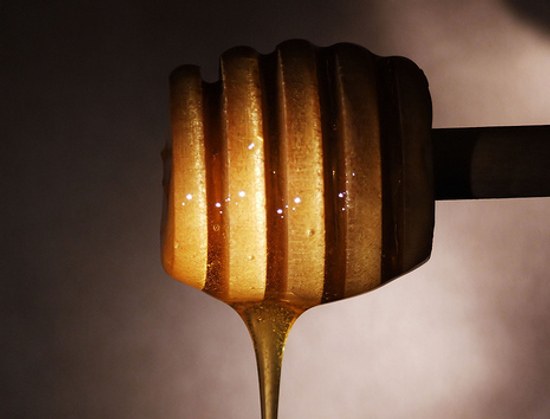
With the recent bad press surrounding High Fructose Corn Syrup (HFCS), a growing number of people are turning to natural sweeteners to satiate their cravings for sugary goodness. But there’s a lot of confusion out there.
We in the Real Food Revolution have done such a thorough job demonizing HFCS that refined white sugar looks saintly in comparison.
But you and I know better.
We know that refined is refined is refined. In other words, trading out one refined sweetener for another refined sweetener doesn’t make a product any more healthy, traditional, or nourishing. After all, your great great grandmother probably ate about 5 lbs of sugar per year. If you eat like the typical American, you’re likely to eat that much in just two weeks!
So, most of us have two responses. First, we try to reduce the amount of refined sugars we consume. This alone can be quite the challenge.
Virtually everything you can buy at the supermarket contains an added refined sweetener, even things you may not think of as sweet. There’s HFCS or sugar in your ketchup, your yogurt, your salad dressing, your mustard, your bread. The list goes on.
And second, we try to switch out refined sweeteners with their more natural counterparts like honey, sucanat, maple syrup, or palm sugar. (And whatever you do, don’t be fooled by so-called “natural” sweeteners like agave nectar or truvia which are masquerading as healthy alternatives.)
These are both good first steps, but they’re only that — first steps.
Why?
Because the main nutritional culprit in sweeteners is precisely what makes them sweet — the sugar.
There was a time when people knew that eating sweets made them fat. In the last thirty years, we’ve switched our cultural emphasis away from the evils of sweets and onto the evils of fats (you know how I feel about that).
But the truth is simple: eating sweets makes you fat. It’s how our bodies are programmed to work.
When you eat something sweet, your blood sugar levels (the amount of glucose in your blood stream) rise. Your pancreas then secretes insulin, a hormone which tells your liver to start taking up the glucose out of the blood and converting it to glycogen for storage. This in turn makes your liver stop transferring fat out of your adipose tissues (fat cells) and burning it for energy. Instead, your liver starts using its stored glycogen reserves to fuel your cellular metabolism.
Did you catch that?
When you eat sugar, your body stops burning fat as a fuel source. By eating a diet unnaturally high in sugars, we are training our body’s metabolism to store fat.
And that’s just one reason why sugar is bad for you.
I haven’t even begun to go into the other forms of havoc it wreaks on your body, the ins and outs of over burdening your pancreas, and what all this has to do with the nurturing of chronic diseases like heart disease, diabetes, and cancer.
But what about natural sweeteners, surely they’re better for you than refined sugars?
Yes and No.
First, the positives. Natural sweeteners are Real Food, meaning they’re old and they’re traditional. They’ve been around pretty much forever. As such, our bodies are better equipped to eat them. Usually, natural sweeteners don’t cause as large a spike in insulin levels as refined sweeteners, so they’re less likely to contribute to insulin resistance and over burden your pancreas. On a practical level, that means they can reduce your risk for developing diabetes while simultaneously not sending you into the violent mood and energy swings associated with sugar consumption.
Now for the negatives. On a cellular level, they’re still sugar. So, ultimately, they still cause your body to store excess fat. If you eat enough natural sweeteners to satiate your sweet tooth, chances are you’re eating far too much. (After all sugar is addictive, and you need progressively more of it to satisfy your cravings.) So while natural sweeteners may be less of a burden on your pancreas, they’re still a burden. While they may lower your insulin resistance, they don’t lower it enough (particularly if your diet is high in carbohydrates from grains like wheat, oat, corn, and rice).
So, what’s the next step?
I said those are good first steps, and they are. If that’s where you’re at, I don’t want you to get discouraged. Even I still struggle to avoid eating too many sweets, particularly when they’re presented to me in celebratory settings like holidays, birthdays, or dinners out.
But to my way of thinking, the next step ought to be this: try to get your personal sugar consumption down to where it was culturally before the turn of the last century (5 pounds a year). Remember, large-scale production of sugar didn’t even come on line until the 18th century, and even then it was nowhere near as readily available then as it is now. Put simply: sweets are new to the human diet.
The only way to get your personal sugar consumption that low is to try to eliminate it from your diet altogether.
It’s a hard, hard thing to do, but it’s what I’m working on.
If you have any ideas on how you can limit your personal sugar intake, I’d like to hear them. I’m sure we can all help each other in this challenge.
(photo by balakov)
 |





Um… It’s not that eating sugars, or fat, make us fat but rather the failure to use the calories. I work outdoors being very physically active in my farming, construction and simply walking up and down the mountain. That burns a lot more than if I had a desk job. Our dogs burn twice as much calories as I do so they eat a higher calorie diet than I do even though they weigh less than half what I do. Calories in. Calories out. Balanced equation.
I do prefer my sugars in the form of honey, maple syrup, etc rather than HFCS, but that’s just a personal preference of taste and wanting to source things I can get locally or make myself. Fortunately I don’t have much of a sweet tooth which is why a little bit of candy goes a long ways for me. Drives my wife nuts. She has a sweet tooth and can’t understand my not wanting more. She says I keep her in check. I’ll keep her either way.
A friend and I went on a diet trying to eliminate only sugar from our diet. We did NOT change anything else in our lifestyle. We both lost over 20 lbs in 2 months. And I have to say that we were not what you would call heavy sugar consumers. I have seen the effects of sugar on a very real level. This article to me is completely accurate.
If you don’t eat a lot of sugar to begin with, you will not notice much difference. I learned that, even though I do not eat as much as the average American today, I still eat too much. Thanks for this article!
Did you cut out fruit as well?
Hi! Great post! Our family has been drastically cutting back sugar consumption (no matter what kind) for years, but lately feel like we need to do even more. I appreciate that you addressed the ill effects of sugar, no matter what kind. It is easy to feel “okay” if using natural sweeteners, but we all need to be careful of those, too. I’m off to read your post on How to Cure a Sugar Fiend ~
~Wardeh
Wardeh @ GNOWFGLINS
Walter —
While it’s kind of true that calories in should equal calories out, that’s actually far too simplified for the nutrition geek in me. The KINDS of calories really do matter, as different nutrients affect our body’s metabolic processes differently.
For some extra reading on this subject, check out these links:
http://www.marksdailyapple.com/the-context-of-calories/
http://migraineur.wordpress.com/2007/11/11/calories-in-calories-out/
I’m like you in that my sweet tooth is almost non-existent compared to my husband’s. (And I’m happy to keep him either way, too. 🙂 )
Wardeh — I hope it’s helpful. I plan on writing more about it in the coming weeks. This post was mostly on the relationship of eating sugar to weight gain, but I really want to cover all the other aspects of our metabolic function that insulin regulation can improve.
Great post! It amazes me that science has known for so long the effect sugar has on our body (stops using fat as fuel, puts incredible pressure on our pancreas) and yet you never hear about it. From a scientific perspective, there is no mystery as to why we get fat. You’d think some diet guru somewhere would have made a big deal about it and made a fortune helping people lose weight. But perhaps as a society we are far too addicted to listen or try such as “fad diet” (we’ve tried just about everything else though!).
I’ve personally been amazed at how my body responds when I remove sugar from my diet (even just refined sugar–removing all sugar has drastic results). It’s a reliable way for me to lose weight and feel better.
Julie
Thanks for the post; this is good information. I have a sweet tooth the size of the Grand Canyon, and it’s long-been a struggle of mine to cut back on sugar. Now that my husband and I are trying to follow a “real food” diet (for the most part), it’s so easy to simply switch out white sugar for Sucanat, honey, etc. and call it a day. But deep down, I know these still aren’t good for me.
One thing I have found to be helpful is to keep fruit on hand for snacking, as well as coconut oil (a little taste is just sweet enough to control sugar cravings). Also, cutting back on carbs, like homemade breads, muffins, etc., helps, too. If I don’t have baked goods in the house at all, I can’t eat them. That’s much easier then having them there and trying to abstain, which usually results in me eating them all! Eggs, meat, some cheese, fruits & veggies–I try to make these the staples, with only the occasional bread or sweet treat thrown in there. What can I say? I’m a work in progress!
Been using Truvia to bake with ..which for baking does have small amount of sugar..refined or not ..don’t know. I’ve been diagdosed as diebetic.. and have been for yrs.Didn’t know. Been in the restaurant/bar business for 40 yrs. always had a coke to indulge at my finger tips .. always. You don’t drink while working ! Am positive the HFCS is the colprict of my finding out I’m diabect! Truvia/stevia appears to be my answer. Well pure stevia is the best. Extremely 500 times the sweetness of refined sugars. Have looked into other reasons I’m in constant pain 24/7. Gluten ..! Next challenge. Seriously .. gluten dosen’t work well in the body .. just started with the concerns of gluten. Cutting it out of diet .. seems very positive. Certanilly no HFCS like Coke and every other soda. Have my 4th acupcture sesion tomorrow.My left foot,biggest concern .. but addressing the problem .. no sugars .Not much alcohol. Truvia and stevia appears the alturnitive. Truvia has become a question now.”Artifical” sweet pharm. Refined sweetners like equal..twin sugar ..and the deadly pink enclosed packet .. NOT !! The pain. In it every second. Strugling/looking for answers. Sugar/carbs. I need to put weight ON !!
So, I work in a dairy department which is across from the bins of sweets at our store that are sold by the pound. Most of the overweight people I see going through the store always stop to get a few pounds of candy. If they are too obese, then they usually won’t, but the people in middle do.
I also see most overweight people getting skim milk, or low-fat (and artificially sweetened) products. There are exceptions, but this is generally how it is.
Kyle
You know, I kind of agree with you on some points (Corn syrup bad. White sugar bad. Processed foods bad. High glycemic index bad), but I disagree with you that we should work towards eliminating sugars from our diet, period.
Historically, even from the very roots of civilization, sugars were prized and praised – think of the Israelites, going to the land flowing with milk and honey, or Solomon comparing his love to apples, pomegranates, raisins, and honey, or John the Baptist subsisting on locusts and honey in the wilderness. Even the word “sweet,” which has come only to describe “sugary” these days, once meant “delightful”. Food that was sugary was described as “sweet” because it was so delightful. So sweets are an “old” food, and a real food, and I think they have an APPROPRIATE place in our diets.
What is inappropriate is swapping out 100 lbs of white sugar for 100lbs of honey, or maple syrup, or whatever. But sweet things in moderation are, I think, good.
And again, body fat isn’t BAD, just an excess of it (like an excess of anything!) is. Body fat is what allowed our ancestors to survive and thrive in an unstable world, where you didn’t know when you were going to have another meal, or where it was going to come from. Sweet foods were the BEST foods, because you body could use them so efficiently. I can’t imagine a balanced healthy diet without fruits, honey, root vegetables, corn, tomatoes, raisins, wine. etc. etc.
Delish
Natual sugars are “delightfull” your term of sugary.. well, is perfect. The HFCS was discared .. till the big Pharm. pushed the envelope. And am conviced is the biggest problem. What .. NYC and or state have made regulatins of 16 or larger of fountan sodas are not avalable in such high amounts. Costs our govenment in the high costs of medical bills.This am sure has become quite the concerns/topic.The USA has step up the the box. No sugar and carbs .. the USA public just got a slap in the face .. and is Correct ! Amazed it happen. Somone got big Balls ! Nice !
Delish — I think you may have misunderstood my post. I didn’t intend to argue for a diet free of fruits, honey, etc. You’ll never see me argue against eating whole foods!
My only point is that sugar (as an additive) is far more readily available today than it has ever been, so we’re far more tempted to eat it all the time — in just about everything we make or buy. My point is that what we call “moderation” may still be radically more than what we’ve traditionally eaten, even as recently as the turn of the last century when the average person consumed 5 lbs of sugar PER YEAR. We’ve got to remember that for thousands of years, sweets were super-rare treats of extreme value. And, if we want to achieve whole body wellness (mental, physical, etc.), we should get back to those more traditional levels of consumption.
While WE’ve gotten modern sweeteners out of our diet, I still struggle with the natural ones. We’re simply programmed that way – the problem is that access to sweets has increased. Take tonight for instance: I made a raw mint ice cream and I simply cannot keep away from it.
Jenny @ Nourished Kitchen
I wonder if eating good FAT with a meal that might have sweets in it would slow the glucose spike that you would get eating the same meal without the fat? People talk about the glycemic index but if you eat a baked potato, which will spike your glucose alone, with a steak, won’t the protein slow down the spike? Always been curious about that. Good article by the way!
Hi Kristen,
Thanks for the post, it snapped me back to reality. I agree that sugar is addictive (I personally struggle with it) and it is to easily accessible. Perfect timing for me on this post.
Heather
Kristen, you’re quite right on this topic. I’m afraid that many people bring their sugar addiction with them when changing to a more traditional diet by switching to less refined sweets like honey, maple syrup, or molasses. Which is fine in very small amounts like our ancestors ate.
The root of this problem is the addicting nature of sugar. Once addicted, it’s not easy for most of us to break that addiction. But for those who need to lose weight, it’s critical. If you’re at an optimal weight, chances are good that you’re not eating too much sugar. But if you start gaining weight, look out! I learned the hard way 🙂
More and more evidence is pointing towards the fructose component of sugar as the main culprit in driving addiction and in messing up our metabolism. I find it very interesting that milk has glucose and galactose, but no fructose. Nature must be trying to tell us something!
Bryan – oz4caster
Since I am on a low-carb diet honey, sucanat, maple syrup, and molasses are all out. I’m not even eating fruit. The only thing sweet that I am consuming right now is a pinch of stevia in tea or decaf coffee. In my experience the best way to do it is to go cold turkey. It is utterly painful for a few days and you will have crazy cravings. If you take out all carbs – grains and fruits as well – it really helps. I think part of it has to do with whether or not you have a candida overgrowth. Cutting out all carbs will be difficult but after about 4-5 days you will be feeling much better and not have the cravings any longer.
Shannon
One thing I noticed a long time ago was that if I ate something sweet at breakfast, I tended to eat sweets all day. I try to keep my sweet-eating toward the end of the day.
I like Pollan’s prescription (which isn’t original to him), to eat as much junk food as you want, as long as you make it yourself. My chocolate chip cookies are amazing (I replace half the butter with coconut oil, use Rapadura, and chop high-quality chocolate by hand instead of using chips) and once I eat one…well… I rely on hand-chopped chocolate in part because I make them less often by making it less convenient for myself. I suppose that’s one of my tricks for reducing sugar consumption–make it less convenient.
It does seem that combining carbs of any kind with fats and/or lacto-fermented foods would help the body better assimilate nutrients and reduce the digestive burden. Traditionally, we’ve combined butter with bread, cream with sweets, etc., and I know I feel better if I eat carbs with fats–less jittery, more satisfied.
Chris
Jenny — You naughty girl! 🙂
Selah — In my experience, eating sweets in combination with fats does tend to lower the insulin response — meaning that you’re far less likely to experience the “high” and the “crash” of an abnormally high, spiked insulin response.
Heather — You’re welcome!
Bryan — Yes, I’ve been reading that about fructose, too. I don’t think fructose itself is all that bad, particularly when it’s a naturally occurring part of a whole food (like a fruit). But it’s when it’s concentrated in unnatural amounts (as in HFCS or Agave Nectar) that it turns into a bad boy.
Shannon — Excellent point about candida.
Chris — Great point about not starting your day off with sweets! So very true. And I’m also a fan of Pollan’s idea that junk food is okay so long as you make it yourself. That way it takes on it’s truly special role — that of a rare treat. PLUS, you’ll probably make it so much more healthily than what you could otherwise get (like your chocolate chip cookies!).
Ok, sorry if I misunderstood you 🙂
I myself am a diabetic (a result of celiac disease, not over-consumption of sugar!), AND I am a recovered diabetic – that is, I’ve been able to manage my diet and weight so well that I no longer need to take medication to control my blood sugar.
We really don’t eat a lot of sugar at my house! I just don’t even buy anything that has a lot of refined sugar in it. If you remove the temptation it’s much easier to resist. But I do allow myself a lot of fruit, juices, and natural sweeteners. The key is A) don’t eat this stuff a lot. Sweets are treats, not staples. And B) eat sugar with fat. The fat helps stabilize your blood sugar so that you blood sugar rises more slowly, and stays more stable. So if you want a sweet cup of coffee, make sure to use 1/2 and 1/2 or get your latte with whole milk. If you want some toast, make sure it has butter on it (especially if you want honey or jam!). Regular full fat icecream is better than “lite” icecream. C) Eat sugar that comes with fiber! I think it’s silly when people go on such gung-ho low-sugar diets that they even cut out raw fruit. You would have to eat like, 25 apples to equal the sugar in a snickers bar, and if you did eat 25 apples, lets just say you have gotten your daily dose of vitamins, and you are going to have some awesome bowel movements.
The upside of eating sugar with fat is that it is MUCH more satisfying. A very little bit goes a looooong way. Also, if you save sugar for the end of the meal, it will have a MUCH smaller effect on your blood sugar.
I totally agree with chris too – blood sugar is highest in the morning (for poorly understood reasons), and when you eat something sugary for breakfast it will actually elevate your blood sugar all day! It’s much better to eat protein in the morning!
Delish
Wow – such a great post and solid comments from everyone. I am a certifiable sweet junkie who eats real food at every ‘other’ corner. Recently – due to migraines – I have been put on the SCD (specific carb diet) but other than eliminating agave nectar (future post!) still indulge in my (homemade ‘healthy’) sweets. I need to start the day with savory, and quit making dessert! That said, I still treasure my grandmother’s creme brulee:)
Perhaps I wasn’t clear. I agree with you that were calories come from matters. The foods we eat that give us the calories also give us a host of other necessary nutrients – HFCS being notably empty in many aspects in that regard. What I do see is a lot of the faddishness focuses on carbs or fats or sugar and ignores that people really need to either simply cut down consumption or increase exercise to find their balance. Some people also have higher set points for their metabolism, burning calories, ergo the dogs I mentioned. 🙂
Great post, it’s so easy to think that because it’s natural it’s ok. I’ve been working on reducing sugar in my diet for years, starting with macrobiotics and winding up here with a more Weston. A. Price slant. My advice is to just keep trying. It’s a real process, the cravings the food changes, the taste changes. I still have sweeteners in my diet every now and then but when I think back to what I was consuming those years ago compared to now, there is a world of difference.
Berni
I realize that Corn Starch probably has GMO (different article) but I was wondering this afternoon how it compares with HFCS nutritionally? Just as empty?
Great post. My best sweet tooth defense is incorporating sweet veggies into my meals. Squash in the winter, carrots and corn in the summer, stuff like that. It gives me sweetness throughout the day and makes the cravings less. Also I just plain don’t buy anything with sugar. If I’m dying for cookies I gotta make ’em myself and when I make ’em myself I want them to last because they took work, so I eat less 🙂
Michelle @ Find Your Balance
Just yesterday, my friend and colon hydro-therapist sold me a bag of something I had never seen nor heard of before – it’s called Lakanto – apparently this is a zero calorie, zero glycemic index, completely natural plant from Asia made from fermented erythritol and pure extract Luo Han Guo. It can be used in baking and is recommended by the Body Ecology web site, (Donna Gates), whom I really respect. The label claims that it can be used as a one-to-one substitute for sugar, can be used for a variety of uses including baking, and does not cause cavities. Now, I’m not advocating eating a lot of this sweetener, but it seems like a really good alternative to sugar if you are going to make homemade goodies in your own kitchen. My friend even went so far as to say it is “nutritious”. She made cookies with it, consisting of eggs, vanilla, butter, organic peanut butter (which I don’t eat much of due to peanuts having aflatoxins), and sea salt. They tasted fantastic (no flour!!). Has anyone used Lakanto or heard of it? Curious!
Raine Saunders
Hi, just found your post and enjoyed the reading. Maybe you could discuss the importance of a low sugar diet for cancer patients? I am being treated for ovarian cancer right now. I have IV Vitamin C therapy, chemo, vitamin and nutritional supplements, and I follow a low sugar, low glycemic index diet. The theory is that most cancers are “sugar lovers” and if you can decrease (and hopefully eliminate) sugar from your diet, you stop ‘feeding’ the cancer. The theory makes sense to me, I love sugar and ingested a lot of it in my pre-cancer life. I miss corn, rice and potatoes, but they rank moderate to high on the glycemic index. Really there is quite a bit available to eat in the fruit, veggie and grain department so I rarely feel like I am doing without.
So now, when I need a sweet, I use natural sugars: maple syrup and honey. I try not to use any sugar at all, but what I do use is as close to natural as I can get.
I am going to research the ‘lakanto’ to see if it might be something I can use, but mostly, I just avoid sweeteners and eat more fruit when I have a craving for something sweet!
What about roasting vegetables like Kabocha squash? They are incredibly sweet and delicious=, but do they still cause an insulin spike? What about sweet potatoes?
Jean
I used to be chocoholic for years–I even hid candybars in the cupboard–when I started reading Nourishing Traditions—I started buying chocolate with smaller and smaller amounts of sugar until i could not find any less and finally tried baking chocolate with no sugar which I added to my milk after stirring into small amount of hot water—that worked until I was able to buy raw milk, which I cannot waste making cocoa! Now I just have a lovely glass of raw milk with raspberries and I do not have cravings at all. This is a great post!
I agree. Natural sweeteners are a better alternative, and in my opinion they taste a lot better, too. Try putting some honey in some milk, or using some sweet fruits on a dessert, and it always goes up a couple notches on the taste scale.
Unfortunately, as a big dieter, I’ve had to cut them out. I love them, but if you want to lose weight you need to make sacrifices, and sugar in general is one of them.
Thanks for the info. People need to hear this stuff once on a scientific level to grasp it fully.
.-= Edmund Mokhtarian´s last blog post …Ray’s Hell Burger =-.
OK, so sorry to read about the agave nectar. I mean I never used a lot of it anyway–a little went a long way. What a shame about its processing.
What has helped me to reduce sweet cravings is something really simple. I drink more quality water. . .and I also started drinking organic green tea in quality water without anything added to it. Some people balk at this; but really I didn’t find it bad, just different. I read somewhere that it takes about ten exposures to something to acclamate tastebuds. This is why kids need small and regular exposure to things like brocolli and asparagus, and it is why we may not like them at first, but after multiple exposures over time, we end up liking them. This was definitely the case for me with regard to asparagus. I detested it at first as a kid, but our parents made us keep trying stuff. Now I love the stuff. My husband hated it, and now he seems to tolerate it. . . but I love it. So the organic green tea in water and taking in more quality water helps me.
I just proved to myself that there is something to the Princeton study regarding HFCS. I had run out of ginger root and started a job where I was in vehicles driving a lot more, plus ragweed was on the rise, so my sinus headaches were kicking in–and they can tend to make me feel nauseated. So in a hurry I would grab some Canada Dry Ginger Ale. I didn’t change anything in my diet or exercise routine other than that. Guess who just gained 5lbs–most noteably abdominal fat??? Yep. CDGA is filled with HFCS. I was annoyed until I realized that I was taking in between 2 to 3 cans of this ginger ale 3 to 4 times per week.
Like the tobacco industry, you have to wonder if companies know this HFCS is addictive.
Also, what helps me to reduce junk cravings is to eat more brown sugar, salads, and protein. I have never been the kind of person that can stuff herself. It has always made me feel way uncomfortable, and my father always said that is better to walk away from the table very half full. So it’s a few things that have added to weight gain for me, though I have never been a heavy or chubby person. First it is when I decrease aerobic exercise. Second, it is when I take in high carb meals, even though I’d eat smaller but more frequent meals. Third it is the drinks. I believe the drinks are what is causing a lot of weight gain in folks. And forthly, well metabolic changes r/t hormonal shifts–very, very real with women in particular.
Thanks for your website and the information!
Erratum:
In my above post I said what helps me is to eat more brown sugar. NOT! I meant to write brown rice. Oy. Higher quality carbs with protein seems to help me reduce cravings, and eating salads with chickpeas, etc, helps me not to crave the bad stuff too.
Jlin, VEY! (a reply to your Oy),
Try Kombucha instead of CDGA. To me it tastes a lot like ginger ale (you can add a piece of ginger even). Although, I confess that it has been years since I have had CDGA, so I may not be a good judge. Kombucha also has vitamin b and digestive enzymes.
I fill two water bottles every morning, one with water and one with kombucha. I love both.
I understand that the post’s point is to avoid sugar all together. I agree with that intellectually, but I’m not ready or willing to make that committment. I do, for the most part only use honey as a sweetener. I appreciate the post on blue agave. I was wondering about that last night, when I noticed it in the organic section of my grocery store. I typed it in google, and found this site. I appreciate the info.
I would like someone to explain to me what to look for when buying the other natural sweeteners like sucanat, maple syrup, or palm sugar.
Also, is concentrated juice on the same level as honey or is it worse?
Lastly, what about blackstrap molasses? Is this worse than honey?
Thanks! I loved the post. The author has a level of discipline that I admire very much. Kristen, do you feel that you enjoy sugar as much as anyone, and did you grow up mindful of sugar?
Oh, also. If I must use sugar in a recipe, or at least some, would there be any tiny benefit to using fructose instead?
Kristen, would you seek to even make bread without a sugar in it?
And, doesn’t the body need some sugar? Would zero sugar be healthy? I find it hard to believe that fruit, at least, is not very healthy.
I’m sorry, but I’ve got to ask one more thing about your Agave post. You mentioned that concentrated fructose does not occur naturally in fruit. Is juice concentrate unnaturally created? I use it, but is straight up juice(not made from concentrate) better? I know you would rather not have juice at all, but I’m highly interested about the process used to create juice concentrate.
This comment is pretty old, but if you still care, I think the argument against fruit juice is the fact that one glass of apple juice might have the sugar equivalent to 5 apples, and you’d never eat 5 apples in one sitting. No one is saying fruit is not healthy, but most of the health benefits can be found in other sources with less sugar. Also, when trying to lose weight, fruit might need to be cut temporarily to see results.
While scientifically I know all this to be true, I still find agave to be the sweetener that I tolerate best. Cane sugar is acompanied by a whole bevy of symptoms for me ranging from acne, to leg and foot cramps, to fibromyalgia, and many others. Also, I have a strong adddiction response to cane sugar. I avoid dairy and grains as well as sugar, and for me, this is the best. (I found giving up dairy that I lost 18 lbs in a very short time with no effort. Wish I could have it for all the great fat, but not for me.) However, when I do indulge in something sweet, which is more often than I would without kids, I find agave or yakon syrup far more tolerable (apparently for my kiddos too). Either can give me the not-so-nice feeling of eating sweets, but it is FAR less noticable than when I eat cane sugar (the absolute worst), honey, or maple syrup. I have no explanation. To be VERY clear, I think that no sweets is best, but I can’t argue with my personal experience and what my body tells me. Oh yeah, I am very thin, and when I do a lot of baking (and eating) for my boys, I closely monitor my weight and body fat to see how I am affected and I do not see any changes. However, I am still only consuming comparatively small amounts when considering the average SAD diet.
If I have one tsp of agave in a chai, for example, it can’t really be compared to the 10-12 tsp of sugar in a soda pop of the same size. I just wanted to put that out there in case anyone else has the same experience. I am not encourging anyone to eat sweets. Because they are BAD for your immune system, if for no other reason – and there ARE plenty of others!
Great article! I think it is easy for people to go overboard even with natural sweeteners. We only use maple syrup, raw honey, and sucanat, but rarely. I am not a baker and we do not buy junk. Not having it in the house really helps! I think some people really miss that very easy step. Perhaps it is because their children are used to a diet loaded with sugar. Then fix that pronto! When I went gluten free, it helped with sugar and carb cravings tremendously. I had a gluten intolerance already that I knew of. I think a lot of people who crave sugar and carbs have an intolerance and perhaps trying gluten free would help. I was really shocked that my cravings went away almost instantly. I agree also that going cold turkey to help with sugar cravings will help. Your taste buds will begin to appreciate more natural flavors and before long, sugar will not satisfy. Ir is like retraining your taste buds. There are many things that are naturally sweetened that are just too sweet for us. Lara Bars for one thing! Just way too sweet. Also, eating protein alongside sweet things helps your body not experience the glucose spike. We eat nuts and dried fruit together for example. Specifically soaked and dried pecans with raisins. Oh that is sooo good! Also often when you have a sugar craving, your body is really wanting protein. I used to keep hard boiled eggs in the fridge for times like this. A little paprika a salt on one, and that really did help satisfy.
Nickole @ http://www.savvyteasandherbs.com
Love your site. It takes brains not to be afraid of fats. I started a food for health blog called http://www.gaiahelthblog.com and ran across your sit in my research on pancakes, I’ve been trying to find the real deal with Aguave. Anyhoo, for me, I don’t knowingly take in any sugar, I just started swapping out and using honey and stevia. when doing my Coconut Flour Banana bread, I used super ripe bananas and that all the sweetener I needed. Now I’m into Birch Tree Xylitol, taste better than stevia. But for be, it seemd my body just didn’t want all that sugar anymore, not that I had to force myself off it.
Dear Food Renegad:
Am happy to have found your website (even though I wasn’t looking for it) while researching something else.
Thanks so much for your information on sugars. Thought I knew “everything” on that subject but after you said that aguava nectar was not natural either that may explain why I got sick last year after using it.
I had been off of sugar for a term and really wanted something sweet, so I put it heavily on my cereal and had a once in a life time bad gastrointestinal episode that lasted about a half an hour afterward.
I was wondering what is wrong with grains now or is it something to be avoided only for those allergic to them? Thought whole grains were considered a healthy item…haven’t read all you wrote though so maybe I will find out after clicking on your no grain on-line cooking course….anyway, thanks for being here. People need more information on what to stay away from…sad though..when I was a kid, I just went out to our garden and picked a ripe tomato and ate it like an apple. No worries about genetically engineered food..not as much preservatives..etc.
Keep up the good work Renegad.. 😀
I am happy to say I have been “dessert free” for over 2 months now. I have not eaten sugary products…. however, I have had a bit of fruit here and there, and also stuff that has sugar, like BBQ sauce and ketchup… and a corn dish that I made for Thanksgiving had 2 TBS sugar in it, and I had some. But, no dessert, no sweet snacks, nothing! And not a single piece of chocolate or candy during Halloween, and not a single piece of pie for Thanksgiving.
I have only lost about 9 lbs in these 2 months… so I am thinking of decreasing my starchy carbs intake to see if that makes a difference. I have 12 more lbs to go before I reach my goal weight. (I am within my BMI range, but was at the high end and i want to be at the lower end).
i have been on agave syrup for a few years and have put a lot of weight on mostly on my stomach time to change after reading your article
I’ve heard different things about Agave Nectar, some people say it’s pretty processed and closer to high fructose corn syrup on the glycemic index! (which would explain your weight gain Elaine)
But I’ve seen raw supposedly unheated ones which hopefully are better for you. I used to use those but I found it kind of tastes like plastic. So stopped using it.
It’s probably best to try cutting out all extra sugars, although I think fruit and sweet veggies are fine.
If you do need sugar, I found organic coconut sugar is nice tasting and supposedly not so processed and lower on the glycemic index. Which should mean less health issues and weight gain.