
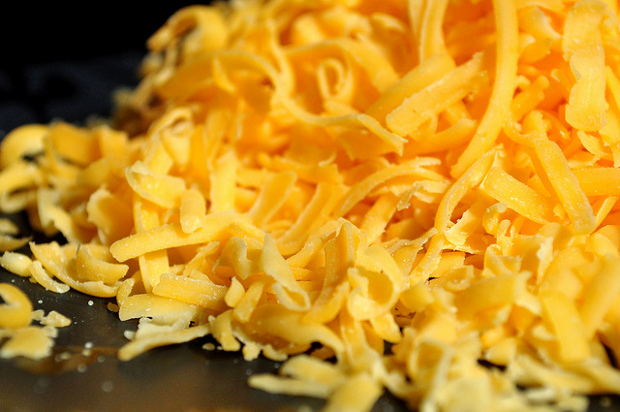
QUICK! What keeps pre-packaged shredded cheese from clumping, low-fat ice cream creamy, and pre-made milk shakes smooth? You guessed it! WOOD PULP. They call it “cellulose,” but it’s just powdered wood pulp. The industry loves this stuff. It’s cheap. It helps stabilize food, lowers fat content, increases fiber. Did I say it’s cheap?
As the prices of other food ingredients rise, food manufacturers are increasingly turning to cellulose so that they can keep production costs low. Even big organic brands like Organic Valley are not immune from the appeal.
Organic Valley uses powdered cellulose made from wood pulp in its shredded-cheese products. The company would prefer not to use a synthetic ingredient, but cellulose is bland, white and repels moisture, making it the favored choice over products such as potato starch, says Tripp Hughes, director of product marketing for Organic Valley. (source)
The appeal of cellulose as an additive
During the past two years, sales of cellulose have increased by 8%. This, when the average annual increase is 3%. What accounts for the rise in popularity? The Wall-Street Journal reports:
While some food manufactures say they aren’t increasing the percentage of cellulose in their products, others are boosting the amount of fiber in their foods with cellulose and other ingredients. Companies can save money by using it, even though it costs more by weight than conventional ingredients. Cellulose gives food “more water, more air, a creamy feeling in [the] mouth with less of other ingredients,” and only a very small amount is needed, says Niels Thestrup, vice president of the hydrocolloids department for Danisco AS. The Copenhagen-based company makes ingredients and enzymes for food, cleaning supplies and other products.
This is why cellulose gets added to non-fat and low-fat foods like low-fat ice cream, sour cream, yogurt, and non-dairy creamers, among others. It gives the mouth-feel of creaminess when the real cream is removed. If you aren’t already avoiding low-fat versions of real foods, perhaps this will provide you with the final push you need to change to eating full-fat, real food. After all, not only is full-fat dairy generally unadulterated and more natural compared to its low-fat counterparts, it has also been shown to lower risk of heart attacks.
How cellulose is made
Lest you protest and say “cellulose is in every plant food out there, now you’re saying it’s bad for me?,” let me explain the process by which the cellulose used as a food additive is made:
Cellulose comes in various forms, each with a specific use. Beyond powdered cellulose, two other modified forms are common in food. Microcrystalline cellulose is either listed as such on labels, as MCC, or in some cases as cellulose gel. Carboxymethyl cellulose or cellulose gum, another modified version, is listed as such on labels. Each gives foods a slightly different texture — from gelatinous to more liquid-like — because they trap varying amounts of air or water.
Powdered cellulose is made by cooking raw plant fiber — usually wood — in various chemicals to separate the cellulose, and then purified. Modified versions go through extra processing, such as exposing them to acid to further break down the fiber. (source)
In other words, this is not the cellulose you’d get from eating broccoli. No, this is cellulose that’s created in a laboratory, by a convoluted process you’d find difficult (if not impossible) to replicate in your own kitchen. And did I mention it’s made from wood pulp?
And yet, this unnatural food additive is considered “natural” by our government — so natural that it’s even allowed in foods bearing the “organic” label.
But, is added cellulose “safe”?
Well, your government says it is.
What? That’s not good enough for you? You don’t trust them? How about nutritionists?
Although the notion of eating fine grains of wood pulp might make some consumers blanch, nutritionists say cellulose — which gives plants their structure — is a harmless fiber that can often cut calories in food. Insoluble dietary fibers like cellulose aren’t digestible by humans so add bulk to food without making it more fattening.
Cellulose can serve as a good source of dietary fiber for people who don’t eat enough fruits, vegetables or whole grains, Ms. Slavin says. The USDA’s most recent dietary guidelines recommend young women get 28 grams a day of fiber and young men consume 38 grams.
“Cellulose is cellulose,” regardless of if whether it comes from wood pulp or celery, says Michael Jacobson, executive director of the Center for Science in the Public Interest, a group that advocates healthier, more nutritious food. He says no research points to health problems related to consuming cellulose.
The Food and Drug Administration sets limits on the amount of cellulose in certain foods like cheese spreads and jams. The USDA also limits the amount of cellulose in meat products to about 1% to 4%, depending on the type, in order to meet the agency’s standards for protein content.
(source)
Here’s my question. Who cares if it’s safe? It’s disturbingly unnatural to have wood pulp in your cheese or cotton in your salad dressing.
Yes, I said “cotton in your salad dressing.” Thank you, Kraft Foods, for making such statements actually truthful and not merely the figment of a childish, over-active imagination.
What can you do?
Well, stop buying shredded cheese, for one thing. Buy cheese by the block and shred it or slice it yourself. You’ll save money, and you won’t be eating wood pulp. It’s a win, win! Want to know how to prioritize your cheese choices? Check out this post on Healthy Cheese: What To Buy.
Secondly, you should stop buying the reduced fat versions of full fat foods. Good fat from real food is actually healthy for you. Plus, when you take the fat out of traditionally fatty foods, you’ve got to replace it with something. That usually results in ingredient labels that read like chemistry text books.
And lastly, stick to eating foods with ingredient labels you actually understand — or better yet, foods without ingredient labels at all! These are whole foods. Cook from scratch with them, and you’ll always know what’s in your food.
(photo by ShardsOfBlue)
 |




This is SOOO wrong!
Wait, what? So, it’s completely safe, has many benefits, and yet… you have an issue with this? Are you all dumb? There’s a TON of unnatural things out there. Who cares if it’s unnatural? Ever brush your teeth? BUT THAT’S MAN MADE, IT’S UNNATURAL!
What about taken a pill of…any kind? ALSO UNNATURAL!!!!!
We’d better eat nothing but free-range chicken dry, and use leaves to wipe our butts, and not take care of ourselves when we get sick.
Well if this isn’t a parody of what it means to eat “natural” food, I don’t know what is! We’re talking about FOOD here, the sacred life-giving stuff we put into our bodies. Not toothbrushes.
And, please, in future comments refrain from calling others dumb. You may see my comments policy for more details.
You’re missing my point. Perhaps instead of “unnatural,” I should have said “non-traditional.” In my mind, the two run kind of parallel, but you’ve pointed out how far the definition of “unnatural” can be stretched. And, subsequently, you’re missing my point.
I want to eat food that’s REAL, first and foremost — that means that it’s old and traditional, not a newly invented food that’s only made possible by industrial food science.
For more about why this distinction is important to me (and others), try reading my ABOUT page.
A tree is just a giant vegetable. Beavers eat it, the only reason that we don’t is because our jaws aren’t strong enough.
We extract sugar from tree to make syrup, why is cellulose any different?
Just think of it like juicing a giant broccoli.
I think the point is that the cellulose isn’t just extracted, its that they have to use different chemicals to separate it.
Chemicals eh? Well, I guess nothing is safe because ALL MATTER IS CHEMICALS! That broccoli you eat? Chemicals. That egg? Chemicals. Water? Chemicals. The air you breath? Chemicals. YOURSELF? Chemicals.
Shit. I guess we should just ban everything, because after all, chemicals are bad.
Exactly.
Canadian Man you are correct, wood pulp cellulose is very much like sugar in the sense that most people consume far too much of it. The bottom line for me is the fact that more recent studies repeatedly reveal adverse health effects from processed foods in general. When you choose whole fruits and vegetables more often than wood pulp cellulose, obviously you’re getting more nutrition in your diet. The only thing I suggest to Kristen is that we don’t need the all-caps “WOOD PULP” hyperbole when the choice is already so simple.
Well said.
It doesn’t matter if our jaws are strong enough or not, we can’t digest wood… If we could:
“our food supply would increase exponentially: cellulose happens to be the most abundant organic polymer on Earth.”
The fact of the matter is that we eat way too much and there’s too many calories in everything. Putting tiny amounts of something that our body is just going to crap out again anyway is a small price to pay for it being slightly easier to avoid being obese, while still having tasty food.
For some people who have allergies to trees, cellulose can produce a severe allergic reaction. I have had this happen to me on more than one occasion after ingesting something that had microcrystalline cellulose (wood pulp) in it. Ingesting cellulose is my no means natural or safe (especially for those with tree allergies).
Also, me! Cant even get painkillers without it.
Im allergic to some trees too and Ive noticed sneezing attacks after eating meals on occasions. and I never knew why I’m going to pay more attention to this from now on.. I also have chronic constipation and I wonder if wood pulp could be the cause.
I’m willing to bet that you raise your own pigs and grow your own veggies if eating pulp from trees is ‘unnatural’ to you. Heck, you consume billions of foreign bacterial bodies a day with your food. I honestly don’t get the issue here.
I came here wanting to learn why cellulose from wood pulp was bad and what the difference was.
Instead i read a comically writen article which reads as cellulose good but wood eww.
What i have learned is that thanks to cellulose i have food with a longer shelf life and less additives.
Also cellulose exists in nature. It is natural.
I would also like to point out that your article is very misleading. Upon further research the chemicals that you decry are actually just one chemical. Acetic acid is used to break down wood pulp. The wood pulp is boiled in water. The slurry is separated with a hose. There are instructions on how to make it at home online. Acetic acid is just vinegar.
The only reason i post this is so people that are worried (like myself at one time) have peace of mind.
Wow….and the public is so blind to all this……I am sharing this on my wall….thanks for the information.
suddenly I am glad I’m on a new diet hehe
WTH. How can we possibly keep one step ahead….
When I posted the OJ article a few days ago I had a friend refer to me as an “alarmist.” Is there something wrong with NOT wanting to eat this crap? I don’t think so!
So glad you share these things because I would have NO idea otherwise!
Reminds me of Roman Meal putting sawdust in their bread to bulk it up…Tasty, tasty tree parts. 😛
I started noticing crap in shredded cheese when I was on the Atkin’s diet. I was incredulous to the fact that cheese had so many grams of carbs. Then I read the ingredients on my 100% cheese. Gag me with a spoon.
Wait… you buy something called 100% cheese? You know cheese is made in a factory of many ingredients. That’s like going to the bakery and buying a loaf of 100% bread and being mad that it contains anything other than flour and water.
@April — It’s just information that’s TRUE. Nothing alarmist about it at all. It’d only be alarmist if you were exaggerating or plain lying. Neither is the case.
This is your alarmist moment: “It’s disturbingly unnatural to have wood pulp in your cheese or cotton in your salad dressing.”
Interesting, yes. Informative, not so much. Do you separate out the cellulose from your leafy greens? I’d like to see you try that.
“Do you separate out the cellulose from your leafy greens? I’d like to see you try that.”
Thank you for making my point for me!
I’m allergic to some trees. I’d say this IS a problem. I have recently had an allergic response to cheese that I did not have before. This explains quote a bit since I normally grate the cheese myself but my husband bought it grated and voila– ill. Truth in ingredient listings could save many of us from unnecessary ills.
You’re not allergic to some trees. You may be allergic to certain extractives present in ceratin trees which are washed away with the hemicelluloses and lignin by the time the ‘tree’ becomes cellulose.
I had an idea the other day. What if you had to answer a little quiz, maybe three multiple choice questions, about the content of an article before you were allowed to comment on it. What do you think? Would that improve the quality of the conversation, if we could avoid some of the comments from people who just skimmed, or didn’t finish the article?
“Lest you protest and say “cellulose is in every plant food out there, now you’re saying it’s bad for me?,” let me explain the process by which the cellulose used as a food additive is made…In other words, this is not the cellulose you’d get from eating broccoli. No, this is cellulose that’s created in a laboratory, by a convoluted process you’d find difficult (if not impossible) to replicate in your own kitchen.”
The point of the comment you dislike is that despite reading the article, it is clear that this is all based on a bias against foods processed at all. If you look beyond a single article you found on the Internet, you would see just how simple a process it is to extract wood pulp- despite this articles claim otherwise. Maybe there should be a quiz to make sure people actually research info instead of reading one article and believing everything.
@Melinda — You’re welcome. It’s one of the reasons I do it!
@Kate – Now I know why I never liked Roman Meal bread. My parents kept making me eat it!
ugh!
I really appreciate that you find these things out and post them!!
@Mary Light — You’re welcome!
Fight this with your wallets! Breads had this same stuff in it about 25 years ago, and when enough people stopped buying the brands to which cellulose had been added, the bread companies caved to the pressure and stopped putting wood in their bread!
This makes my brain hurt. Admittedly, I trusted my organic 100% natural shredded cheese. After a trip to the fridge, I realize it does in fact have cellulose. *sigh*
i never knew thats what cellulose was!! im glad i started buying block cheese and full-fat dairy!
@Summer — Sad, I know!
Barfaroni!
ewwwww
Oh, but it’s ok, because cellulose is cellulose, just like sugar is sugar. Your body can’t tell the difference! *insert severe eye roll here
“organic” unfortunately is what “conventional” was in the 70’s…. buy local, in season, from farmers you know and trust. Thank you, Food Renegade!
One approach to avoid knock-off food is to wean ourselves from the grocery store and become locavores. Dairy, meat, eggs & produce should (as much a possible) be acquired from our immediate and neighboring communities. Condiments and beverages can be fermented in our own kitchens.
If we can do this, we can put all of the food & drug commercials on fast forward, because they won’t pertain to us.
Ciao, Pavil
Couldn’t agree more!
You got it!
We want to know how they make fat free half and half?!
LOL. I’ve wondered that, too!
Simple…Ingredients label from Land O Lakes Fat Free Half and Half. Remove the healthy fat (cream) and add sugar and carrageenan and all sorts of dyes and preservatives. Viola!
Ingredients: Ingredients: Skim Milk, Corn Syrup, Cream*, Contains less than 0.5% of the following: Carrageenan, Sodium Citrate, Dipotassium Phosphate, Mono and Diglycerides*, Vitamin A Palmitate, Color Added (Ingredient not in regular half & half).
Yep. https://motherwouldknow.com/know-ingredients-fat-free-half-half/
Eeww. Enough said.
If companies would stop using deceptive terminology and used everyday layman’s language for ingredient labeling, we wouldn’t have this problem…hmmm, maybe we can change the labeling law: “Truth in Labeling.”
@Howard Gray
“Laymans” language? I’m sorry, how else would you like me to refer to cellulose? It describes EXACTLY what’s being put in the product. That is “truth”, and is legally mandated.
Were they to call it anything else, regulatory agencies would be all over them.
Cellulose isn’t an uncommon word, and can be found in any dictionary. That people don’t bother to read it is frightening.
That people don’t know what cellulose is scares me even more. It’s covered in like 3rd grade Natural Sciences. And again in every grade after that.
@MeshGearFox
hahahahahaha…dear god that made me cry it was so funny!
Thank you
Cellulose gum is in just about everything prepackaged. Glad to finally find out what it is! Thankfully I gave up Kraft products a long time ago as well.
This is a potential pitfall for folks trying to combat stomach problems by reducing fermentable carbohydrates in their diet…
Excellent point. Seems like they should be on the lookout for any food with “cellulose” or “cellulose gum” in the label.
Good to know. I just started buying block cheese because I recently bought a vacuum-sealer machine. I can now buy a huge block of cheese without worrying about it going bad and shred it when I need some.
Thanks for exposing all these dubious practices – when all is said and done, avoid all processed foods. You may need to spend more time in the kitchen, but you will be healthier, wealthier and wise!
Ah, well if this weren’t enough, guess what else they use cellulose for? K-Y jelly. Yum! I’ve said it before and will say it again, our nations infatuation with cheap food has got to raise eyebrows. What does one think is IN a 99cent burger. I’d feel better if it WERE KY Jelly, but I think it’s something scarier. LEARN TO COOK. Love a farmer. 🙂
@Frederica — So true! What’s sad about this is that most people wouldn’t consider a bag of shredded Organic Valley cheese a “processed” food. But it is!
@Frederica — So true! What’s sad about this is that most people wouldn’t consider a bag of shredded Organic Valley cheese a “processed” food. But it is!
What saddens me is that the Victorians often adulterated food; this was legislated out of the food supply in the early 20th century, and guess what, now the adulteration is legal! What is the difference from sawdust in bread and cellulose in cheese?
Is the sawdust dangerous? Or the cellulose (which will scrub you out) or the cotton? It isn’t FOOD, but may not be HURTING anyone.
I started shredding my own cheese a long time ago. I had a gut feeling that the powdery coating on store bought shredded cheese wasn’t something I wanted in my body. Once I got my food processor, shredding cheese became unbelievably easy–and you really do save a lot of money shredding it yourself!
I hate shredding cheese by hand. With a passion. That’s why I bought a food processor attachment for my Kitchen Aide stand mixer that can shred cheese (or veggies, whatever). It takes seconds. It’s easy to clean up. I completely identify with your comment!
Okay, this is just gross…first meat glue, and now this. you are so right–the only way to avoid this stuff is to stick to whole foods. And it occurs to me that I won’t get splinters from my broccoli, but what about wood pulp cellulose?? And if the cotton isn’t organic, it’s been treated with tons of pesticides–I had no idea that was getting into “food”. Thank you for the info!!
It’s not digestable, you will crap it out, and save many calories in the process, as it gives food a more enjoyable consistency and texture without adding loads of fat and sugar.
I LOVE this information… and the suggestion on how to solve this problem… so simple… buy block cheese. Thank you for always providing us with new ways to change what goes on in our kitchen.
Great article. Why not just sprinkle saw dust on your pizza!
I know! What a picture.
@Peggy — I doubt it’s hurting anyone except perhaps the few, extremely sensitive people who react to even trace amounts of chemically processed foods. Nevertheless, it’s disturbingly unnatural to have wood pulp in your cheese!
like it is completely unnatural to have tree bark in your coffee, desserts, food etc…..I mean you do know that cinnamon is tree bark right?
Um….NO. Cinnamon is traditionally a spice we add to food. We’ve done it for thousands of years. Wood pulp? Cotton? Not so much. These are newfangled additions to our food supply, only really possible because of the marvels of industry and science. For more information about why that little distinction is important to me, read my ABOUT page.
So the FIRST time someone put Cinnamon in their food it would have been an abomination according to you.
Do you now see why some of us take issue with your arbitrary rules about what makes certain things OK as food?
Again: “Um…NO.” Please stop misconstruing my point. Since when is cinnamon “only really possible because of the marvels of industry and science”?
I’m not misconstruing…just demonstrating that your definition is arbitrary.
By your own definition only “traditional” food prep methods are OK.
At some point, ALL methods of food prep were new and therefore “non traditional” (hence the cinnamon example).
I’m just saying the ambiguity of the definitions you use isn’t helpful. Just because “it’s been done for thousands of years” doesn’t automatically make something better or safer than the next thing.
I agree that we have a dearth of knowledge of food, farming and processing in the laity, but your guidelines appear arbitrary…which doesn’t help with credibility.
i agree wholeheartedly with BOB!
Yes, I was thinking the same thing as bob and saw as I scrolled down that he addressed it directly. Many tree pets and strange foods are considered natural because it’s been used for a long time, but you condemn these new practices. Cellulose can be made with vinegar, it’s not like scientists are pouring drain-o and pool acid on the wood. Yes, it’s new, but in a hundred or so years it will be the same as adding cinnamon to a food.
yum, I can just eat my t shirt.
Thanks again, Kristin – not that I buy these products, but it’s still great to know, and great to have it reaffirmed that WHOLE foods are the way to go! Thanks so much for your time and research and passion for real food and health. : )
I just noticed last night that Green Pastures uses Cellulose in their cod liver oil 🙁
Unfortunately, where I live, it is cheaper to buy shredded cheese. We NEVER used to buy it until we moved to Alabama. I have to tell this to my husband now though. EW!
I’d be curious to find out how the cellulose is extracted from the wood, i.e. what chemicals they soak it in to get it out.
Honestly? I’m just surprised they bother to pull it from wood. It’s sort of pathetically refreshing to hear of a disgusting food additive that isn’t soy or corn based.
why is it disgusting? because it is tree based?
“Here’s my question. Who cares if it’s safe? It’s disturbingly unnatural to have wood pulp in your cheese or cotton in your salad dressing.”
Natural, like eating dairy, using a computer, driving a car. All natural things.
My husband thinks I’m crazy because I’ve been slowly whittling away at the processed food we purchase. I looked at what my family ate a lot of, like peanut butter, milk, and cheese, and they went first. Thanks so much for putting this information out there – some people won’t believe anything unless they see it in writing.
We stopped buying shredded cheese years ago to save money, and because the texture of pre shredded cheese always seemed strange to me. Thanks for the info!
Disturbingly unnatural? I’m all for avoiding HFCS, preservatives and MSG, but I don’t see how this is gross or disturbing in comparison to anything else that we eat. A cellulose additive sounds no worse than something like a multivitamin or Metamucil.
We eat foods that are made with bacteria and yeast poop. We eat fungi, undeveloped bird embryos and milk of other mammals. Our dietary requirements include metals!
I agree completely.
Sheesh people, I hope you realize cellulose from wood pulp is probably the cleanest thing you have in your diet. It’s a whole lot more natural than your twinkies, chicken nuggets, and just about everything else.
I seriously doubt any of the regular readers of this site, or the people who are alarmed by the fact that there is wood pulp in their cheese, are the kinds of people who eat twinkies or chicken nuggets. More likely, they’re the kinds of people who avoid processed foods altogether.
Perhaps I’m rare, but the thought of eating bacteria and yeast poop actually thrills me — all those good probiotics! I don’t view that as unnatural food at all, since we’ve been eating it for thousands upon thousands of years. (Where do we think traditionally fermented foods like sauerkraut, cheese, and sourdough bread come from, anyway?)
Perhaps instead of “unnatural,” I should have said “non-traditional.” In my mind, the two run kind of parallel, but other commenters have pointed out how far the definition of “unnatural” can be stretched. And, subsequently, they’re missing my point.
I want to eat food that’s REAL, first and foremost — that means that it’s old and traditional, not a newly invented food that’s only made possible by industrial food science. A buttermilk and mayonnaise blend you whip together in 30 seconds and toss a few fresh herbs into? Real food. Deriving cellulose from cotton and adding it to your “ranch” salad dressing so that it’s creamier? Not so real.
For more about why this distinction is important to me (and others), try reading my ABOUT page.
I’ve read your About page and your point is taken, Kristen. We just draw the line at different places.
I don’t eat fast food and I avoid prepackaged food with hundreds of ingredients that I can’t recognize, but I agree with the quote that “cellulose is cellulose” just as a tomato is just a tomato to me — with or without an organic label.
Also, I will happily take my milk pasteurized, thank-you-very-much. 🙂
There is something ironic here. Since this post it has come about that unpasteurized milk certainly has extreme health benefits. So your smug coup de grace moment is absolutely ruined :D.
In the end, I indeed agree with your main point hah! The process by which they’re getting their cellulose is a bit unnerving, but that’s as far as it goes, bring me the pre-grated prepackaged insanely convenient cheese, and while they all slave away in the hot kitchen I will continue writing inane posts on the internet! Wait …
Question: Can we start a fire with shredded cheese?
Oh, but eating wood extract in wine and whiskey is OK… or eating grass-fed beef that’s been smoked with hickory is OK… Just because an ingredient goes through some steps of “processing” does not immediately make it “BAD”. Almost everything you eat has some level of processing, often in ways that you can not easily replicate in your own kitchen. This manic obsession with “processed” or “natural” foods are has led to stupidity like “organic salt”.
I’m all in favor of processed foods — so long as it’s the kind of processing that’s been traditionally done by home cooks for many hundreds, if not thousands of years. I can think of a host of examples — like turning cream into butter, milk into cheese, fermenting cabbage with salt and wild lacto-bacillus cultures to create sauerkraut, or boiling sap to create syrups.
You’re right. Processing is not inherently bad.
What *is* bad is the way that these traditionally processed foods have been altered by industrial processing methods so that they’re stripped of their nutritional value, life-giving enzymes, and probiotic benefit. Sauerkraut is an excellent example of a traditional food gone awry in the wake of industrial processing. Now instead of being a living, probiotic-rich food full of good bacteria, sauerkraut is a dead, vinegar-swamped food that tastes little like the real thing.
So, once we have been adding wood pulp to cheese at home for 200 years it should be ok then?
You wouldn’t believe what they use to keep bread dough from sticking to counters.. they grind up this genetically differentiated grass into tiny bits and then just sprinkle it on the outside! MONSTERS!
(Its called “flour” and we should ban it! what is that some kind of chemical!?!)
The irony here. Flour is one of the number one causes of dietary disease, IBS issues, cause of wheat intolerance, obesity – (without flour we wouldnt have the abundance of cakes/sweets). It is a nutritionally dead powder, fortified with synthetic lab made vitamins, ultra high GI and contributes to insulin spikes and diabetes, celiac disease, and direct correlations with the increase in flour in our diet to cancer, stroke, mental disorders etc..
why is something better if it’s been done for thousands of years? are there NO modern ways of processing that you find acceptable?
My thought would be..and I don’t presume to answer for Kristin, is that if something has been prepared and consumed a certain way for hundreds or thousands of years, it has simply stood “the test of time” for safety. I guess we will know soon enough if our current food processing techniques will cause chronic illness and/or premature death. Oh, wait…
So let me get this straight. This wood cellulose additive isn’t harmful and in fact provides some fibre to our diet, but it’s bad because…ummmm…why again?
Sorry, but I’m desperately trying to figure out how I should really care about this.
How about because its not absorbed by our body, so why eat it. You know what else isnt absorbed by our body? Plastic, mud, metal.
All of those things can be created naturally, still want to eat them? Don’t worry, they don’t get absorbed by our body.
Maybe…
So I get the point you are trying to make. But…plastic isn’t “made naturally” so that’s a bit of a stretch to compare plastic to wood. Furthermore, those things do get absorbed by your body…mud is just an assortment of MINERALS and Possibly some oh-so-good-tor-your-micro biome bacteria and other macro/microscopic organisms. All of that is absorbed good or bad. Metals are rapidly absorbed in your body…your blood is red because of iron. You will die or suffer serious health issues without metal in your diet like copper, iron, zinc, molybdenum, magnesium, etc. and a few that most people are familiar with but don’t realize are METALS: calcium, potassium, and sodium! Too much metal is bad but you still absorb it contrary to your claim. Cellulose in the other hand is literally Fiber. Everyone knows we need fiber…why? Does it do anything in your body other than bulk up stools? Not really no. Fiber is cellulose….cellulose is fiber….fiber bulks up stools because it is not digestible so it goes straight to be expelled where it helps bulk up your poop. Wood in and of itself would tear up your stomach…just like if you tried swallowing a large piece of metals the physical structure would mess you up. But that’s not what we are talking about. We are talking about cellulose…the same kind of cellulose you get from lettuce or an apple. If you used the same process to remove cellulose from an apple would you have a problem with it? Did you know Asprin come from trees? The Medicine comes from chemicals that bubble to the surface when you boil the bark of a certain tree and then dry it to a powder. Bet you wouldn’t have qualms grabbing some Bayer Asprin if you felt like you were about to have a heart attack or if you were gonna be on a long flight and wanted to avoid any blood clots.
I don’t have a problem with people against any sort of “non-traditional” stuff. Whatever everybody has there own thing. Some people think cooking food is bad and drinking another animal’s milk is unnatural because milk is intended only for babies…whatever…y’all do you. But if you’re gonna make a the comparison of cellulose to plastic or mud or metal or whatever…just don’t because from a purely logical standpoint your argument is WILDLY flawed. You’re free to your own OPINION but the facts are against basically everything you said.
I care if it is safe, if instead of cellulose they were adding an unsafe chemical such as melamine, I’d think you would care too. In 2008 13 infants died because of melamine added to infant formula. Safety first.
A more clear way to state what I was trying to communicate is: “So what if it’s safe? Even if it is safe, it’s disturbingly unnatural…”
But, as noted above, it’s completely natural.
Problem is this particular example is a tempest in a teapot.
Is this something I should be aware of? Sure!
Is it dangerous or even marginally unhealthy? Not at all.
Do I personally buy shredded cheese? Never. But I’ve been able to read a label and look up ingredients since I was like 12…in the pre-internet era where a dictionary and encyclopedia were required.
Cellulose isn’t natural for humans to consume.
Totally not natural, right? Guess we better start eating exclusively animal products and stop eating all your fruits and vegetables and slowly die of malnourishment while suffering from massive constipation since cellulose is the main structural molecule in all plant cells. Without cellulose…plant cell walls do not exist. I understand the argument that it’s processed a certain way so you don’t like it -as the author of this article and several others claim. While I don’t agree with them I understand their views. But you are speaking from ignorance when you broadly claim that all cellulose is “unnatural” for human consumption. Sure soluble fibers makes softer stools and a draws water into the intestine…but oh wait…guess what it’s still a fiber meaning soluble fibers aren’t digested either! But just about everybody knows you need both soluble and insoluble fibers in a healthy diet to bulk stools, feed the bacteria in your intestines, and help you feel full. Cellulose and all other polysaccharides/carbohydrates that cannot be digested by our body are classified as fiber and are not only natural…but NECESSARY for human health.
Please folks…do your own research and don’t mistake an opinion or false statement for fact just because it showed up on a cool blog you like. In this age of information where answers and definitions from PRIMARY sources are just a click away…there is no excuse for spreading ignorance or misinformation.
So that means bread, flour, and cake are all unnatural. Yet it’s completely okay to eat them. and im not gonna cut them out from my diet just cos they’re “unnatural”.
How so? Unless Food Renegade amended this article since the original post, she explains that the process of creating cellulose powder and gums involves chemicals and solvents. It is not the same thing as merely grinding flour from wheat or grain.
I can in theory, grow grain in my back yard and grind it in my home mill (or pound it between rocks even) and make flour. I’m not sure I’d have the same success trying to extract cellulose powder from my firewood.
In the scheme of things, cellulose is not on my list of the most noxious food additives I have come across. On the other hand, if the point of eating is to nourish my body, then wood pulp comes up a little short.
Yes, bread, flour and cake are unnatural, and yes its NOT completely ok to eat them.
Are you an idiot? Flour causes obesity, IBS issues, diabetes, insulin resistance.
This is terrifying. Who knows what OTHER food might have cellulose in it?
I’m sticking to raw fruits and veggies from here on out.
Uh, plants are made of cellolose. “Raw fruits and veggies” come from plants. Good luck finding something to eat.
I think MeshGearFox was being sarcastic! 😉
Wood does a body good. A buddy of mine is a chemist at a plant next to the paper mill that uses by products of paper manufacturing to make cholesterol lowering food additives and drugs. Not sure what its is but any thing to lower my cholesterol has got to be bad for you.
Good article… but, I laughed at the ridiculousness of you saying you can’t finish a apple in a single sitting? A 3 year old can eat a whole apple… so that makes me think you are either bulimic, have food ADD, or you have the body size of an infant.
i agree. i am 25 years old and i can eat an apple in one sitting.
The fact that it comes from wood doesn’t bother me, much. It is the intense chemical processing. This makes it like soy, HFCS and friends. Things we really shouldn’t be putting in our bodies.
Wood pulp… Man, I’m still trying to figure out how to stop eating MSG since I read that awful entry. I hate the food industry. 🙁
They will feed us anything & tell us it is safe to eat just to make a profit!
Who cares if the cellolouse in cheese is taken from the source where it is most abundant — trees? Just because the ingredient is processed does not automatically mean it is unhealthy, and just because something doesn’t occur in nature doesn’t mean it’s unhealthy. I definitely see the benefit of eating ‘real food’ for almost everything, but making it sound like the cellolouse in cheese is bad for when every source you cite says otherwise seems rather alarmist to me.
At least it’s better than soy. Ever notice how much soy is in everything? I mean everything. Soy is bad for you in large quantities–Europe has already begun restricting soy in their foods. And a lot of what we eat is actually the stem of trees anyway so it’s not so bad. Aspirin comes from willow bark, so does cinnamon. We eat a lot of roots and leaves too–carrots, spinach, turnips, etc. Tree or wood does not necessarily = bad.
Cinnamon does not come from willow bark, just bark. It looked unclear the way I wrote it.
Wow! You really do learn something new everyday! I have no problem eating wood pulp as it’s all natual, but when I read further and found out that it’s a chemical process to get to this stuff I gotta say nay on any wood pulp. Thanks btw!
What is it about it that makes it BAD? I have never seen anything specific on this. No symptoms it can cause, or ailments. I have only seen scare tactics such as “OMG WOOD IS IN YOUR FOOD!” Don’t get me wrong, I am against food additives and I am on a quest to eat only real foods, but I just really wanted to know what specifically made this so bad and what it can do to you. Thanks!!
The chemicals they used to extract it concerns me, but not so much the wood chips, actually. We have recently acquired a hamster, and one of it’s needs, listed right there in the Hampster care book, is wood to chew on. Tons of animals eat wood. We don’t because…well, splinters. But I know there must be nutrition in it or other animals woudln’t eat it. If we’ve found a safe way to tap that, not sure that’s bad.
Hamsters eating wood doesn’t mean humans eat wood. Koalas eat gum leaf/eucalyptus, try chewing on one of those leaves and you’ll quickly realize that different species can eat different things. Rabbits will die from red cabbage. No wood chips for me, thank you very much.
This IS an alarmists view. We might as well ban dihydrogen oxide while we’re at it. You would probably starve to death if you completely avoided cellulose. As others have said, it is in pretty much all fruits and vegetables you eat. Not only that, but the chemicals removed from the wood pulp are still present in those fruits and vegetables. And, just for clarity, EVERYTHING is “chemicals”, even the dihydrogen oxide you so despartely need to consume regularly.
I am an engineer that works in a pulp mill where we process wood chips into fiber for making paper. Let it be known that I would have NO problem ingesting wood pulp, let alone purified cellulose that is used in food. All that is left when wood fiber is processed for food use is cellulose. Cellulose is a NATURAL polymer of sugar. We as humans lack the ability to break down cellulose, unlike say, a termite or cow or horse or bacteria, so we derive no nutrition from it. It passes right through our digestive tract, but we do derive some benefit as fiber. The chemical processing of the wood does not appreciably change the chemical structure of the cellulose making it suddenly toxic or anything. The chemicals, which are actually very common, nothing exotic, cook away the lignin and some of the cellulose components. They are then washed out and recovered for recycling back in the process. The cooking is all done under high temperature and pressure. It is quite possible to make wood pulp in your kitchen, just not as fast.
I’m not saying you should go eat a paper grocery bag, although it would not hurt you, but cellulose is certainly one of the safest food additives there is.
I will say though that breathing wood dust is not healthy. That has been shown to cause cancer in people who inhale a lot of it. It is a little like asbestos in that regard. Some people are also allergic to wood dust. However, the allergy is not to the cellulose, it is to the other NATURAL CHEMICALS present in the wood. If you were allergic to cellulose, you would probably quickly die. So if you feel you are allergic to the added cellulose, I suggest you are barking up the wrong tree, pun intended, and you need to find another culprit. Maybe you are allergic to casein, OMG, another chemical!
Lot’s of products that say high fiber are actually products with cellulose. I was eating high fiber English Muffins and found that I was having trouble with my stomach and after removing them from my diet I realized that It was the cellulose that was causing the problems. If you want fiber just take bran or some other form but be warned cellulose can cause problems.
I found this blog because I have had stomach problems after eating Kraft shredded cheese. This was the only change to my diet each of the last three times I have had stomach issues. I do have celiac’s and have been trying to find if (processed) cellulose can cause this issue. I am currently on Mark Sisson’s Paleo blueprint diet. It has changed things for me dramatically. On the other hand, I have found that I have become more susceptible to some ingredients when I get things that I have cut from my diet for the past 2 years. I believe there may be a link to the way this cellulose is processed. Any ideas?
I think they’ve started doing something else to shredded cheese in the past year or so. It’s just not melting right. Cheese sauces are taking me longer, and we just made a casserole where the cheese hardly looks melted at all. I found this article while searching for an explanation.
Cellulose is “unnatural”? Then I guess plants are unnatural, because cellulose is the main structural element that holds them together. It’s not just found in wood, but in plant stems, leaves, grass, etc. etc. Humans are not able to digest cellulose (only ruminants like cows can), but that doesn’t mean it’s bad for us–in fact, it’s a major source of healthy fiber in our diets.
So if the food industry wants to use this as an anti-caking agent for products like shredded cheese, I see nothing wrong with it. It’s completely harmless and far superior to other commonly used anti-caking agents like silicon dioxide and aluminum compounds. There are far more important food issues to worry about than this.
Unnatural for human consumption, hence why we can’t absorb it.
Why would you put anything in your stomach that has no nutritional content?
And you do not know how cellulose (which on its own is ‘meant’ to have no ill effects) mixes with other things in the stomach and what that creates.
So don’t eat it. To be on the safe side. It doesn’t need to be there.
Our inability to break down cellulose doesn’t make it unnatural for human consumption. In humans, it has a secondary role. It acts as a lubricant for our digestive system. As Harriet Vane stated, it’s found in all plant matter. That includes fruits and vegetables.
The potential problem here is that we are not talking about eating a whole plant, cellulose and all, but extracting one chemical from it and adding it to animal products like cheese or milk. Sometimes, this can have unforeseen consequences.
For instance, it was found that nitrates (normal chemicals found in plants) can combine with amino acids in meats to create carcinogens. Oops. This preservative has been used for centuries, but maybe it wasn’t the best practice in the world. Not all traditional methods of doing things are.
Is it a little weird to put saw dust in your cottage cheese? Definitely. Could there be negative consequences? Maybe. But in the grand scheme of things, we do much weirder things than that. So, this is a pretty small fish to fry in an ocean filled great white sharks.
So, basically, our choice is between glass, metal, or sawdust. Decisions. Decisions.
Clearly there are worst food additives than cellulose. It’s not even a contest. But there is a good argument for whole and minimally processed foods as a general rule.
Here’s a good example of something completely natural that is not really the best thing when it’s extracted and used as a food additive. Fructose.
Fructose can be found in every piece of fruit and in most vegetables. So, what’s wrong with adding a bunch of it to our food? Plenty.
Fructose in low concentrations mixed with the proper amounts of dietary fiber (cellulose, etc.) and a number of other ingredients found in a piece of fruit, is a recipe for good health and long life. High concentrations of fructose in a soft drink, on the other hand, are a formula for disaster.
You might suggest that high fructose corn syrup is no worse than table sugar. And you are probably right. Just as it might be fair to compare poison hemlock to cobra venom.
The difference being the dramatic difference in the health benefits of fruit versus soft drinks, and the more subtle difference in health benefits of sugar cane versus cotton candy. The fructose makes a better case for whole foods, so that’s why I’m using it.
Another interesting bit of whole food trivia. The deadly nightshade group of plants. It includes potatoes, tomatoes, peppers… Alright, maybe not so deadly in all cases. But the alkaloids in these plants (natural insecticides) could make a pretty lethal food additive if it were extracted and concentrated, like we do in the case of other naturally occurring substances.
My point being that while a natural product as a whole might be a good thing, a piece of fruit or a potato, that doesn’t guarantee that a component of it in isolation is a good thing. So, we need to be careful.
Thank you for presenting a well-educated argument.
This is fuckin’ nuts.
Huh… so I shouldn’t eat shredded cheese because there’s wood in it? I guess that means I’ll have to stop eating cinnamon too (which helps regulate blood sugar and is quite healthy) because it’s made from bark. I’ll also have to stop eating bamboo shoots as well because those are just baby trees (Ie, wood). Not to mention I’ll also have to stop drinking barrel aged wine because they’re sitting in wood for years on end. I’m sure that in that time some of the cellulose from the wood leaked into the wine.
EEEEEEEEEEEEK – there’s wood pulp in my cheese!!!!! Honey, pass me the enema bag, or I’m going to die!
Seriously, what a load of profitable malarky that is – if you are afraid of eating cellulose “wood pulp” in the cheap and available cheese which saves poor folks loads of money while making their pasta palatable, then you really should be scared to death of eating fruits and vegetables – they have a lot more of that “wood pulp” per serving!
This is the stupidest article I have ever read. It is obvious the author is uneducated and doesn’t have a science degree.
Your opinion on taking vitamins that contain cellulose?? Thanks!
Wow, I didn’t know that’s what rich, arrogant CEOs meant by “fiber”.
I loved reading about this. I just read in consumer reports that there is also an anit fungal ingredient in the packaged shredded cheese..called natamycin which is a pesticide. Thanks for info
glad i discovered this post, had been buying organic valley shredded cheese for years and never once looked at the ingredients! Just blindly thought oh it’s organic so it must be 100% so. Not so. Now i’m pissed at myself for not looking at what I was eating but hey now I can make a conscious decision not to buy it anymore.
Very informative! Thank you.
While I’m all for eating locally grown, organic, natural foods, this article and your arguments are horribly written. None of your quotes or facts backed you up in the slightest. In fact, I’m more inclined to think cellulose is good for me based on the quotes you pulled from nutritionists than I am to stop buying foods that may contain it. You could have made a case by investigating more into the process of how cellulose is extracted. But there was so little detail presented that I couldn’t tell whether the chemicals used for extraction were actually bad for me, whether there were traces of them left over in the final product, or whether it is all completely safe for me to consume. There also could have been a case if the waste from using those chemicals is harmful for the environment. But who knows? No one would, based on this article. All I can tell from this article is that both the government and nutritionists believe cellulose to be a safe additive that reduces the need for fat in foods while increasing the amount of fiber and creating a creamy mouth-feel. Also, it happens to come from a plant that we don’t normally eat, but is still just a plant: a tree.
Does anyone here know what CINNAMON is?
Can any suggest , in the production of cheese when microcrystalline cellulose added in the Cheese ???
We just had an interesting thing happen to our bulk shredded cheese. I thought it smelled off when I re-opened it, but not in a -it went bad- way. And there was no visible mold. I figured it was just because this blend had provolone, which is different than our normal Mexican blend. So I made some quick quesadillas with it, and while eating I put my finger on it. Somehow fermentation had started in the bag. I was smelling the yeast having a good time. Probably on that nice easy processed cellulose powder that was supposed to keep the cheese separated ( it had started to clump) Back to smaller bags for our quesadilla snacks meals.
a.) Everyone should eat as “raw” and simple as possible. The quality matters most not just the amount.
b.) I think the way this article is written is too overheated against cellulose which is not the real enemy. It is written to people with no awareness of what they eat too. With health problems etc..
One: they are not even looking for articles like this. Two: They won’t understand just follow people like blind fools.
They will see just cellulose equals bad. As the masses of people not building up their own knowledge about the theme.
c.) There are differences between chemicals and chemicals and used methods. Everything is made of chemicals and our own body uses chemicals.. It sounds wrong just talking about bad chemicals..
We are humans with a piece of mind. Yes there are risks in everything.
c2.) These are simple natural chemical processes. To make pulp. They have bacterial methods just not working for the big masses.
It is possible there are manufacturers not controlled but they cannot deliver to organic companies.
You can repeat the process in your kitchen to make cellulose. You just need a lot equipment and space.
Read about the “technology” if you can understand it: https://en.wikipedia.org/wiki/Pulp_(paper)
What do you think when was pulp making discovered? If I am sarcastic they had really brutal chemicals I guess.
d.) Cellulose has a lot benefit. We talk about make better food for the junk food eaters. As they don’t give a … what they eat.
If you don’t know: English breakfast and fish and chips can count as junk food. A most average dish of food can be considered as junk.
e.) Low fat products are somewhat safe. I would not tell a 160kg women to eat the full fat one as it is good for her. There are 100 other aspects of being healthy.
We should add I think eat the full fat product but half the amount. Then it is healthier.
f.) Each an every person is different. You cannot say this is bad unless it is containing like chromium.
g.) After-all it is natural selection. You eat bad food you won’t reproduce. If you do then you give the bad forward that eventually kills your family/tree.
Just bought a container of Aged Cheddar (shredded) from Canada. Contains cellulose and natamycin. Should have read this article first. I’m throwing it in the garbage!
THANK YOU KRISTEN ! Just discovered your site, while I’m researching wood pulp. Am self-healed at 99% from a long time creepy condition which I can disclose via private e mail contact. In the last 2 1/2 yrs make EVERYTHING from scratch, eliminated sugar for sure, although was always moderate in processed. Use Indian spices bought individually from bulk at health food store. (non irradiated) – Because I take Luglols Iodine now, read that I needed to also take b complex. bought a supplement that said ‘for the blood’ and had plenty of b vites, time released… end of 1st day, my one lower leg became red very itchy rash, 2nd day even worse… started to read the extr. fine print, and among many other chems there was the crystalline wood cellulose… It spelled out my symptoms, which some of it I had before, due to co-infection from my ‘condition’ which I have really learned due to what I eat
Dont want to bore you with all this, mostly I feel tremendous now, my brain has mostly come back, I am NOT young, but believe in the human body that it can live much longer than most people think! Plus – have never been on the usual horriffic pharma (or other drugs) that most of my similar age friends and acquaintances are !!! No, havent bought shredded cheese in YEARS. Only get the Cabot AGED cheddar cheese – many cheeses are not aged, and hope they dont lie about it.
Have a nice day, I never wrote on the internet before, only to sign petitions for the Cornucopia Institute – look them up if you will. – Karin
I turned to natural foods because of migraine. I had a really bad one today because I ate a mcgriddle on Monday. Thanks for sharing this information with me. I found it to be helpful and informative.
Thanks for doing all that research. I’m relieved to know that it’s safe and adds fiber to my diet without adding calories or carbs. I don’t agree with your conclusion, but I appreciate your efforts.
Love your style. Great role model for mothers
Thank you for your info. I will be buying block cheese from now on!
Welp, guess the author should stop eating 90% of modern food then.
Thanks so much for the information. We’re passionate about “real” food ourselves. Thanks again for helping us out.
What I got from this article about cellulose powder (wood pulp):
Pros:
– Wood pulp is non-toxic and natural (it’s wood pulp, not polystyrene, so that’s a plus)
– Extends shelf life of foods
– Eliminates the need to use other additives
– Has a creamy mouth feel, improves the feeling of food low in fat.
– Facilitates the production of lowfat foods
– Is high in fiber, which promotes healthy digestion
– Is not known to cause any health problems whatsoever
Cons:
– It’s wood.
Everything that God made us good. However, it should be advertised the content of ingredients found in food. By name.
They also say you cant be allergic to cellulose, but the only difference between shredded and block cheese IS CELLULOSE and I can eat cheese that I shred myself, but not preshredded, bagged, cellulose cheese.
Why does Hills Prescription food for dogs have cellulose powder as the 2nd ingredient and corn starch as the first..
Thanks. I didn’t know this. I’ll buy whole milk and grate or shread a cheese block from now on or by prproducts that exclude cellulous powder like 4C grated parmesan Romano. Which is actually how i discovered cellulous powder because its says NO CELLULOUS POWDER on the label!
I am allergic to cellulose. It is even in all the tylenol now. I used to be able to get one genuine tylenol without it, but it has it now. Cant take aspirin, or ibuprophan, either. So frustrating…
Me too!!! We need to band together and figure out how to be an instrument of change. Between lactose and Cellulose fillers I can’t find many meds that I can safely have wo an allergic reaction.
From the few comments I read, I think many people missed one important sentence: “this is cellulose that’s created in a laboratory, by a convoluted process you’d find difficult (if not impossible) to replicate in your own kitchen.”
Maybe it is convenient to remain naive and ignore that part. It is easier to simply go on believing it is just plain simple wood pulp and not something that is so highly refined – using chemicals – that it is probably closer to something synthetic.
I discovered that Boniva has cellulose in it. I had diarrhea for two months and a rash on my arms. Now I can’t take pills that have it or eat at Subway because prepared meats have it too.
Thank you for posting. Shocked at all the trolls on your site.
Many people, especially those with already compromised health, are having moderate to severe reaction to microcrystalline cellulose. One of Avicel’s mcc products also contains guar gum to which some people are sensitive. I am not sure if the reaction is due to the type of chemical processing or the “micro” size molecule. Sadly, I could find very few human studies on MCC, with a total of less than 100 people being studied. Manufacturers keep adjusting and tweaking mcc formulas, and it gets automatically assumed as safe because they think they did enough studies on wood cellulose and “it’s basically all the same”. Most chemical engineers will tell you there is a difference between wood cellulose and microcrystalline cellulose). Reactions can be immediate or build slowly. Most reactions seem to be of a mast cell activation type; dizziness, headache, mod to extreme gastroperisis, horrible gut pain, disorrientation. This may or may not have to do with plant toxicity. My gut tells me it’s the process and molecule size. Nonetheless, anyone with health issues, and especially those with SIBO, Leaky Gut, etc or those with histamine issues or MCAS would be smart to avoid mcc. Please note that mcc is in many of your sups and prescription meds. It might not be the sup or med you think you’re allergic too, it may be the mcc. MCC is the fasted growing pharmaceutical/supplement ingredient currently being sold. Sadly, many people will never make the connection.
Wow!! Thx for your post. I JUST 3 days ago made the connection! My new thyroid meds had MCC microcrystallized cellulose in it and it took me 3 months to figure out ugh! It finally came to a head when I was continually sooo itchy (esp my back at night) and then impaired lung function- asthma off the chart and my normal meds weren’t working. It finally dawned on me and I stopped my meds 3 days ago and slowly slowly getting better. What can we do to raise awareness!!? I know this must be happening to a ton of people out there!
I am pretty sure that MCC – microcrystallined cellulose (which is a binder inactive ingredient in a ton of meds) is Causing allergic reactions and impaired lung function in many of us. I’m experiencing it right now after 3 months on a new med. luckily for me I am pretty good at detecting issues but this one takes the cake. Between lactose in meds and now this many allergic people are increasingly and unknowingly being given meds that make them sicker and they don’t even know it.
I just wish we could do something about the full disclosure of ingredients in Meds and foods. They should be required to tell us the source (like soy or pine tree etc— then we would be empowered. Ugh. Thx for your article thi.
So….. It says that you enjoy Caol Ilsa scotch… You surely must be aware that alcohol is lab created… it also comes from…plants…. That specific brand… uses peat water to make it and will also burn peat during the distilling process for a unique smokey flavor…. Then to as part of the aging process, its stored for 3 years or longer in….WOODEN barrels….
Ok, I will save the time going into alcohol not good for consumption and why it is an extract, that we can agree yes and yes on?
Now I can imagine, that at some point from the starting with malted barley and ending up with a drinkable, flavored alcohol that no cellulose is present or no other chemical has been bound to that savory liquid….. Now remember that any food that retains a flavor other than its Own would y had some chemicals stored in it that werent there from the beginning…. It went through a process….
IMO, there are far greater dangers and things in general that or more important to worry about.
For those of you making the fact that the cellulose is not digestible by the human body a thing to be concerned over…. ITS NOT…Here is why, your poop and pee are a combination of undigestible particles and byproduct particles left over from the PROCESS your body conducts inside its laboratory , specifically the digestive labs.
Was there any part that I did not cover or one that anyone would like to go more in depth about?