
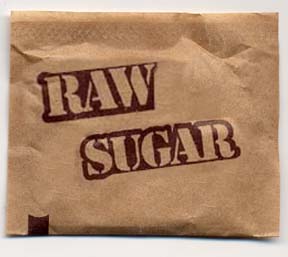
Raw Sugar? Really?
Labels are deceptive.
I was in the grocery store yesterday — in the sugar aisle. Of 5 products claiming to be natural, raw sugar, exactly ZERO actually were!
Now, I know we’re supposed to avoiding sweeteners altogether. When I get a hankerin’ for sweets, I usually grab a fruit or — I kid you not — a glass of whole raw milk.
But, sometimes you may want to make something sweet as a special treat. It’s the holidays. It’s your kid’s birthday. You got promoted. You need comfort.
When those days strike, it’s best to use natural, unrefined sweeteners to fill the gap. Things like honey, maple syrup, or raw sugar.
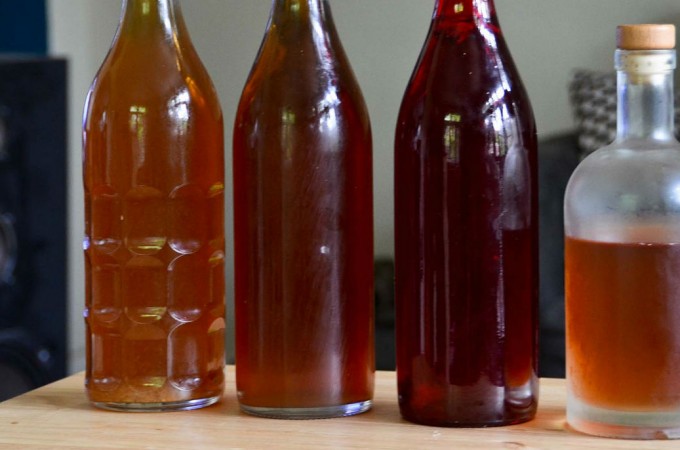
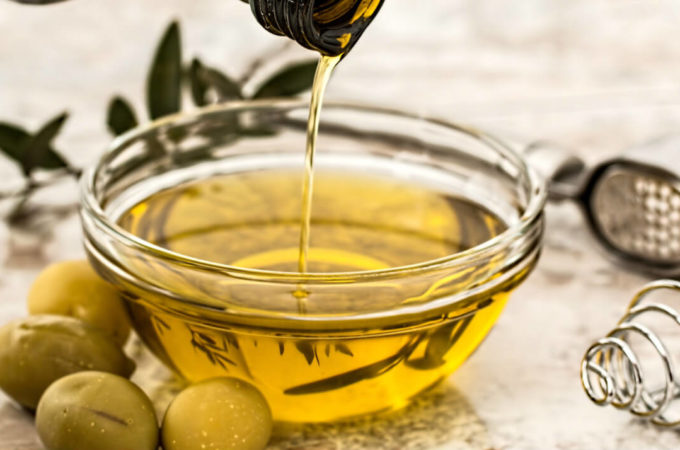
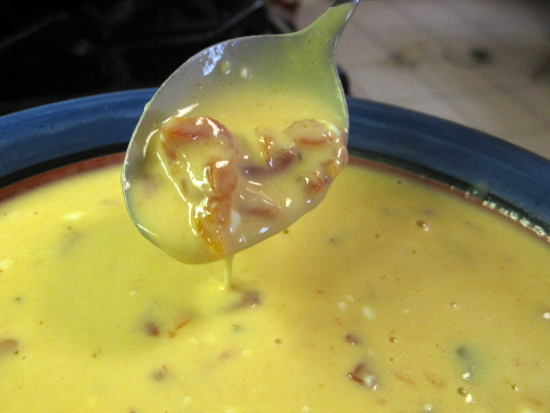
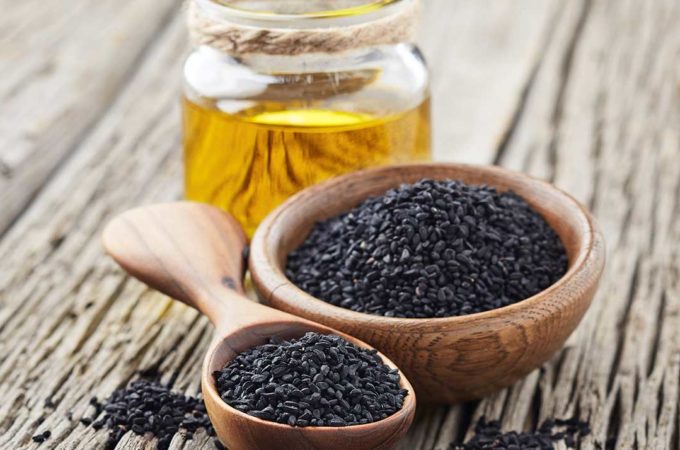
Want to test your raw sugar spotting abilities? Check out the photos below and tell me which one’s really and truly unrefined, raw sugar.
Will the Real Raw Sugar Please Stand Up?
Each of the sugars below is advertised as natural, raw sugar.
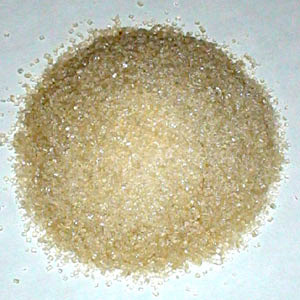
Option 1
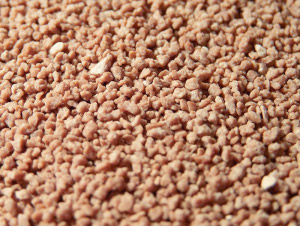
Option 2
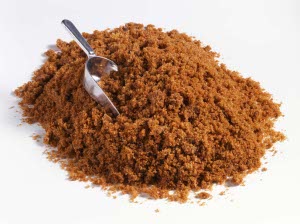
Option 3
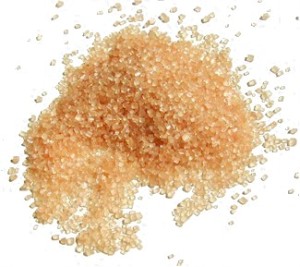
Option 4
Figured it out yet?
 |


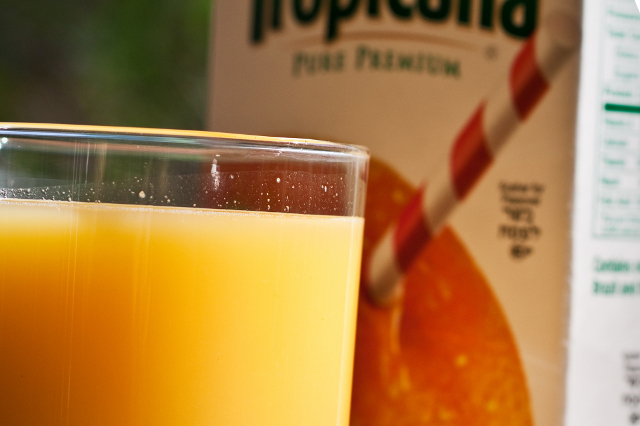





I’m goin’ with options 2 or 3 because they are the most brown (and that’s the opposite of WHITE).
Its white sugar but with molasses added to give you the “brown” so it may be opposite in colour but not product.
I know, because I’ve done it. It tends to make it a brown sugar consistency. And raw sugar, apparently is the first cut, from the cane, and it may or may not have molasses added. But molasses is full of vitamins anyway. So I still like raw sugar.
I don’t know–option 2 looks like it could be Sucanat up close, so I’m guessing #2.
Shannon
Sucanat isn’t really raw sugar.
I’m going with #2, too, which looks like sucanat. #1 & #4 look like sugar in the raw (which isn’t). #3 looks like turbinado. Of course, sucanat isn’t really raw since it’s heated until it’s thick enough to crystallize when paddled, so I’m kinda thinking this is a trick question. 😉
Jenny
Ah, Jenny! Do you really think I’m THAT tricky? 😉
KristenM
I’m guessing none of them unless number two was scraped right out of the sugar cane itself. If I can’t see the cane, it just doesn’t seem natural.
Genie
Hi Kristin!
Perhaps I can clear up the confusion? #2 is true raw Rapadura? I know there’s an old Sucanat-Rapadura debate…. I think recently Sucanat fell back into graces because they’ve changed their processing and are now actually real, but the only real raw cane sugar I know of is Rapadura.
Unfortunately, I test badly for all cane sugar, so I tend to stick with raw honey and stevia. Great blog, by the way!
The Thrifty Oreganic
Why oh why can’t they just ALL be good for us????? Or if we could just get a *chocolate* exception…
Kelly the Kitchen Kop
I went on a detox diet and since then, rediscovered the beauty of honey. We are also experimenting with Agave syrup as an sugar alternative.
Fumi
I wouldn’t do agave if I were you. It has a higher percentage of fructose than HFCS, and can damage your liver. Plus, the way it’s made is questionable.
I would say none of them are “raw”. But it may depend on your definition of “raw” 🙂
If you’re not overweight, the main problem with sugar is the fructose. Getting too much fructose, from whatever the source, tends to mess up your system over time and will likely lead to obesity and increased risk for type II diabetes, heart disease, and cancer. It’s the fructose that appears to be the addicting component of sugar. Most sugars when digested are about half fructose and half glucose, including table sugar (sucrose), and high fructose corn syrup (HFCS), as well as honey, maple syrup, and molasses.
If you’re overweight or have diabetes, then the glucose matters as well. Most people lose weight more easily by cutting carbs, including starches and sugars.
Interestingly, mother nature did not provide fructose in milk. That alone is a strong sign that fructose is not good for us. The sugar in milk is lactose, which digests into glucose and galactose. So, as long as you don’t already have weight problems, raw milk is great for satisfying any urge for sweets. I like it with a little raw organic unsweetened cocoa powder and raw pastured egg yolks blended in for a really healthy treat.
The sugar in fruit typically digests to about half fructose, but the quantity is small compared to what you get in typical desserts that are made with added sweeteners. So, it’s still not a good idea to eat too much fruit, as the fructose does add up.
Bryan – oz4caster
Everything that you said is wrong. Fructose, from its original source(straight from the fruit), does not cause any sort of disease. I have no idea where you are getting your misguided information. If you really think that fruits are bad for you, then tell that to the people all around the world that have eaten only fruit for decades or live off of fruit and are perfectly healthy. Fruit alone will not make you obese, they will actually make you thinner. Raw fruits alone can actually cure you of all of the diseases that you mentioned. Fruit is the purest of foods. It is the only food source that helps the environment instead of hurting it. When you eat a fruit, the seeds are indigestible, which you should either throw on the ground, into the dirt, or they will come out in your feces(which in the wild would fall into the earth and give the seed everything that it needs to grow). Do you know why the rainforests are so healthy and thriving so well? It is because of the many varieties of fruit and the animals that eat them. Without those animals, the trees and plants would have a hard time spreading their fruit. The animals eat the fruit and spread the seeds for them(intentionally or unintentionally), and when eaten, the surviving seeds would have everything that they need to grow inside of the feces. Have you ever seen a tree that is growing randomly on top of something? It got there because of the bird or other animal that ate the fruit and/or seed and pooped it out, giving it the perfect environment to grow in. And that is the main reason that a rainforest is so healthy. One of the beautiful relationships where all benefit in nature. Fruits are actually better for you than raw vegetables, as most raw vegetables are actually indigestible. You made me laugh with the comment “Interestingly, mother nature did not provide fructose in milk. That alone is a strong sign that fructose is not good for us.” Of course milk doesn’t have fructose, this is no SIGN! Lol. Fructose comes from plants, not animals! And if you think that breastfeeding a 12 year old child or even a 40 year old man is wrong, then stop drinking milk! Lol. You are no baby! I was researching raw sugar to find out why the smoothie place that i visited yesterday dumped a bunch of sugar into my smoothie. When i asked why, they said “its a natural sugar, its good for you!” In my opinion, anything that was extracted from something natural just for flavor is anything but natural. Nature provides the substance with the source because it is balanced with that source. When you take only the sugar away from fruit, it becomes unbalanced and is therefore unhealthy. There is absolutely nothing wrong with eating a lot of fruits, and it is actually very healthy for you, as long as they are raw, ripe fruits and not processed. Nature is still alive and thriving on this planet and it has done so for billions or even trillions(maybe even more) years. If you really want to know what is healthy and will keep you alive, look towards and listen to nature. Don’t listen to some random guy online that is advising you to do things that are against nature, claiming that it is healthy and good for you. Don’t listen to anyone who does this in real life or on the internet. Ohh and here is a great movie on this whole subject! Its called Origins, Go here http://origins.well.org/ you only need to enter an email. or here
http://origins.well.org/movie/?contactId=649932&inf_contact_key=6ac4528d5d56dfbef1e812b408531e74f0e296f12a4605a53f5ed013fe8f59c6&inf_field_Email=raindroptreee%40yahoo.com&inf_rLqGs6V75AW7leoT= copy and paste either into your url for a free 10 day screening.
If you want to feed yourself or your family something sweet, just use ingredients that are already naturally sweet. Those are the healthiest kind as they are perfectly balanced for your body. I use pinterest.com and yummly.com for all of my recipe needs.
My guess is that none of them are raw sugar.
Bryan, interesting treatise on lactose vs fructose, I’d never thought of it that way. But if you’re going with what Mother Nature intended, she certainly never intended us to drink the breast milk of other mammals. Cow’s milk is designed for calves. We are the only creatures who drink the milk of other animals and the only ones who drink it past the age of weaning.
Good point about milk and our consumption. I’m lactose intolerant. During a university health course I read how our bodies were never meant to be able to digest cows milk. They only reason (most) people can is because of high consumption over time. Asian countries where dairy is rarely consumed have high rates of lactose intolerance. I used to live in Korea and dairy was extremely expensive.
Actually, most mammals will drink the milk of others if milk from their own kind is unavailable. Humans are also different from other animals in many ways. We have the ability to reason and project into the future. We also rely on the industry of others to provide our sustenance, and as a society are willing to consume an awful lot of engineered crap that no living creature was ever “designed” to consume. Edible petroleum products anyone?
My apologies, I realize this is off the raw sugar topic, but I just can’t leave this alone.
I was lactose intolerant as a child when I consumed pasturized milk, but had no problems with the occasional raw milk we obtained. It was the pasturized milk that “exploded through” me. Some, like Sally Fallon, suggest that it is the dead bacteria in pasturized milk that causes the problem, not lactose.
Excrement also consists largely of dead bacteria. Isn’t that an interesting connection?
I don’t think the point here is weather or not humans or other animals drink another species milk, but weather any other creature besides humans drinks milk unless they are a baby. Milk is for babies development, it is not a food source. It is produced for the growing child’s body. An adults body needs different things than a babies body. If you don’t like the idea of someone breastfeeding a 12 year old or even a 40 year old, then don’t drink milk. There is a reason that our bodies stop producing milk over a certain amount of time feeding our babies, Our bodies don’t need it anymore! Babies on the other hand Need breast milk. It has certain things in it that are necessary for a babies healthy development, and also allows the mother to share with her baby things that only can come from a mothers breast milk. An example of this is microbes, or microorganisms. http://www.wired.com/2014/04/missing-microbes-antibiotic-resistance-birth/ this is a good article talking about the relationship between a mother, her baby, and microbes(a symbiotic relationship). Copy and paste it into your url.
We may have the ability to reason and project into the future, but we are the only species destroying our home planet and ourselves on a massive scale. We definitely aren’t using those abilities for our own benefit, but rather for our own demise. Hopefully this will change in the near future. If it doesnt change, we will be the dumbest species who killed most other species and ourselves. I say most because this planet has lived through far worse than the human species and survived for billions if not trillions(maybe even longer) years. Scientifically, it is impossible to know the exact length of this planet’s existance, and if it is possible, we are nowhere near advanced enough to find out.
i hear the argument against milk (only humans drink another species’ milk) a lot, but it’s not true. Dogs, cats and bears drink milk if they have access to it — they just don’t often. It’s clearly not meant to be drunk often by carnivores, based on what happens to them when they get too much, but humans are not carnivores. Even a vegetarian is an omnivore, they just don’t want to be.
What about coconut sugar or perhaps I should say coconut crystals? How does this measure up? Are they still fructose, still taxing on the system overtime?
I realize this is a few years old, but I’m reading it because I had a discussion with a friend yesterday about howI had heard agave nectar was bad. Anyway, what is the suger answer here?
Where is the answer? I don’t see a link anywhere.
I think it’s Option 1. Would love to know the answer though.
Hi, Kristen! It would be so helpful if you dated your blogs. I can’t find the answer to this great start you made about “raw” sugar and have no idea how old or new it might be (except by looking at the comments). Dating your words would be great for posterity and info. Thank you.
Click “next post” on the bottom for the answer.
I would really like to know the real raw sugar answer. I love this forum. I have beeen researching raw natural foods and herbs since 7/18/1960. That’s the day my mother died from diabetes, which began my life long journey searching for what could have saved her. I still miss her. God is my best friend and next was my mother.
I visited a sugar plant in Hawaii and number 4 looks most like the raw sugar that we were given in sample form.
I’m new to your site, and don’t see a date on this post, but I would go with #2 of the options above. Looks like SuCaNat to me. 😀
Option 3….When are you going to post the answer?
So you say no truly raw sugar is available. What I want to know is: how can you tell how it was processed? My apologies if this is elsewhere on your site. I’ve been reading a lot of your posts about different sweeteners starting with a link my sister sent me about the way agave nectar is made. Yick. Anyway… I’m still browsing. Love what I’ve read so far.
Isn’t ‘raw sugar’ just a manufacturing term??–as opposed to real raw sugar.(if there is such a thing).
Then I guess it will be OPTION 1.
All the other brown sugars perhaps are just processed sugar with the addition of things like mollasses and stuff.
How can any sugar be “raw” if it is crystallized?
It can only be really raw if you grab a sugar cane or sugar beet and bite into it.
I’m sure the manufacturing world has technical/commercial definitions for what is considered raw or refined, ie being processed at different temperatures, etc.
But my gut feeling is that–how can anything be raw if it is in a powdered or crystalline form?? Surely the raw sugar has to be juiced, boiled, chemicals added, evaporated or centrifuged, etc, etc, before it can find its way into a plastic bag with a label on it??!!
Just my two cents worth. LOL
Ha! Yes, I think you are right….I was going to say the raw-est sugar is molasses because it would be the least refined, however it is not RAW! However, if you dry raw sugarcane juice, THAT would be raw sugar juice at least, if not raw sugar itself, no?
#4 : )
Have the answers been posted?
option 1 and 2 i see a lot when i get raw sugar and because # 3 look like light brown sugar or dark brown sugar i know that not right. # 2 looks like sugar cane pieces. i will be waiting on the answer
my vote, goes for unrefined sugars, falling under the names, panela, piloncillo, jaggery, or raspadura.
None of it is really raw sugar since it is illegal to sell it in the U.S. due to the high impurities level in the truly raw product. All of it has been processed in some form or fashion to clean it, but it has not been subjected to the full refining and whitening processes of ordinary white table sugar.
Yes, but all raw sugar is actually just white sugar with added molasses for coloring, which is funny because molasses is the brown coating that is first taken from raw sugar that is made into white sugar, lol. Its like our sugar is all backwards!
A friend used to bring me raw sugar from Jamaica. It came in a can, and it was wet. This was in the 1970s, and I can’t find it anymore.
You mention using maple syrup as a natural, unrefined sweetener. Isn’t maple syrup boiled down 30x to make it sweeter than when it’s harvested?
Love the Pun! And love the info. Thank you for putting the TRUTH out there. So many clever deceiving sugar companies out there.”Will the real raw sugar please stand up”!!-Rapadura
Your posts aren’t individually dated, are they? We can search for a month, but within that month we can’t go to a specific date, can we? If not, how do we find the answer to your sugar question?
It took me a while to flip through the pages but I searched “raw sugar” and the post was right next to this one. I agree it should be linked for ease or be able to go to the next post like you can with pages of posts. 🙂