
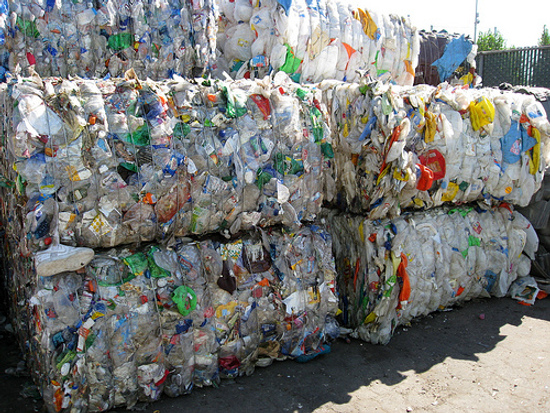
Today, scientists gave us even more ammunition to use in the fight against bisephenol A (BPA) — the synthetic estrogen present in many plastics and packaged foods. Ever since low levels of BPA were shown to be toxic to mice in 1997, the chemical has been steadily in the news as researchers around the world keep unlocking the many ways that it leaches into our foods. From today’s press release:
The French National Institute of Agronomic Research (INRA) found BPA caused a negative reaction in the intestine of rats – even at low doses. The report was published in the Proceedings of the National Academy Sciences and focused on the digestive tract as the first organ the chemical comes into contact with after being consumed.
INRA said its team orally administered doses of BPA to the rats that were equivalent to about 10 times less than the daily amount considered safe for humans. The Toulouse-based body’s research was also carried out on human intestine cells and revealed the chemical lowered the permeability of the intestines and the immune system’s response to digestive inflammation. They also found that newborn rats exposed to BPA in the uterus and during feeding have a higher risk of developing severe intestinal inflammation in adulthood.
“These findings illustrate the intestine’s great sensitivity to Bisphenol A and open new research paths for characterising and evaluating the effects of endocrine disruptors from food,” said a statement from the researchers.
It added: “They may also contribute to risk assessment and the determination of new acceptable exposure thresholds for these molecules.”
In the past, we’ve primarily been concerned about BPA from a hormonal point of view. The regular presence of synthetic estrogen in our food supply can have many negative effects on fertility, normal human growth, cancerous growth, and more. Yet now we can add one more element to our growing list of wrongs: it harms our guts. (And you all remember how I feel about our guts, right?)
How to avoid BPA exposure:
- Because of the ubiquitous presence of BPA in the linings of canned foods, you should limit your consumption of industrialized canned goods (particularly if you’re pregnant or nursing).
- Avoid polycarbonate plastics, particularly those labeled as plastic #7 and #3. Don’t eat or drink out of these containers; don’t store foods in these containers; and don’t heat foods in these containers. As an alternative, use glass, stainless steel, or ceramic containers NOT lined with plastics.
(picture by seaotter22)
 |





new reasons to avoid BPA (because we needed more, right?) https://www.foodrenegade.com/new-reasons-to-avoid-bpa/
This comment was originally posted on Twitter
Wow, very disconcerting indeed. I’ve been reveiwing gut health both personally and on my blog during the last month, and avoiding toxic chemicals does play an important part in restoring the health of your gut. I imagine avoiding BPA should be on the top of the list.
.-= Elizabeth @ The Nourished Life´s last blog post …Nourishing Baby Steps: Small Changes for Beginners, Part 2 – Three Strikes for Vegetable Oils =-.
Hey, that pic looks a lot like my friend’s art installation for ArtPrize in Grand Rapids. It was crazy seeing all that plastic in person, and I believe it was only a month’s worth for our city.
http://www.mlive.com/artprize/index.ssf/2009/10/artprize_in_review_our_top_10_most_popular_artprize_stories.html
.-= The Local Cook´s last blog post …Cooking from Scratch: Ideal or Idealistic? =-.
New Reasons to Avoid BPA http://bit.ly/8IEveT (via @FoodRenegade)
This comment was originally posted on Twitter
Wow, it can be so overwhelming to find out what we have done to ourselves with all the inovations of the last century or so. Thanks for spreading the word!
.-= Christy´s last blog post …5 minute Bread – Really =-.
I have been gradually reducing the plastic I come in contact with. We no longer buy anything in BPA-lined metal cans, and store everything we possibly can in glass jars. For the few plastic things we still have, we are working to get them all into plastics labeled #2, 4 and 5 exclusively. But then I see bulk food bins made of plastic. When a recent public works project unearthed our water pipes, I was shocked to see they are PVC: #3. The “bad” plastics are ubiquitous so every bit of reduction I can manage that is under my own control is worth it.
.-= Local Nourishment´s last blog post …Family Food Times: Birth of an Activist =-.
Oooh, scary. I never wondered about what my water pipes are made of!
It seems every day we discover one more chemical that has dangerous effects on our bodies – you have to wonder at what point we just can’t handle anymore, (some would say we are way past that point already). Not to mention chemicals like BPA are everywhere – I didn’t know it was in soup cans for example. Can we really cut out all the BPA from our daily use if we don’t even know where it is coming from? Especially since I would imagine most water pipes are made of PVC like Local Nourishment stated above – I guess we either evolve into “glowing green men” or we go the way of the dinosaur.
.-= Earth Friendly Goodies´s last blog post …Breaking News: Rufus the Puppy Responsible for Organic Dog Treats =-.
It does seem rather hopeless, doesn’t it? We simply try to do the best we can with what we’ve got and hope that our good nutrition is building a strong enough liver to handle all the detoxing that our bodies need to do.
I have been reducing our plastic use for some time but still have a few canned goods I buy, but plan on eliminating them as soon as I can.
Question for anyone that knows…. are all metal cans lined with BPA? I know some cans I buy have this white plastic looking coating to them and others don’t have anything noticeable to my eye anyway, just curious if all canned goods are bad.
Thanks!
To my knowledge, the only cans that are BPA-free are also labeled as such. I’d assumed it was because going BPA-free costs more, so a company would want to promote that as a selling point in order to earn back some of their extra expenses.
Eden Organics beans are in BPA-free cans. Their tomatoes are not; apparently, tomatoes must be in “lined” cans by law.
.-= Emily´s last blog post …Sauerkraut wrap-up and recipes =-.
Remember what we learned about estrogen and cellulite? More important info from @FoodRenegade about BPA http://ow.ly/N0oG
This comment was originally posted on Twitter
I have a bunch of Tupperware that I use, Anyone know if it has BPA?
Melanie — A google search turned this up: Many tupperware items contain BPA, although their entire line of infant/children’s products are BPA-free as well as some of their other products. A complete breakdown can be found here:
http://zrecs.blogspot.com/2008/02/z-report-bpa-tupperware.html
New reasons to avoid BPA. As if you needed any more? http://su.pr/2HhJOK
This comment was originally posted on Twitter
New Reasons to Avoid BPA | Food Renegade http://bit.ly/8GDLZB Its’s bad for our guts! @FoodRenegade
This comment was originally posted on Twitter
How many do we need?!
RT @foodrenegade New reasons to avoid BPA. As if you needed any more? http://su.pr/2HhJOK
This comment was originally posted on Twitter
Reading @foodrenegade New Reasons to Avoid BPA http://tinyurl.com/yepb4j8
This comment was originally posted on Twitter
Good read @ RT @FoodRenegade: New reasons to avoid BPA. As if you needed any more? http://su.pr/2HhJOK
This comment was originally posted on Twitter
We’ll buy BPA free if there’s a choice but right now the market doesn’t give us much choice. What to do?
.-= Nate´s last blog post …Fruits of Serian =-.
This explains why people on the GAPS (Gut and Psychology Syndrome) diet should avoid canned foods. thanks for posting this,
Sarah
.-= Sarah Schatz – menu plans for limited diets´s last blog post …Recipe for Sugar-free Almond Roca Candy =-.
May I just say what a relief to discover somebody who actually knows what
they’re discussing on the web. You definitely know how to bring an issue to light
and make it important. A lot more people really need to check this out and understand this side of your story.
I can’t believe you’re not more popular because you surely possess the gift.