
Confused about what kinds of seafood to buy? What the healthiest seafood choices are? Which ones are free from toxins? Which ones are sustainably caught?
You aren’t alone.
Without a doubt, our oceans are polluted and over-fished. Our streams are thoroughly saturated with mercury — a deadly poison. This has led many to throw up their hands in despair and swear off seafood altogether.
That’s not a good choice.
Seafood is an incredibly nutrient-dense food — arguably the best source for fat-soluble vitamins A & D, omega-3 fatty acids, and more. We know from anthropological studies that traditional people groups around the world prized seafood above every other food and went to great lengths to obtain it, regardless of their location.
But, you say, what about mercury in fish? Isn’t that a good enough reason to stop eating it?
Research indicates that if you have good gut flora, you are protected from the mercury in fish and other environmental toxins! So, if you are eating a diet rich in lacto-fermented foods and/or taking a good probiotic supplement, the mercury content of fish is less of an issue. (For sources of lacto-fermented vegetables, starter cultures, and probiotic supplements, see my resources page.)
So, what are the healthiest seafoods you can buy?
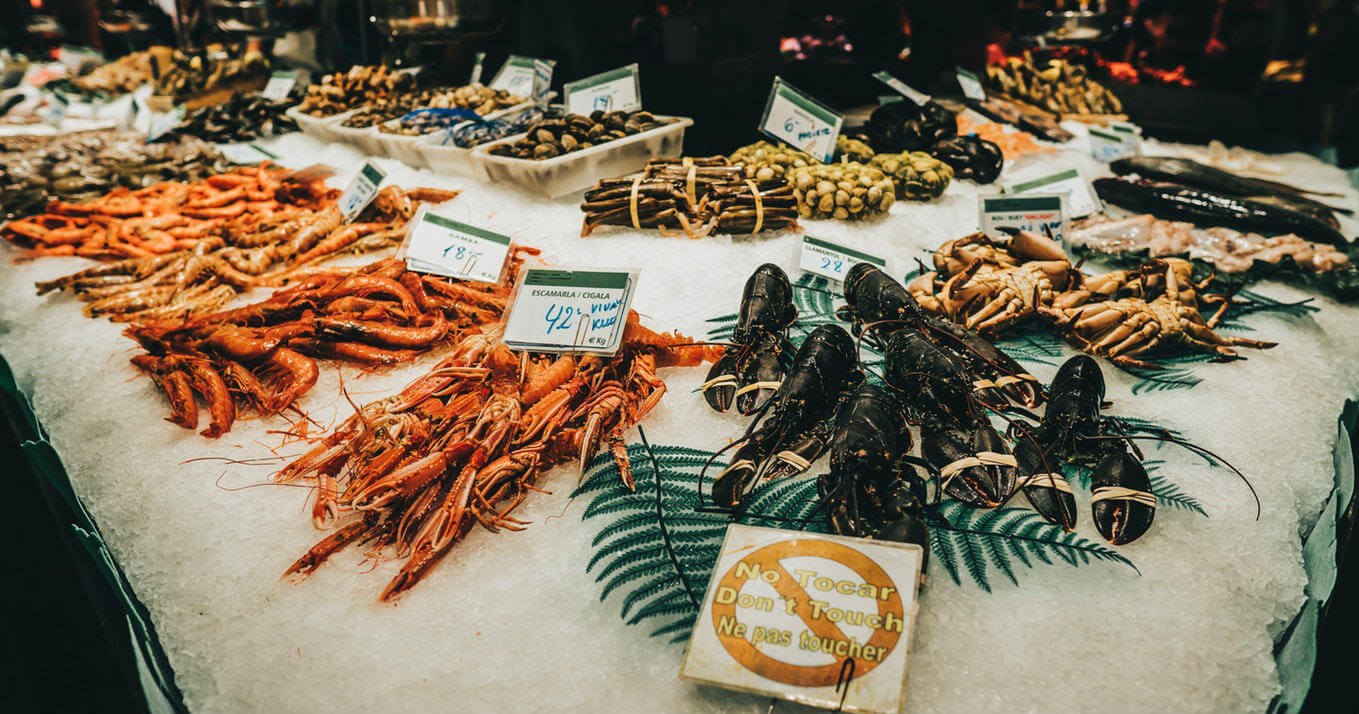
BEST CHOICE: Mollusks are the most nutrient-dense of all seafood (source). Oysters, clams, mussels, scallops, octopus, and squid are the most commonly available mollusks in your grocery store. And these days, many of these foods are farmed using such sustainable practices that the farmed versions are actually better for you and the environment than their wild-caught counterparts thanks to the heavy pollution and over-fishing of the wild. Depending on where you live, you can find these fresh, frozen, or canned.
SECOND: Other shellfish such as lobster, crayfish, shrimp, and crabs are also significantly more nutrient-dense than fish, though less so than mollusks. As with mollusks, many of the farmed versions of these sea foods are now so sustainably farmed that they exceed their wild counterparts in sustainability & healthfulness. Also included in this second list are fish roe (eggs), available fresh or canned. They’re an essential part of most native fertility diets — and for good reason!
THIRD: Fish — any fish. Oily fish are among the most nutrient-dense, but also among the ones to be most cautious with regards to sustainability and toxicity. Sticking to small, oily fish like sardines and anchovies can virtually eliminate any risk of toxicity. In general, wild-caught carnivorous fish are significantly more nutrient-dense than their farmed counterparts, mostly because of the unnatural diets fed to the farmed fish. According to Nina Planck — definitely a lady in our camp — if the fish are herbivorous (like tilapia), then it’s easy to feed them their natural diet. Plus, with sustainable management practices, the farming of the fish can be much better for the environment than capturing the fish in the wild. But, as always, the choice between wild and farmed fish needs to be made on an individual case by case basis. (For example, U.S. tilapia farms are held to a higher standard than international farms. They’re fed a natural diet, and they’re farmed sustainably. So, in this case, it’s best to get U.S. farmed tilapia rather than Costa Rican farmed tilapia.)
So, how do you balance the nutrient-density of these foods against their sustainability and toxicity?
Easy.
The folks at the Monterrey Bay Aquarium have put together the most comprehensive database of sea food, farming and harvesting practices, and toxicity levels available today. And, they’ve conveniently condensed all this information into a handy pocket shopping guide which is broken down according to region. The pocket guides (which you can download here) are divided into three categories: Best Choices, Good Alternatives, and Avoid. I personally shop from this guide for my region, choosing mollusks, shellfish, and fish (in that order) according to what’s best and what’s on sale.
What should I feed my kids?
Believe it or not, kids generally approve of the most nutrient-dense foods of them all. If you’re looking for safe seafood to feed to kids, this list takes into account nutrient-density, sustainability, and toxicity and narrows it down 6 prime seafood choices:
- Wild Alaskan Salmon
- U.S. Farmed Tilapia
- Farmed Blue Mussels
- Northern U.S. and Canadian Shrimp
- U.S. Farmed Crayfish
- Farmed Bay Scallops
You’ll note that with the exception of the U.S. Farmed Tilapia, these fall into the nutrient-dense recommendations I made above.
Finding Sustainably Caught Seafood
(Click here to find sustainably caught seafood from my favorite online retailer.)
Want more like this? Here’s the ever growing list of Healthy Foods: What to Buy:
- Healthy Eggs: What To Buy
- Healthy Milk: What To Buy
- Healthy Cheese: What To Buy
- Healthy Meats: What To Buy
- Where to Buy Butter from Grass-fed Cows
 |





Hi Kristen, I love your Website! I can’t remember for sure where I read it (several places), but I thought all farmed fish choices were bad, as far as real food/NT eating goes.
Most farmed fish are not fed a natural diet (GM corn… YUCK!), and are given antibiotics. There is also the possibility they will escape, and endanger the wild population. In fact, there was a segment about it in Food, Inc. What are your thoughts on these issues?
It’s pricey, but for now I’m sticking with Vital Choice products.
I should add that I live right in the middle of the country, so there are no local seafood options here.
Food Renegade » Blog Archive » Healthy Seafood: What to Buy http://tinyurl.com/r3df9k
This comment was originally posted on Twitter
#ynw Confused about what kinds of seafood to buy? What the healthiest seafood choices are? Which ones are fr.. http://bit.ly/17k89K
This comment was originally posted on Twitter
Jen — Actually the distinction is much more subtle than farmed/wild in the traditional foods world. According to Nina Planck — definitely a lady in our camp — the nutrient profile of farmed fish is only significantly different than wild caught fish when the fish in question are carnivorous. If the fish are herbivores (like tilapia), then it’s easy to feed them their natural diet. Plus, with sustainable management practices, the farming of the fish can be much better for the environment than capturing the fish in the wild. It’s simply wrong to say “most farmed fish are not fed a natural diet.” Many are.
I went on ahead and edited the post to make this distinction more clear because I feel it’s an important one for people to realize.
P.S. Did you look at your regional guide at the Monterrey Bay Aquarium site? Even inland places have waterways, so you may be surprised with what’s a reasonable choice for you from local fish. Also, remember that even in traditional people groups, inland tribes went out of their way — sometimes traveling for days, sometimes calling for temporary truces with warring neighbors so that they could pass through territories to the coast, sometimes *starting* conflicts with tribes that stood in their way — in order to get access to seafood. If there’s any food that’s nutritionally worth bringing large distances, it’s seafood. Always has been, always will be.
Ok, I am confused, did’t you say in your latest post, April 6, 2015 that tilapia is a bad choice?
Thanks for the clarification, Kristen. I guess my concern about farmed fish eating a natural diet applies only to carnivorous fish. That makes sense. I need to read Nina Planck’s book!
I haven’t really researched this issue myself, but I should! I have just taken snippets of what I’ve seen and read as a guide. Thanks for the post, and I will check out the Monterey Bay Aquarium site.
I happened upon the Food Renegade twitter through other slow food twitters I’ve been following. I am so happy to find this. I want to thank you for what you are doing and I look forward to reading through your archives and joining in on discussions here! 🙂
great info.
jen- i live in MN, no sea in sight, but my dad is a fishmonger and manager of a seafood shop which gets fresh seafood and fresh water fish flown in or delivered by truck every day. I dont know where you live but there might be a small seafood store in your area that gets fish daily that is fresh and sustainably caught.
as a kid i loved mollusks, my dad makes a beautiful creamy curry with muscles that I just love. my kids really like shrimp, any floured then fried fish such as local trout, haddock, local walleye (i’m lucky to be able to get wild-caught fish fromafairly clean lake, Lake Superior), ect. Also, expensive as it may be we love lobster dipped in real butter.
.-= emily´s last blog ..A Real School Lunch- cute eco friendly lunch boxes and simple meal ideas =-.
Thorough, detailed guide to sustainable seafood choices http://bit.ly/4pU24 {via “Healthy Seafood: What to Buy” http://su.pr/1Ys2pt}
This comment was originally posted on Twitter
Thank you for this…I do think this is one of the more confusing topics for me.
I recently read that cilantro helps your body when you digest mercury, so it doesn’t effect you as much. I’m not sure how true this is, but it’s worth looking into and finding out if it is true! Salsa with your fish, anyone? =)
.-= tarena´s last blog .. =-.
Tarena — Yes, cilantro, garlic, and spirulina are all good detoxing agents, particularly when consumed raw.
Reading @foodrenegade Healthy Seafood: What to Buy http://tinyurl.com/r3df9k
This comment was originally posted on Twitter
Super helpful post, Kristen! I’ve been eating farm-raised Tilapia since I read about it in Nina Planck’s book, but she doesn’t say *why* it’s safe, and it’s good to finally know! (I’ll have to let my readers know, too, as some were asking.)
Also, I really appreciate your list of 6 prime seafood choices – I’m a list person. 🙂
Thanks, Kristen!
Kelly
.-= Kelly the Kitchen Kop´s last blog ..5 Reasons Why Homemade Kefir Soda Pop Is Better Than Kombucha Tea (Real Food Wednesday) =-.
Great article, Kristen! I didn’t know that mollusks are more nutritious than fish. I’ll have to keep that in mind, but I think I’ll pass on the farmed Tilapia. 🙂
.-= Vin – NaturalBias´s last blog ..How to Prevent and Eliminate Knee Pain =-.
Vin — Yeah, we don’t eat U.S. farmed tilapia all that often either because it’s not particularly nutrient-dense. But at least according to the two sources I cited above (which are the most reputable ones out there), it’s not bad for you and/or the planet.
Excellent post. It’s so hard to keep up with, sometimes I crave seafood but worry so much that I skip it altogether. The good news, is that it is officially oyster season on the east cost!
.-= Heidi from Savory Tv´s last blog ..Chef Michael Smith’s Smoked Salmon Pasta With a Lemon Dill Cheese Sauce =-.
This is an excellent post and definitely information I can use daily. I’m always looking for ways to add more seafood to my diet, but am concerned about the toxicity (confirmed by reports like the recent one mentioning mercury in nearly all water sources you brought to our attention). I will be using this information for my grocery trip this week! Thank you for all the wonderfully informative information!
.-= Brie´s last blog ..True Blood Martini =-.
Great list and thanks for the breakdown on types of seafood and their relative exposure or lack thereof for contamination, health and other concerns.
The HEALTHIEST Seafood Choices To Buy: http://tinyurl.com/r3df9k
This comment was originally posted on Twitter
Via #FoodRenegade: “If you have good gut flora, you are protected from the mercury in fish” http://bit.ly/10MW7W –Cool!
This comment was originally posted on Twitter
great tips and well written
Via @FoodRenegade: “If you have good gut flora, you are protected from the mercury in fish” http://bit.ly/10MW7W –Cool!
This comment was originally posted on Twitter
Very informative, thanks!!!
.-= thepinkpeppercorn´s last blog post …Baba’s Perogies on Video =-.
My concern with farm raised Tilapia is that they may fed soy pellets. How can you know if they were fed soy? What is their natural diet? I am in the process of reading Nina Planck’s book. Maybe I will come across that info there. On the cans of tuna that you buy, it will say “contains: fish, soy'” or “contains: fish.” I always buy the ones that say “contains: fish.” I am not a fan of soy for many reasons. Until I read enough info about farm raised fish that makes me feel comfortable buying it, I’ll stick with the wild ones.
It’s so hard to trust any suggestions on seafood. For one, the Monterrey Aquarium’s suggested list includes Basa,
which some 90% of it is farm raised along the Mekong River, which is the most polluted and toxic river in the world. In fact, there’s raw sewage flowing directly into it. The fish are fed ground up dead fish and all sorts of antibiotics. This is now the cheap fish many restaurants are selling. This fish even tested positive for malachite green and other toxins. My husband had it at a restaurant last year and was so sick he could not stop vomiting for 24 hours.
Is there any information out there that gives a proper list of seafood that is sustainable AND tested for toxicity?
Any info would be greatly appreciated.
Ava
Though I love Sally Fallon’s book Nourishing Traditions, and I am a member of the Farm to Consumer Legal Defense Fund, I still like a little science and repeated blind studies in my library of food decisions. Fermented foods are good for you for a number of reasons, mainly the preserved vitamins and stomach flora, but their are no studies besides anectotal that show good stomach flora can filter out heavy metals like mercury or lead. As a matter of fact, basic biochemistry would prove this untrue.
Actually a couple of studies have been done on rats that seem to verify this. One such study — which I mention in my book Beautiful Babies — found that those with normal gut flora had no problem eliminating a mercury toxin from their system, while those with damaged gut flora (induced by a course of antibiotics) developed symptoms of mercury toxicity.
I have one question. I am a firm believer in the power of seafood and also a fan of Weston Price, however I am curious how Weston Price advocates reconcile this with the fact that seafood has no vitamin k2. Seafoods seem to be the most nutrient sense foods for humans on the planet, but we only get vitamin k2 from ruminating animals.
Hi Kristen. I always enjoy reading real stuff and I find it in every article you write. Keep it up!
p>I dont think LactoBacillis Americanus et al have the power to remove heavy metals and toxins from you…
Also there is heavy radiation from the Pacific Gyre constantly being fed from Fukushima and recycling around the Pacific
The FDA REFUSES to monitor seafood-and besides AK,BC,WA,OR and CA never bothered to open their crabbing seasons this last year-they claimed some kind of “Red Tide” nonsense
On whose research did she base this Gut flora info? Anybody test THAT info i.e. second opinion?
Pretty dangerous to state this based on New Age wishful thinking thats not backed up by HARD RESEARCH
Thank you for foodrenegade.com as I happened along while researching “healthy fish on a poor mans wallet” ans somewhere along found Food Renegade. One article of interest and I found was very comprehensive was that of store bought eggs vs free range. I spilled over the comments also to get a variety and possibly learn of an expiration date for a free range or pastured egg but found nothing on that one question I had throughout the article. Is there such a thing as when a free range egg is no longer good to eat or is suspect of being expired?
I would appreciate your reply and thank you in advance.
People think that all kinds of seafood are healthy. Well, not all of them are. This blog gives right information on the choices we make, and how should we buy the healthy seafood. I shall keep the points in my mind when I am out to purchase.