
Deceptive Labels Assault Us From Every Grocery Store Aisle
I haven’t bought lunch meat in ages. If we want meat on our sandwiches, we usually stick to tuna, pulled roast beef (from that cow we bought in the spring), or pulled chicken (from pastured hens we buy direct from a farmer).
But not too long ago, I actually needed to prepare a dish with deli meat for a social function. I started perusing the lunch meat aisle at the grocery store, knowing I couldn’t find anything as healthy as farm-fresh meats, but still hoping for something without added MSG, nitrites, and nitrates.
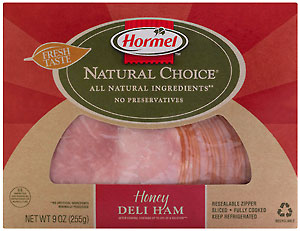
Happily, I found Hormel’s Natural Choice deli meats. The package advertises “No added MSG” and “No added nitrites or nitrates.”
When I got home and scrutinized the packaging claims more carefully, I noticed an asterisk next to the “No added nitrites or nitrates” claim. The qualifying phrase reads, “except for those naturally occurring in natural flavor.”
It sounds harmless enough, like it’s saying that there are no nitrites or nitrates in this deli meat except for what occurs naturally.
But, that’s not what it means.
You see, there’s an ingredient listed called “natural flavor.”
In other words, they’re adding nitrates and nitrates, but calling it “natural flavor.” And they’re selling this deli meat — which is essentially the same as all their other deli meat — at a premium.
This happens all the time when you buy packaged foods.
They’re deceitful.
Here are some of my other least favorite, totally deceitful labels:
“Hand gathered eggs from free-range hens.” — In order to qualify for the “free-range” label, the hens have to have a door opened up from their cages to the outside world for at least 20% of their life. If they live for 10 weeks, that means that they have access to the outside for only 2. But, growers wait until the last 2 weeks to open the cages, and guess what? The hens don’t go outside. Why? They’re afraid. They’ve never been outside their cage. And, even if they should venture out of their cages, would they be in happy, bug-filled grass? Eat insects to up the beta carotene levels and reduce the cholesterol content of their eggs? Nope. It’s just a tiny concrete sidewalk which is also caged-in and sterilized.
“Eggs gathered from cage-free hens.” — All this means is that instead of living 8 to a tiny 8 square-foot cage, the hens live in a giant warehouse. They still never see the light of day or get to eat what their god-given instincts tell them to eat. Therefore, the eggs are still total crap when compared to fresh yard eggs.
“All natural” meats — These meats are minimally processed. Some may even have labels saying “No growth hormones added” or “absolutely no antibiotics added.” Does this mean the animal was raised without growth hormones or the use of antibiotics? NO! It means that no growth hormones or antibiotics were used in processing the meat. Processing the meat is what you do after you’ve killed the animal. It’s how you turn a cow into steaks, hamburger, and roasts. Why would anyone inject growth hormones or antibiotics into meat that’s being processed? They wouldn’t. So, these meat manufacturers are selling so-called “all natural” meats — which are essentially identical to their other antibiotic-laden, disease-riddled, hormone-filled meat raised on a sickening mixture of grains and animal parts (neither of which their bodies are designed to digest) — at a premium price. The only way to get good meat is to know the cow, the pig, the chicken, and the farmer and pay to have the meat processed locally for you. (It’s also WAY cheaper this way!)
“Contains 0 grams of trans-fats” — This means that they have less than .5 grams of trans fats per serving, not that they have no trans fats. A quick check of labels clearly reveals partially-hydrogenated oils among the list of ingredients.
 |






It just goes to show that even when you *do* read labels carefully, you’re still probably buying crap — even if it’s “all natural” or “organic.” It’s because these people are in it for the money. They’re corporations tapping a market that’s willing to pay more, and of course they need to make money for their shareholders. The best way to get real food is to grow it yourself or know the people who grow it.
You are a prophet. This is actually really helpful in swaying me to never shop at HEB again…
yessireebob! “Natural flavor” is a catch-all term for anything they want ot put in ther but don’t want to tell us. Can also include MSG or other glutamates.
I try to buy more foods that come without packaging. Makes reading the ingredient labels much easier ;-).
Deli-style roast beef is really easy to make, BTW. I use Shannon Hayes’ recipe for Super Slow Roast Beef in her Grassfed Gourmet cookbook. After roasting to rare, I let it cool, then chill it, then slice it as thin as I can. Beats deli counter roast beef by a mile. I’ve made it with bison, venison, and beef in round or sirloin roasts and it’s great every time!
Kristen, it just goes to show that processed food is to be avoided. But for people who do read labels carefully and are so particular, the other problem is what is NOT on the label! So many things can be added to products and never listed because it is an “industry standard.” That includes damaged cholesterol and additives that might cause allergic reactions. But the worst offender is genetically modified foods, found to be quite dangerous to health. GMOs are in 80% of processed foods in the grocery store, but it is not labeled! The only way to avoid it is to never buy conventional corn, soy, or canola products or foods that contain them. Well, almost all processed foods contain one or more. I’ll be blogging more about GMOs for our Podcast release this week. We interview Jeffrey M. Smith, author of Seeds of Deception and Genetic Roulette. I am appealing to everyone to blog on this important topic and how we must make a political stand to protect ourselves and our children from the dangers. Thanks for any support you can offer! The word must get out!
It is so important to ask questions and find out about EVERYTHING that goes into the product. I’d been buying bacon from a local farmer whose animals are all pasture-raised and finished. One day, I told him how I like his bacon better than Farmer X because it was much less salty. He said his bacon is in high demand because it is less salty. Then he said that he can do that because he adds saltpeter to his curing mix. I thought, saltpeter? Isn’t that sodium nitrate? I didn’t say anything, but when I got home I looked it up. Yup, he was adding sodium nitrate! It never occurred to me that a farmer committed to sustainable production would do that. Argh!!! Since then, I learned that you can easily reduced the saltiness of sugar-cured bacon by soaking it in water or boiling it before cooking. So it is the salty bacon for us!
Thanks for your info. I find all of this so overwhelming. I have been eating the Hormel deli meats and just couldn’t get how they were doing it so inexpenisve compared to the non-processed organic meats at Whole Foods. I finally got around to looking it up and found your site. I had to do some digging since the first 3 pages of searches were diet sites loving Hormel or positive info straight from Hormel themselves.
“Hand gathered eggs from free-range hens.” — In order to qualify for the “free-range” label, the hens have to have a door opened up from their cages to the outside world for at least 20% of their life. If they live for 10 weeks, that means that they have access to the outside for only 2.”
I’m sorry, but this in itself is also (maybe unintentionally) somewhat deceitful. Not that I am disagreeing with the bulk of what you have to say, and not to say that I don’t also think that label reading is a necessary, though fraught with difficulty, exercise. But the above quote is misleading, at best. A 10 week old chicken, while a standard age for slaughter, is not going to be laying eggs. The earliest that any of my chickens have started laying is 19 weeks; the longest, so far, has been 27 weeks. I realise that 20% is 20% no matter how old, but still … Those who buy eggs, but don’t know chickens, could be misled by your above statement. That said, I now have hens of my own since I don’t wish to buy supermarket eggs.
OK, so here is the $64,000 question: I hear all of this, but what does a working mother of two who does not live near a farm and is not independently wealthy do?? I don’t have $700 to buy a half a cow, and I have no idea how much chickens and raw milk cost even if I could get my hands on them. Aside from the money, I’m curious if any of you who are dedicated to this renegade way of eating are working mothers or are you all stay-at-home Moms? Not that that means you don’t work as hard, but you might just have a bit more time to shop and cook and get all the food stuff right for the family. When you work 9-5 and have the weekends to entertain your kids, clean the house, hit the neighbor’s kid’s birthday party, there is not much time left over to be cooking a roast beef from scratch! Although I wish I could, believe me. I HAVE to turn to store bought stuff but it’s so expensive to buy good stuff. Breakfast and dinner I have down, pretty much. My kids’ lunch is the problem. They don’t eat tuna, and deli turkey/chicken is the only source of protein I know of that they will eat and that I have time for, and the Applegate Farms is RIDICULOUSLY priced. Any suggestions? Sorry this got so long…but thanks for listening. 🙂
I work full time so I get where you’re coming from. I’d say over the past year we’ve moved more and more away from processed foods but I’m still not where I’d like to be, and I may never be since I do have to work. I do spend alot of time on Saturday doing prep for the following week, but I have been trying to limit it to half a day so I do actually get to see my family. 🙂 I am like you – we have breakfast and lunch down, but I struggle with lunches (school lunches!) and snacks. One thing that we found that has tremendously helped with getting out of the sandwich/lunch meat run are the Thermos Foogo’s – I got them on Amazon for two of my kids. They keep food hot until lunchtime and are small. Although I do send some things that probably aren’t so good sometimes (Amy’s tomato soup, Annie’s Bernie O’s), I try to send leftover soup, spaghetti, whatever will fit. I too have been buying the Hormel and am appalled at reading this. So much for my “better option”. We are lucky enough to live in a rural area so I can source out some meat, and I should note that we are also not independently wealthy. It is a process and do your best (your best, not someone else’s best) – I keep having to remind myself of that too. Good luck!
I should add one more thing – since moving away from boxed cereals and as much of the processed snacks as we were using, I can say it has cost me considerably less. Build up your pantry with baking goods, dried fruits and nuts , etc., over time and it seems like now I rarely have to buy ingredients specially for snack items. And anytime you can buy from bulk bins…go for it.
And…my kids have whined and complained from time to time and frankly they just get used to it. The level of outrage was great when we first quit buying sugar cereals, and even greater when we quit buying cereals altogether. That was a month or so ago and no one even mentions it now. Hang in there.
This is a subject I find myself trying to learn more about and make changes where I can. I want to try and provide the highest quality nutrition for my family and have everyone enjoying the taste. I’ve heard, “oh no, is that healthy?”, which is their way of saying, they think it’s not going to taste good. I have been trying to make small changes with little fanfare for now, but I feel a responsibility to educate my children too. I do like the app “Fooducate” it is a useful tool, if you have a smart phone or IPad. I defineity don’t look at the grocery store the same anymore!
I stopped buying junk in general about a month ago. But I do let each child choose 1 “not too bad food” each week. It might be an organic processed food or a treat I make in advance at home from scratch with them. Then I only let them “earn” it by being “good” lol. I let them choose their favorite fruits and veggies at the store and if they want a snack they can have all of that they want. I love hearing “mom can I have more celery?”. They actually get really excited about all you can eat snacks and now I dont have to say “no” constantly. I homeschool so lunch is usually leftovers. but you could try crock pot meals in thermoses with their favorite fruit or veggie. It actually took less than a week for my kids to start requesting healthy foods because they think they taste richer.
I also find that eating healthier foods reduces their appetites because they are more filling and taste more satisfying. I also learned a trick to keeping costs down. Day 1 a “real” slab of meat/chicken/fish, day 2 a casserole from day 1 meat with whole grain and veggies, day 3 a soup from day 1 meat and sometimes left over casserole thrown in as well or i add extra protein from legumes or cheese. I LOVE my crock pot. So many things are easy, cheap, make ahead, and usually last a couple days in a crock pot.
Happy I found your page 🙂 I had horrible migraines for the past 30 years and no docs could find a cause. A few months ago it was becoming so unbearable that I decided to find the answer. After doing much research I stopped consuming ALL foods with chemicals, and learned pretty quickly to avoid “natural flavors”. After a week, my migraines stopped. It’s been almost 3 months.
I’ve had a migraine twice since then and both times were after eating at someone else’s home.
I had also been diagnosed with adult ADD, but didn’t like the medication side effects. Now my focus, energy and drive are returning.
I’m seriously shocked, thrilled, amazed at the drastic changes. I wish others would realize that our food is poisoning us.
Are the nitrates and nitrites in these lunch meats made from celery extracts and powders or are they solely made in a lab from other sources, and, if so, where are they made from? I was curious where these nitrates and nitrites in the “natural flavors” come from. I know many additives can be hidden in the “natural flavors” phrase but is that what’s going on here also? Very curious! Thanks!
I’d love to know that too.
Please tell me that Applegate Farms organic means sans antibiotics while it’s being raised, and no nitrates.
Thanks,
Kate
I got 2 packages of this so-called natural chicken and ham meats thinking would be closer to what kind of food i eat only t o f ind out its lies. so i guess best is to buy locally from farmers you trust and have processed there? looking for anyone that uses only products that has NO DSO fed to livestock? only one so far is a brownie cookie co called “mrs. thinners brownie cookies, check her out. wish more would be concious to customers wishes? even Perdue looked great until a friend told me its a lie also though thier motto is “we are what we eat,what they eat?” lol dont belive it same as all the others decieving us?
It is not often that someone (such as yourself,) imparts to others such really good usable information. I will keep all that you said in mind when I shop for wholesome food. I want to thank you for providing this to us… pc
Thanks so much for the clarity of their deceit. I’ve always wondered if their labeling is ever checked. I never by package meats that aren’t “natural”. Now I will only buy local. Hornet also deceives the buyer buy hiding half of the totally fat pieces of bacon behind some good cuts that you see through the windows on the back of the package. I will try to attach a pic for clarity.