
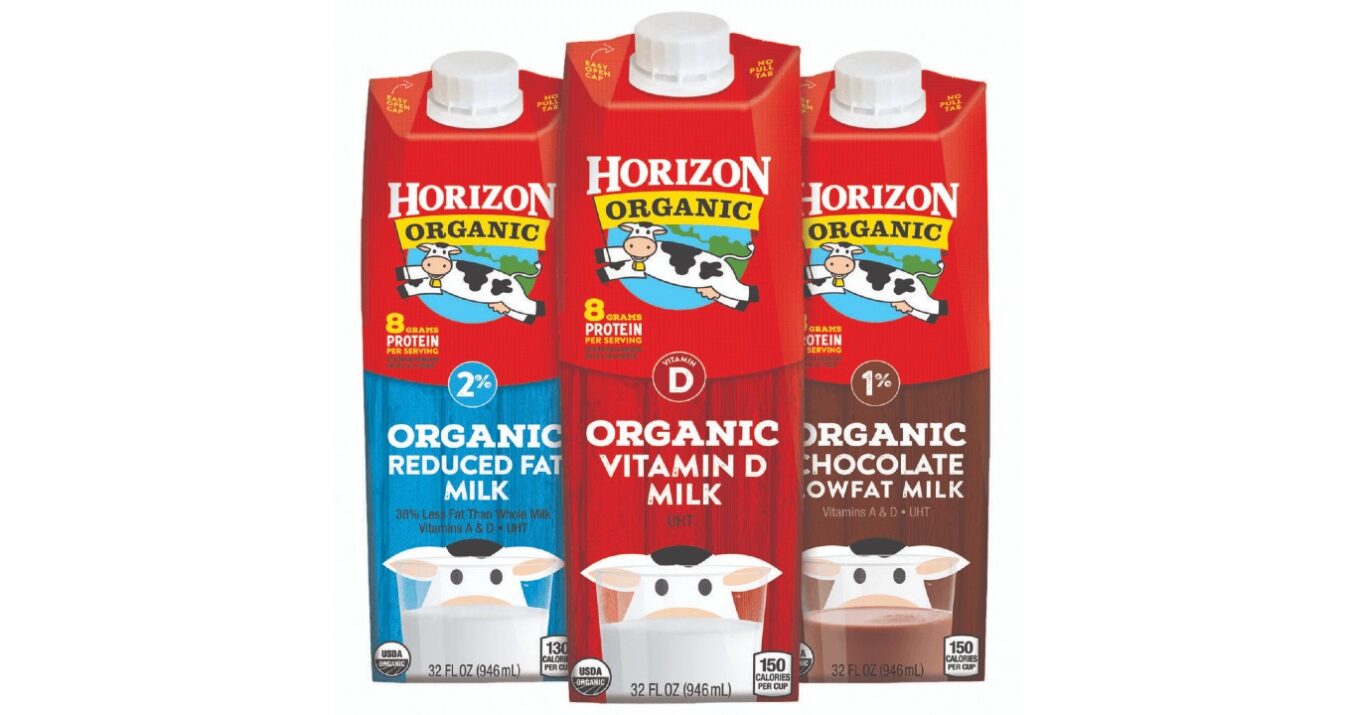
I’d been a raw milk drinker for years. Yet I hadn’t expected to respond so negatively to the glass of Horizon organic milk my friend poured for me. After all, that’s what I’d drunk for years before making the switch to raw milk from grass-fed cows.
“Yuck. This tastes burnt!” I said.
That’s when I saw it. The milk had been ultra-high temperature pasteurized. In fact, more than 80% of the organic milk sold in the U.S. is UHT pasteurized. It’s why I don’t drink most store-bought organic milk.
What is UHT Milk?
The official U.S. government definition of an ultra-pasteurized dairy product stipulates “such product shall have been thermally processed at or above 280° F for at least 2 seconds, either before or after packaging, so as to produce a product which has an extended shelf life.”
Get this. UHT milk has a shelf life of 6 to 9 months (until opened). When the world’s foremost UHT milk processor, Parmalat, first introduced UHT milk to the U.S. market back in 1993, they hit a snag. Americans distrust milk that hasn’t been refrigerated. We like our milk cold, and UHT milk doesn’t need to be refrigerated.
So, milk producers got creative. They could extend the shelf life of their product and not advertise that they were doing it. They’d sell the milk in normal packaging, in the refrigerator aisle, and none of us would be the wiser.
Now, almost all of the organic milk and the majority of conventional milk available in U.S. supermarkets is UHT processed.
What’s wrong with UHT processing?
The introduction to a 2005 study published in the Journal of Dairy Science highlighted the current problems with UHT processing from an industry point of view:
Often, heat treatment causes milkfat globule membrane proteins and whey proteins to unfold such that buried sulfhydryl (-SH-) groups, normally masked in the native protein, are exposed to the outer surfaces (Hoffmann and van Mill, 1997). In turn, these processes produce extreme cooked flavors, often attributed to changes in the sulfhydryl and disulfide content of the protein fraction (Swaisgood et al., 1987). Conventional pasteurization methods have long been in place and with the advent of UHT technology, the sterilization of fluid milk was achieved using higher temperature treatments for shorter periods. However, shelf-stable milk has met with limited acceptability by the consumer, especially in the United States, due in part to a high cooked flavor. Several attempts to improve the quality of UHT-treated milk products proved successful to varying degrees. Previously, Swaisgood and coworkers used immobilized sulfhydryl oxidase to reduce the thiol content of UHT-heated skim milk and described an improved flavor after enzymatic oxidation to form protein disulfide bonds (Swaisgood et al., 1987). Other studies have showed that altering UHT processing parameters, such as indirect vs. direct steam injection systems, cooling rates, and long-term storage conditions have a significant impact on sensory attributes (Browning et al., 2001). Most recently, epicatechin, a flavonoid compound, was added to UHT milk prior to heating, and the results revealed partial inhibition of thermally generated cooked aroma (Colahan-Sederstrom and Peterson, 2005).
So for decades, UHT processors have known that UHT processed milks results in a “high cooked flavor,” and they’ve done all kinds of experimenting to get rid of the nasty taste and smell (even resorting to adding flavonoid compounds to the milk to try to negate the off-flavor).
Okay, so it tastes funny compared to raw milk. And maybe it smells funny too. But what makes UHT processing any worse than regular old pasteurization?
Let’s start where the milk does — raw. The components of raw milk are extremely fragile. The milk proteins are complex and three dimensional, meant to be broken down when digested by special enzymes that fit into the proteins like pieces of a jigsaw puzzle.
When you rapidly heat milk, it denatures the proteins, flattening them so the enzymes can’t do what they’re supposed to do. In other words, it makes the milk protein significantly harder to digest! Look at what happens when milk is ultra-pasteurized at high temperatures versus when it is pasteurized at low temperatures:
“Whey protein denaturation plateaued at about 88% following a UHT heat treatment of 149°C for 10 s. However, it reached about 88% with a vat heat treatment of 82°C for 5 min and reached 95 to nearly 100% after 10 to 15 min. Vat processing under pasteurizing conditions at 63°C for 30 min resulted in less than 10% denaturation.”
(source)
Now, that’s scary. No wonder more and more people are starting to think of themselves as intolerant to casein (the protein found in milk).
Not only do pasteurization and UHT processing kill off the enzymes present in milk needed to digest the casein, the casein itself is altered to the point of being indigestible!
So now you know why I don’t buy organic milk at the store — even when I run out of raw milk — unless it’s low-temperature pasteurized. If you want more help deciding how to prioritize your milk purchases, check out this post on Healthy Milk: What To Buy.
 |





Are you casein intolerant? You should read this! RT @FoodRenegade: What’s wrong with UHT milk: http://su.pr/ARJBZT
This comment was originally posted on Twitter
I started buying raw milk about a year ago so I could make cheese. DH mentioned last night that ever since he started drinking raw milk he hasn’t had any IBS issues. Wow! I’m starting to become a believer.
.-= Wendy (The Local Cook)´s last blog post …5 Reasons Why My Blog Rocks =-.
Wendy,
That really doesn’t surprise me. I’ve heard similar things from just about everyone who’s started drinking raw milk. Obviously, some people really ARE lactose or casein intolerant — particularly if they’re from non-dairy herding ancestry. But the rest of us can probably do dairy just fine, so long as it’s in its natural state.
Ultra-pasteurized milk – a deader than dead product https://www.foodrenegade.com/just-say-no-to-uht-milk/#more-1639
This comment was originally posted on Twitter
Deader than dead! I like that.
What’s wrong with organic milk? Something you may not know, but should consider: http://su.pr/ARJBZT (RT @FoodRenegade)
This comment was originally posted on Twitter
UHT milk is heated to 140f for 2-5 seconds. so the experiments that you cited dont reflect marketed UHT milk but rather milk heated to exponentially higher temps for longer periods. Raw milk is amazing but you know damn well that the ovwrwhelming majority of humans dont have access to it so stop being so boujey. I live in a remote dessert area and having access to UHT milk saves me 100s of miles of driving per month and the refrigeration costs associated with keeoing an animal that proeuces as much milk as a cow or goat. As for the burnt flavor that’s Maillard caramelization and if you cant handle such a minor discomfort as that then youre in for a hard decade with what the economy is about to do.
Reading @foodrenegade Just Say No To UHT Milk http://tinyurl.com/yzy5jhc
This comment was originally posted on Twitter
Details about why ultra-pasteurization is bad news: http://bit.ly/ceQPkZ
This comment was originally posted on Twitter
I searched high and low for a milk that we could drink since we are allergic to corn. You might think the two things are unrelated, but even organic milk uses GMO corn as a vitamin carrier for the added vitamin D. Once I realized that the nonfortified milk is ultra-pasteurized, I gave up. I, too, believe that UHT milk is dead. In fact, I don’t believe it qualifies as edible food any more. Until I can find a source for raw milk, I will continue to do the only thing that works for us and that is substitute Daisy full fat sour cream plus water for milk in recipes and just drink water. After all, it is corn-free, full fat, and readily available. (I would like to use whole milk yogurt but there is nothing but nonfat and lowfat in my stores. I guess that’s another whole can of worms, isn’t it? I sometimes wonder if we will starve having to rely on what little actual food is sold in the grocery store until the farmer’s market starts up again.)
.-= kc´s last blog post …GMOs in Pasture Raised Meat =-.
Kc — Have you ever considered watering down cream and using that as a drink (that’s something I once heard Sally Fallon Morrell recommend)? Or any of these healthy homemade milk substitutes?
@KC: but Daisy’s probably uses “dead” GMO corn milk as their base, no? As would ANY yogurt.
Plus, I don’t believe that ANY component of “organic” can have ANY amount of ANY GMO ingredient, so I doubt your claim…..
Reading @foodrenegade Just Say No To UHT Milk http://tinyurl.com/yzy5jhc
This comment was originally posted on Twitter
I raise Kinder dairy goats simply because I wanted a source of fresh raw milk for my family to drink. I make raw milk yogurt and ice cream, and hope to make lots of cheese this year. It’s a sad day around here when I have to dry my girls off and go back to “store” milk. Hopefully this year I’ll be able to milk one of the girls through so I don’t have to drink the other junk. Even though what we drink isn’t UHT, it’s still nasty stuff. The problem here in Illinois is that you can’t legally sell raw milk. What a crock of crud, but it’s true.
Even when we “have” to drink the pasteurized stuff, we still have a few options. There’s a local dairy that gently pasteurizes their milk and doesn’t homogenize it. We can pick it up at either the Farmer’s Market or a couple local health-food stores. I also know of a couple of brands of pasteurized, homogenized milk that comes from grass-fed cows and ISN’T UHT processed (if you’re really desperate). Also, have you contacted your local Weston A Price chapter leader? It’s possible that there’s a nearby herdshare arrangement where you can get raw milk by buying a share of a cow. Anyhow, you’re lucky to have goats!
You keep referring to organic milk yet you are talking about UP milk with no need for refrigeration until opened? What does one get to do with the other? I’m confused.
what’s wrong with milk? it doesn’t even need to be refrigerated- that’s what. http://su.pr/ARJBZT #fb
This comment was originally posted on Twitter
In ways you have to be a renegade today. Look what happened to the Great American Indians. The guys with the guns win. This is not always so. Industrialized food has been their gun for along time ad we were forced fed these industrialized foods for many years without knowing all the facts. Now we have internet and this real good foods movement is rolling along. All the emotionally intelligent have come out of the closet or just now able to step up to the plates. Now is time to start hitting home runs.
We have a good read for you to demonstrate how we feel about these subjects you write about. we are milkmen and we like David Gumpert’s new book;
“THE RAW MILK REVOLUTION – Behind America’s Emerging Battle Over Food Rights.”
Read this and follow through with some of his suggestions or just make plans. There are a whole “lotta” good things to learn from this book. We did and we thank Mr. Gumpert for writing this book.
The Milkman is Back!
Milkmen USA
Thanks. Remember, cream floats on top, the rest go to the middle and bottom. And no problem with that as long as the good stuff stays on top.
Ed — Yay. I’ve already read and reviewed the Raw Milk Revolution for my readers. You can find the link here:
https://www.foodrenegade.com/the-raw-milk-revolution/
The problem with this whole raw milk vs other milk issue is that not everyone will have access to raw milk itself. Unless you know someone who will give you the milk, it’s allowed in your state or you own a dairy farm those who live in major cities or like me, Hawaii where it is illegal to sell raw milk let alone has very little dairy cows I won’t have access to it.
Not only does this stuff taste like crap, it is often adulterated with thickeners because it is so damaged that the mouthfeel is wrong.
That is BS I work in the UHT industry, I have for 33 years, the milk that is heat treated to UHT time and temperature has NOTHING added to it. It is a very good quality milk, it has to be for the heat process to do its work. The Log reduction for continuous sterilization requires high quality milk and perfectly clean equipment. The laws that protect the consumer are rigorous. As for the burnt taste this is history the new equipment such as VTIS tubular combinations have even faster heat contact. You all need to be updated to the current technology. If you do not get milk directly from the source, or if you cannot guarantee the GMP of the ‘farm equipment’ then raw milk is not only bad for you, it can be lethal.
I agree.
I believe UHT milk has caused leaky gut and has directly affected my heath over the last 3 years. I purchase and consume milk everyday, instead of coffee, and i have had some major heath issues arise suddenly. I have experienced major leaky gut problems, i couldn’t lay down or sit comfortably due to this problem. I had rashes that went up both sides of my body, under my arms, i was catching every cold or flu going and didnt have my regular energy. I had visited my doctor numerous times over the few years trying to figure out what the problem is, having not associated all the symptoms as caused by the same problem. I went through many tests and it was thought that IBS was the issue. I was sent to a Dietitian who made me create a food diary. This has helped me identify UHT milk as the problem. I love milk and still drink milk everyday and i have for over 30 years. I have removed UHT milk from my diet and i now don’t have leaky gut, i don’t have any rashes and i feel way better! I feel normal and i dont have ANY issues any longer. UHT milk has created over 3 years of pain and suffering. I dont have IBS and i feel 100% better without UHT milk in my deit but i could not go one day without a glass of milk in the morning.
I agree pagan. The author tastes one brand of UHT milk once and now thinks all UHT milk is the worst. So many things wrong with this opinion piece. I’ve had shelf-stable milk in Africa and it tasted exactly the same as regular refrigerated milk in the U.S. Also, there is no such thing as leaky gut syndrome. I appreciate the author removing misinformation, how about taking out the paragraph making unsubstantiated claims (“IF such proteins pass into the bloodstream…”)? This piece is devoid of factual information.
Yes. It actually seems the way UHT effects milk protein can make it less likely to cause the issues raw milk does in some people. UHT milk can digest in ways milk only containing A2 milk protein does rather than the more common A1 and A2 mix in general milk. So people switching to UHT milk can find milk no longer triggers constipation
I am a lifelong milk drinker. Only when Bio brands here in Germany went quietly UHT (haltbar), still stocking it in the refrigerated section, did I end up in agony. The process destroys the enzymes many people require for digesting it properly & end up with an inflamed gut. I have zero issues with non-UHT.
What happens to the vitamins and minerals in raw milk when it is treated to UHT processing? I can tell the difference in taste between raw and UHT milk. As long as cleanliness is followed, raw milk is not only more nutritional but perfectly safe. We have been drinking only raw for 5 years now. And, yes, FunFacts, there is a condition called leaky gut syndrome. We don’t suffer from it but I know others who do. Apparently it is not pleasant.
Thanks for clarifying that. I agree people need to know what is happening. I tried making ricotta yesterday with a Quebec brand of milk,Natrel 3%, and 35% cream from Lactatantia. However, for the first time in en years, I couldn’t get the dairy to curdle. I then called the company Agropur and they said that yes, all their creams are UHT pasteurized, and their milk from Lactancia undergoes a fine-filtration…I never knew what that meant but Indo now. The microscopic filtration destroys the casein protein. likewise, UHT prevents the curdling and is use,ess to make paneer, ricotta, farmer’s cheese (queso) and regular cheeses. This is sad. I wasted 7.00$ and I’m upset. Canadian milk is 3 x the cost in the USA, so a gallon of milk in Boston costs 2.99 but here for the same it’s 7.99 or up to 10.99 depending on the brand and kind of milk. I wish that it said UHT on the packaging but it doesn’t on either the Natrel milk or the Lactatantia cream.. At least the US got the dairy industry to label their products. If anyone is in Quebec/Montréal area and you know of a non-UHT milk and cream brand, please let me know.
I’ve been drinking fine filtered milk (microscopic filtered) and using UHT milks and creams for years without knowing it. Though UHT was initially packaged to sell to countries and areas without refrigeration, or for other uses. Much of it isn’t stable for 6 months, and is found in the refrigerated section of major supermarkets. So maybe you tried the UHT that has that 6-month stable life. most UHT doesn’t, and once you open it, you still have to consume it within 5 days.
I have heard that it is because of the UHT that expiration dates on organic milk are so much farther out than regular milk.
My question though is where do I find a raw milk supplier? Thanks!
.-= Jennifer´s last blog post …I ordered my seeds! =-.
Jennifer — The best place to start looking for milk is by contacting your local Weston A Price chapter leader. They’ll know. Otherwise, you can check out the very limited listings at http://www.realmilk.com and ask around at your local farmer’s markets.
Hope that helps!
~Kristen
How do y’all not see she’s trying to sell something. I do molecular research and most of the science she cites is crap. Not that the science is crap honestly, but the way she uses it to obscure her point. If you’re doing it for taste, by all means drink whatever milk you want. But there’s nothing wrong with it, nutritionally or digestion. If anything, by her logic, UHT pasteurization would make you LESS likely to have a casein allergic reaction.
I like the idea about using science…that said a large study now or so years ago in the Uk said that eating organic foods had little to no effect on the lives of the people…Now that is scary but think of it. I had two friends who were religious about organic and both died of cancer…but of course that’s not a science experiment itself. There may be some looneys on this site because some of the language I see/read is very antagonistic. So if someone has scientific studies, let us know:a show us the link.
I think UHT milk is good, if you need it, and I have never seen science that says that there is anything wrong with it. my opposition is t to UNT or fine filtration. It’s the fact that here in Canada (where it is illegal for manufacturers to sell cow-to-table milk—for good reasons) there are no UHT labeling laws.
this weekend I tried to make ricotta st home using whole milk snd 35% cream: it didn’t work. I then learned that both the cream I bought and the milk were UHT and fine filter pasteurized, which means I cannot make cheeses, ricotta, paneer, or queso using them. that’s an issue. I want mild pasteurization, not UHT or fine filtrâtes milks and creams .( grew up on a farm and we often had fresh milk which ai hated and was allergic too ..look at the rates of food borne-diseases in the US and Canada. They would be triple that if milk were not pasteurized.
I’m in agony after I drink UHT. I’m not alone with this reaction. I’m a lifelong milk drinker. No issues with other milk.
Another reason to pass on Horizon Organics is that they are owned by Dean Foods, which recently acquired Silk soy milk and pulled a dubious bait and switch on its consumers and retailers:
http://greens-n-grains.com/?p=85
I was looking for milk for my daughter when we were visiting my parents in the States over Christmas (they only have skim conventional in the house…bleh!) and was shocked that I could only find UHT stuff! Here in Cananda I’ve never seen UHT organic milk. I went to the fancy grocery store and really poked around and managed to find some full-fat, cream-top milk that was not UHT. We didn’t even come close to drinking all of it in the couple days we were there, but my dad commented after we left that he drank the rest of it and it was the best milk he had tasted in a long, long time. They still don’t believe me that it’s good for you, too.
I’m not sure where you live but in Wuebec. OST of the cream brands and milks are UHT and/or fine filtered—which is worse than UHT as it breaks down casein and other microscopic “things”. I just called Agropur and they told me that Lactatantia and Quebon, and Natrel creams are ALL UHT pasteurized…and these same milks are also UHT pasteurized—except for Quebon milk—and that is the milk I’ve been buying for years and never had an issue make paneer or ricotta or queso. What gets me is that there is no mention of UHT labeling on these creams, so I guess in Canada they don’t have to label it.
I’ve been making yogurt for the last 3 years using UHT milk. It works fine. Indeed, it’s incredibly convenient to not have to pasteurize the milk yourself… I like it better than commercial yogurt. I agree with much of the Weston Price philosophy in principle, but their article about UHT (which finds its way into articles such as yours) is just plain wrong, and maybe even intentionally misleading.
I’ll leave it to you to decide whether or not you think UHT is good or not. But, without a doubt, you can make fine yogurt with it. Thousands (millions?) of people do. I use Yogourmet yogurt starter or just propogate the culture from previous batches.
I started buying Organic Valley recently but was confused why organic milks expiration date was always over a month so I googled and found out about UHT and then I found this gloomy article.
THANK YOU for your comment because I was about to toss mine out and never drink it again because of the whole “If a product will not support microscopic life, it is not likely to support human life” statement.
I agree with u that others need to decide whats good or bad for them but when u have a valid point no need to scare people with false information in the process and that’s what this article did. I’m thankful for your comment so that this article didn’t turn me into a chicken little like I’m sure it did for many others.
Thank you, Bill. I, too, make my yogurt from UHT milk and it’s fabulous.
Yes, the UHT process is less than ideal. Would I choose raw or gently pasteurized milk first? Yes. But it’s not exactly widely available, so I happy load my cart up with Organic Valley and Stonyfield milk, knowing that it may not be the nectar of the gods but at least I’m steering clear of growth hormones and antibiotics.
You can make yogurt from it fine, I make it also, but I cannot make paneer, ricotta, or queso from UHT creams and milk products that have been fine filtered—as I learned yesterday after pouring cream and milk down the drain. I only know of one milk product in Quebec called Quebon (Oh isn’t that good) (que c;est bon) which I’ve been using since I relocated to Montréal a decade ago. I thought “fine-filtered” was a good thing and it may be for people who just want to make yogurt with it —me—or drink it and use it in cooking, but it won’t allow you to make those cheese products and items like ricotta and paneer…and then ima,so found out that neither will UHT ream products, and that most of those creams here in Quebec—even the Quebon creams—are UHT pasteurized. That sucks only because I cannot make my cheeses with it…also I see no UHT labeling on those creams…
The statement you quote, “If a product will not support microscopic life, it is not likely to support human life”, has validity, but in this case it is totally misrepresented. UHT milk will very much support microscopic life, which is why it must be refrigerated after opening. It will spoil (i.e. support bacterial growth) as quickly as any other milk once it is opened and exposed to the air. The difference is that UHT milk has been ultra pasteurized resulting in the complete elimination of bacteria (including deadly pathogens) and then packaged in sterile containers to further prevent bacterial contamination.
Wow, I didn’t realise all the milk you guys get in America is UHT. In europe, refridgerated milk is ‘fresh’, and UHT is on non-refrifgerated shelves.
BTW, I agree UHT tastes bad, but it’s not true you can’t use it for yoghurt, i works fine, if anything a little richer than fresh milk.
same in Australia uht is fresh and we have full cream pasteurized as fresh
Please note who attacks UHT milk…those who compete with this technology. There is nothing wrong with UHT milk products even those products that use radiation preservation I am not in the milk industry and have no vested interest on either side. Those who state UHT is bad and suggest its not good for our health are liars. When these farmers who attack such products go into this area themselves they will sing a different tune. UHT is find, I have been drinking it for years and in some cases its better for those who have issues with other milk products. There are many papers stating its a solid and logical way to distribute milk.
Always do the opposite of what (((Glassman))) says.
YES to the above comment. The quote from the farmer in this blog post is BS, proteins are digested by proteases that don’t depend on the molecular shape – there are far too many types of protein for this to even be possible. And “leaky gut” is a disease with autoimmune and bacterial causes that has absolutely nothing to do with drinking milk. UHT milk does not pose a health risk, and by the very fact that it is UHT and has less microbial contamination, it’s probably SAFER.
Just be upfront about it: you don’t like UHT milk because it tastes different. …and maybe because it seems “unnatural” for it to not need refrigeration. Both of these are preferences. There is nothing wrong with UHT milk, just like there’s nothing wrong with asparagus no matter how much I dislike it.
Also, raw milk may taste awesome, but the refrigeration costs and waste involved in having every city-dweller in america drinking raw milk would be enormous (not to mention the environmental impact). So until the day when they breed cows to be pets, maybe some people (read: most of the US population) will just have to settle for milk that’s been decontaminated. And come to think of it, you’d probably find a reason to hate on the milk from pet cows too.
Thank you. Logic and reason. Raw milk can kill you.
Reason and common sense. Modern man is so confident of his own safety that he forgets it has been achieved through technology and science, and somehow has come to distrust both.
There is nothing wrong with UHT or pasteurised milk, and it is Safer. Period.
Considering the write-up’s biggest argument is an article that dates back to 1981…
…yet there’s no source on how “all” milk in the US is UHT.
The equivalent to being a shill and saying “don’t buy any other competitor’s milk”.
Considering this fact, and one that can be googled. Milk consumption in the UK is on the decline.
Why in the world would you write an article saying to “avoid” when in fact, people should try to drink as much milk as they can?
There are differences in not only brand, but body chemistry.
I have to differ. I am a lifelong milk drinker. But when I drink UHT I am in agony for hours. Others have reported the same & medical studies verify inflammation issues in some people. The process does make the product indigestible for some. I am not a raw milk drinker & have no problem with milk that is not UHT. I’m glad you have no issues, but sanitation & shelflife aren’t the only considerations. Alteration of proteins & enzymes can have an impact.
Max –
Sorry to disagree with you, but you’re way off-target on this one – and your arguments just don’t hold water.
1. Yes, UHT milk is more difficult to digest for many people than fresh raw milk or even vat-temp pasteurized milk. As an added insult since it is free from beneficial bacteria and does not support their growth, it cannot be properly cultured. It’s beneficial bacteria that line our gut that help the human body to develop appropriate immune responses, to manufacturer vitamins and to digest macronutrients. UHT milk doesn’t support this process, and people drinking UHT milk in lieu of fresh milk will be operating at a loss.
2.Taste is a personal preference. You may like the thin texture and the cooked flavor of UHT milk, and great for you if you do. But from a culinary perspective, it’s relatively worthless. Sure, you can put it on your cereal, but there’s little else you can do with it. You can’t even make cheese from it, not because the cheese tastes bad, but because it won’t clabber and won’t foster the growth of the beneficial bacteria necessary to do so.
3. With raw milk, transportation costs are fewer – and even refrigeration costs. UHT milk, despite the fact that it has been so denatured that it can sit on the shelf at room temperature for months, is STILL transported in refrigerated trucks. It’s STILL sold from refrigerated cases. And when people crack open a carton, they still need to refrigerate it. Not to mention it’s still processed through a cooling tank at the farm, and in cooling trucks to the dairy before it’s heat-treated and bottled (or, rather, put into waxed cardboard cartons that may be recyclable in some areas but are not reused).
That’s a heck of a lot more wasteful than the milk that comes from my dairy which goes into a cooling tank, into reusable glass jars, into a cooler, into my hands and into my fridge for a week. Way more efficient.
.-= Jenny @ Nourished Kitchen´s last blog post …A Recipe- Coconut Flour Cake with Coconut Frosting =-.
Well said.
Well, unless you have a cow in your backyard, you don’t really know what you are drinking “in your milk”, they don’t write on the package what a farmer has been feeding the cow…. Good luck to all of you! And I will enjoy whatever I wish…..
Most of Europe has used UHT milk for drinking, cooking, and more for decades, and has not seen mass death, dismemberment, or defects as a result. You are woefully ignorant.
“It’s beneficial bacteria that line our gut that help the human body to develop appropriate immune responses”
Pseudo-scientific nonsense. Only ancient Europe was silly enough to think drinking cow’s milk was a genius idea (most non-Europeans have some level of lactose intolerance, Europe seemed to weed the gene out over a few thousand years). Cow’s milk (organic or non, pasteurized or raw) is in no way a ‘necessary’ thing for anyone’s health, or most of the world would’ve died off from lack of it thousands of years ago (see Africa and most of Asia). You run across millions of bacteria in daily life. If you’re worried about weakening your immune system, don’t wash your hands so often, then you’ll get plenty of bacteria.
Oh boy, can I take a ride in your time machine? fresh milk in glass jars–The ice wagon delivers ice for your ice box too, I’ll bet? Never mind Charlie — I’d love to be in Jenny’s shoes, that’s where I’d like to be!
This is pure nonsense:
“since it is free from beneficial bacteria and does not support their growth, it cannot be properly cultured. It’s beneficial bacteria that line our gut that help the human body to develop appropriate immune responses, to manufacturer vitamins and to digest macronutrients. UHT milk doesn’t support this process, and people drinking UHT milk in lieu of fresh milk will be operating at a loss.”
UHT pasteurized milk is fully capable of supporting bacterial cultures for cheese or yogurt.
As for UHT milk somehow depleting our gut of its endogenous flora, that is simply untrue. Our microbial flora reproduces fine regardless of the bacteria in our milk, or even if we consume no dairy products at all. It is self-sustaining as long as we eat a balanced diet and avoid milk and meat contaminated with antibiotics. As long as one buys organic milk from cows that aren’t juiced with antibiotics, his or her gut flora will be fine.
Thanks, Jenny for your comments. We cannot make cheese with UHT milk. In case one wonders about raw milk cheese, once it is aged 3 to 4 months, there is no bacteria in the cheese, if that bothers people.
Sources, please. If you are going to state “facts”, please include sources. Did you know that 75% of Americans are more likely to believe made-up statistics if they actually sound real?
Where is the case study of UHT milk is harder to digest?
It’s redundant to note taste but then judge the taste, contradicting your own point.
Where is the actual facts of transportation? If so, which brands are shipped in which ways?
@ Max Welsh
It drives me nuts when people post arguments with no sources backing up their statements. Not that you have to write an annotated bibliography, but come on — you just make several claims with no supporting statements:
You can’t just say someone is wrong — you have to say why.
The quote from the farmer in this blog post is BS, proteins are digested by proteases that don’t depend on the molecular shape – there are far too many types of protein for this to even be possible.
Please explain.
And “leaky gut” is a disease with autoimmune and bacterial causes that has absolutely nothing to do with drinking milk.
Please elaborate. What are you basing this statement on?
UHT milk does not pose a health risk, and by the very fact that it is UHT and has less microbial contamination, it’s probably SAFER.
Proof, please, showing how UHT milk is safer.
Also, raw milk may taste awesome, but the refrigeration costs and waste involved in having every city-dweller in america drinking raw milk would be enormous (not to mention the environmental impact).
Huh??? We’ve been refrigerating our milk for decades. I doubt you are going to convince Americans to stop using refrigeration so this argument is just plain silly.
She makes a good point that nobody would buy the stuff if it was sitting out on the shelf.
So until the day when they breed cows to be pets, maybe some people (read: most of the US population) will just have to settle for milk that’s been decontaminated. And come to think of it, you’d probably find a reason to hate on the milk from pet cows too.
Um, OK this is based on what exactly? People will have to settle for UHT milk because… why? Please back up your claims.
.-= Ann Marie @ CHEESESLAVE´s last blog post …Giveaway- Enter to Win a Le Creuset Stockpot 55 value =-.
Kristin, thank you for bringing to light the realities of UHT milk. In Spain, particularly the larger cities, most of the population drinks UHT milk sold warm in boxes. I did not realize until this year that UHT milk can very well be sold warm in the States, however, the public would probably freak out to realize their milk is shelf stable for 6 – 9 months! Common sense people… common sense should let us know that ingesting something that doesn’t spoil for months…. which appears to be food, can’t be good for our bodies. It’s no wonder that most Spaniards claim to be lactose intolerant and claim to have problems digesting milk. Hmm… in the times of raw milk (my mother’s generation), the problems of digesting milk weren’t there. There were no problems! Sigh…. before the times of adulterated food, we didn’t have to think scientifically when it came to food. We just used a little bit of common sense.
Thanks Kristin!! Loved this!
.-= Diana@Spain in Iowa´s last blog post …Giveaway Winners and Things to Come =-.
Don’t eat any food.
Get rid of a refrigerator if you have one.
Have a problem with “food that doesn’t spoil for months”? Don’t eat, at all.
Frozen foods such as vegetables are as blatant as they get. They’re not as nutritious, even producers will tell you that much, but they can last for a long time. Condensed products, dehydrated products, do you not know what jerky is? Do you not know the process of dried fish?
If you don’t understand physiology, then please, don’t speak. You do know your “mother’s generation” is one with little communication, right? Did Trump not teach anyone a lesson? With more people reporting cases, you get bigger case numbers.
Also, on the box, it literally tells you to refrigerate once you open it, or else it’ll spoil. Do you not know what the removal of air is? Oxygen has profound effects.
Obviously, the people that are saying there is nothing with UHT have an agenda! Just like we who support raw milk will go to sites of people who are saying raw milk is bad and try to convince them otherwise. Except we know the facts!!! No one can thrive on overly cooked and processed milk.
“Just like we who support raw milk will go to sites of people who are saying raw milk is bad and try to convince them otherwise. Except we know the facts!!!”
Sooo, you know the facts but no one else does? How do you not see the flaw in that type of thinking?
Why isn’t UHT milk on the regular shelves in the US? Because no one in the US would buy milk that wasn’t refrigerated! That’s why! They have to keep it in the coolers and make the masses think that it’s still like the milk their great grandparents drank – but it’s nothing like the grass-fed, raw milk of the olden days, is it? No, it is not. It’s a junk food like everything else sold by the big food industry.
haha I pity uneducated people. I’m sorry but there is something terribly wrong with milk that doesn’t have to be refrigerated. I prefer my food just the way God intended it. UHT and other processed products will be the death of America because of uneducated people relying on a corrupt government and food industry to tell them what to eat. My prayers go out to you!
‘The way God intended it’? Correct me if I’m wrong, but if God intended milk to be refrigerated, then why do human babies drink body temperature milk directly from their mother? Or do you believe that even mothers’ milk should be refrigerated? And people obviously survived drinking unrefrigerated milk before refrigerators were even invented. Also, labeling others as uneducated before stating something you want them to believe is not exactly the way to convince people of your ideas and thoughts. Think before you speak, if you truly are ‘educated.’
Saying that yoghurt or kefir cannot be made from UHT milk is simply incorrect! Unfortunately raw milk is unavailable here legally (on this Spanish island where I live) – so I have to make my yoghurt and kefir from UHT milk – which I’ve been doing weekly for the past year..
I was living in Spain a few years back. After being healthy my entire life, a few years back my family and I began to get flu-like symptoms and a low-grade fever, a situation that lasted for months. We spent a great deal of time eliminating possible causes, thought in terms of an allergy or food toxin or some transmitted disease, but discovered that a UHT low-fat milk we were using in tea was the cause when my young daughter drank a glass instead of the whole milk we were using for drinking. She immediately became extremely ill with vomiting and ran a 41Cº fever for three days, a fever we had to keep down with compresses day and night. Since, we had more than a few experiences of the same type, and were heating the milk to just below boiling for three minutes to save ourselves the agony of more illness, even though it was my understanding that we were denaturing both proteins and vitamins(although UHT had probably done that denaturing already). It is a great pity Americans are being subjected to the same profit-motivated regulations as in Europe, where UHT is king, where the EU apparently is about to permit feeding animal protein to cattle, chickens, pigs, etc. once again, even after the mad cow disaster extended by government subsidies to the industry in the past. So soon it will be mad cow, mad pig, mad goat, mad turkey…. Ignorance in the political class and a subservient press is the cause. Doing things right and honestly and investigative reporting are things of the past in the US and have never existed from what I can judge in Europe. There, excess milk production is poured into the ground, not converted into dried milk and cheese for the poor as in the US, and there I am told but haven’t verified, milk returned from stores can be reprocessed and repackaged to be resold! If you compare labels the nutritional data indicates that the natural vitamin value of milk is destroyed by the UHT process, and in products specifically for children a short list of vitamins is added…but I suspect that a long list of other necessary vitamins and nutritional compounds found in fresh milk simply do not get into the diet of many people. Medicine has to be free when illness is government policy.
You clearly don’t understand what a tainted product is, and what food-borne illnesses are. Thank you for recalling that you had an experience with a tainted product. You either had an expired product, happens if you don’t know how to read expiration labels, or if it sat out under specific conditions, or if it was tainted from the get-go.
Did you know that milk from a sick cow will in turn, make you sick? Shocking, right?
Do you not know what violently ill means, and what causes it? Do you not know seafood and how old seafood can cause the same symptoms?
Do you not know how expensive it is to process milk? The excess milk is poured, and you’re going to blame… whom? Do you think every farmer can “convert” it as if it’s magic?
Animal protein. Defined as a protein found in an animal. Does this mean animal meat? If you think it does, please, google what a compound actually is.
Stonyfield, Reduced fat. 16% protein, 15% Vitamin D, 20% Calcium, 8% Potassium, 20% Vitamin A.
Gossner, Whole. 16% Protein, 25% Vitamin D, 30% Calcium, 9% Potassium, 8% Vitamin A.
Source : Googling the two brands.
You can “suspect”, but you can never list what is actually missing. Isn’t that funny? Why is it always like that?
I like the taste of UHT milk. I wish I could buy Parmalat here so I could keep it on the shelf at work until I need to open it. That way I would have less of a problem with the milk I buy going bad before I drink it. I am sure that raw milk in general is healthier but what I really want most is to have the CHOICE…
I recently purchased milk at Target under the Market Pantry brand (their own brand, I believe). It had about 12 days until expiration on it at time of purchase. When the date on the milk arrived, we continued to drink it, as there was no smell or consistency issues. 3 days out of date we stopped drinking it but left it in the fridge. Another week passed and it still did not smell nor did it curdle. I then took it out of the fridge and set it on the counter. That was 3 days ago. Still, no smell or no curdling.
I contacted Target and they claimed to be surprised by all this. I was also advised not to drink it, something which I most assuredly had no intention of doing. Still, they gave me no answers.
I has become clear to me that the milk which I drank was UHT, even though I could not detect any difference in taste between this and other locally purchased milk, milk which typically does not survive it’s expiration date. I’m angry because I was not informed of this on the container. I would never have purchased it had I known .
Let this be a warning to those of you who buy milk at Target or who buy milk under the Market Pantry brand name. You may very well be getting UHT milk without knowing it.
Probably not. Maybe you got some really strange milk or something, but UHT milk still only lasts about 7-10 days after opening, like all other milk. It does go bad eventually.
You people are crazy. How can you possibly think that the bacteria found naturally in cow milk is completely safe for human consumption? All milk contains growth hormones. So a mother that breastfeeds her child is giving them growth hormones found in her body. Does it make sense to drink the growth hormones found in a cow? I didn’t think so. Not to mention all the other bacteria that we were never meant to handle.
This is why we have modern practices such as pasteurization and UHT. Heating milk to 260 is a pretty safe way to kill off bacteria. True it doesn’t contain the enzymes that allow us to properly digest raw cow milk, but that is the only harm it is causing. If you consider that a harm.
That’s so true. I love in Nepal where raw milk is very freely available, in fact, in most places the only milk for sale. But there are a lot of problems causes by this. When I get a box of UHT, I feel like I am getting a treat.
Interesting article. I moved to Spain four years ago from Texas and didn’t drink milk for quite awhile because I could only find the UHT milk on the shelf. I found that “some” stores carry fresh milk but it’s super expensive and not readily available. UHT milk in Spain does not taste bad nor does it smell bad. I’ve used it in my cereal for years now without incident. It seems to last forever, which is strange to me, but it is nice not to have to buy milk every few days. However, I no longer drink milk by itself, not because it tastes bad; I think it’s all in my head. Every once in awhile I will buy fresh milk if I need to drink it. So, I doubt it’s unsafe considering most Spaniards live much much longer than Americans.
Whatever, tastes fine to me and I don’t need to buy new milk every week. So what if it “alters” some of the nutrient content. It’s not like you look to milk to get all of your nutrients in one day anyway. If you ARE then you should think about switching since too much calcium is bad for you. My father used to drink a lot of milk daily till he got a kidney stone.
Anyway, I think all of you are making a much bigger deal than it should be
I live in the Philippines until UHT milk from New Zealand there was almost no milk avalable. I have been useing a 2% UHT milk for more than 3 years and do not find any difference from the 2% milk we drank in the U.S.
I just read on the Daisy brand website that their products are pasteurized and homogenized, actually I found out most sour cream brands are homogenized!! I thought this was not possible! This really irritates me because I stay away from conventional milk products not only because they come from factories but because they are homogenized and I thought cream and butter were not! Can anyone explain why they have to do this??
Not to be mean, just stating some things to think about:
The type of milk you drink is a preference. Freedom of choice.
Just because something is different does not make it bad.
If you use raw milk to cook what do you think happens to it when you bake it at 300 degrees? The same as Pasteurization.
Milk (even raw milk) is an insignificant source of enzymes and vitamins in your diet. Milk is significant for protein and calcium.
Pasteurization is not a conspiracy, it came about in the 1800’s to eliminate sickness caused by milk. Statistics prove that this has worked.
If everyone went back to raw milk all of these diseases would return.
One last item to look into. You would be amazed at how many people did the raw milk thing for awhile including buying a share of a cow, and after a couple of months quit because of getting sick. Including 2 of my friends.
If you like raw milk than drink it and enjoy, but there is no need to beat up on the other people that use other products.
Thanks
Good that you spoke up, Alan! You’re right — these nutritional choices are a personal decision. Instead of arguing, we should be educating — and allowing others to make their choices based on the facts. That’s one good thing about this site — people are being educated. It’s good as long as we aren’t offensive to others and that we are getting the truth. One particular choice may be good for someone; but often that same choice is not the best for another. Thanks for speaking up, and especially for being pleasant when presenting your opinion.
Couldn’t agree more. I can enjoy raw an Uht milk… both are god. People seem to need to be divided in this issue, to have a reason to hate others… or to demonize certain foods. As I posted below: “”Rapid heat treatments like pasteurization, and especially ultra-pasteurization, actually flatten the molecules so the enzymes cannot do their work” citation: Weston Price. Weston Price cites from? It’s not reliable. Check your science in PubMed or Google Scholar. Do you know what denatured proteins are? When you cook food, you denature proteins, it’s the same process. The protein doesn’t get ‘damaged’; our bodies absorbs the exact same amino acids from the protein whether we cook it or not, whether it is UHT or not. Denatured protein is also known as a whey hydrolyzed protein. When you hydrolyze a protein, what you’re doing is basically changing the structure of the protein permanently. The peptide bonds that are present in protein are broken. However, despite the change in the structure of the protein, denatured protein still contains all of the amino acids that are found in other forms of whey protein. As a result, denatured proteins are still nutritionally beneficial. They are especially beneficial to bodybuilders who use denatured proteins. They help aid in protein absorbance and protein digestion since the protein is already broken down. Indeed, actually DENATURED PROTEINS ARE BEST ABSORBABLE because the aminoacids are already broken down so they go faster to your blood stream. In essence, a denatured protein is already broken up before entering the body as opposed to being broken up in the stomach by acids. Therefore, it is still helpful to you if you are looking to give your protein levels a boost”
Yeah, all proteins become denatured during digestion, if anything these would be slightly easier to digest.
UHT milk tastes great and lasts in our frig for days. It lasts much longer than the milk from the market frig. This is good for us as there is no waste. We are always able to use the amount in the carton in a timely manner. This milk is also good for making yogurt. One does not necessarily need to heat before adding the culture only after in the sun until is warms well then can be kept at room temp until thickened. I would use whole organic milk for children and infants though because they can use the extra calories and vitamins. I would not use raw unless the milk is from my own animals.
We have a cow and after milking we boil the milk before drinking it, therefore paterizing it, this is the only way I would really drink it.
I agree with Alsn if people want to drink raw milk and it works for them, fine we should just stick to what suits us and let others enjoy what suits them.
It is not true that you cannot make yogurt or kefir from UHT milk. I have done so many times. It will culture just fine. Even Organic Lactose Free milk works great to make yogurt.
Not saying it is GOOD milk, or GOOD yogurt, but it does work. Try it yourself.
I have Crohn’s. I can drink raw milk without digestive problems. I cannot drink commercial pasteurized and homogenized milk. It gave me belly aches, and I ended up calcium deficient in spite of drinking quite a bit of milk and eating plenty of fresh veggies. Raw is definitely healthier than pasteurized, if it is not subjected to mishandling and exposed to factory farm superbugs.
Many have said the same about yogurt or kefir. What they DON’T agree with is that, apparently, you can’t make CHEESE using UHT milk…..
UHT: yogurt fine
UHT: NO CHEESE MAKING
Hello I do love this blog and have today just received my first kefirgrains. The lady who sold them to me said to use only UHT milk but couldn’t explain why, I believe it’s microphobia as many people in Holland have it, everything must be sterilised to death especially if babies are involved. Can you see any other reason she might have suggested this? She also said to rinse the kefir and sterilise everything before making each batch but I thought rinsing them was not so good? Maybe you can shed some light on the situation. Thanks! Cat
I’ve noticed, from my first tast of UHT milk, that I had intolerance symptoms, but I just thought that it was my body with a bad reaction to “milk”, I had not related “UHT” and “intolerance” until a couple of years back; nevertheless, what amazes me is that all of them disappear when using lactose-free UHT milk (there’s no other choice for this product in my country of living). I know that I’m not “lactose intolerant” as yoghurt and cheese are not giving me any problem at any time, so, after reading your blog (I just thought “I knew it!”) I’m not really sure about:
– What are those “lactose-free” UHT milk products?
– which is the relation between the degradation of casseine and lactose freeing process applied to milk?
– Will the regular pasteurized or boiled milk have the same problems that ultra pasteurized milk has?
Hi Alexis.
The lactose present in milk is a naturally occurring type of sugar, in which some people have difficulties breaking it down on their digestive tract, hence the discomfort.
Lactose-free milk is when the lactose is broken down prior to packaging by an enzyme called lactase. This enzyme is added to the milk being processed, and it breaks down the lactose into simpler sugars, facilitating the digestion by our digestive system.
There is no direct relation between degradation of casein and breaking down of lactose; as milk allergic people are different from lactose intolerant people.
The idea of heat treating the milk, is to guarantee it is safe for consumption. This means that heat treating the milk, it will kill the harmful bacteria. Now there are different types of heat treatment for different consumption preferences.
Pasteurized milk: It is heated up to 72°C and kept for 15 seconds to get rid of pathogens (bacteria that produces enzymes that can make you sick), as well as inactivate the effect of those harmful enzymes. note that here we do not get rid of all bacteria. It is then rapidly cooled, so it is not over treated, and it should be kept refrigerated as to slow down bacterial activity.
UHT milk: Heated up to 140°C and kept for 2-5 seconds. There are two types of UHT treatments. One that is kept for 2 seconds and the other kept for 4-5 seconds.
the first one, called ESL (Extended Shelf Life) is the inactivation of pathogens, harmful enzymes and some other microorganisms that have the ability of making significant chemical and physical changes to the milk. Note that not all bacteria are eliminated. Under refrigeration conditions it could last longer than pasteurized milk (unopened). The other type of UHT, also called ambient milk, is treated for 4-5 seconds. This process sterilizes the milk, leaving behind no viable ways for bacteria reproduction or enzymatic activity, and if it is packaged on an aseptic package, it could remain indefinitely, as long as the package is not damaged. The shelf life of ambient milk is determined by the stability of the proteins and the efficiency of the homogenization process.
Interesting facts:
-The milk from a healthy cow is sterile, until it comes in contact with the environment, in which could get infected by airborne bacteria.
– Homogenization of milk is a mechanical process in which the milk is pumped through a microscopic gap, generating pressures in the order of 200 bar. This breaks down the fat globule into smaller globules, facilitating the interaction with the proteins and dissolving more easily on the milk. Over time (months) the fat will regather and form a big globule again, determining the shelf life of ambient milk.
Hope I brought some light into the discussion.
Regards
Diego
Seriously, you people have food paranoia.
The only down side of UHT milk is that it tastes horrible to most people.
So heating milk to high temperatures alters the structure making it harder to digest leading to digestion problems? It’s true that heating any food alters it’s molecular structure, that’s essentially what cooking is, that’s why the food changes colour and tastes different when it’s cooked. But the theory heated milk is hard to digest is just someone’s guess. The only evidence for this given in the article is about people with leaky guy disease. Who has leaky gut disease? Not me, and not you, so why worry?
What about the raw milk you put in your tea and coffee? You are adding milk to a boiling drink which is around 100 degrees C. So basically that milk’s molecular structure is going to change as well.
And yoghurt? When you make yoghurt from milk what’s happening? The molecular structure is changing. Is yoghurt therefore harder to digest than milk?
At the end of the day, UHT milk is clearly “safer” than raw milk because it’s been so thoroughly pasterised and is therefore less likely to have any potentially harmful bacteria in it. Naturally occurring bacteria isn’t the only stuff that can be in milk, other stuff could get in during the production. Either way, the risk is still extremely low and nothing to worry about.
In conclusion the choice between UHT and raw milk for us normal people is about taste, cost and convenience.
So glad to see at least a couple people with critical thinking skills. And “leaky gut disease” isn’t an actual condition, so even that argument doesn’t hold water.
A few simple points:
–I agree that raw milk has beneficial properties that pasteurized milk does not have. That doesn’t mean pasteurized milk is bad for you. It means pasteurized milk is not as good for you.
–Do heat your milk before making yogurt? Almost everyone heats it and then cools it before adding the cultures. If you do this, you have exposed your milk to far more heat than UHT pasterization does. UHT pasteurization holds the milk at very high temperatures for about a second and then rapidly chills it. Standard pasteurization heats it to a lower temperature (about the same as most people heat their milk to before making yogurt) for a few seconds. But when you heat milk on your stovetop and then let it cool, it is spending far more time at high temperature than in pasteurization.
–Pasteurization does prevent milk from being used for certain cheeses. It does not prevent milk from being used for yogurt or kefir. I have doe it many, many times
–The bacteria in kefir and yogurt eat the sugars in the milk, not the proteins or enzymes. In fact, kefir grains can be used to culture fruit juice as well as milk.
David, Thanks for the point about the temperatures at which yogurt is made. I was wondering why this hadn’t been mentioned.
I’m loving that I can buy UHT milk. I’m travelling for business, and I want my coffee in the morning and it costs like $15 for a decent cup in the morning from a business hotel.
So I can make my own, but I need cream. UHT is the answer. It packs in my suitcase, and it will stay good for my entire trip.
As for health, I read “The China Study”. Arguing about which milk is healthier is like arguing which type of nuclear reactor to build in your town. I haven’t found a substitute for cream in the coffee, or for really good cheese, but in general, milk isn’t really in my diet very much any more.
Neil
I think the China study hit upon some truths, but it is also true that people that do not eat the right animal products (see the work of Weston A Price) do not have the dental health of those that eat these animal products.
You can make both yogurt and kefir from UHT milk. I do it all the time. Dollar Tree has quarts of UHT whole milk for $1, and both my homemade Greek yogurt culture and my kefir grains grow well and produce safe, edible products. Raw milk is undeniably better – if you’re drinking /raw milk/. If you plan to ferment it or culture it in any way, it doesn’t matter what kind of milk you use, it’s the culturing process that will produce the beneficial parts.
You mention not being able to make Yoghurt from UHT Milk. With The UHT milk available in the UK, it is entirely possible, indeed recommended by yoghurt machine manufacturers.
I for one do not like the taste of UHT milk and, having consumed untreated milk in the past, would prefer that if it were an option. However, UHT, with its faults, also has its benefits. Todays homogenised, pasturised, filtered milks are already far too industrial. The UHT Procdess has little more effect on the goodness of the milk.
Only an idiot would bash UHT milk. For those cultures that have grown up with it, it is a tasty part of a healthy diet. I regretfully grew up drinking regular milk and contracted Crohn’s Disease a decade ago. I avoid non-UHT milk whenever possible to avoid the harmful bacteria that may well have contributed to my chronic gut disease.
You should check to make sure you’re not eating gmo corn or soy bi-products, this leads to gut issues (proven). Regular milk from corn/soy fed cows leads to this too, 80%+ all processed food has it in it and leads to inflammatory response and disease.
An additional question I have. Some organic milk companies “enhance” or add Omega 3, DHA, to their milk. This is done by adding the same type of vitamin fish oil pills you buy in the drug store. Except they don’t use fish oil they use vegetable based Omega 3. Question is, Are the additives they are putting in the milk organic?
Not a big deal but I think people who drink it should be assured the vegetable oil being added to their milk is organic.
Just to reiterate what others have said above, you CAN make yoghurt from UHT milk (or at least, the brands that I buy in the UK), I make it on a daily basis and see our daily yoghurt as a foundation for gut health! It can’t be completely dead if it undergoes this process can it? I would not drink UHT milk, but then I don’t drink any milk unless it has been turned into butter, cheese or yoghurt as I find it much easier to digest these products. Yoghurt made from UHT milk is delicious!!!
Have really enjoyed some of these articles. We will not always agree on what is good for us, each person has an individual and personal health journey, but many thanks for firing the debate!
Namaste 🙂
Helen
Would you agree that fresh fruit and vegetables are better for you than heated and canned vegetables?
The heating kills all of the enzymes and destroys much of it’s nutritional value.
Don’t you think the same thing happens with milk?
BTW all sorts of things that are awful for us “taste delicious”. If taste were the only criteria I would have a 5 pound canister of MSG in my kitchen – but I know better.
Did you ever consider that drinking milk itself is kinda gross? I mean, you are drinking the bodily fluids of an animal that poops all over itself and its friends. Would you drink your friend’s breast milk? Probably not. Yet you will drink it a cow? Just a thought!
I drink milk of all kinds, so I’m not trying to antagonize. It just seems a bit silly that you all are so passionate about preserving the nature of milk, yet it is quite UNnatural that humans consume the bodily fluids meant for baby cows.
Sorry man you don’t know what you’re talking about. I do prefer raw milk to pasteurized however, I make kefir from UHT organic milk all the time. In fact it cultures quicker than raw milk since there is no competing bacteria. The yeasts and bacteria in kefir only feed off of the lactose in the milk. My kefir grains are also growing very well in the UHT milk. On the other hand, if you want to make yogurt, the first step is to heat milk until it is relatively sterile (essentially pasteurizing) and then let it cool until you reach the proper temperature for the cultures to grow. If you don’t heat the milk, the starter will not be able to culture the milk and you will not be able to make yogurt.
I worked on a cruise ship with several Italians, and they love their morning cappuccino. After we took on a supply of UHT milk they found that it did not froth as nicely and mostly didn’t really froth at all. Boy did we hear a lot of colourful language during those weeks.
Obviously UHT milk doesn’t always have a problem frothing. I think it was just that particular brand from Thailand or Malaysia.
Thank you for this information. My toddlers grandparents insist on giving him UHT milk whilst he is at their house despite my pleas against him having this milk. As a child it would make me feel very sick and give me a headache if I drank. Since finding out that they use it too I have asked them not to give it to my son however they ignore my request and have continued to do so. Your site had provided me with information that I needed which I can print off and share with them to prove that this variety of milk really is quite unhealthy.
My sister works for the USDA checking cows at all the dairy’s for potential health hazards. And she says drinking raw milk has got to be one of the dumbest things you could do for your health. Even the grass fed cows have mexicans picking up tubes out of the cows shit and sticking on to the udders, you know where that fecal matter ends up? Sure its not a lot, but these are how diseases are born and spread. Just because you’ve been drinking raw milk for years without any problems just means your number hasn’t been called yet.
You do know farmers are a LOT more careful with instrument sterilization when dealing with raw milk? The folks who would “pick tubes up out of the cows’ shit” are less careful because they are ultra-pasteurizing and are less concerned about foreign bacteria. I prefer the raw, thanks, where the farmer is more cognizant of contamination.
Thanks for this interesting read…as a mom w/ a toddler who mainly exclusively drinks organic milk, you are def. helping me think twice. does non-organic milk not go thru the UHT process?
I make excellent yoghurt with UHT milk. I mix skim and low fat 50/50. I use Activia as a starter, which I only use every 5th fermentation.
You lost me completely at “leaky gut syndrome” and the completely unscientific notion of “If a product will not support microscopic life, it is not likely to support human life.” (Well, you can’t culture bacteria on a plate of zinc, but zinc supports human life. I don’t think your logic follows at all.)
I think I’m gonna keep buying UHT milk and pride myself on not having standards so hyperattenuated that I’m going to reject a food that is for all reasonable purposes harmless and tastes perfectly bloody fine to most of us.
I agree. Anyways, milk pasteurized by any method CAN support microbial life which is HOW IT GOES BAD. Notice, pasteurized milk lasts longer before spoiling, not forever. Microbes are what cause spoiling…
I drank uht milk for years. I was constantly at the drs getting endoscopes , blood tests etc. I had been on PPI medication ( lansoperozole) for years.
I noticed when I went on holiday my condition improved.
I stopped drinking uht milk and guess what? I am the best I’ve ever felt, all my symptoms have completely disappeared. No more medication.
It seems strange to me that the incidents of oesophageal , bowel , stomach and intestinal cancers have exploded in the western world in line with an increase in more people drinking uht milk. Surely this warrents further investigation. In my opinion ( and I am still entitled to one I imagine), uht was the cause of years of Gastro intestinal upset and inflammation . I have the evidence to support it . No more medication. Higher energy levels , no inflammation , just for the record I am a non smoking very moderate drinker and a fitness instructor so my diet is A1.
I make yoghurt all the time from scratch using UHT milk. It’s wonderful.
Your article states most milk in the US is UHT processed. Check yourself on that please. Most grocery store milk doesn’t taste “burnt”, and has merely been conventionally pasteurized, incapable of staying safe for consumption for 6-9 months….weeks at best.
Wikipedia says that 7 out of 10 Europeans drink UHT milk. When I was in France 40 years ago that is all I drank. So it has been around for a long time. I would think that we would have figured out by now if it were truely bad for us. UHT milk does not need refrigeration. Think of all the energy (which is produced burning coal and oil) that we would not need to use if we didn’t refrigerate our milk while it is in transit and in the store.
Isn’t cow’s milk not healthy in general, pasteurized or not? I’d like to see a variety of milk products.
I am an American living in Switzerland, where many people drink UHT milk and give it to their babies. It tastes absolutely fine to me. I can tell no difference between it and regularly-pasteurized milk. And the fact that the Swiss are SO much healthier than Americans tells me that there is no harm in drinking UHT milk instead of “regular” milk.
I am interested in learning about the positives and negatives of UHT-treated milk, but stupidly absolute, easily falsifiable statements such as “Now consider this: you cannot make yogurt or kefir out of UHT milk, it is simply too dead to hold a culture. If a product will not support microscopic life, it is not likely to support human life.” make it difficult to judge what is a legitimate concern and what is hyperbolic scaremongering. I appreciate the passion in articles such as this, but unscientific generalizations negate credibility.
Nice comments by all participants.
Here in Pakistan the coming up trend is Fresh Pasteurized Milk and UHT consumption is going down day by day.
From Ontario Canada.
My family recently went on a trip of a lifetime traveling around France for 6 weeks. We were shocked to find that fresh milk popularity so low. A few places did not stock it! The alternative was a choice of many UHT suppliers (1/2 an aisle). We tried many brands and our family did not like the taste. A couple of companies are trying to market UHT milk to Canadians. They will have a very hard time at doing this. That is unless the price comes down significantly. (3 times fresh)
UHT milk in my opinion is only good in places where refrigeration comes at a premium. Canada is not one of them unless you are the remote north or camping?
Are you able to find raw milk in Ontario?? Or fresh milk? The best I can find is full fat, non-homogenized. But I was under the impression that the sale of raw milk was illegal, even through a CSA by buying parts of a cow….
I wouldn’t follow the eating habits of a country whose #1 cause of death is heart disease. On the other hand, take Spain for example, where over 95% of the population consume shelf-stable UHT pasteurized milk–they boast one of the highest life expectancy rates in the world and extraordinarily low heart disease rates.
The proof is in the pudding.
So I was sold on this raw milk deal, until I read a CNN article saying that raw milk is a culprit for food poisoning and even caused two deaths AND cwused two healthy people to come down with debilitating diseases. Read excerpt below:
“We have two people, in California and Pennsylvania, who developed Guillain-Barré syndrome [which can cause paralysis and respiratory failure] after contracting a bacterial infection called campylobacteriosis from drinking raw milk,” says John Sheehan, head of dairy safety at the U.S. Food and Drug Administration (FDA). “These were healthy, active people who came down with debilitating, lifelong diseases.”
What is your response to this?? I believe that raw milk is better bc its hormone and antibiotic free, but I’m afraid of the bad bacterias that could be in it or the possible contamination. Maybe I’ll just go organic. I’m not sure. What are your thoughts??? Anyone??
Raw milk is not necessarily antibiotic or hormone free. The atibiotics and hormones are given to the cow so that it produces more, and then they show up in its milk (even raw) and its meat.
I grew up in Maine on a farm. I couldn’t drink fresh milk because I had reactions to it. I can however use dairy now. Just because something is a’ naturals’ doesn’t mean it cannot hurt us. if we were all drinking fresh milk, millions would have died.
How come you dont freak out when you buy a jar of pasta sauce, which stays good for years on a shelf? How about a can of tuna? Do you know how long meat has to cooked in a can for it to be stable? Do you ever question a jar of baby food? A can of soda? A juice box? (which is UHT treated by the way so you can freak out now!) is UHT the problem? Or your inability to cope with something new? I’m sure most scientists in this blog wouldnt hesitate to give their children jam (also cooked and processed food, kept in a shelf for months, god save us!) how about cheetos, chese whiz, ketchup, mayo? Are you banning those too? Dont forget they are also processed,so that they last months in a shelf, so they are the boogeyman too. Its a shame that a bunch of biggots come here to misinform people who may actually benefit from this product.
Actually, I *do* “freak out” about those things, and I don’t buy them or feed them to my family.
That’s, in fact, one of the main premises behind this blog.
To read more about the philosophy that prompts the posts on this site, please read my About page.
Also, please refrain from personal attacks. Trying to inform people about the industrialization of their food supply is NOT bigotry. Please read my comment policy for more on how I expect readers to conduct themselves in this site’s discussions.
Thank you!
Haaahaaaahaaahaaaaaa! I wouldn’t eat ANY of the store-bought products you listed! Not one!
I learned to cook from scratch and I intend to keep it that way. Each to her own, I guess.
And why are you on this site if you have no problems with processed foods, including UHT milks? Just continue to live your blissful life and don’t learn anything new. That won’t bother any of us in the least. Enjoy!
I have friends who make yoghurt out of UHT all the time, and they get a much better consistency than I do when I make out of regular milk. Go figure?!:!?! Could UHT be different depending on country? they are using Australian UHT…
There are so many wrong statements in this webpage, I don’t know where to start. While it is true UHT can change the taste or smell of milk, there is absolutely NO scientific evidence that it is less healthy then raw milk. “the casein itself is altered to the point of being indigestible!” UHT can alter the structure of milk proteins, but as one reader pointed out above, any form of heating will cause protein breakdown. This is what happens when egg whites are cooked and change from clear liquid to white solids. There is absolutely nothing harmful about this process. When proteins are ingested, whether animal or plant based, they are rapidly broken down into small peptides and simple amino acids by enzymes in the stomach and pancreas. The human body absorbs 99.9% of proteins this way. So it doesn’t matter if UHT breaks down proteins, it is just saving a step that would normally happen 30 seconds after drinking milk anyway. And here’s a link to a reference that actually works. http://www.ncbi.nlm.nih.gov/pmc/articles/PMC1176257/pdf/jcpsupproyal00002-0034.pdf
With all the live enzymes dead from UHT the milk is hard to process in the body. The lactate enzyme makes digestion of raw milk possible. Too many people have an intolerance to dairy because pasteurization kills the live enzymes that help digest the milk. Fermented milk or cultured has great health benefits.
As many of the posters have pointed out, KristenM’s original statement about kefir is simply wrong in regards to UHT milk. It unfortunately makes me question the sources and the veracity therein about what is good and not good about UHT milk, though I have been biased towards raw milk because I have YET to find it here, and so I felt compelled to respond with what I know.
From what I’ve seen and read the truth is in the middle. Wat we know and hear is biased towards what the press purports as the best. I’ve taken a nutrition class and you should NEVER EVER go with ONE method of thinking or ONE source for all your information even if it sounds good. For example, always going for grass fed beef sounds environmentally green on paper until you realize some aren’t locally sourced. Trader joe’s grass fed organic beef is flown from australia and not necessarily greener than the feedlot beef processed within state. So labels are one thing while knowing WHERE your beef comes from is another.
Also NO ONE has conclusive, sweeping, end all be all long term conclusions on the effects of GMOs, animal products from animals eating GMOs, as well as processed foods. Which means you ultimately cannot claim it is good or bad and means we are unfortunately using our bodies as testing grounds. More on that later as I have found my own conclusions on this matter.
What you can be assured of however is that the FDA, USDA, etc. will do their utmost to conceal bad press so long as it meets their long term goals. I say this confidently because the government has, in the 1900’s, hidden many detrimental facets about certain foods and pesticides to further their bottom line. They have been downright evasive on the GMO debate, biased towards conglomerates such as Dean Foods on their “organic” certification, and proven by the independent media, such as Food inc, to be ethically deficient and lazy.
The first is the fact that the food pyramid is woefully outdated and based on a healthy 18 year old MALE while frankly being too carb heavy. Carb heavy diets have been proven by many in the general public as well as some in the scientific community, to cause long term obesity and yoyo dieting. A once committed vegetarian professor from stanford stated the superiority of atkins in this regard.
http://www.youtube.com/watch?v=eREuZEdMAVo
Also while during the 1800s food science has created Pastuerization which indeed helped curb diseases when raw milk used to sit at room temperature for DAYS. Well it’s not the 1800s anymore and yet this has never been updated. Refrigeration is the norm now, we are no longer afraid of getting poisoned by spoiled milk and we SHOULD have a choice to eat food that doesn’t come from commercial feedlots. And it is on those feedlots where unnatural death and disease is proven prominent.
Raw milk supports local dairy but not big and to me this is the MAIN reason why the government is absolutely draconian towards raw milk farmers. By filling up the media and press with how raw milk kills they are effectively controlling your food choice in the name of science and health when the bottom line is profit.
Pure and simple.
What I learned is to always go into what you see on the news with open eyes but doubtful minds. Look for evidence and be able to back up your claim, or simply do what works for you. Without an open mind I would not have known I do best on the old traditional atkins (not the overly advertised new atkins) with whole foods as well as foods that are processed minimally. The short term ketosis then long term focus in favor of carbs from whole foods is a godsend on my health just not my taste buds. Abandoning pizza, chips, soda, etc. makes me drop weight instantly but being indeed addicted to carbs and bread makes me realize first and foremost my addiction, and secondly what my body needs and when it should be hungry. So I choose my health so to speak. I don’t always eat atkins because I’m human, but for my own health my own body, it is the best way for me to eat.
On that note, regardless of your stance, you should ALWAYS support food freedom as freedom is not only the true, old fashioned American way, we are all different. I cannot do a vegan lifestyle but other people can. And frankly I don’t care if my neighbor chooses to live off cheetos and pizza hut so long as I am not forced to eat the same way.
So regardless of how you feel, we cannot and should not outlaw something that other people can consume without harm including raw milk, grass fed beef, and herd sharing related foods. If we want to believe we’re a country that has food freedom we need to change ourselves.
So yes though I disagree with some of the pro raw milk drinkers out there, i think it is absolutely unjust and unfair for the USDA and FDA to outlaw the practice based on century old findings.
I grew up on a farm, and I also regularly drank fresh milk from my grandparents. but we don’t want farm fresh milk on the marketplace, without pasteurization. Many would be sick, look at the rates of food poisoning today. And cases of salmonella in the US and Canada…imagine what it would be like. maybe if someone lived near a farmer, and they could make daily deliveries, but we stopped that back in the late 50’s.Pasteurizwtion is a safe, and healthy alternative. my only protest is that I cannot use IHT and fine filtered milk from cream and milk that has been pasteurized using those processes. And here in Canada, I have not seen UHT codes on my creams, or milk products. And how can I buy milk/cream that doesn’t have that labeling?
How do I identify if the milk sold in a store( in USA) is Ultra pasteurized . Is there a label ?
I have been a microbiologist for 21 years and the vast majority of problems come from organic milk. UHT milk is the absolute safest milk to drink. There are near constant outbreaks of disease associated with raw milk. If you want to be healthy, instead of a statistic, drink UHT milk and stop risking your life for no real reason.
I grew up on a dairy farm consuming only raw milk and butter made from raw milk. I have spent my entire career working with dairy farmers in the U.S. and other parts of the world. I love dairy products of all kinds and varieties, flavors and textures, fresh and aged.
UHT is a necessary tool to provide high quality dairy products to the world’s population.
In some of the regions where I worked (Africa, Central America, Eastern Europe), refrigeration on the farm, in trucks, at retail stores, in the home does not exist in the same way as North American consumers expect and take for granted. Refrigeration in many parts of the world is not always as effective at getting and keeping dairy products at the desired, ideal temperature for freshness and food safety. Hot outside temperatures, less efficient equipment, intensive-labor handling practices, frequent (sometimes daily) electrical outages, poorer road conditions and higher incidence of numerous diseases all combine to make UHT a best practice for fluid dairy products such as North Americans take for granted. I lived in Central America when my son was less than 2 years’ old. Without UHT products, there would have been no fluid milk available that I would have trusted to feed him. I learned to enjoy the slightly caramelized flavor of the milk. In Africa, I was infected with salmonella after drinking milk I “thought” was heated sufficiently to pasteurize it. It wasn’t. In the U.S., I worked with a farm family who were all exposed to Salmonella, and one family member died because they drank their own raw milk after they purchased replacement animals, some of whom carried the disease. The arrogance of the majority of the 314 million people living in the U.S. about “what they know is true” along with their utter ignorance about how most of the remaining 6.7 billion people live depresses me. Everybody on earth would benefit from highly nutritious, delicious and infinitely varied dairy products produced using technologies designed to provide the SAFEST food products possible.
UHT is one of those technologies, and in my world view, an essential one.
Or you could regularly test the cows producing the milk, but hey, that would decrease profits for industrial milk producers, right? Better to just cook the hell out of the product, rendering it just another innocuous white liquid, devoid of the bacteria that help sustain our microbiome.. right?
Your link to the Weston Price foundation needs to be updated to,
http://www.westonaprice.org/modern-foods/ultra-pasteurized-milk
I am searching for information on UHT Coconut milk. Thanks for this excellent article, I think the same thing must be going on here in Thailand – Meiji brand milk (http://www.cpmeiji.com/) will last for over a month in the refrigerator without going sour! I thought it must have been irradiated, but heat treatment may be more likely.
You should be more worried about contracting mastitis and a host of other pathogens from drinking your precious raw milk, than the minor effects UHT processing has on other milks. What would you prefer….LTLT processing? Or does that not fit into your narrow field of milk vision as well?
Well folks, milk is not the only food and not the cause of every ailment anyone may have. If you test allergic to casein or lactalbumin, just make sure you know which of these proteins in in whatever you contemplate eating. High heating removes most of the lactalbumin in milk, making it OK in cheese if that is what you are allergic to. Casein may be more difficult to be removed. Your allergy doctor should tell you these kind of things, but often don’t.
Natural foods are generally a better choice than artificial food products – now called processed foods. Artificial foods began during WWII so that troops could carry such products as C rations and K rations and dry Tang they could mix with water on their body where there were no mess tents on the battlefields. The manufacturers found this type of food profitable and expanded upon it so that we now have these really super super markets full of products that did not exist at that time. We also have lots of maladies and allergies that did not exist at that time.
I love raw milk and the taste. However I also like the taste of uth, I just wish they wouldn’t go around adding crud into it to get rid of the taste. It’s fine, it’s an acquired taste, just like sea urchin or rabbit.
What, exactly, do you mean by “raw milk?”
Thank you very much for your article. I moved 2 years ago nearby to a 2 cow dairy farm and have been hooked on raw milk since. I do occasionally buy “organic” milk when away from home or as back up. I even have some paramalat milk in the cabinet for a true emergency. I had no idea New Horizons used the same pasteurization methods as paramalat. It is actually quite shocking to me. Thanks for your research and enlightenment.
What is saddest to me is how raw milk is how regulation raw milk farmers have to put up compared to how much mass producers of milk can get away with hiding.
This is a really interesting and informed article, however milk being organic doesn’t necessarily have anything to do with the UHT/ ultra-pasteurization process. Organic, raw milk is available, as is non-organic UHT milk. Organic refers to a) the food the cows are fed and b) the steroids/ antibiotics/ hormones (or lack thereof) involved in both the rearing of the cows and the ingredients of the milk. ‘Organic’ is a completely separate thing from ‘UHT’ as both can stand alone and, reading this article, I would assume you take issue with the UHT part, rather than the organic.
I lived for around ten years in south America and other five years in Europe.
I have tried different brands of Ultra Pasteurized milk.
I see the American producers have think amateur trend on the process. First there is no official regulation on contrast to Europe or some countries in south America.
Still UHT milk for example from Uruguay said the label to refrigerate.Also it had a very milky smell.
I think people forget the chain of events on nutrition of cows.
In US cows can be fed from chicken crap processed with beef meat reprocessed. So Organic means nothing in US.
On the other hand countries like Argentina; Uruguay; Korea and Japan..they push free range grass feed for cows in milk production.
Parmalat milk was so much better than US milk. Also Conaprole (Uruguay) had the better taste..which reflects high ISO standards on the production.
Now..why last longer..?
When you get milk from a cow. .you will get germs when you boil it and you will kill them. Simple as that. I could explain the microbiology of the germ cycle but no need..most here wouldn’t know what is a Petri prep.
Now why some companies produce crappy milk..
*Bad nutrition. .from antibiotics to unbalanced feeding…yes non grass fed cows.
*Bad equipment. The proper equipment consists on a series of tiny tubes with a heating element where milk is pushed..which can be under high pressure which makes milk very foamy for air pushed. Then on the other side there are the same tiny tubes where is chilled.
Food after heated needs to drop fast to refrigerated temperatures. Most food service professionals now this.
Sadly in US. Lack of regulation has cost so many life’s from “tainted peanut butter” to “tainted milk”…
Sadly Our congress has no interest in regulation.
Conaprole tests the milk from tambos looking for bacteria, antibiotics, synthetic growth hormones and cream content and will refuse the milk so people in Uruguay make sure their milk meets Conaprole standards. Conaprole either pasteurizes or makes UHT products.
Sorry, nothing tastes funnier than raw milk.
Do you advocate against heating all protein-containing foods above a certain temperature, or just milk?
If something is indigestible, it doesn’t get absorbed in your intestines. If it doesn’t get absorbed in your intestines, it never enters your bloodstream. If it never enters your bloodstream, you never get a “chronically overstressed immune system”. Lee Dexter: likely not a reliable source (ref: http://www.austinpost.org/article/local-farm-plagued-legal-problems). The only people vulnerable to this response would be “leaky gut” individuals (if such a thing even exists). Those rare “leaky gut” people would likely already be aware of their situation and avoid these foods BECAUSE YOU HAVE TO EAT FOOD TO LIVE FROM THE DAY YOU’RE BORN.
I don’t believe all this stuff. Sure, the FDA makes mistakes sometimes, as does the USDA. But, according to them, regular store-bought milk is fine. So is UHT milk, or they couldn’t sell it in the USA. After all, the same officials who approve our foods consume them! Who would do that? Too much paranoia in the world today! Drink your milk and enjoy it.
I lived in Europe for many years, and while most milk there is fresh some people do use UHT. I have to say that sometimes I prefer the taste of UHT over plain regular milk. In tea, for example, it imparts a unique taste that I find myself craving from time to time. Perhaps nostalgia plays a role in it, but I’m glad it exists.
My daughter is 24 and recently developed an allergy (she has never been allergic to anything before) We suspect that it coud be longlife milk or something in it that causes the allergy as this is the only change she has made to her diet (she used to stay at home where we never used longlife milk and now lives on her own and now only uses this stuff) Her lips swell up like balloons and she gets these itchy red blotches. My question is how long does it take after she stopped using this milk for all traces to be out of her system? She stopped using this milk about a week ago but still has the symptoms. Any comment or advise will be greatly appreciated.
What about zoonotic diseases that can be contacted via drinking of raw milk? Where i live in the world zoonotic diseases are sometimes present in raw milk..the only way to absolutely guarantee the milk is safe is to use UHT. UHT milk is definitely safer for human consumption from a food safety perspective, ppl can get really sick from drinking raw milk.I much rather drink burnt milk than milk that may get me sick.
Hi, this weekend is pleasant designed for me, since this moment i am reading this great educational article here at my
home.
Hmm is anyone else experiencing problems with the images on this blog
loading? I’m trying to figure out if its a problem on my end
or if it’s the blog. Any feed-back would be greatly appreciated.
I drink Organic Valley Milk.
Local, grass fed, organic and raw.
I don’t drink it often any more, but when I do I get it straight from the dairy a few miles away.
Local pasteurized goat milk from a personal friend, or Almond milk in the off season
i dont drink cow milk anymore.. gave up.. too hard ive tried most of the alternate milks hated them all.. the only one i could kinda handle an now used too it oat milk. but its not nice in tea, if ur a tea drinker, and it not a milk too use in bechemal (white cheese sauce), its foul.. lol just for the record.. mostly just use the milk for coffee and occassionaly cerial.
Just skip the milk in general, you don’t need it at all. And if kids drink too much milk it can cause internal bleeding…
“if kids drink too much milk, it causes internal bleeding”???!!! NOT
I drank TONS of milk growing up, and I NEVER had internal bleeding. What is your source for that information?
I love raw milk. UHT milk is dead dead dead. I tried to make yogurt with it and it just won’t culture. Raw milk makes the best yogurt I’ve ever had.
Local and raw only for me. Store bought milk makes me sick as a dog.
Raw goat when I can get it (most of the summer). Non UHT grassfed organic non-homogenized cow milk the rest of they year. I don’t really like the cow milk so I don’t drink much of it, but my daughter, who reacts to conventional milk, can drink the cow milk above with no issues.
Thank you for posting this!!! Needed this info just now 🙂 does explain why I can manage goat and not cow, unless it’s raw
We JUST started drinking raw milk yesterday. I’m so excited to have found a local farm that sells it. We will be picking some up every week while on the way to pick up our organic CSA fruit and veggie shares. So lucky to live in an area where I have access to these wonderful things! Raw milk tastes divine. I can’t wait to start making my own dairy with it…kefir, yogurt, buttermilk, butter, etc.
I drink local raw grass-fed milk but now I am scared after hearing reports of roundup ready grass ):.
Ok, we don’t drink raw milk here, and would like to know a good brand of Organic to buy? It really opened my eyes to read about the UHT pasteurization. I am trying to get my daughter (16 months) to drink cow’s milk, and would like to start off on the right path! Thanks to anyone with advice.
I don’t have access to raw milk and it is so hard to even find any that aren’t uht in the grocery stores. Makes me sad. Going to have to look harder.
We make Kefir using UHT Organic milk…does anyone have any feedback on the food value of the UHT impact on Kefir production? Does the Kefir help/worsen this situation?
Hummm. Can I point out that humans have been consuming cooked milk for thousands of years (and probably longer)?
People didn’t have the luxury in the past of eating lots of foods in separate states. It was very common for the food to all be put into a soup or stew. Anyone who had milk at all considered themselves to be extremely lucky, and this would very often have been added to such a cooked concoction.
I also suspect that people in the past weren’t clueless about the health risks of consuming raw milk as-is, and probably, just as they did with local water sources (which were also often risky), they used various methods to treat the milk, cooking being probably the easiest.
Surprisingly, old-fashioned cooking of milk reduces immunogenicity of alpha-lactalbumen and beta-lacoglobulin, but UHT processing is not “cooking”, and the effects are vastly different, if not nearly opposite. See, Roth-Walter, et al. Pasteurization Of Milk Proteins Promotes Allergic Sensitization By Enhancing Uptake Through Peyer’s Patches. Allergy 2008: 63: 882–890.
I’ll believe that UHT milk proteins are undigestible as soon as I see actual experimental data rather than speculation on whether or not it is real and anecdotal comments from cyberspace.
Also, pasteurization of milk has virtually no effect on the digestibility of casein, according to the published literature I have looked at. The protein nutritional quality of Fresh UHT is almost the same as pasteurized (which is in turn almost the same as raw). However, Recombined UHT milk is lower, and is ssignificantly lower after storage for six months. See for example, Alkanhal, et al. Changes in protein nutritional quality in fresh
and recombined ultra high temperature treated milk during storage. 2001, International Journal of Food Sciences and Nutrition, Vol. 52, No. 6, Pages 509-514.
I should also mention that differences in immunogenicity for processed milks are not primarily due to changes in digestibility of various protein fractions. The effect on casein is negligible. However, absorption of aggregated alpha-lactalbumin,beta-lactoglobulin by Peyer’s Patches increases for heat treated milk. So immunogenicity changes due to heat treatment are not due to alteration of digestibility. C.f., F. Roth-Walter, et al. Pasteurization Of Milk Proteins Promotes Allergic Sensitization By Enhancing Uptake Through Peyer’s Patches. Allergy 2008: 63: 882–890.
Peter R. Kramer, Ph. D.
More poorly documented hogwash. Allergies to milk resides in the fact that humans are not cows thus we are liable to suffer allergy from a host of foreign proteins and sacharides present in cows milk. In old times children with milk allergies were simply fed the milk from other animals, for example goats. At present they are treated with almost completely manufactured protein and sugar assemblies that hopefully include all essential nutrients (elemental formulas). The simplest way to eliminate the issue of milk allergies in babies is simple give them the milk they are supposed to eat, human milk. Again in old times if impossible from the mother that was provided by wet nurse. Human and cows milk are almost diametrically different, human milk is mostly fat, essential to us because or most important developing organ is the brain. Cows milk, on the other hand, is mostly protein to serve the needs of an animal that grows muscle at an accelerated rate but who’s brain needs are an afterthought. How the milk is cooked has little if any additional antigenicity to that already present form the difference in species.
Human, goat and sheep milk rarely causes a problem. Nor does cows milk from the heritage breeds like Jersey, Gurnsey, French Normande, etc. They all have A2 protein. Holstein have A1 protein and are likely to cause dairy intolerance. I found this out with my daughter with severe allergies to Holstein milk which is the most common milk cow in many countries. Switched to Jersey and her severe reactions to milk stopped immediately.
Im just amazed at how the internet facilitates anyone with a computer to blab nonsense about subjects they have no inkling about. UHT is MILK, it has all the nutrients that milk has, it has no additives and if taken from organically certified cows has no hormones and no antibiotics. Yes the taste is a little different, personally, I like the taste. It has the advantage that it can be stored at room temperature for 6 mths and refrigerated up to a year thus making excellent tasting milk essentially a non perishable product. Only a an ignoramus would believe, that raw milk, Which comes from the fecally caked teat of an animal containing listeria, bovine tuberculosis (Ever heard of Potts disease?) along many other nasties, would be a better idea. Raw milk tastes great until you get sick or someone dies from it, then its not so good is it? Since the raw milk mania has taken root the outbreaks of listeriosis and milk borne illness have increased ten fold. All completely unnecessary and costly in human and economic terms. If you want raw milk, get your own cow and have at it, otherwise, keep illness from everyone else’s food supply.
Not arguing with you here but pointing out the Organic Valley website says: “Pasteurization has no impact on the butterfat molecule. “
I don’t see any point in drinking it. Just a white beverage. Yuck
All half gallons with the turn style top are uht. Whole gallons less so!
So, what do you buy? Organic valley is my go to because I can’t always get raw milk.
Are there even any regular grocery store brands that are not ultra high pasteurized?
So what if a person has no access to raw milk?
If you don’t have access to raw milk, here are some healthy milk alternatives. https://www.foodrenegade.com/healthy-milk-substitutes-with-recipes/
There are several brands that aren’t ultra pasteurized, just have to look at labels and for local brands. I think Organic Valley’s new grass fed milk is not. One offering is not homogenized as well.
Food Renegade, you don’t add salt when soaking almonds?
This disgusts me. Thanks for sharing, I will try to watch out for this when buying my milk from now on.
Me too. And even brands like Organic Valley do it. I try for raw but when I can’t get it I have a back up milk from a local farm that does SLOW pasteurization and NO homoginization! Grass fed in season too.
Food renegade! Why is organic milk so much more likely to be UHT than c
…than conventional?
Organic milk is more likely to be ultrapasteurized because the milk is harder to get, more expensive to produce and needs to keep long enough to be distributed over a larger area in order to reach the smaller customer base.
UHT is not for our good at all its all about making milk products seem to last longer. It eliminates good “spoilage” like sour milk that is useful in cooking. I hate that all the milk and cream are uht now and I wish it had never been invented
Such milk has to be produced in designated dairies. There exists market for such with niche
learned a lot from the article but nothing to deter me from UHT milk lol
UHT makes up slightly more then 20% of all milk sold and consumed in Australia. Never have I or anyone I know had burnt milk.
The reason for this is UHT milk is heated to 72°C (161.6°F) for at least 15 seconds, The longer time at a lower temperature lowers the chances of the milk burning while sterilizing the milk!
In Australia by law UHT milk cannot have any additives unless it’s a flavored drink and then just normal milk flavorings and coloring’s that you would find in any floured milk drink (Strawberry, Banana, Ice Coffee etc).
Unflavored UHT is 100% Milk with nothing added, The laws in australia are very strict about saying whats in our food and drinks!
Same in Europe where I spend much of my time. Americans have some of the world’s most unhealthy food and drink, and most of it is sold to them by one of four or five massive companies that own the entire food supply chain in the US. Sadly, most Americans don’t realize that much of the food they are sold is not allowed to be sold in other countries, including most of Europe, as it is considered unhealthy or dangerous.
And so much is irradiated, loaded with chemicals, adulterated and genetically modified. I prefer Mother Nature and her amazing bounty. I feel for those who cannot find raw A2 protein cows milk. They should look for goat or sheep’s milk.
I wish I had my own garden, cow and chickens. But I don’t. I will have a garden next year, I can buy eggs from a friend who raises them free range, but I have no way to buy any other of the recommended items. I also live 11/2 hours from the nearest grocery store that carries some organic products. What is a person to do? I am very confused.
Now that I’ve been drinking raw milk for a few years, store bought stuff just looks really odd and tastes almost fake. Yuck! Lore- you can try looking on realmilk.com for raw milk sources in your area.
I hope access to raw dairy locally just continues to spread.. so many local economies in so many states would benefit, quite beyond the health benefits.
We usually use grass fed pasteurized at home, but lots of times I send my son to school with a whole milk version of this for afternoon snack since they don’t need refrigeration. Any ideas for other ways to send him milk to school that won’t risk spoiling?
Sandra, could you just send it with a reusable ice pack? I’m sure next to a freeze pack it would be fine for the few hours between morning and afternoon snack.
yes! i know. i swear i was the only one who believed this. it is pretty much white water with calories by the time it is done with the ultra treatment. come on people.
That’s not true
So if I can’t afford to buy raw milk then it doesn’t matter if I the milk I buy is organic or not? Neither one is better (or worse) than the other?
Well that sucks!
Organic Valley
Lisa Bailey-Friedrichs, just another reason to give up milk!
I have a local farmer who does low temp pasteurized non-homogenized grassfed milk. Or I can drive two hours for raw.
St. Bernard’s homogenized milk. Also a raw milk from Sprouts. I live in California 🙂
Grew up on organic milk straight from our own cows!
I buy Kolona and Organic Valley Grassmilk. Both organic, non-homogenized, and low temp pasteurization. Sorry, but I don’t trust most raw milk producers in my area and I can’t justify the cost anyway, and milk isn’t a staple of my diet.
Raw milk is the ‘King of Foods’ and nothing else even comes close!
Still, pretty sure milk from Guernsey and Jersey(my favorite) cows is far better than the milk from the far more prevalent Holsteins.
Perhaps another article which expands on this would be helpful.
Here in South Africa we have quite a choice of different milks. Raw, generally not sold in supermarkets, fresh pasturised in full cream, 2% or fat free, which only lasts a couple of days in the fridge, and the same three choices of long life (your UHT) and lactose free, usually soya milk. My first taste of raw milk was as a child, it tasted weird and had funny lumpy bits in it, and it put me off fresh milk pretty much for life unless flavoured, in cereal or in beverages. Decades later, as an adult my family and I lived in a rural area where only raw milk was available locally. My doctor warned me not to let my children drink it without boiling it first and preferably buy long life milk when we did our monthly shopping in the closest town. On a few more years and we ran our own dairy farm and although my family all drank our raw milk from our own cows, as we knew what was in it, I still did not like the taste or texture. Only then did the memory of the horrible lumpy milk I drank as a child surface again, and with greater knowledge I realised that the cow that produced that milk probably had mastitis. So after all the pros and cons in these comments, my advice is, if you are going to drink raw milk make sure you know which dairy farm it comes from and what exactly is in it. Even raw milk can be filled with antibiotics, hormones and bacteria that can make you really ill. Incidently I have been drinking only long life milk for going on 20 years now, and have had no issues with it. Quite honestly I also believe that humans are not really designed to drink vast quantities of cows milk in whatever form, especially as adults. But each to his own.
Yikes! You just scared the living daylights out of me. I’ve been drinking UHT milk since I was a kid. We were taught in school that UHT milk is good cause the high heat kills all the bad bacteria in it(like boiling water). We grew up thinking it is the “safest” milk to drink. Now I know better, no wonder I never really liked milk except the ones that are pasteurized normally.
There is honestly nothing wrong with UHT milk. The process uses high heat to kill bacteria and give it a long shelf life. If the milk is certified organic it does not have any added chemicals or preservatives. I’m pretty sure that’s a whole lot better than regular processed milk in the US. I’m sure raw milk is much more nutritional too. But it’s not in my budget to buy it. So settling on UHT organic milk doesn’t make me any less healthy. Besides, I personally love the taste of it.
You may as well just drink water, as UHT has the same nutrition except it now white water.
That is not true
I just don’t drink milk at all. It’s terrible for you, and only drunk by so many Americans because the corporations selling it spend millions on advertising and on lobbying the government telling you it’s ‘healthy’. It’s not. Not even remotely.
I drink organic soy or rice milk. And not the junk sold in America either 🙂 Thankfully, I live in Asia where soy milk and rice milk is cheap and is everywhere and where it’s sold as it always has been for hundreds of years. Organic and not made from GMO soy or rice.
I’be been a raw milk drinker for the past couple years but am currently pregnant and don’t feel it worth the risk to myself and my baby to continue raw dairy through the pregnancy.
I got Horizon Organic UHT milk thinking it would be a good (safe) substitute. To me the milk boxes taste absolutely delicious, I like their flavor more than raw milk. Reading all of this info about denatured proteins and corn carriers causing autoimmune reactions etc. has me all scared. Millions of perfectly healthy people drink this UHT milk and never have an autoimmune issue. Is there research that you’re basing this statement upon? If so can you please provide me the medical journal information so I may read the studies about UHT milk and autoimmune disease myself?
Much appreciated thank you!
Starbucks have changed to this UHT rubbish in China and people are complaining as Strabucks ignore the problem. So like so many we are goung to real coffee makers with REAl FRESH MILK. In Australia Starbucks has failed. The same will happen in China as people realise the bad health issues from this UHT product. People are gulable and neive. When I ask for a coffevwith REAL MILK they just show a UHT container andvwhen you questionnthem they have no idea what it is. Its criminal to take avrwal product and destroy its nutritional value to just white water. Starbucks compitors are not so stupud.
First of all, STOP DRINKING ANY OTHER MILK THAN YOUR MOTHER”S. Cow’s milk is FOR THE CALF. Cow’s milk is NOT for humans.
Amen!
No it isn’t. the milk that is meant “for the calf” is produced only for a short time after birth. Cows produce milk whether they have just had a calf or not.
I don’t drink cow’s milk and I never have. I use soya milk instead and a few years ago I switched from fresh to UHT soya milk. There was no noticeable difference in taste but this may be different with cows milk. In your post you say that heating milk denatures enzymes in the milk so that it cannot be digested. I would dispute this. Enzymes in the gut are what break down the proteins in milk and so it makes no difference to them whether the milk is heated or not. I also think your comment about commercial milk causing leaky gut syndrome needs some supportive evidence as it is such a big statement to make. As far as I am aware (though I may be wrong) it has not been proven that leaky gut syndrome can be caused by anything other than conditions such as Crohn’s disease, HIV, cystic fibrosis, chemotherapy or type 1 diabetes. While raw milk probably does have health benefits individuals should be aware of the risks associated wtih it before consumption.
Ebony, re: support for claims absolutely… couldn’t agree more. To make such big statements one needs to present clearer independent peer-reviewed evidence and without it the authors should be held far more accountable. Fear-mongering around food topics is high these days and it needs to stop. Authors deliberately create controversy to get more traffic, comments, debates, etc
I’m not saying, this particular author is doing this “intentionally”, I just notice a common theme with alternative nutrition articles and functional medicine articles loosely using scary headlines. The contents with valuable information (often mixed) in with extremes, not to mention followed by gloomy and even impractical suggestions. I’m all for health, and eating as much real food as possible, but overly nitpicking is not healthy either. There is such a thing as “picking and choosing your battles” and just enjoying your food!
It’s almost impossible anymore to get real cream or even half-and-half anymore that isn’t some kind of UHT. They are now passing it off as half-and-half. UHT has such a nasty taste. I refuse to get a cup of coffee if all they are offering is UHT crap. I just won’t do it. We need to take back this country.
Ignorance. People believe this stuff but have no problem putting fluoride (a toxic waste) into our drinking water. I’m a milk-a-holic and drink over a gallon a day born and raised in the United States. Since moving to Hungary (which uses UHT milk) I have not had any adverse reactions. I puzzle doctors all the time. They think because I’m overweight my health is bad. They do tests and think they will come back High cholesterol, High Sugar, High Blood pressure but in the end they come back EXCELLENT!!! All they can do is shrug their shoulders and tell me, Lose some weight. FYI my family members have all of the afflictions people would assume.
I am an American that lived in Germany and Switzerland for several years at two different times. I drank and used the “brick” milk, UHT milk, that is sold in Europe. It’s been for sale for years and years in Europe, decades,!!! The reason is they don’t have the room to store cold milk (small fridges), cold milk trucks, cold milk transfer, grocery store large rooms of cold for dairy, etc . The distrust you speak of is from your CULTURE not facts. You will always find a supporting piece of science when it comes to food and drugs to support your bend. You can find supporting evidence that Autistic kids belong on Risperal, the FDA also agrees. Want you kids to grow breasts? . All of Europe and Asia and the Middle East would be in huge doo-doo for the number of decades of drinking problem milk. They have social medicine, motivation to remove problem foods, like huge buckets of 7-11 sugar pop, GMO, Roundup ready seed. Try to get a European trip together and live that fear of have, you might come back more relaxed and if you work you’ll be paid a minimum of 15 an hour and it’s a 35 hour work week, and family leave, and sick days are not treated with retribution. The gluten free selection is mind blowing, the and the general approach to gluten free is supportive, unlike here. You have a skewed view based on your culture and the cohort cold milk you seem to support. I enjoyed and look forward to the DIFFERENT look, and processing of milk in Europe. I have casein morphine effect and with UHT milk I can drink milk without a problem. The USA companies thinks UHT milk ought to be higher premium price milk. Sigh! I agree with you that Horizon tastes strange. I have no clue what they are doing to taste so odd. Horizon doesn’t taste burnt to me. Dean’s Horizon premium milk has a differing flavor. In Europe the number of brands of milk would make your mind spin! It’s not like here, Dean’s, and House brand. I also appreciate they use a different species of cow in Europe. Relax and learn the milk situation of much larger and so costly here. Maybe you ought to write a scary article about European eggs. They sell them warm, sitting on tables the way we sell donuts in the grocery store.
You are so wrong… Please live in Germany and take your fears there and tell them about the terrible food they eat, terrible health care they have, and how they are going to UHT drink their way to a early death. I SMH!!!!!! You embarrass us Americans and give us the reputation of ignorant.
As for the smallness of Europe kitchens and fridges, it’s all fine when you are there living it. From afar it seems like a another terrible thing of Europe to have a small kitchen fridge. I loved living in Germany, it was nice to buy 10 gallons worth of milk at one time and store it in the pantry. I’d do it again. I loved the taste too. We spend lots and lots of pollution running around getting milk, or milk delivery WEEKLY, much less the whole cold processing of stores! It’s us that are sick for processing milk the way we do.
Let me guess, you live in California?
Do your homework first before you make outrageously false claims. Check to see how many cases of Krone’s disease occurs in countries that use UHT milk as their primary source of milk versus countries using quote use either raw or regular pasteurized milk????? You would do better to really inform people of the facts.
This story is extremely dangerous. If you farm and have direct access to raw milk and are comfortable with sterile techniques then this may be a viable choice but this is potentially a very bad move for 99.9% of the worlds milk drinking population. I have a niece that has permanent kidney damage from drinking raw milk as a child. Please be more responsible with your words as these words have the power to do great harm.
http://www.cdc.gov/features/rawmilk/
Yes!! Pasteurisation has saved probably millions of lives since its introduciton. Some people today are against any kind of technological advancement if it involves food, but wouldn’t think that way if they were living 100 years ago and knew people who died due to dangerous food contaminants. I say thank God for pasteurisation and the lovely taste of UHT milk.
Studies in London show that UHT. milk is better for people with crohn’s disease. They think raw milk carries a TB like substance that causes the disease in those of us who cannot tolerate or fight it.
Don’t slam the TASTE of UHT milk … People should be able to decide for themselves what they prefer. Personally, I cannot STAND the taste of raw milk..it’s too strong…I absolutely prefer the “cooked” taste of UHT milk, especially after refrigerating it. Most of the Western European countries consume mainly UHT milk – it’s a common household stable and it’s convenience is fantastic!
I say yes to UHT milk any day! And I am upset, frankly, that Canada does not have a very large production of it.
They started pasteurizing milk in the first place because raw milk can have the toxic lifeforms that pasteurization kills. So you’re choosing your poison, that’s all.
I can’t find any peer reviewed articles by Lee Dexter. The fact that Lee Dexter is associated with a non-pasteurized dairy would lead me to doubt that the article on UHT is unbiased. Further, having some understanding of how milk is digested, I really don’t think that small conformal changes in the protein structure induced by UHT would have any impact on digestion or immune response. The high acidity of the human stomach causes the proteins in milk to denature, that is to loose their folding structure.
UHT milk does have a “cooked” flavor. For children raised in western Europe, this is how milk tastes. They would find unpasteurized milk to have a funny taste. Good taste is often to what you are accustom. Organic milk is UHT because it is a niche market. It doesn’t sell as fast as the less expensive milk and therefore a longer shelf life is required.
Drinking unpasteurized milk is rolling the dice on health. If prepared under sanitary conditions and consumed quickly, it presents few risks. But with every passing hour, there is a risk that pathogens are multiplying in this ideal growth medium.
I posted a very similar comment before reading this one. Thanks for bringing some actual science to the comments section. It seems that places like this turn into an echo chamber for pseudoscientists to post their unreviewed, unsupported claims and just get away with it. In this case, it really does endanger people and there needs to be a little accountability.
Amen. My first thought when I read the article was that the title should be “Just Say No to UHT Milk Because it Tastes Funny”. That was really the main argument against it. I grew up in the US and would only taste UHT milk when I visited my family in Mexico. I always wondered why Mexican milk tasted so much better and didn’t learn about UHT pasteurisation until I was an adult. Now I buy UHT by the caseload and love it.
Okay, I’m convinced…UHT is not good for me. But what if my grocery store does not permit me to buy milk by the pint? (I live alone and ordinarily use only a dash of milk on my cereal, so that I cannot finish a quart before it goes bad.)
Well, UHT milk still only has about a 2 week shelf life once opened and refrigerated.
When I tasted Horizon milk, I thought it was the best milk I had ever had. Still do. The shelf life is five times longer than regular milk. The only problem is the high price.
I love uht milk. great flavor. will NOT, buy anything else. Thanks for your thoughts, made me feel better that the uht milk is safe, unless you have a rare health condition.
I think your conclusion is 180 degrees out from what the author was trying to say, but I agree with you. I also love the taste of UHT milk and have no ill side effects from it.
Thank you for your information I have 313 box of milk and thare all going right in the trash can your a godsend and it’s been a real pleasure I’m a big fan of yours and you can and have make and made a big difference It’s just so sad what they put on and in food now days i just found out I’m not effected by milk products well not all of them just the ones with uht in them Thank you very much
Please don’t throw away 313 (!) boxes of UHT milk just because of an article that quotes nothing at all scientific to back it up. Sell it to someone or give it away if you don’t want it. People have been drinking UHT milk in Europe for decades and they’re not falling apart with illness because of it.
I don’t know about any of the others, but the Organic Valley 1% UHT milk definitely has an unpleasant “burnt” taste when consumed at room temperature. Once it’s been refrigerated, that test is not so detectable.
In third world countries there are a plethora of diseases in raw milk. Cows can get TB. These infected cows could give people with a weak immune system (e.g., HIV+, cancer) TB of the stomac,untreated it will kill you. I have seen what we call “klier koors” that is deadly as well (my brother was in a hospital for seven days), from drinking unpasteurized milk.
Be cautious in third world countries, ensure it is pasturised.
I am simply amazed by the notion that UHT milk is less safe than raw milk in someone’s mind. Raw milk contains a higher amount of bacteria compared to regularly pasteurised milk, let alone UHT pasteurised milk. Especially for children and the elderly (and really anyone with a compromised immune system), pasteurisation as an important safety measure. Yes, most raw milk today is safe due to safety measures other than processing. However, if something does go wrong on that end, there is no pasteurisation to keep out dangerous bacteria that could cause serious harm.
I also find it ridiculous that people are willing to spread this absolute pseudo-science and pretend sources are experts when they really aren’t. I mean, first of all, there is little to no evidence that raw milk has any benefits over pasteurised milk. Second of all, the “three dimensional” molecules bit. Of course they’re three-dimensional. Most organically-produced molecules are, as a matter of fact. However, claiming that heating them makes them harder to metabolise by “flattening” them is oversimplification and really isn’t founded in any evidence. That would be like saying that lobster bisque is bad for you because you’ve heated and “flattened” the milk molecules in the dish. Rubbish. Come back with some evidence from real experts (see: organic chemists/biologists/what-have-you) and maybe I’ll buy it.
I was a 70s and 80s kid. I grew up drinking lots of whole milk. Back when it was frothy and bubbly. great stuff. I went to camp one summer and they had a milk fountain. Us boys would run for refills every chance we could get. Bubbles runneth over! We knew it was good for us. But I know what milk is today. It isnt even milk. The government is clearly hell bent on destroying all good things in the world. They showed that when they came to America to rape the land.
One comment about pasteurised & UHT milk chronically stressing the immune system – from an *owner of a dairy* – and zero scientific research to back it up.
This article is fake news.
“Now, almost all of the organic milk and the majority of conventional milk available in U.S. supermarkets is UHT processed.” While this is true for the organic milk, it is absolutely not true for conventional milk. Most conventional (refrigerated) milk sold in the US is HTST pasteurized (High Temperature, Short Time) as Americans in general do not like the sweet/slightly burned taste of UHT milk. That quoted statement is certainly true for much of Europe where UHT milk is much more common.
I personally love the taste of UHT milk but like raw milk as well. For most people, there will be no issues associated with drinking UHT milk.
I seem to have become lactose intolerant after i turned 30.If i drink raw milk,i will definitely have to go to the toilet within the hour and have runny stools but when i drink UHT milk, it seems to be fine but i still get a lot of wind in the stomach.Why is that so?
Thank you for the very informative and interesting article on UHT milk. An eye-opener! My wife runs a small dairy farm here on a small island in Scotland, and recently we have begun pasteurising our milk for sale in local shops. First of all, let me mention that we ourselves and our children drink the milk raw, and have done for many years. But by law in Scotland we have to pasteurise it in order to sell it. We use the old slow low temperature batch pasteurising method, heating it to between 63˚C and 65˚C (our pasteurisation vessel can’t easily be more accurate than that) and holding it there for 30 minutes. We then chill it, and bottle it in glass bottles. The response in the local market area (Kintyre) has been phenomenal. People say they haven’t tasted such good milk in 30 years. If they are young, they exclaim that they have never tasted milk this good. So I was astonished to read and learn recently how so much milk is treated in the USA by UHT process. It sounds horrible..! If you ever come over to Scotland, stop by for some lovely milk..!
Some of us don’t have a choice in the matter. On every Navy ship I’ve deployed on, we had UHT milk. We were not given other options.
The purpose of UHT milk is to increase the shelf life. It would be pointless to put it in regular milk cartons. A regular milk carton isn’t sealed and treated like a UHT carton and it would still spoil quickly if unopened. No milk in the fridge is UHT.
Which would rather have: ultra-pasteurized milk that kills nearly all bacteria, or an infection of Mycobacterium Avium subspecies Paratuberculosis (MAP), a particularly heat-resistant bacteria found in at least 12% of tested U.S. milk herds and is the suspected cause of Crohn’s Disease, a lifelong, incurable, horribly painful affliction that involves multiple surgeries in which one’s bowel is removed?
http://www.crohns.org/map_food/dairy.htm
https://www.ncbi.nlm.nih.gov/pubmed/28507419
https://www.ncbi.nlm.nih.gov/pubmed/15633677
I have now read a few of your articles . They were very insightful , I live in Ireland , some of this is relevant. I grew up on a farm , where we grew organic vegetables and owned a cow . When I buy vegetables in Ireland, they look like vegetable but certainly do not taste like one .
This article made me more aware now of what organic label stands for .
Thank you .
I suffer from Crohn’s disease. I’m told I got it from bacteria found in milk. Because I already have the disease, I still drink it, because I love it. But it made me very ill, until I started drinking UHT milk. I actually think the UHT stuff tastes better than the cheaper store-brand milk I used to buy. And I like that it doesn’t spoil in a week.
my wife wants healthy milk but still loves eating junk food. i am confluzzed
* chocolates
* and stuff
today
I believe ultra high temp milk is different from ultra pasteurized milk. I learned in my undergraduate in nutrition that UP is a lower temp than UHT. Most organic mills I see at the store are UP rather that UHT.
So it’s mostly down to personal taste. Literally the taste.
I’m here to see if UHT destroys oestrogen. Oestrogen causes breast cancer in some people, so destroying it is beneficial and would make it better than normal milk.
can you make yogurt from GUHT MILK
It’s a fluke that we are genetically capable od drinking milk as adults. So it doesn’t really matter how it’s pasteurized, it shouldn’t be a significant part of your diet
I’m from a country where UHT has been prevalent for decades, and as far as I know, health problems associated with ultra-high temperature processed milk is unheard of. I don’t think it tastes like burned milk at all, I even like the discreet caramelized taste. Living here in the U.S. I drink milk commonly sold in those plastic gallons but I boil the milk before drinking it because I like to reproduce the taste I was used to.
We buy local raw Guernsey whole milk. My dilemma is how to make our lattés without pasteurizing the milk.
I feel physically sick after consuming UHT milk I drink full cream whole milk without any problems,
I have drunk UHT milk on and off (called sterilised milk at the time) since the early years of WWII. I was not keen on the flavour but my gran obviously bought it for its lasting ability.
We never typically used it “straight up” but in our tea or in desserts. Like most things in llife there always has to be a compromise—you want a long shelf-life? You’ll have to compromise on on flavour.
Such nonsense! Someone like me who has had a milk allergy since birth is thankful for UHT milk.
This woman does not know wjay she is talking aboit when it comes to UHT milk.
Thanks for providing this informative blog post about organic milk. Organic milk is always healthy and unique. It taste is quite creamy then other milks.
Hope we will soon see your next post.
Life expectancy in Europe is higher than in US. They have been drinking UHT milk for decades. Nobody drinks refrigerated milk. Besides that it is much more nviromen5al friendly since you don’t have to refrigerate the milk on the stores.
As an European living in the US I am surprised how much BS Americans are willing to take under the word “organic” “fit” or “healthy”.
You shoukd stop following people on the internet and start observing how the hell they live longer in other countries.
You could be living longer and saving a ton
Thank you for your post. Ever since I found raw cow milk, O can mever buy milk from a store. Raw milk tastes so delicious and fresh, even after a couple weeks. I hope more people find it in their neighborhoods. It took the pain I had in my wrist for about 2 decades away.
Until you get listeria and mentally impair an unborn child, like it happened to friends in Germany.
This is all Bs! I feel this is safer I’m lactose intolerant and I prefer this kind of milk. I was born in Europe I drank this milk all the time in Europe and I never had a problem. HOW do you know what burnt milk tastes like? I think you’re working for the other side– people who make raw milk, which I’m really against. It’s like asking a human being to suckle from the teat of a cow directly… that’s disgusting!
No any real evidence. Just “extremely harmful” blah blah
This article is plain bullshit. UHT milk is in use for decades in Europe and there is no issue with drinking it.
Horizon Organic (pictured) is NOT aseptic and is NOT shelf stable (no refrigeration). Author has no clue how UHT processing works. It uses heat to kill harmful microorganisms. Most people call this “cooking”
Does the author cook chicken? If so she is a hypocrite.
Raw chicken is full of great beneficial bacteria and cooking it on your stovetop kills them all!!!! STOP COOKING CHICKEN!! The government wants you to believe that cooking your chicken is good for you!!! DONT BELIEVE THEIR LIES!!!!!
JUST SAY NO TO COOKED CHICKEN
It’s beautiful click-bait, if anything. It shows how people will try to argue over milk and dismiss milk itself. As long as people are actually drinking it, it should be good enough. Yet, that isn’t on the author’s mind. Typical.
People who get “woefully sick” are probably the types to think MSG is bad, even though it’s the equivalent to powdered mushrooms.
Take your BS and feck off. Wasting people’s time with your garbage. Suck it the feck up and accept what food we have available. Do you have any idea how lucky we are to have things such as milk so easily accessible and readily available? Do you have any idea how lucky we are to have meat that’s already butchered sitting on the grocery store shelves? You have some serious fecking problems in your head and you need to figure them out. Your focus is clearly on the wrong fecking things on our dying planet. Worry about real problems, like global warming, and stop whining about milk.
Not everyone can drink raw milk: please read about listeria. It is also entitled to assume that everyone can have access to raw milk – short life span and expensive. Poor people cannot even have fresh pasteurized milk. Please be less condescending and judgemental.
Neverseen such a well-deserved roast from the comments. I normally am
With the alternative zealots – but this article truly was off base. No responses from the op either. Wow!!
Good luck with that raw milk.
“Rapid heat treatments like pasteurization, and especially ultra-pasteurization, actually flatten the molecules so the enzymes cannot do their work” citation: Weston Price. Weston Price cites from? It’s not reliable. Check your science in PubMed or Google Scholar. Do you know what denatured proteins are? When you cook food, you denature proteins, it’s the same process. The protein doesn’t get ‘damaged’; our bodies absorbs the exact same amino acids from the protein whether we cook it or not, whether it is UHT or not. Denatured protein is also known as a whey hydrolyzed protein. When you hydrolyze a protein, what you’re doing is basically changing the structure of the protein permanently. The peptide bonds that are present in protein are broken. However, despite the change in the structure of the protein, denatured protein still contains all of the amino acids that are found in other forms of whey protein. As a result, denatured proteins are still nutritionally beneficial. They are especially beneficial to bodybuilders who use denatured proteins. They help aid in protein absorbance and protein digestion since the protein is already broken down. Indeed, actually DENATURED PROTEINS ARE BEST ABSORBABLE because the aminoacids are already broken down so they go faster to your blood stream. In essence, a denatured protein is already broken up before entering the body as opposed to being broken up in the stomach by acids. Therefore, it is still helpful to you if you are looking to give your protein levels a boost. I am a senior researcher in chemistry and nutrition from London.
Found your comments interesting on U H T milk. I have been buying the shelf variety for many years but for some reason my body has decided to break out in a rash, scabs, of which five doctors have no answers too. I have been wondering for awhile whether something had changed with that particular milk and maybe it could be something that is upsetting my system. I shall revert back to normal milk for awhile and see if that helps. Unfortunately there is so many additives being put in everyday foods it’s hard to work out what might be the problem. I must admit that i have a bad habit of eating a lot of ice cream which would not help my cause at all. Ian. B. Margate Tasnmania. Australia
My daughter was highly allergic to milk in the states. Her reactions were so severe (tonic clonic seizures and projectile vomiting) that I feared for her life. We had to go completely off all dairy. Then we moved outside the country, bought a Jersey milk cow and we now drink only raw Jersey milk from our grass fed Jersey’s. I learned that the standard dairy cows in the states are Holsteins. So what in Holstein milk causes diary intolerance? I learned about milk protein. Heritage milk cows have A2 protein, same as goats, sheep, humans. Holstein has A1 proteins. Now I knew why her reaction to US milk was so severe. Last June we went stateside and was shocked that all milk, cream is now UHT, even organic milk. You cannot make cheese with UHT milk. It’s dead.
We love good, clean tasting milk too much to move back. We make our own raw butter, cheeses and ice cream. We have been milking and drinking raw Jersey milk and never have been sick. It’s safe, it’s wholesome and thank you, Kristin for sharing your knowledge and caring to put together this site.
Kristen,
I found your article while searching for something I could pass on to family members who buy UHT organic milk. I wasn’t sure they would just take my word for how bad it is for you. Thank you for your article. I appreciate the supporting the documentation you provided. I also found another article you might be interested in.
http://www.scielo.br/scielo.php?script=sci_arttext&pid=S0103-50532011001100014
Action of successive heat treatments in bovine milk fatty acids
I know people who drink raw milk are passionate about it, but I do have concerns about the risk of pathogens from raw milk, which has prevented me from going that far. My concern was recently backed up by people recently getting ill from the raw milk sold by a local farm through herd sharing. My solution has been to buy from a small creamery that pasteurizes at low heat in small batches. The milk is also non-homogenized, which I also feel to be very important. to our health.
The article I referenced above studied the effect of pasteurization on the fatty acids in milk. They found low heat pasteurization “did not significantly alter the quality and quantity of fatty acids in milk.” However, each succession of higher heat changed the fatty acid composition. At UHT levels, 21 of the 26 fatty acids had been significantly changed. This included lineolic acid, which is very important to our health. Where I live in Indiana, there are no stores that sell milk pasteurized at low enough heat levels to not destroy the fatty acids. and other nutrition. Yesterday, my husband I drove more than an hour just to buy milk and other dairy products.
Please keep getting out the word about how dangerous the milk we buy in the stores can be. And please consider that low heat pasteurization may be the balance we need in keeping milk nutritious while eliminating food borne pathogens. Unfortunately, the low heat, small batch, process is more expensive so it is hard to find. However, the more educated people become on this subject the higher the demand might become.
Homogenization is another issue. Unlike pasteurization, which was developed for health reasons, homogenization was started for the profit of the dairy industry and actually causes health risks. Our body was never intended to handle fat molecules obliterated into particles so tiny that they stay suspended in the milk rather than rise to the top. Once homogenization was started, people could no longer tell how much cream was in the milk. That gave the dairy business the opportunity to skim the cream off and use it for products like butter and ice cream. Of course, later, the government started to require labels showing the fat content– skim or 2%–but by then, we were being told low fat was better for us anyway. That myth continues today. I’m sure you know this already. But did you know that some countries have added whole milk to the list of superfoods–but not lowfat milk?
Er, UHT DOES need to be refrigerated – right after you open it. It’s simply that you can store it on the shelf in supermarkets and it won’t harm you on the first glass. I think you’re getting confused about what “raw” milk is. That’s straight out of the cow and is considered more risky – hence here you need a special licence to even sell it. Your real focus should perhaps be not the silliness involved in not realising UHT does need to be in the fridge after opening, but the growth hormones that have been shown to have a DIRECT link (not an indirect one) to causing cancer in humans, that you routinely pump your cows full of there.
Maybe risky today or maybe not. I grew up drinking Raw Milk – from a farm just down the road & usually there was still some cream on top. We also bought Raw Butter from this farm. The best tasting I have ever had. If it was not so far to buy some Raw Milk, I would be buying it.
So instead I use Nut and or Seed Milks – almond, coconut, etc.
No one should drink cows milk of any kind! The connection between it and cancer of the reproductive organs was established by the late professor Jane Plant et al (the same scientist who discovered the health benefits of Selenium). Modern breeds of dairy cattle produce many times more milk than their ancestral oxen, to do this their hormone levels are dangerously high.
Thanks for publishing thr truth about milk processing which the “Dairy INDUSTRY” wants kept secret. The same is true with the Dairy INDUSTRY’s use of “moo-glue” milk derivative “proteins” now in all sorts of dairy “products” including “cheese”with “standards of identity” that FDA used to monitor and hold processors accounatable to follow. Not any more. Big INDUSTRY money talks in DC. “Moo-glues” were developed as industrial glues and adhesives and snuck in dairy products as “milk protein concentrates” (MPC), “ultra-filtered milk” (UF), now pitched under the most recent deceptive term” “high protein milk” to keep consumers in the dark through mis-leading labelling. FDA changed the definition of “milk” to accommodate this deception. “fairlife” uses many of these “processes.” “Extended Shelf Life” (ESL) technologies, “ultra-pasteurization,” UHT, etc., like the “moo-glues,” displace REAL fresh LOCAL milk and contribute to the PERECEPTION that farmers are “produccing too much milk.” This repetitive mantra is used to justify the current low farm milk prices paid farners under the FEDERAL milk priicng formula driving many to sell out. Consumers and farmers all lose under these dairy iNDUSTRY lies. The best milk: fresh, local RAW milk if you can find it or non-homogenized “traditionally” pasteurized “FULL-FAT” milk .
Been buying raw milk for about a year now and cannot go back to anything else. It’s $8.25 a gallon for me through a drop point, but totally worth it. I had some UHT organic that was a freebie on my Safeway store card a month ago and it was awful! I used it for making pancakes and biscuits tho as I felt bad wasting it. 🙁
Exactlyy what I grew up drinking – Raw Milk – my parents bought it from a farm just down the road from us – Until we moved & started 5th grade in a new town. I never liked to drink any other milk & I am 68 now. Arkansas does allow buying Raw Milk but is too far to travel – i would have to buy lots and have a freezer at home to keep it. —
You can get raw milk in Arkansas. There are legal loopholes. Here’s a list: https://www.realmilk.com/real-milk-finder/arkansas/#ar
And another thing . . . Here in the Middle Atlantic states, dairy farmers buy tractor trailer loads of discarded products from a major candy company headquartered in central Pennsylvania to feed their milk cows, It is mixed with corn silage and other feed elements. The labels on the Gaylords (large boxes that fit on pallets and are approx 5 ft high) that I see every week tell where the product is from as well as its use as “stock feed”. I asked a former dairy farmer and he replied, “my son buys trailer loads for his dairy cows.”
The last I checked the cows most likely eat GMO products – & where the horizon milk comes from – what they eat we eat/drink.
I say ‘most likely’ because horizon dairy is owned by a GMO company. – & why I do not drink it. So I stick with Almond, Coconut & other nut milks.
That is why I drink hazelnut milk. After opened I can camp for a whole week and it will not go bad (at least if it isn’t 90 degrees outside). I can have my granola with hazelnut milk for breakfast my whole trip. I always bring a spare unopened one too in case it smells funny (if it ridiculously hot outside) and it doesn’t go bad until it is opened.
If you’d be so keen, please buy a carton of Horizon Organic and let it sit out. Make sure it’s from the refrigerated aisle, as that’s the only place you can get it. Record every minute of it for 3 months. If you truly believe in your own lies, prove them by recording them.
“That’s when I saw it. The milk had been ultra-high temperature pasteurized. In fact, more than 80% of the organic milk sold in the U.S. is UHT pasteurized” Source? Why the gas-lighting? Where’s the 80% source?
How did you see a burnt flavor? The “carton”? You mean the one you’ll magically claim to be different because they’re “hiding their lies”? The fact you’ll say “it’s different from what I was given” or “they’re setting me up”?
That’s proof, enough, isn’t it. Really telling about the “facts” here. So “factual” you’d contradict one sense using another.
Do you think every farm somehow has a magical processing unit that can take care of heating and packing in an instant? If so, tell us, how many brands are there that would fall under “UHT” versus… pasteurization? UHT milk can only be found in a specific container. Did you know that these boxes blatantly state that once you open them, you have to refrigerate them or they’ll spoil like normal milk? Where do you store your milk, then? All milk goes in the refrigerator in the end, due to science.
“So, milk producers got creative. They could extend the shelf life of their product and not advertise that they were doing it. They’d sell the milk in normal packaging, in the refrigerator aisle, and none of us would be the wiser.”
Do you know what this says? Trump. Yes, come up with a conspiracy theory with little proof, not even interviewing or bringing to light the actual process. Is this a predominantly white-people thing?
What producers? Which producers? Did you not know that the packaging itself is a part of the process of shelf life? You think a paper carton carries your point well? What about Tetra Pak’s cartons?
Do you not know what the US government even IS? If people were pulling that BS with milk, do you not know how much money the government could make fining these people?
All milk is disgusting to drink.
So glad I found this. Now I can’t help but wonder what microwaving our food had done…and for so many years!
raw milk can literally kill you, so I’ll take the UHT milk any day over potentially bacteria ridden milk.
This article is so cringey to me. I absolutely HATE raw unpasteurized farm fresh milk… it’s the most disgusting thing I have ever consumed. There’s literally nothing wrong with milk that has been pasturized at a high temperature, the only thing it destroys is a miniscule amount of vitamin C (which doesn’t matter at all because you’re almost definitely being fed vitamin C supplements in other foods and it’s easy to get from citrus.) I literally think boxed milk tastes BETTER. That’s a matter of preference of course, but the fact that it reminds me of those little half and half packets you get at Denny’s with your coffee actually makes me like it better than regular plastic-galoned milk. You’re in your own right to not like boxed milk but you don’t have to make up fake reasons about why it’s “worse for you” because it really isn’t.
Denaturation is what happens when you cook eggs, and albumin is just as complex and three-dimensional as casein is. I guess you could make a crusade against cooking eggs, too — I only eat eggs raw! Say no to over easy!
There’s no science behind any conclusion other than a flavor difference. Yes, UHT tastes different (eggs do, too), and some brands are better than others in this regard. I’ve found one that’s indistinguishable from raw milk. I won’t name it here, but this entire article sounds of someone who is tied to the raw milk industry…
Well, after a recent trip to Europe, I discovered that I’m not actually lactose intolerant like I had thought for years. I had ice cream and plenty of other dairy out there every day for 3 weeks, and my stomach had never felt better. Turns out UHT pasteurization is the norm in Europe, and my stomach agrees with it significantly more than the way we pasteurize dairy. Upon coming back home, I did an experiment and found that I can drink UHT milk here with no problems, but regular milk makes me feel awful.
So, in short, I’d say that from my experience, UHT pasteurized dairy is SIGNIFICANTLY easier to digest, so there must be some flaw in your science here. If it came off the shelves, I’d no longer be able to enjoy milk. It’s even an added bonus that the only kind of milk I’m able to drink is so incredibly shelf stable! Not sure what the problem is having both available. If you don’t like it, don’t buy it! There is definitely no shortage of standard pasteurized dairy here in the states.
Thank you very much for this information.
Is there anything available about whether the UHT process lowers the amount of calcium the body gets from drinking this kind of milk?
Thank you in advance.
S. H. Ransom
This article has several errors. Denaturing does not make it harder to digest proteins, it makes it easier. That is how UHT milk contains more protein than regularly pasteurized milk – you can absorb more of it. Protein begins to denature once it reaches the highly acidic stomach acid, so denaturing protein prior to this makes that process easier. Many people with whey (a milk protein) sensitivities are able to consume UHT milk because of the denaturing. UHT can have a slightly altered taste, but otherwise, it is as healthy, if not more healthy, than regularly pasteurized milk.
Cooking denaturizes proteins too, and that’s kind of the point. Our proteases don’t fit into the proteins we eat like a key into the lock but instead find certain amino acid sequences they can bite to. In native, three-dimensional form those sequences may well be buried inside the protein but denaturizing the proteing into a one-dimensional chain makes the job easier for proteases, and the food generally more easily palatable.
Hi, Kristen, my name is Melissa Kile. I am fascinated that I found your website today. Long story short, I started having severe neck pain 2 years ago, and I was diagnosed with degenerative disc disease at the ripe old age of 41. Because I am extremely anti-opiate and really anti-pharmaceutical at this point in my life, I began researching natural ways to treat inflammation and pain in my body and to hopefully prevent the degeneration from moving quite so quickly. I know now that many of the foods I was fed as a child and continued to eat as an adult certainly did not help my situation. Other contributing factors such as alcohol consumption and meth addiction in my 20s (I’ve been clean for 16 years) most likely contributed as well.
I’m fascinated at your article about ultra-high processed milk. I have fallen in love non-homogenized milk but I can’t always afford it. My handicap, as I call it and have accepted at this point, has caused me to be out of work and to seriously consider consider applying for disability where I will only be permitted to make up to $1,260 per month. I’m currently looking for work but I’m not sure I’ll be able to find a job that pays that little with my qualifications. This really disappoints me because I worked so hard for two years by eating almost 100% organic foods, and while I will never be a vegetarian or vegan, I’ve also given up the majority of beef and pork except for grass-fed beef that I only eat occasionally and maybe a couple strips of bacon here or there.
As soon as I am able to pay the postage for a couple of your books I do plan to order them. That may take a month or two. I signed up for your mailing list, and I wonder if you will reply and let me know if it’s possible to get what I’m going to begin to call “safe” milk from any of the major retailers. The only retailers that I think carry it (Natural Grocers ad Sprouts) are many miles away and I do not have a vehicle right now. I’m restricted to food stamps so I need to stick to Walmart, Reasors, or Braum’s. I know that Braum’s most likely only has UHT milk, just based on the way it tastes when I drink it. But do you know of anything else that might be reasonable for me? I try to add a little more to my knowledge bank every day without making myself sick because there’s so much information on the internet it can be dizzying.
I’m also interested in learning where you obtained your nutrition degree. I put my college career on hold because after almost 80 credit hours I still did not want to know what I wanted to do with my degree. I started at Dallas Christian College as a major in Ministry and Leadership, so we have some things in common there. In my sophomore year I changed my major to business and that has made me degree-equivalent for a lot of accounting positions, etc. I’m great at math and always will be, but my true passion today is about nutrition and helping people learn about the nightmare of the food industry.
I appreciate in advance and I thank you for your response. Feel free to email me directly at [email protected]. I’m worried that if you reply from this website it may go to my spam folder, and right now I have so much spam because of all these job search engines and other silly things. Have a great day 🙂 may God’s blessings rain upon you.
Most of the world drinks UHT milk. It’s the US that is backward as usual. Waste of product that expires too soon and waste of energy to refrigerate. I know what you’re selling, but when most of the world is still buying large dairy milk, it’s irresponsible to the environment to say there is anything wrong with UHT that conversion to European ways can’t fix.
I accidentally bought UHT once, and now I can’t find it, and I’m pissed. I want to have it all the time.
“The components of raw milk are extremely fragile. The milk proteins are complex and three dimensional, meant to be broken down when digested by special enzymes that fit into the proteins like pieces of a jigsaw puzzle.”
Cow milk is for baby cows, meant to be broken down by baby cows not humans. It’s unhealthy and it’s unethical to steal milk not designed for us.
Searching for potential digestive issues relating to UHT milk gave me a lot of results authored by the dairy industry; detailing the (shelf) benefits of UHT while conveniently failing to mention the issues you mention here. Thank you!
You are, of course, ignoring the major BENEFIT of UHT milk, which is that it IS, in fact, shelf stable, and can be stored without refrigeration for months – using MUCH less energy, and requiring fewer trips to the grocery store (typically by car, burning gasoline and producing CO2). UHT milk doesn’t have any additional preservative added. – it’s just milk (which has been processed at a higher temperature).
We live on a sailboat, and occasionally go many weeks without touching shore. UHT milk enables us to have milk when it would otherwise be impossible. I don’t personally notice any “burnt” flavor to the milk.
My sister-in-law owns and lives on a farm, and raises goats for milk. I love fresh goat milk when I can get it, so I’m not insensitive to the taste of milk. I think you are being unnecessarily judgemental about UHT milk.
— Jerry (aboard s/v Idril)
Fairlife doesn’t disclose on labeling that it is Ultra-Pasteurized. They only say “Ultra-Filtered” which isn’t the same. I have called their worthless help line to complain about their deceptiveness.
Never ever drink raw milk. The danger of raw milk is due to bacterial contamination which can transmit several dangerous diseases to humans including bovine tuberculosis. Pasturization was invented specifically to make milk safe. Those moving back to raw milk display an alarming ignorance, giving it to their children is just plain irresponsible.
I have never liked milk unless disguised in, for example, milk shakes or puddings. Since i discovered white coffee made with uht milk in France and Spain i much prefer the taste, but i worry that uht milk could be carcinogenic in the same way that other ultra processed foods have been recently discovered to be.
When we’ve used UHT or HTST milk we found it very inconsistent in making yogurts, kefir and cheeses. Can you make any comments of why that would happen ?
I appreciate the inclusion of primary literature in this article but as a chemist the description of digestibility and denaturation appears misinformed. There are good critiques of UHT milk but you may want to refine some of your points. Denaturation merely implies loss of tertiary structure and disulfide bonding present in proteins and does not have a negative effect on digestibility in general. On the contrary linearization can actually make many proteins easier to digest as proteases in the gut have less difficulty accessing cleavage sites. This is one of the reason humans started cooking meat, denaturation of the protein makes digestion easier and less energy is wasted. However there likely won’t be a difference for milk.
Additionally enzymes that will not survive pasteurization will also not survive the acidic environment of the stomach so there will not be a chance for them to display any beneficial activity for humans. However the immunological components of milk (mostly IgA antibodies) which may be beneficial to humans can survive the in through the gut and be absorbed as they are with protection of offspring through maternal antibodies. While they tend to survive regular and low temp pasteurization UHT takes a greater toll even if they are not completely absent, so this may be a good point to bring up.
There are also questions about oxidation of cholesterol with UHT and some indications these oxidized products may not be particularly great for you although the effect is probably not massive.
To be honest I actually do like the taste of UHT milk, at least not the shelf stable stuff in tetrapaks, and don’t have a problem with it. But I think its use in organic processing but not conventional makes no sense market wise and negates the main advantage UHT has from a public welfare perspective- allowing penetration of affordable milk into food deserts and low income areas. Even with UHT’s flaws I think that we can all agree that any milk is better than soda and it is a shame that a technique that could be used to extend the shelf life of milk in a way that might make it able to be stocked in smaller corner stores, shipped more easily, and possibly sold at a lower cost due to reduced spoilage, is being used only for the product it is not needed!
I started using organic milk a few months ago, but even as ‘uht’ treated, it only smells & tastes fresh for a short period, then I throw it out. I might as well buy raw milk….
Cooking denatures protein in meat and makes it EASIER to digest. Denaturization of protein is sometimes a GOOD thing depending on the context. Without references, how am I supposed to trust your claim that protein denaturization makes the milk harder to digest? In fact the references here ( https://biology.stackexchange.com/questions/86035/are-casein-proteins-in-uht-milk-digestable-for-infants-or-toddlers ) show that the protein in UHT milk is easier to digest. Will you please add references to your claim? It will help with your credibility. When no references are given, it makes me distrust not just that specific claim, but your other claims, too. And on a side note: I agree with other commenters on how you can judge the taste of all UHT milk by one brand?
On a personal note, I have a hard time tolerating raw milk, and pasteurized milk. It makes my stomach hurt. But I do not have those issues with UHT milk.
Why are some of your sources lined out?
Here in Oregon, we can’t buy raw cows milk. Unfortunate, as I don’t particularly like goat milk and I LOVE Heavy Cream!
The ONLY way is to “buy” a portion of a cow, and it’s VERY expensive and there are only about 3 farms that offer it in the entire state!
So, if you have the ability to buy fresh raw milk, realize how very fortunate you are.
There’s a different perspective to UHT milk that you are missing. I make L. Rueteri probiotic using UHT milk. Do your research. L. Reuteri has changed the lives of so many people and I am one of them. This valuable bacteria is missing from the intestines of more than 95% of people (according to studies). When restored, it brings about positive health changes that are the biggest news in natural healing in decades. But to make this probiotic, you must use UHT milk for best results. If you try to use whole milk that hasn’t undergone UHT pasteurization, the L. Reuteri growth can be overtaken by the growth of natural bacteria present in the milk. I am so thankful to Dr. William David, MD, for his groundbreaking research. And I’m also thankful for UHT milk that makes this possible!
Shelf stable milk is very beneficial. There are some people who can’t drink regular milk because of the way it’s pasteurized. This content is five years old and outdated. Shelf stable milk has been around for a long time and proven very beneficial and a healthy option over regular milk.