
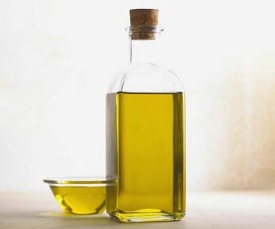
Cold-pressed Olive Oil
Food Renegade Newbie Tip #2
Start Eating Healthy Fats. They’re not what you might think they are.
If you’ve become a Label Nazi, you’ve probably noticed the perniciously pervasive oils that saturate the Standard American Diet (SAD) — corn & soybean oils.
These oils — along with most vegetable oils — are primarily polyunsaturated fats (PUFAs) that your body doesn’t know how to use. So, your body uses these oils to make you fat and weaken your immune system. Also, these unstable oils are highly sensitive to oxidation and rancidity — so much so that in the process of making them the oil actually goes rancid! Food manufacturers then have to deodorize and bleach the oils to make them marginally palatable to consumers.
I’ve got an experiment for you. Try drinking a tablespoon of veggie oil. Repelling, isn’t it?
There’s a reason.
Like most animals, your body is mostly comprised of mono-unsaturated and saturated fats. Only 4% of your fat composition is polyunsaturated.
To stay fit, lean, and healthy, you’ve got to give your body the kinds of fats it needs — the kinds of fats it craves.
Butter, anyone? Bacon grease? Beef tallow? Just the fragrance of these fats makes our mouths salivate in anticipation. Plus, these fats are remarkably stable. They almost never go rancid and can last for years stored in your pantry.
What are the “good fats?”
- Lard (non-hydrogenated, if you can find it)
- Tallow
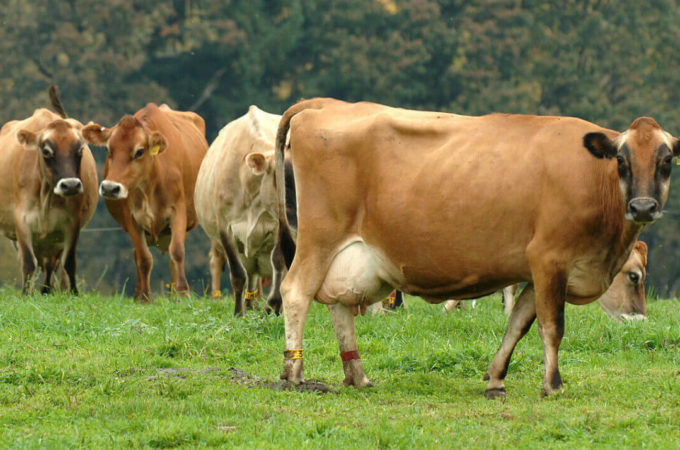
- Butter (particularly from cows eating lush green grass)
- Coconut Oil
- Palm Oil
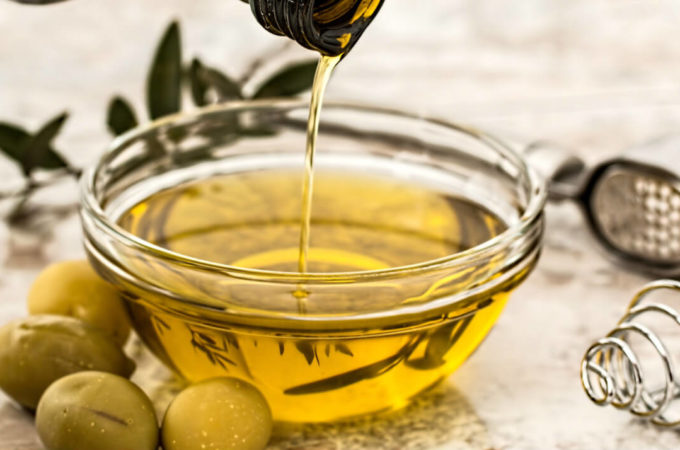
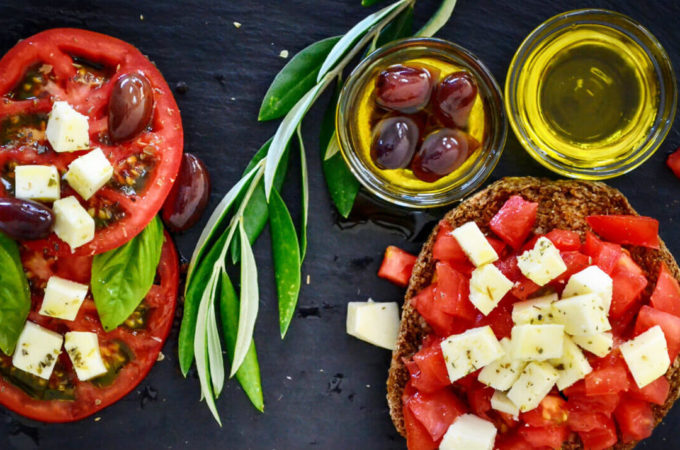
- Olive Oil (only cold-pressed, uv-protected, and at low temperatures)
Basically, animal fats from grass-fed/pastured/wild animals are as good as it gets. While you’re hunting down a good source for those at your local farmer’s market, start using coconut or palm oil. If you can’t find decent tropical oils in your grocery store, check out the listings posted at my Real Food Resources page.
So, for your next dietary change as a Food Renegade newbie, make the switch to good fats. Use your label reading prowess to avoid bad oils, then start introducting healthy fats into your cooking.
Looking for more Newbie Tips? Check out the ever-growing list here.
 |




I clicked through the links you posted about how PUFAs make us gain weight and weaken our immune system and WOW. I had no idea these things were that bad for us, and it’s good to see the data that backs the claims up.
If I needed reasons to complete my switch to heatlhier fats, I have them now!
err yeah, but where’s the data?
Yes I do understand the argument for ketosis and I’m currently on a ketogenic diet myself, but Skinnygirl… where is this data you refer to? Data requires evidence and citations, not claims and ideas.
After reading this, I went out and bought coconut oil.
I now have two questions:
1 – How do I know if the Olive Oil is UV protected? Will it just not be see-through? I saw those at the store…
2 – Also, should the coconut oil dissolve in my shakes? I’ve tried it in two different things, and it just kind of floated to the top in little granules. It was kind of gross, but tolerable. Is it possible to get it to dissolve, or should it be dissolving?
THANKS!
Hi Kyle —
Yes, UV-protected will be in a dark container. The more opaque the better.
As to coconut oil, you will probably want to raise it above 76 degrees so that it liquifies. Once it’s liquid, THEN add it to your shakes or smoothies. It’ll blend in with the rest of the liquid and be un-noticable.
Cheers,
KristenM
Thanks again!
I noticed in Eat Fat Lose Fat the author didn’t recommend Olive Oil, do you think it’s fine then? I also read on mercola.com that cooking with it produces free-radicals, do you receive his newsletter? It’s great too, but I didn’t start watching for the vegetable oils until I came to your website, and it makes so much sense!
Olive oil isn’t going to help you lose weight, but it is a decent fat. It’s been in use for thousands of years. You just need to find some that’s made using traditional, cold-pressed methods that’s been UV-protected.
It is not best to cook with it, which is why I say “at low temperatures” in the post. You can use it to cook, but the higher the temperature the more you’re denaturing the oil.
Okay, great, because I love Olive Oil.
Keep on posting! It always makes me laugh too.
Cordain states that his research on fats shows that wild game animals sontain more monosaturated fats than livestock bred for food and that the amount of fat that Paleolithic people got over the course of a year averaged out to about 10% body fat on the animal. he also explains that the diet in his book is designed around giving you what our paleolithic ancestors ate within our cultural conditioning against eating organ meats and what is currently available.
I also think that the bit here about taking a spoonful of vegetable oil is misleading . I tried taking cod liver oil and had an ongoing nausea problem I never could get over and this was a brand that the Weston A Price foundation recommended.
I still hae mixed feelings on the lipid Hypothesis of heart disease but I think that you need to explore the available material in greater depth.
Internet Driveby — I’ve never read Cordain’s book, but I admire many of the principles behind it.
Yeah, I’m not too keen on taking Cod Liver Oil either, but I can understand the argument for doing it. If you’re going to take supplements (which is what CLO is, no one suggests you cook with it!), then it’s best they come from food.
I do plan on writing more about the Lipid Hypothesis. Thus far I’ve got this post, a couple of others, and a video tutorial on fat. But, there is still sooo much more I haven’t covered yet.
Hi! I was wondering how you knew about Sesame Seed Oil. I love the flavor it gives food and it has this wonderfully nutty smell (though I don’t know if I’d want to eat it straight…but that goes for olive oil too…and bacon fat).
I have another question: I have a package of lard which is hydrogenated. Does that negate the health benefits? Is hydrogenated lard better than nothing, or should I throw the package away?
Rachel
Rachel —
Throw it away! Hydrogenation turns whatever might be good about lard into evil trans fats which cause heart disease.
Mmmm! I love fat! Healthy fat that is! Is it gross that I lick the pan after I cook fatty and delicious salmon… and when I buy salmon I only buy its belly because that’s the fattiest part?! ha ha! Oh yea, bring it on!
GIGI
Melt coconut oil before putting it in your smoothie. It will be silky & delicious!
Hi Kristen,
Do you know how sunflower oil stacks up here? I’ve been told it’s healthy and I use it for most cooking and salads.
Thanks
Why wasn’t Canola oil mentioned? It’s a Canadian low-erucic acid bred (not GMO) rapeseed oil, it’s second only to olive oil being monounsaturated fat containing omega-3 fatty acid. It has a higher smoke point than olive oil, a smoke point is the temperature in which a oil breaks down and smokes when heated, this break down of oil is bad for your health (think fried foods, and free radicals) I use Canola is almost all my cooking as it has all the benefits I mentioned and a neutral flavored,almost tasteless. I use coconut oil in traditional ethnic dishes that I want to taste like coconuts and grape seed oil very sparingly in high temperature cooking, as it has a very high smoke point. I keep it in the refrigerator next to the sesame seed oil. I think only an idiot would waste very expensive cold pressed extra virgin olive oil on med to high temperature cooking, as it degrades the flavor, nutritional value, and color of the oil. To me that golden green goodness is strictly for home made salad dressings. P.S. Rapeseed was grown for hundreds of years for it’s oil before scientists found out that the erucic acid was very bad for your health, not everything “traditional” necessary equates to healthy for you!
MJ, I didn’t mention Canola oil because I don’t believe it’s a healthy fat. The vast majority of Canola oil comes from rapeseeds genetically-engineered to be Round-Up resistant in the 1990s. Even those that aren’t are still varieties of rapeseed invented in laboratories in the 1970s. In other words, Canola oil is a completely new oil in the human diet.
On top of the fact that it’s not a traditional fat (and by “traditional,” I mean we’ve been eating it for thousands of years), most Canola is also high-temperature/high-pressure extracted. The use of heat and/or pressure in the extraction process causes the delicate poly-unsaturated fats (Omega-3s and 6-s) to oxidize. The oils then smell and taste bad, so they’re chemically deodorized before being put on store shelves.
There are very few varieties of Canola oil available that are cold-pressed at low pressures. While that’s arguably a more natural processing method and helps prevent the oxidization of the polyunsaturated fats, you still have to contend with the fact that the non-GMO Canola oil is completely new to the human diet (only in existence since the 1970s).
Hope that answers your question!
Just found your site and totally agree with your post on fats. After Gary Taubes “Good Calories, Bad Calories” masterpiece, there is no doubt we’ve been badly misled for the last 50 years. The enemy is carbs: starch/sugar.
Excellent post, Kristen! I have a suggestion for you. In your list of healthful fats, you seem to have omitted sesame oil, which has been used for millennia by humans. Just a thought!
Thanks for your writing !
Also, I forgot to mention goose, duck, and chicken fat, also known as Schmaltz. These fats are common to Jewish and other culinary traditions.
Do you think refined coconut oil is as good (healthy) as unrefined? That might help some people who object to the coconut flavor, as refined coconut oil does not have a strong coconut flavor.
I just want to add one more good fat to the list, although I realize this is not available to everyone. I use a lot of bear fat in cooking. I live in an area where there are LOTS of black bears, and lots of people who hunt them. We don’t hunt bears ourselves (though we do hunt other kinds of meat) but lucky for us we know some people who do, and this year we were given about 70 pounds of fat from a freshly butchered bear. Some of these fat chunks were 4-5 inches thick! I rendered 3 gallons and have been feeding the rest to my chickens bit by bit. They go NUTS for fat. So we end up eating it through the eggs too. Maybe some readers also live in bear country–if so, just ask around and find a hunter who is willing to hook you up. I don’t know what the saturation profile is but bear fat is similar to lard in its hardness. It has a very mild, pleasant flavor, you can use it in delicate-flavored stuff like pie crust just fine. The ultimate pasture-raised, or rather forest-raised fat.
I am new to your site, and I love it. It is so nice to find someone with exactly the same food views. I’m not crazy after all!
i am looking for some bear grease. i bought some from a hunters supply place in idaho 3 yrs ago and was trying to find it again when i stumbled upon your comment. let me know if it is possible to buy some rendered or not, thos i guess it would be easier to ship bottled up. thank you in advance for your reply. cyndie lou// [email protected]
Great post and site! I am a big advocate of cocoanut oil, not just in the smoothies but also on my body as a moisturizer.
However, I found that it doesn’t work so well for frying, especially meat which needs a bit of time to cook and the oil burns rather fast.
What oil do you suggest for steaks, chicken or even french fries?
I want let go of the vegetable oils but haven’t figured how to make the switch.
Thanks!
I would use beef tallow from grass-fed cows to fry foods in. Another great possibility (but one which I don’t have easy access to) is duck fat from wild ducks.
I’m all over this saturated fat thing and I can’t tell you how happy it makes me! I grew up on a farm eating raw dairy, fresh bacon, etc. and we never worried about the fat content. And we were so healthy!
Here’s my question: I have a 2.5 yr old who has had growth issues his whole life (to the point of having a feeding tube!). At this point his system is reacting to all sorts of things, including dairy. We’ve tried raw, but it’s still not happening. So, we’re cooking most of his food in bacon grease or coconut oil in hopes of adding good fats into his diet. We’ve been using coconut oil for a long time, but the bacon fat is new and he’s been pretty constipated. Could it be the bacon fat? I’m curious if you’ve heard of people adjusting to new fats like this.
Love, love, love your site! Diane
I just read this post, and I have to say I’m happy to know that saturated fats are good for you.
But the reason I’m commenting is because I have a question: What about walnuts?
According to my bag of unroasted, unsalted walnuts, there’s 12 mg of Polyunsaturated fats in 16 nuts.
Should I avoid walnuts because of their polynusaturated fat content?
Do you have references? I loved this article. I’m looking for more sources and studies to convince my extended family and share with my doctor husband.
I understand that canola and soy oil are unhealthy. What about cooking with sunflower oil or safflower oil? Are these oils good substitutes? Or can I find a liquid palm oil to cook with when a recipe calls for vegetable oil?
You forgot hempseed oil!
Pretty sure that one’s good for you.
And Flax Seed oil (for omega3s, not to be cooked with)
I don’t think PALM oil is good recommendation just because the way they harvest it is apparently really destructive to animals and the environment.
http://www.saynotopalmoil.com/palm-oil.php
http://ran.org/palm-oil
Is grapeseed oil a good alternative to olive oil when cooking?
Kristin wrote an article on Hemp oil & seeds awhile back. You can read it here: https://www.foodrenegade.com/hemp-oil-hemp-seeds-safety/
(The general consensus: Hemp oil isn’t a good choice, but hemp seeds are fine to eat.)
And I appreciate you mentioning the un-sustainablitiy of Palm Oil. It is a healthy oil to consume, but because the harvesting process is so harmful for the enviroment, it makes it a not-so-responsible choice for consumption. Thank you for commenting on this!
Palm oil is killing the tropical environment, devastating forests and maiming and horribly killing innocent creatures with a vengeance!
Have you seen the movie Avatar? We’re talking THAT kind of devastation!
Take Palm Oil off the menu.
This is really serious, You’re an exceedingly qualified writer. I found so many informative stuff in your blog, especially its discussion. and additionally will enjoy finding your personal wonderful write-ups. I am sending it to a few friends and also sharing in delicious. Thanks for your sweat!
Hi there. I thought my husbie had lost his marbles when he came home with a ton of beef tallow 🙂 Looking into it more (and having tasted the food made with it) I am on board. The only problem I am having is this. How much of it is too much? Basically, even though it’s healthy fat, I imagine if we fried food in it and ate that every day, it seems that’d probably be bad? I don’t know. Basically how much of it is the limit on it being healthy?
Shared this on Facebook! My personal favourite is Coconut Oil! I use it in food and as a beauty product. I wouldn’t go without it
I find this informative and i hope a lot of people would do think that fats are not an absolute bad for our health in general.
Fact: According to medical reports, two to three orgasms in a week can increase your life span. The hormone DHEA works as an anti-depressant and improves immunity levels in the body. It also repairs tissue damage and improves your complexion and skin.
Any opinion on grape seed oil?
Food Handler Training & Manager ANSI Certification
http://foodhandleru.com
• 10 OFF SALE: Enter Promo “TRAIN10OFF” at Checkout
Shared this on My website. I translate it . ! My personal favorite is Coconut Oil!and Oliu Oil I use it in diet and as a beauty product often. I like it an use it always
Shared this on My website. I translate it . ! My personal favorite is Coconut Oil
ádasd
đasadasdasd
Shared this on My website. I translate it . ! My personal favorite is Coconut Oil!and Oliu Oil I use it in diet and as a beauty product often. I like it an use it always