
I’ve said it before. Fat isn’t bad for you. It’s not the quantity of fat you eat, but the kinds of fats that matter.
In short:
Vegetable oils = BAD
Animal fats = GOOD
(Go read this post on the subject if you’re fuzzy on why this is so.) Mark Sisson, of Mark’s Daily Apple, posted a sample menu today of his low-carb diet. Unlike many Atkins or Zone dieters, Mark prioritizes getting lots of good, clean, healthy animal fats from grass-fed/pastured/wild animals.
Of particular interest to me was the final breakdown of his meals for an average day. 55% of his caloric intake came from fat!
But does Mark gain weight? No. In fact, he’s remarkably fit.
Granted, Mark regularly exercises. But, he’s not stuck on an endless cardio fitness routine either.
My point is simply this: If you want to lose weight, consider switching to good fats and eliminating or reducing your intake of grains.
Why am I beating up on grains? Well, to put it simply, people are not cows. We are not ruminants who can easily digest grasses. We don’t have four stomachs. And grains are basically just domesticated grass. The only way we can even start to digest grains properly is if we sprout, soak, or ferment the grain in order to pre-digest it.
Many traditional diets around the world include grains — but not in the perverse quantities of the Standard American Diet (SAD). Plus, what grains they do consume are unrefined and usually sprouted or fermented in some way.
So, if weight loss is on your list of New Year’s goals, do yourself a favor. Start eating healthy fats and avoid unhealthy grains.
 |





well said!!
:
“Well, to put it simply, people are not cows. We are not ruminants who can easily digest grasses. We don
Henriette — Thanks for the comment.
It’s actually something I’m just now starting to wrap my mind around. Grains (particularly traditionally prepared breads, tortillas, and rice) are a part of many traditional diets, so I never questioned their goodness. (And they ARE good, if properly prepared!)
But what I am starting to realize is that Americans are addicted to grains. We simply eat far too many of them when you consider proportions.
PLUS, when you consider how much damage we’ve done to our digestive systems by consuming improperly prepared grains for most of our lives, it makes sense to take a dramatic break from them to give our bodies a chance to heal and come back into balance.
KristenM
Absolutely! I find the more real natural fats I eat, the better my weight is, and I’m not much of an exerciser (though not a couch potato, either).
Exercise does make one fit (and maintains lean muscle mass), but ultimately it is what one eats that determines overall weight. I lost weight 5 years ago and maintained it when I quit the YMCA gym and their dated weight loss/fitness philosphy and cut the carbs at home instead. I recently went back to the Y to try to get some “Slow Burn” strength training going and they are STILL stuck on the chronic cardio for the mainstay of fitness. In the Personal Fitness Center (the smaller gym with a higher staff ratio, separate from the main gym), the cardio machines are all in use (mostly by very overweight, elderly, and/or people recuperating from health issues), and the weight machines are all empty. They just don’t *get* that cardio exercise is a surrogate for strengthening muscles and increasing efficiency of O2 use in the muscles, so the lungs and heart don’t have to work as hard. The lungs and heart don’t get any stronger with cardio. Sheesh.
I read something today that rings so true – Grains are a GATEWAY DRUG! Oh yeah. Grains have opioid peptides and many people have significant WITHDRAWAL symptoms when they cut grains, especially the worst one, WHEAT. And the concentrated sugar sidekick that often stows away with grains (pancakes & syrup, anyone?). Double whammy. Dr. Eades has a great post up a few months back (october ’08)about carb addiction and a last chance to beat cancer.
I’m still mulling over the soaking/fermenting /traditional processing of grains to render them edible. Our family does seem to have some subtle gluten issues and we all have genes (tested) that predispose to celiac/gluten sensitivity, so even the best preparation might not render grains safe enough for us. YMMV. And for me, there is still the issue of the high glucose level in grains, which processing doesn’t address. So we’re going ever more paleo; that path has none of the murkiness of the neolithic “opioid” grain path.
Time for some local “backyard” eggs gently cooked in grassfed butter!
I think grains are actually a nutrition staple, and have been time out of mind- HOWEVER- I think the problem is how they are grown or processed or both. And in combination with high fructose corn syrup and hydrogenated oils or the number of petroleum extracted oils also in processed foods we have created an anti-nutrtional Frankenstein most of us live on. The Eat Fat Lose Fat proposition relies on meat and low carb vegetables and healthy fats, animal and coconut. If people can change their eating habits to this matrix they can recover their health and vitality and drop a good bit of body fat accumulated from empty calorie carbs. Once some semblance of health is recovered, one can probably add back in more fruit or concentrated natural sweetness like honey and maple syrup- but reserve with regard to processed foods is probably always going to be necessary. Grains can probably be attempted by people in good health at stable weights, if they are whole grains and the products made from them are naturally soured or somewhat fermented in the process of preparation.
Well, gluten intolerance is gluten intolerance. I’ve heard of people who had sensitivities to gluten being healed — usually by avoiding gluten for extended periods of time (months or years) and then gradually reintroducing traditionally prepared grains into their diets.
That said, my family doesn’t seem to suffer from any kind of gluten intolerance. We must have lots of grain-eating ancestors!
For us, much of our diet is determined by our church (Eastern Orthodox) and its regimented fasting schedule. For about 40% of the year we eat like vegans (we call it fasting to do this) in order to prepare for the holy feast days (like Christmas, Easter, and others).
During our vegan fasts, we simply have to eat grains. I don’t know how else we’d get the protein we need to survive! But, in my family, we try to counter the temptation to turn our fasting into a carb-fest by cooking with lots of tropical oils. That keeps us satiated and tempers our appetites.
I’m slowly starting to be convinced that during our festal (or non-fasting) seasons, we should avoid grains altogether. You know — just to mix it up and keep our bodies on their toes! (And also to give us a break from all the work of sprouting and soaking that goes into our fasting seasons.)
KristenM
I have a question, it says: Canola oil contains omega 6 and omega 3 fatty acids in the ratio of 2:1
It’s here: http://ezinearticles.com/?Uses-and-Benefits-of-Canola-Omega-3-Oil&id=977562
Is that false?
Kyle — Canola is actually one of the more “decent” vegetable oils as far as this particular balance of fats goes. But there are other problems with it:
— it has too many polyunsaturated fats (our body only needs about 4% of our fat intake to be PUFAs),
— the high-temperature, high-pressure methods used to create it cause the fats in the oil (particularly the delicate Omega-3s) to go radically oxidize (essentially go rancid), and manufacturers then have to chemically deodorize and bleach the oil to make it somewhat palatable
— it’s a new oil to the human diet, so our bodies aren’t adapted to eating it
That’s just off the top of my head. 🙂
Oh, that’s true, we probably aren’t used to it, thanks for clearing that up!
In one article when you said that most oils are already rancid, where did you read/hear about that? I can’t believe they’d do that to us!
Kyle — The first place I heard about it was in reading Mary Enig’s book Eat Fat to Lose Fat. In it, she talks about the oil production/extraction processes used to make vegetable seed oils. I looked online for an excerpt, and found this more condensed treatment of the subject matter: http://www.westonaprice.org/knowyourfats/skinny.html#modern
That link takes you to a subsection of a much longer article that is well worth the read!
Great, thanks again!
Vegetable oils = BAD
Animal fats = GOOD
I think the generalization of the first statement is wrong. You advocate coconut oil and in the same post, you have an ad for hemp oil and coconut oil. Those are vegetable oils, right?
Kay
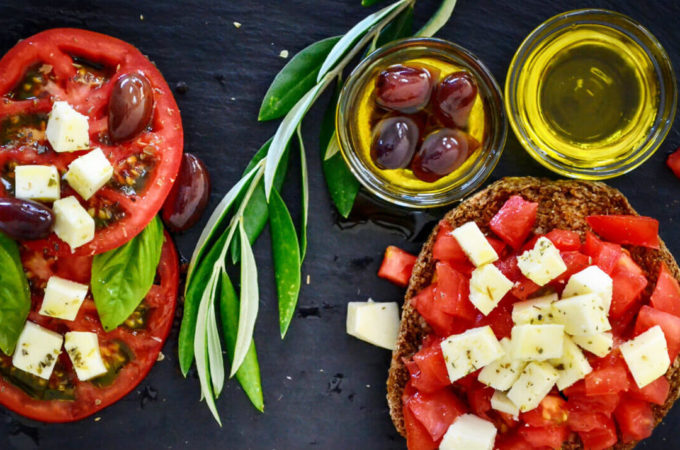
Kay — You’re right. And I also advocate cold-pressed extra virgin olive oil. Regular readers of my blog know what I mean when I refer to vegetable oils, though: the new, modern oils that were only introduced to our diets within the last hundred years (like soybean oil, corn oil, canola oil, and other seed oils). Nina Planck likes to call them the “yellow oils.” Perhaps I should start calling them that, too.
A friend told me that her doctor suggested she buy organic coconut oil, take one table spoon, put in cup and microwave until liguid and drink it every night to lose weight, can this be good for you and has anyone heard of this working?
Mechelle, i have heard this as well….BUT warming it in the microwave KILLS the good in coconut oil. To make it liquid, scoop some in a container and put the container in warm water to liquify. Or, set on water on stove and heat until melted.
Great post. My husband has type 2 diabetes. Over the last few months he has lost 10kg and his blood sugar levels have gone down just from cutting out ALL grains, cutting out as much sugar as we can (there’s so much hidden sugar), eating unprocessed foods such as raw vegetables and animal proteins including saturated fats. He’s not even exercising much more than usual. It is hard to break the old eating patterns that we grew up with, though.
@ michelle
When I take coconut oil, I prepare tea and scoop it on top of the tea. Then I get my glass of water and my coconut oil in one!
Yes it does work (along with controlling carbs and moderate movement).
Haha my family and friends are positively horrified at all the fat I eat. They can’t believe I don’t cut the fat off my steak, cook everything in coconut oil, drown already-cooked food in cold olive oil, and even take spoonfuls of coconut oil right out of the jar (will have to try it in hot tea like someone suggested). If fat made you fat, I would be HUGE. But I’m very slim. I keep trying to explain the good/bad fat thing to my family, but they’re still stuck on believing that saturated fat = bad and unsaturated fat = good. Sigh.
There’s a difference between grass and grains. Cows eat grass, they don’t eat grain (nat naturally, in CAFOs they’re forced to eat it). Their stomachs have not evolved to digest grains. It’s only a small detail but if you’re going to compare people and cows, you might want to get those little details straight.
Great post!!! I agree completely- use the stomach analogy a lot when explaining nutrition to patients & friends!!! 🙂 Thanks for the great articles!!!
if we can’t eat grass because we don’t have four stomachs like a cow, why do we drink cow’s milk?
Wow, that’s what I was searching for, what a stuff!
present here at this weblog, thanks admin of this web site.
I would agree with process foods from grains, but i think everything has a place in diet if it’s in moderation… oatmeal for example is a huge benefit in my diet.