
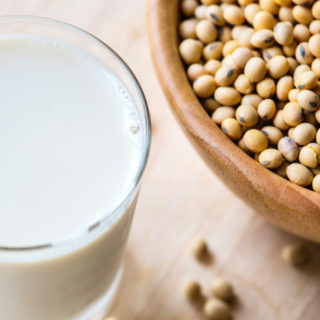
Are you convinced yet about the dangers of soy? Many aren’t. “Is soy bad for you? …Really?” I hear the question so often I want to scream. After decades of hearing marketing spin about how soy is a wonder food, a protein-rich legume able to rescue us from our dependence on meat, I suppose it’s understandable why so many people have yet to understand fully the dangers of soy. Really, you’re not going to get the full story unless you research it on your own. And why would you, when soy is “universally” touted as a health food? Well, it isn’t.
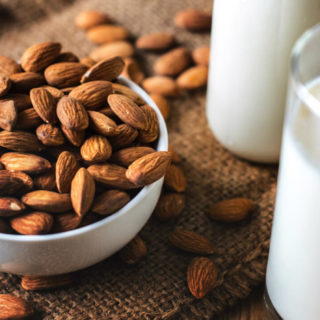
Healthy Milk Substitutes With Recipes
Are you in need of a healthy milk substitute? Are you dairy intolerant and in search of good alternatives to milk? Or perhaps you can’t get your hands on any milk from grass-fed cows — pasteurized or raw? Or maybe you’re fasting from dairy for religious or health reasons and simply want the most nourishing milk substitute you can find?
These days, people turn to soy milk. Even if you’re not turned off by the fact that it’s an industrial waste product spun by marketers into a so-called “health food,” you can’t like the numerous health-risks associated with soy. (I’ll be writing more on those later in the week. But as a foretaste of things to come, soy: is thyroid suppressing, blocks absorption of minerals like calcium, causes hormonal imbalance leading to infertility and breast cancer, disrupts protein digestion, can cause growth problems in children).
So, if you’re not willing to drink soy milk, what’s left for you? What are the healthiest milk substitutes available?
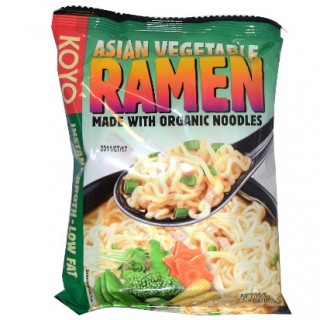
Decoding Labels: KOYO Asian Vegetable Ramen
Okay, so it’s time to admit it. For a long period of college, I subsisted almost entirely on ramen and peanut butter and jelly sandwiches. Ramen is cheap, filling, and versatile. You can add meat to it, add frozen veggies to it, dress it up or down. It’s also super tasty and addictive. But after my Real Food conversion, ramen could no longer be my go-to choice for a quick lunch. It was packed with MSG, artificial colors and flavors, deep fried noodles, you name it. It’s been years since I’ve eaten it. And then, a reader emailed me asking about a “natural” ramen she’d found at her supermarket that’s made with organic noodles. It’s called KOYO Asian Vegetable Ramen. Here’s what I found out about KOYO.
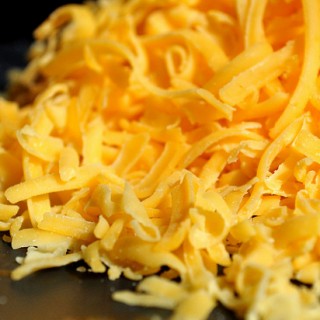
Would You Like Some Wood Pulp In Your Shredded Cheese?
QUICK! What keeps pre-packaged shredded cheese from clumping, low-fat ice cream creamy, and pre-made milk shakes smooth? You guessed it! WOOD PULP. They call it “cellulose,” but it’s just powdered wood pulp. The industry loves this stuff. It’s cheap. It helps stabilize food, lowers fat content, increases fiber. Did I say it’s cheap?
As the prices of other food ingredients rise, food manufacturers are increasingly turning to cellulose so that they can keep production costs low. Even big organic brands like Organic Valley are not immune from the appeal.
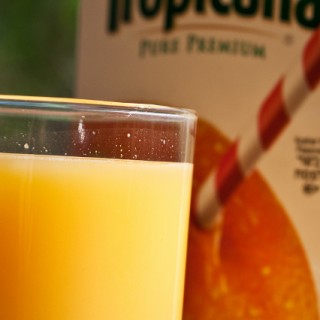
The Secret Ingredient In Your Orange Juice
Do you buy orange juice at the store? If you do, I’m sure you’re careful to buy the kind that’s 100% juice and not made from concentrate. After all, that’s the healthier kind, right? The more natural kind? The kind without any additives? The kind that’s sold in the refrigerator section so it must be almost as good as fresh-squeezed orange juice?
If I’m describing you, then you’re either going to hate me or love me by the time you’re done reading this post. The truth is, that orange juice you feel so good about buying is probably none of those things. You’ve been making assumptions based on logic. The food industry follows its own logic because of the economies of scale. What works for you in your kitchen when making a glass or two of juice simply won’t work when trying to process thousands upon thousands of gallons of the stuff.
Haven’t you ever wondered why every glass of Tropicana Pure Premium orange juice tastes the same, no matter where in the world you buy it or what time of year you’re drinking it in? Or maybe your brand of choice is Minute Maid or Simply Orange or Florida’s Natural. Either way, I can ask the same question. Why is the taste and flavor so consistent?
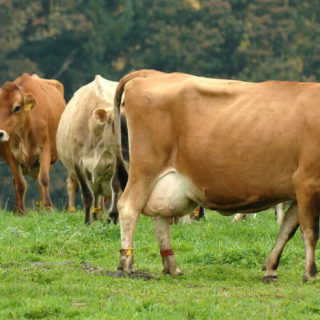
Where to Find Grass-fed Butter
Want to know where to find butter from grass-fed cows? I’ve said before that butter is a health food, but butter from grass-fed cows is even better — a nutritional powerhouse of vitamins A, D, & K-2, heart-disease preventing CLA (conjugated linoleic acid), and so much more.
Yet finding butter from grass-fed cows can be hard for those newly committed to doing so. Is buying certified organic butter enough? Do you absolutely need to find a local pasture-based dairy? What if there are no pasture-based dairies near you?
Consider this your guide for where to find butter from grass-fed cows.

Study Shows Anxiety May Be Caused By The Gut
Researchers have finally found conclusive proof that the balance of bacteria in your gut may have more to do with your mood than any other contributing factor. Do you struggle with anxiety? Irritability? Depression? How about your friends or children? If yes, then this recently published study done by researchers at McMaster University may provide one of the keys to unlock mental clarity and wellness.

How to Heal a Sunburn In Less Than 24 Hours
If you want to know how to heal a sunburn in just under 24 hours, I’ve got a trick for you. All it takes is two simple, real foods. In fact, because of this trick, I rarely even admit to having a sunburn. In my family, we now call it turning pink. That’s because our skin never peels, and instead our sunburns fade to nice tans.
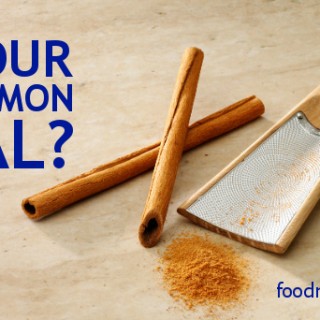
Is Your Cinnamon Real?
A lot of folks have made a hubbub about whether or not your cinnamon is real. Their claim is that Ceylon cinnamon is the only true cinnamon, and that Cassia (or Saigon) cinnamon is fake. They are missing the point. The truth is, both belong the same family of plants (and even the same genus — cinnamomum). And both are similar although the taste is somewhat different. That said, I do believe there’s such a thing as fake cinnamon, and it can impact not only your measure of culinary delight, but also your health.
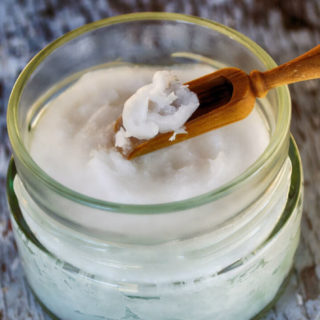
How To Choose A Good Coconut Oil
It’s no secret that I am a fan of coconut oil. But how do you pick the best, most healthy coconut oil? How do you know whether to get a refined or unrefined oil? What do all those labels like “virgin,” “extra-virgin,” and “expeller-pressed” mean? What’s the difference between the cheap coconut oil I see on my grocery store shelf and the high-quality oil I can buy online?
- « Previous Page
- 1
- …
- 7
- 8
- 9
- 10
- 11
- …
- 107
- Next Page »